Rubber Crosslinking Agent Compound
CN → US| HS Code | Tariff Rate | Origin | Destination | Doc |
|---|---|---|---|---|
| 3403112000 | 35.2% | CN | US | Official Doc |
| 3403115000 | 36.4% | CN | US | Official Doc |
| 3824992900 | 41.5% | CN | US | Official Doc |
| 4005200000 | 35.0% | CN | US | Official Doc |
| 4005100000 | 35.0% | CN | US | Official Doc |
Product Images


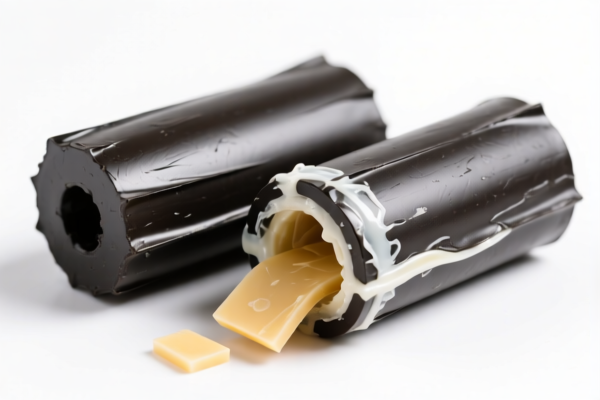
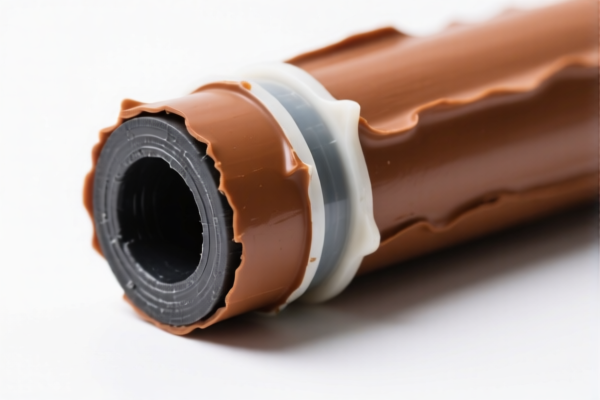
AI Analysis
🧪 Rubber Crosslinking Agent Compound (橡胶交联剂混合物)
🌐 HS Code Reference & Customs Clearance Guide | 2026 Latest Tariff Analysis | Professional Clearance Strategy
📌 1. Product Definition & Classification: Do You Truly Understand "Rubber Chemicals"?
A Rubber Crosslinking Agent Compound is a specialized chemical mixture used in the rubber manufacturing industry to facilitate vulcanization (crosslinking) processes. It improves the physical properties of rubber, such as elasticity, durability, and heat resistance.
In international trade, these products are often ambiguous because they can fall under different categories depending on their chemical composition, physical state, and intended use. They are generally categorized into two main groups:
- Chemical Preparations/Agents (Chapter 34 or 38): If the product is primarily defined by its chemical function as a processing aid or additive, rather than being a rubber product itself.
- Unvulcanized Rubber Compounds (Chapter 40): If the product is considered a "mixed, unvulcanized rubber" where the crosslinking agent is just one component of a rubber-based mix.
⚠️ Key Distinction Point:
- If the product is a pure chemical mixture used for treating or processing rubber (but not a rubber compound itself) → Chapter 34 or 38
- If the product is an unvulcanized rubber mix containing the crosslinking agent as an ingredient → Chapter 40
📦 2. HS Code Classification Details (2026 Latest Tariff Authority Comparison)
| HS Code | Product Description | Applicable Scenario | Tax Rate (Total) |
|---|---|---|---|
3403.11.20.00 |
Rubber chemical preparations; mixtures based on petroleum oils or bituminous substances | Chemical agent formulations, no material conflict | 35.2% |
3403.11.50.00 |
Rubber chemical preparations; other mixtures | Material processing chemical agents | 36.4% |
3824.99.29.00 |
Other chemical products and preparations (not elsewhere specified) | General chemical additives, no clear material conflict | 41.5% |
4005.20.00.00 |
Unvulcanized rubber compounds, partially compounded with other substances | Unvulcanized mixed rubber material scope | 35.0% |
4005.10.00.00 |
Unvulcanized rubber compounds, not otherwise compounded | Inferred unvulcanized mixed state, fits material characteristics | 35.0% |
🔍 Key Reminder:
- Chapter 34/38 Codes apply if the product is classified as a chemical preparation used to treat rubber. - Chapter 40 Codes apply if the product is classified as unvulcanized rubber itself, where the crosslinking agent is an ingredient in the rubber mix. - The tax rate varies significantly (35.0% – 41.5%) depending on the precise chemical nature and customs interpretation.
💰 3. 2026 Latest Tariff Rate Breakdown (Including Surtaxes & Policy Add-ons)
✅ Applicable Country: USA (US)
✅ Origin: China (CN)
✅ Effective Date: Starting November 10, 2025 (for subsequent imports)
🎯 1. 3403.11.20.00 —— Rubber Chemical Preparations (Petroleum-based)
| Item | Content |
|---|---|
| Base Tariff | 0.2% (ad valorem) |
| USITC Surtax | +25.0% (Section 301) |
| IEEPA Surtax | +10.0% (122-Clause Tariff for China/HK products) |
| Total Rate | 35.2% |
| Tax Calculation | CIF Value × 35.2% |
| De Minimis Exemption | ❌ Not Eligible (deny_de_minimis) |
| Legal Basis Path | USITC:3403.11.20.00 → USITC:Footnote301(25%) → IEEPA:122-Clause(10%) |
📌 Explanation:
- The 0.2% base is low for chemical preparations. - The 25% Section 301 tax is mandatory for most rubber chemicals from China. - The 10% IEEPA 122-Clause tax applies specifically to certain chemical and rubber-related imports from China. - Total 35.2% is a significant cost factor.
🎯 2. 3403.11.50.00 —— Rubber Chemical Preparations (Other Mixtures)
| Item | Content |
|---|---|
| Base Tariff | 1.4% |
| USITC Surtax | +25.0% |
| IEEPA Surtax | +10.0% |
| Total Rate | 36.4% |
| Tax Calculation | CIF Value × 36.4% |
| De Minimis Exemption | ❌ Not Eligible |
| Legal Basis Path | USITC:3403.11.50.00 → USITC:Footnote301(25%) → IEEPA:122-Clause(10%) |
📌 Note:
- Slightly higher base rate (1.4%) compared to petroleum-based codes. - Still subject to the same high surtaxes. - Use this code if the preparation is not primarily based on petroleum oils.
🎯 3. 3824.99.29.00 —— Other Chemical Products and Preparations
| Item | Content |
|---|---|
| Base Tariff | 6.5% |
| USITC Surtax | +25.0% |
| IEEPA Surtax | +10.0% |
| Total Rate | 41.5% |
| Tax Calculation | CIF Value × 41.5% |
| De Minimis Exemption | ❌ Not Eligible |
| Legal Basis Path | USITC:3824.99.29.00 → USITC:Footnote301(25%) → IEEPA:122-Clause(10%) |
📌 Warning:
- This is the highest tax bracket among the options. - Apply only if the product does not fit the specific "Rubber Chemical Preparation" definition of Chapter 34. - High risk of customs scrutiny if misclassified.
🎯 4. 4005.20.00.00 & 4005.10.00.00 —— Unvulcanized Rubber Compounds
| Item | Content |
|---|---|
| Base Tariff | 0.0% |
| USITC Surtax | +25.0% |
| IEEPA Surtax | +10.0% |
| Total Rate | 35.0% |
| Tax Calculation | CIF Value × 35.0% |
| De Minimis Exemption | ❌ Not Eligible |
| Legal Basis Path | USITC:4005.x0.00.00 → USITC:Footnote301(25%) → IEEPA:122-Clause(10%) |
📌 Advantage:
- 0.0% base tariff is the lowest possible. - However, the product must be genuinely an "unvulcanized rubber compound." - If customs determines it is a pure chemical additive (not a rubber mix), this classification will be challenged, leading to penalties and higher retroactive taxes.
🛠️ 4. Customs Clearance Practical Advice (Battle-Tested Pitfall Guide)
✅ 1. Documentation Checklist (Non-Negotiable)
| Document | Required? | Description |
|---|---|---|
| ✅ Product Specification Sheet | ✔️ | Must detail chemical composition, crosslinking mechanism, and intended use. |
| ✅ Safety Data Sheet (SDS) | ✔️ | Critical for chemical products; confirms hazard class and handling requirements. |
| ✅ Product Photos | ✔️ | Clear images of packaging, labels, and product form (liquid/paste/powder). |
| ✅ Commercial Invoice | ✔️ | Clearly state "Rubber Crosslinking Agent Compound" and HS Code. |
| ✅ Certificate of Origin (CO) | ✔️ | Required for origin verification; may affect surtax applicability. |
| ✅ Packing List | ✔️ | Detail weight, volume, and packaging type. |
| ✅ Third-Party Test Report | Optional | Can help prove chemical composition if challenged. |
✅ 2. Declaration Tips (Critical Mantras)
🔥 “Form Determines Fate, Chemical Nature Defines Code!”
| Scenario | Correct Declaration | Incorrect Approach |
|---|---|---|
| Pure chemical additive (not rubber) | 3403.11.20.00 or 3403.11.50.00 |
Misdeclare as rubber → Audit risk |
| Mixed unvulcanized rubber | 4005.10.00.00 or 4005.20.00.00 |
Misdeclare as chemical → Higher tax if rejected |
| General chemical preparation | 3824.99.29.00 |
Use only if no better fit; high tax |
📌 Note:
- Do not try to disguise a chemical additive as rubber to save on base tax. Customs may demand chemical analysis. - Do not split a single compound into multiple parts to avoid tariffs; this is considered evasion.
✅ 3. Special Case Handling
| Situation | Handling Advice |
|---|---|
| Customs Challenge on Classification | Provide SDS and technical data sheets proving the product's primary function and composition. |
| Product Contains Multiple Components | Ensure the HS code reflects the essential character of the product. |
| Import from Non-China Origins | Verify if IEEPA 122-Clause taxes apply; some countries may have exemptions. |
| Small Quantity Samples | Still subject to full tariffs; de minimis does not apply to these HS codes. |
🌍 5. Global Market Comparison (2026 Latest)
| Country/Region | Recommended HS Code | Tariff (China Origin) | Certification | Remarks |
|---|---|---|---|---|
| 🇺🇸 USA | 3403.11.20.00 or 4005.x0.00.00 |
35.0% – 41.5% | SDS, MSDS | High surtaxes; strict classification |
| 🇨🇳 China | 3403.11.20.00 |
5.0% – 6.5% | None | No additional surtaxes |
| 🇪🇺 EU | 3824.99.29.00 |
0% – 6.5% | REACH, CLP | REACH registration required for chemicals |
| 🇦🇺 Australia | 3403.11.20.00 |
5.0% | AICIS | Chemical inventory check required |
| 🇯🇵 Japan | 3403.11.20.00 |
3.5% – 5.0% | JIS | No major surtaxes |
📌 Conclusion:
- USA has the highest effective tariff due to Section 301 and IEEPA taxes. - EU and Japan have lower base tariffs but require strict chemical compliance (REACH, JIS). - China origin products face the most complex tariff landscape in the USA.
📌 6. Common Mistakes & Pitfalls (Lessons Learned)
❌ Mistake 1: Declaring a pure chemical additive as "Unvulcanized Rubber" to get 0% base tax.
👉 Consequence: Customs requests chemical analysis; if proven false, penalties + back taxes apply.
❌ Mistake 2: Ignoring the IEEPA 122-Clause 10% tax.
👉 Consequence: Underpayment; goods held at customs; fines.
❌ Mistake 3: Using vague descriptions like "Rubber Chemicals" without specifying the HS Code.
👉 Consequence: Customs assigns a default code (often higher tax); delays.
✅ Correct Approach:
"Rubber Crosslinking Agent Compound, Chemical Preparation, HS 3403.11.20.00, SDS Provided, Made in China"
🎯 7. Conclusion: Precision in Classification Saves Money!
🎯 Remember:
🔹 "Chemical Form, Rubber Function, Check the Code!"
🔹 "Base Tax is Low, Surtaxes are High, Declare Accurately!"
📌 Pro Tip:
If your product is mixed rubber, ensure the rubber content is dominant. If it is a chemical additive, ensure it is not considered a rubber compound.
Consider applying for a Binding Ruling from US Customs if the classification is uncertain.
📣 Immediate Action:
📞 Consult a licensed customs broker + Provide SDS + Verify HS Code
🚀 Clear customs smoothly, minimize costs, maximize efficiency!
✨ Professional Customs Clearance Starts with Accurate Classification!
💼 Every Cent of Cost, Worth Precise Calculation!
Customer Reviews
About HS Code Classification
The Harmonized System (HS) is an internationally standardized nomenclature developed by the World Customs Organization (WCO) to classify traded products. Over 200 countries use the HS system as the basis for customs tariffs, trade statistics, and import/export regulations.
Each HS code follows a hierarchical structure:
- Chapter (2 digits) — Broad category of goods (e.g., Chapter 84: Machinery and Mechanical Appliances)
- Heading (4 digits) — More specific grouping within the chapter
- Subheading (6 digits) — Internationally standardized breakdown, used by all WCO member countries
- National subdivisions (8-10 digits) — Country-specific extensions for further classification, such as US HTSUS 10-digit codes
Correct HS code classification is essential for smooth customs clearance, accurate duty payment, and compliance with trade regulations. Misclassification can lead to customs delays, overpayment of duties, or penalties.
When importing from CN to US, the applicable tariff rates may include:
- Most-Favored-Nation (MFN) rate — The standard duty rate applied to WTO members
- General rate — Applied to countries without trade agreements
- Trade remedy duties — Additional tariffs such as Section 301 (anti-dumping), Section 232 (national security), or countervailing duties
The information provided on this page is for reference purposes only. For official classification, please consult with your local customs authority or a licensed customs broker.