Rubber Cushion Tires Low Noise
CN → US| HS Code | Tariff Rate | Origin | Destination | Doc |
|---|---|---|---|---|
| 8431499038 | 85.0% | CN | US | Official Doc |
| 8431499090 | 85.0% | CN | US | Official Doc |
| 8708995500 | 37.5% | CN | US | Official Doc |
| 8708990300 | 35.0% | CN | US | Official Doc |
| 4016990000 | 0.0% | CN | US | Official Doc |
| 4016991000 | 20.8% | CN | US | Official Doc |
Product Images
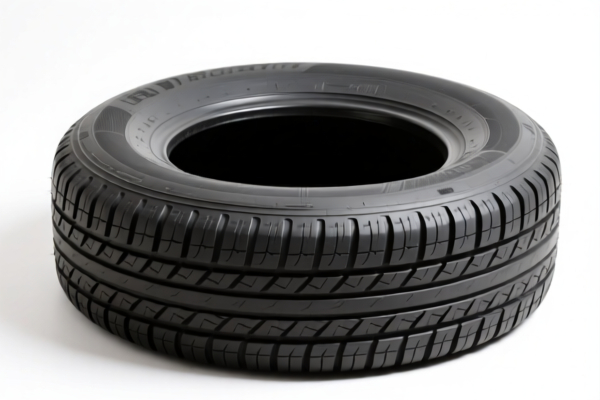
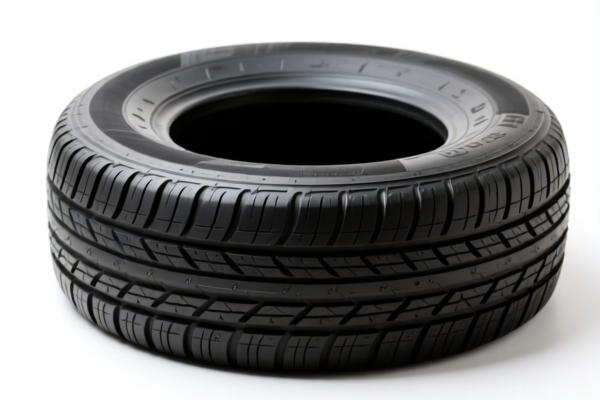
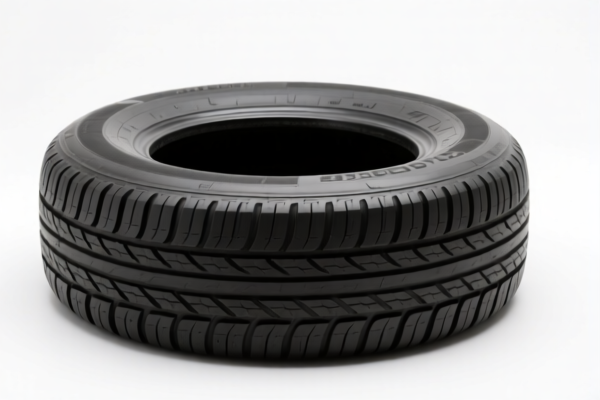
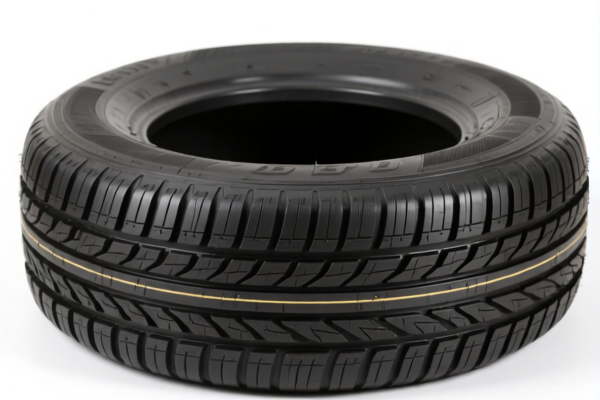
AI Analysis
🛞 Rubber Cushion Tires: Low-Noise Solutions for Industrial & Automotive Applications
🌐 HS Code Reference & Customs Clearance Guide | 2026 Latest Tariff Analysis | Professional-Level Strategy
📌 I. Product Definition & Classification: Do You Truly Understand "Rubber Cushion Tires"?
Rubber Cushion Tires are specialized components designed to provide vibration damping, noise reduction, and shock absorption. They are primarily used in: 1. Industrial Machinery: Excavators, backhoes, loaders, and construction equipment. 2. Automotive Parts: Engine mounts, suspension bushings, and vibration control goods containing rubber.
In international trade, they are not classified as standard vehicle tires (Chapter 40.11 or 40.12) but rather as parts of machinery or vibration control goods. Misclassification here can lead to severe tariff discrepancies.
⚠️ Key Distinction:
- If the item is a wheel and tire assembly for construction machinery → Classified under Heading 8431.
- If the item is a vibration control component (mounts/bushings) for vehicles → Classified under Heading 8708.
- If it is a pure rubber container/packing part → Classified under Heading 4016 (Rare for "tires," but possible for rubber buffers).
📦 II. HS Code Classification Details (2026 Latest Tariff Authority Comparison)
| HS Code | Product Description | Application Scenario | Key Classification Feature |
|---|---|---|---|
4016.99.00.00 |
Other articles of vulcanized rubber: Containers, with or without closures, for packing/transporting | Rubber buffers, packing seals, non-tire rubber parts | ❌ Not a tire; usually rubber gaskets/buffers |
4016.99.10.00 |
Other articles of vulcanized rubber: Handles and knobs | Rubber grips, handles | ❌ Irrelevant to tires |
8431.49.90.38 |
Parts of machinery of heading 8426, 8429, or 8430: Parts of backhoes, shovels, clamshells, draglines: Wheel and tire assemblies | Construction equipment (Excavators, Loaders) | ✅ Assembly for heavy machinery |
8431.49.90.90 |
Other parts of machinery of heading 8426, 8429, or 8430: Wheel and tire assemblies | General industrial machinery wheels | ✅ Assembly for other machinery |
8708.99.55.00 |
Parts and accessories of motor vehicles: Vibration control goods containing rubber | Automotive: Engine mounts, suspension bushings | ✅ Vibration Control for vehicles |
8708.99.03.00 |
Parts and accessories of motor vehicles: Parts of tractors: Vibration control goods containing rubber | Agricultural Tractors: Vibration mounts | ✅ Vibration Control for tractors |
🔍 Critical Reminder:
- "Low-Noise" is a performance feature, not a classification criterion. The classification depends on what it is used for (Machinery vs. Vehicle) and its form (Assembly vs. Component).
- "Cushion Tires" for forklifts or excavators are often classified as Wheel and Tire Assemblies (8431.49...) because they are integral to the machine's mobility.
- "Rubber Bushings/Mounts" for cars are Vibration Control Goods (8708.99...).
💰 III. 2026 Latest Tariff Rate Details (Including Surtax & Policy Surcharges)
✅ Applicable Country: United States (US)
✅ Origin: China (CN)
✅ Effective Date: November 10, 2025 onwards (for subsequent imports)
🎯 1. 4016.99.00.00 & 4016.99.10.00 — Rubber Articles (Non-Tire/Buffer)
| Item | Content |
|---|---|
| Basic Tariff | 0.0% |
| Section 301 Surtax | 0.0% (Note: Section 4016 items often have lower surtax exposure than tires, but check specific footnotes) |
| Total Tariff | 0.0% |
| De Minimis Exemption | ✅ Eligible (if < $800) |
| Legal Basis | Standard Chapter 40 rules |
📌 Explanation:
- These codes apply to rubber buffers, seals, or handles, not functional "tires." If your product is a true "tire" or "wheel assembly," do not use these codes.
- If it is a pure rubber cushion (not a wheel/tire), the tariff is 0% with no Section 301 surtax.
🎯 2. 8431.49.90.38 & 8431.49.90.90 — Wheel and Tire Assemblies for Machinery
| Item | Content |
|---|---|
| Basic Tariff | 0.0% |
| Section 301 Surtax | +25.0% |
| Steel/Aluminum/Copper Surcharge | +50.0% (If the wheel rim is made of steel, aluminum, or copper) |
| Total Tariff | 75.0% |
| Tax Detail | "Basic: 0.0%, Surcharge: 25.0%; Steel/Aluminum/Copper products surcharge: 50%" |
| De Minimis Exemption | ❌ Not Eligible (Deny de minimis for machinery parts from China) |
| Legal Basis | USITC:8431.49.90.38 → FOOTNOTE:Section 301 → Section 232 (if steel/aluminum) |
📌 Explanation:
- Wheel and tire assemblies for construction machinery (excavators, backhoes) are subject to 25% Section 301 surtax.
- If the wheel contains steel, aluminum, or copper components (e.g., steel rims), an additional 50% surcharge applies under Section 232 or related trade actions.
- Total Tariff: 75%. This is a high-cost classification.
- Key Risk: Many importers mistakenly classify these as "rubber parts" to avoid tariffs, but customs will reclassify them as "machine parts" if they are functional wheel assemblies.
🎯 3. 8708.99.55.00 & 8708.99.03.00 — Vibration Control Goods (Automotive/Tractor)
| Item | Content |
|---|---|
| Basic Tariff | 2.5% (for 8708.99.55.00), 0.0% (for 8708.99.03.00) |
| Section 301 Surtax | +25.0% |
| Total Tariff | 27.5% (8708.99.55.00) / 25.0% (8708.99.03.00) |
| Tax Detail | "Basic: 2.5%, Surcharge: 25.0%" |
| De Minimis Exemption | ❌ Not Eligible |
| Legal Basis | USITC:8708.99.55.00 → Section 301 |
📌 Explanation:
- Vibration control goods containing rubber (engine mounts, bushings) are subject to a 25% Section 301 surtax.
- For general motor vehicles (8708.99.55.00), the basic tariff is 2.5%, making the total 27.5%.
- For agricultural tractors (8708.99.03.00), the basic tariff is 0.0%, making the total 25.0%.
- Note: These are not "tires" in the mobility sense, but "cushions" for vibration dampening. If your product is a rubber bushing or engine mount, use these codes.
🛠️ IV. Customs Clearance Practical Advice (Battle-Tested Pitfall Avoidance)
✅ 1. Documentation Checklist (Non-Negotiable)
| Document | Must Provide | Explanation |
|---|---|---|
| ✅ Product Specification Sheet | ✔️ | Must clearly state: "Rubber Cushion Tire," "Vibration Mount," or "Wheel Assembly." Include dimensions, material composition (e.g., "Rubber + Steel Rim"). |
| ✅ Circuit/Structure Diagram | ✔️ | If it's a vibration mount, show it's not a structural tire. If it's a wheel, show the assembly. |
| ✅ Product Photos (with Label) | ✔️ | Clear view of the product, label, and part number. |
| ✅ Commercial Invoice | ✔️ | Description must match HS Code: e.g., "Wheel and Tire Assembly for Excavator" vs. "Rubber Vibration Mount." |
| ✅ Packing List | ✔️ | Detail contents to avoid "missing parts" flags. |
| ✅ Certificate of Origin (CO) | ✔️ | Required for duty exemption claims (if applicable) and anti-dumping verification. |
✅ 2. Declaration Tips (Key Mnemonics)
🔥 "Assembly = 75%, Vibration = 25%, Rubber Buffer = 0%! Know your part!"
| Scenario | Correct Declaration | Wrong Practice |
|---|---|---|
| Wheel + Tire for Excavator | 8431.49.90.38 |
Declaring as "Rubber Part" → 75% Penalty + Retrospective Duty |
| Rubber Engine Mount (Car) | 8708.99.55.00 |
Declaring as "Tire" → Customs Rejection |
| Pure Rubber Buffer (No Metal) | 4016.99.00.00 |
Declaring as "Machine Part" → Unnecessary 75% Tax |
| Steel-Rimmed Wheel | 8431.49.90.38 |
Ignoring steel content → 50% Surcharge Missing |
✅ 3. Special Case Handling
| Situation | Handling Advice |
|---|---|
| Hybrid Tires (Rubber + Polyurethane) | Declare material composition accurately. If >50% rubber, Chapter 40 or 8431 may apply. |
| Non-Steel Wheels (Plastic/Airless) | If no steel/aluminum/copper, avoid the 50% surcharge. Use 8431.49.90.90 (75% total due to Section 301 only). |
| OEM Custom Parts | Provide customer PO and design specs to prove intended use (Machinery vs. Vehicle). |
| "Low-Noise" Marketing | Do not declare as "Soundproofing Material" (9018 or 8518). It is a functional rubber part. Misdeclaration leads to fraud penalties. |
🌍 V. Global Market Comparison (2026 Latest)
| Country/Region | Recommended HS Code | Tariff (China Origin) | Certification Requirement | Remarks |
|---|---|---|---|---|
| 🇺🇸 USA | 8431.49.90.38 |
75% (25% Sec 301 + 50% Steel) | N/A | Highest Risk |
| 🇺🇸 USA | 8708.99.55.00 |
27.5% (2.5% Basic + 25% Sec 301) | N/A | Lower for vibration parts |
| 🇨🇳 China | 8431.49.90.38 |
5-10% (Import Duty) | CCC (if automotive) | No Section 301 |
| 🇪🇺 EU | 8431.49.90.38 |
0-1.7% (Depending on subheading) | CE (if machinery) | No retaliatory tariffs |
| 🇦🇺 Australia | 8431.49.90.38 |
5% | RCM | No Section 301 |
📌 Conclusion:
- USA imposes punitive tariffs on rubber machine parts and tires from China.
- EU/China/Australia are tariff-friendly.
- Strategy: If exporting to the US, consider supply chain diversification (e.g., Vietnam, Mexico) to avoid Section 301 surcharges.
📌 VI. Common Errors & Pitfall Guide (Blood-and-Tears Lessons)
❌ Error 1: Declaring a Wheel and Tire Assembly as a "Rubber Part" (4016)
👉 Consequence: Customs reclassifies to 8431 → 75% tariff applied retroactively + fines!
❌ Error 2: Ignoring the Steel Rim in Wheel Assemblies
👉 Consequence: Missed 50% surcharge → Penalty for undervaluation/tariff evasion.
❌ Error 3: Using "Low-Noise" as a classification basis
👉 Consequence: Customs ignores marketing terms. If it's a tire, it's a tire. Misdeclaration → Audit Trigger.
❌ Error 4: Confusing Vibration Mounts (8708) with Tires (4011/8431)
👉 Consequence: Wrong HS Code → 27.5% vs 75% difference → Massive cost variance.
✅ Correct Practice:
"Rubber Wheel and Tire Assembly for Excavator, Model XYZ, with Steel Rim, for Industrial Use" →
8431.49.90.38
"Rubber Vibration Control Mount for Car Engine, Model ABC" →8708.99.55.00
🎯 VII. Conclusion: Professional Declaration, Cost Reduction, Efficiency!
🎯 Remember the Mnemonics:
🔹 "Wheel Assembly = 75%, Vibration Mount = 25%, Rubber Buffer = 0%! Know your part!"
🔹 "Steel Rim = +50%! Don't ignore it!"
🔹 "HS Code Determines Life, Tariff Differs by 50 Points, Declaration Error Costs Thousands!"
📌 Tip:
If your rubber cushion tires are originating from Vietnam, Mexico, Thailand, or Malaysia, you may qualify for IEEPA Exemption or lower Section 301 rates.
Recommendation: Apply for Advance Ruling (Pre-Ruling) from CBP to confirm HS Code classification before shipment.
📣 Immediate Action:
📞 Contact a Professional Customs Broker + Provide Product Photos + Apply for HS Code Advance Ruling
🚀 Let your rubber parts pass customs smoothly, boost profits, and avoid penalties!
✨ Professional Clearance Starts with Accurate Classification!
💼 Every Cent of Cost Deserves Precise Calculation!
Customer Reviews
About HS Code Classification
The Harmonized System (HS) is an internationally standardized nomenclature developed by the World Customs Organization (WCO) to classify traded products. Over 200 countries use the HS system as the basis for customs tariffs, trade statistics, and import/export regulations.
Each HS code follows a hierarchical structure:
- Chapter (2 digits) — Broad category of goods (e.g., Chapter 84: Machinery and Mechanical Appliances)
- Heading (4 digits) — More specific grouping within the chapter
- Subheading (6 digits) — Internationally standardized breakdown, used by all WCO member countries
- National subdivisions (8-10 digits) — Country-specific extensions for further classification, such as US HTSUS 10-digit codes
Correct HS code classification is essential for smooth customs clearance, accurate duty payment, and compliance with trade regulations. Misclassification can lead to customs delays, overpayment of duties, or penalties.
When importing from CN to US, the applicable tariff rates may include:
- Most-Favored-Nation (MFN) rate — The standard duty rate applied to WTO members
- General rate — Applied to countries without trade agreements
- Trade remedy duties — Additional tariffs such as Section 301 (anti-dumping), Section 232 (national security), or countervailing duties
The information provided on this page is for reference purposes only. For official classification, please consult with your local customs authority or a licensed customs broker.