Rubber Dispersion
CN → US| HS Code | Tariff Rate | Origin | Destination | Doc |
|---|---|---|---|---|
| 3824992900 | 41.5% | CN | US | Official Doc |
| 3824999330 | 40.0% | CN | US | Official Doc |
| 4005990000 | 35.0% | CN | US | Official Doc |
Product Images
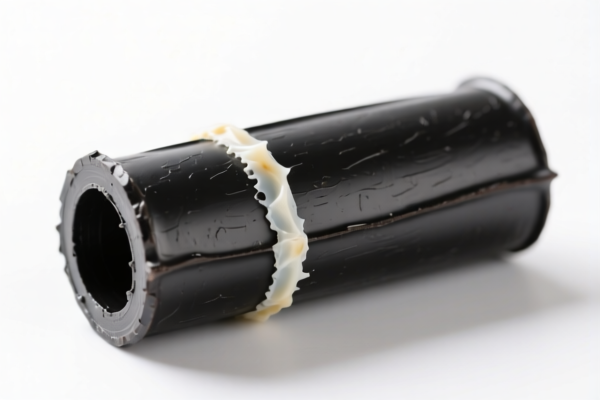
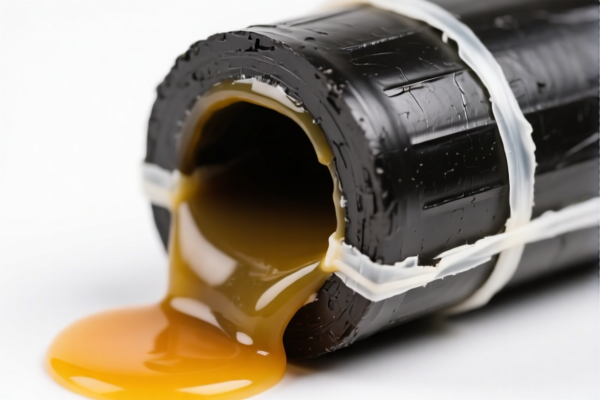
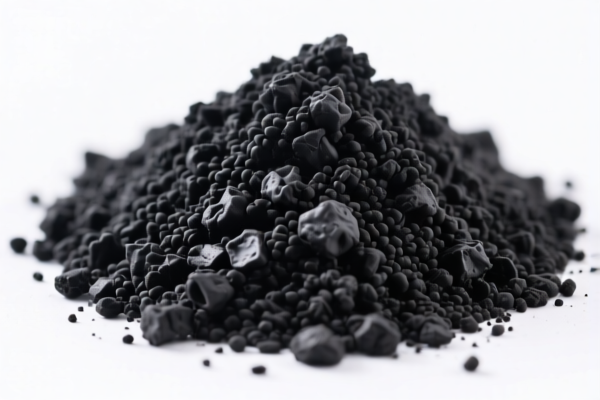
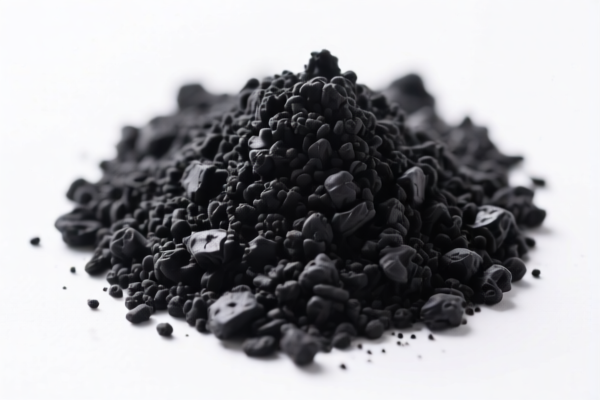
AI Analysis
🧪 Rubber Dispersion & Accelerator Agents (Rubber Industry Chemicals)
🌐 HS Code Reference & Customs Clearance Guide | 2026 Latest Tariff Analysis | Professional Clearance Strategy
📌 I. Product Definition & Classification: What Exactly is "Rubber Dispersion"?
"Rubber Dispersion" is a broad term in the chemical and rubber industry, typically referring to liquid mixtures or agents used to facilitate the mixing and processing of rubber compounds. In international trade, these products are primarily classified as chemical products and preparations, but due to their specific functional applications, they may also be categorized under processed rubber accessories.
The key distinction lies in the physical state (liquid vs. solid/paste) and the chemical composition (organic solvents vs. pure additives).
⚠️ Critical Distinction Point:
- If the product is a liquid mixture containing organic chemicals (solvents, carriers) or unclassified chemical additives → It falls under Chapter 38 (Miscellaneous Chemical Products).
- If the product is a pre-mixed, unvulcanized rubber compound used specifically as an additive in mixing → It may fall under Chapter 40 (Rubber and Articles Thereof).
📦 II. HS Code Classification Details (2026 Latest Tariff Authority Cross-Reference)
| HS Code | Product Description | Application Scenario | Taxation Logic |
|---|---|---|---|
3824.99.29.00 |
Rubber accelerator dispersion/agent, other chemical products and preparations | Liquid mixtures used as industrial chemical additives; "Other" category fallback | ✅ Chemical Preparation |
3824.99.93.30 |
Rubber accelerator dispersion, non-cyclic, monohydric, unsubstituted alcohol mixtures | Liquid mixtures with specific organic chemical characteristics (alcohol-based carriers) | ✅ Specific Organic Mixture |
4005.99.00.00 |
Rubber accelerator agent, used in processing unvulcanized milled rubber | Unvulcanized rubber compounding additives; treated as part of the rubber processing chain | ✅ Rubber Accessory |
3824.99.29.00 |
Rubber accelerator agent, industrial chemical mixture | Fallback for industrial mixtures not fitting specific subheadings | ✅ Chemical Preparation |
3824.99.93.30 |
Rubber accelerator dispersion, liquid mixture | Liquid formulations classified under organic chemical components | ✅ Specific Organic Mixture |
🔍 Key Reminder:
- Liquids are usually Chapter 38: Most "dispersions" are liquid suspensions or solutions, placing them firmly in Chapter 38.
- Solvent vs. No Solvent: If the dispersion contains significant amounts of solvents (like alcohols),3824.99.93.30might apply if it fits the specific alcohol mixture description.
- Rubber-Specific Accessory: If the product is essentially unvulcanized rubber pre-mixed with accelerators,4005.99.00.00is the most precise "rubber-specific" code, potentially lowering the base tariff.
💰 III. 2026 Latest Tariff Rate Breakdown (Including Surcharges & Policy Add-ons)
✅ Applicable Country: United States (US)
✅ Origin: China (CN)
✅ Effective Date: November 10, 2025 (and subsequent imports)
🎯 1. 3824.99.29.00 —— Rubber Accelerator Dispersion/Agent (Other Chemical Products)
| Item | Details |
|---|---|
| Base Tariff | 6.5% (ad valorem) |
| Section 301 Surcharge | +25.0% (USITC Footnote) |
| Section 122 Surcharge | +10.0% (Specific China-related provision) |
| Total Tariff | 41.5% |
| Tax Calculation | CIF Value × 41.5% |
| De Minimis Eligibility | ❌ Not Eligible (Deny De Minimis) |
| Legal Basis Path | USITC:3824.99.29.00 → Section 301: 25% → Section 122: 10% |
📌 Explanation:
- This is the "fallback" chemical category. Because it doesn't fit a more specific chemical subheading, it uses the general "Other" rate.
- High Base Rate: 6.5% is higher than many rubber-specific codes.
- Triple Hit: You pay Base + 301 + 122. Total 41.5% is a significant cost driver.
🎯 2. 3824.99.93.30 —— Rubber Accelerator Dispersion (Specific Organic Mixtures)
| Item | Details |
|---|---|
| Base Tariff | 5.0% (ad valorem) |
| Section 301 Surcharge | +25.0% |
| Section 122 Surcharge | +10.0% |
| Total Tariff | 40.0% |
| Tax Calculation | CIF Value × 40.0% |
| De Minimis Eligibility | ❌ Not Eligible |
| Legal Basis Path | USITC:3824.99.93.30 → Section 301: 25% → Section 122: 10% |
📌 Explanation:
- Slightly Lower Base: 5.0% base rate reflects its classification as a specific type of organic mixture (likely alcohol-based carriers).
- Total Savings: 1.5% lower than3824.99.29.00.
- Condition: Must accurately describe the product as a mixture of non-cyclic, monohydric, unsubstituted alcohols or similar specific organic chemicals to justify this code. Misclassification can lead to penalties.
🎯 3. 4005.99.00.00 —— Rubber Accelerator Agent (Unvulcanized Rubber Accessory)
| Item | Details |
|---|---|
| Base Tariff | 0.0% (ad valorem) |
| Section 301 Surcharge | +25.0% |
| Section 122 Surcharge | +10.0% |
| Total Tariff | 35.0% |
| Tax Calculation | CIF Value × 35.0% |
| De Minimis Eligibility | ❌ Not Eligible |
| Legal Basis Path | USITC:4005.99.00.00 → Section 301: 25% → Section 122: 10% |
📌 Explanation:
- Best Base Rate: 0% base tariff is the most advantageous.
- Why? This code classifies the product as a processed rubber accessory (pre-mixed unvulcanized rubber), not just a generic chemical.
- Crucial Condition: The product must be demonstrably a rubber compound or milled rubber blend used directly in the rubber manufacturing process. It cannot be a pure chemical solvent or standalone accelerator powder.
- Total Savings: 6.5% lower than3824.99.29.00and 5.0% lower than3824.99.93.30. This is the cost-optimized choice if product specifications allow.
🛠️ IV. Customs Clearance Practical Advice (Real-World Pitfall Avoidance Guide)
✅ 1. Documentation Checklist (Non-Negotiable)
| Document | Mandatory | Explanation |
|---|---|---|
| ✅ Product Specification Sheet | ✔️ | Must detail: Chemical composition, physical state (liquid/solid), function (accelerator vs. carrier), and whether it is a "pre-mixed rubber compound" or "chemical additive". |
| ✅ Safety Data Sheet (SDS) | ✔️ | Essential for chemical classification. Shows if it's hazardous, what solvents are used, and its compatibility with rubber. |
| ✅ Technical Data Sheet (TDS) | ✔️ | Proves the product's performance as a rubber processing aid. |
| ✅ Commercial Invoice | ✔️ | Must clearly state: "Rubber Accelerator Dispersion" or "Unvulcanized Rubber Compound". Avoid vague terms like "Chemical Mix" if it's actually rubber-based. |
| ✅ Origin Certificate (CO) | ✔️ | Required for Section 301 and 122 determinations. |
| ✅ Packing List | ✔️ | Details net/gross weight, container types, and any hazardous material packaging labels. |
✅ 2. Declaration Strategies (Key Mnemonics)
🔥 “Rubber-Base for Zero, Chemical Mix for Six, Liquid Alcohol for Five!”
| Scenario | Correct Declaration Approach | Incorrect Approach |
|---|---|---|
| Product is pre-mixed unvulcanized rubber with accelerators | Use 4005.99.00.00 (Base 0%) |
Misdeclare as chemical → Pay 41.5% |
| Product is liquid dispersion with alcohol carriers | Use 3824.99.93.30 (Base 5%) |
Vague description → Risk reclassification |
| Product is generic chemical additive with no specific organic profile | Use 3824.99.29.00 (Base 6.5%) |
Try to force 4005 → Denied by Customs |
| Product is solid powder accelerator | Not in this list (likely 3824.99.94 or 2904.20) |
Declare as "Dispersion" → False declaration |
📌 Note: The term "Dispersion" often implies a liquid or paste. If it's a dry powder, these codes may not apply at all. Ensure the physical state matches the HS Code description.
✅ 3. Special Circumstances Handling
| Situation | Handling Advice |
|---|---|
| OEM Custom Rubber Blends | Provide the rubber formulation ratio. If rubber content is high, 4005.99.00.00 is stronger. |
| High Solvent Content (>50%) | Likely falls under 3824.99.93.30 if solvents are alcohols. If solvents are different, 3824.99.29.00 is safer. |
| Hazardous Chemicals | Ensure proper UN numbers and IMDG/IATA labels are applied. Section 122 may have additional safety requirements. |
| Intended Use | If explicitly marketed for "Rubber Processing," use 4005. If marketed as a "Chemical Additive," use 38xx. Intent matters for Customs. |
🌍 V. Global Main Market Clearance Comparison (2026 Latest)
| Country/Region | Recommended HS Code | Tariff (China Origin) | Certification Requirements | Notes |
|---|---|---|---|---|
| 🇺🇸 United States | 4005.99.00.00 |
35% (Total: 0+25+10) | None specific | Best base rate. Avoid 3824 if possible. |
| 🇨🇳 China (Export) | Varies | 0-6% (Export Duty) | N/A | No export tariffs on most rubber chemicals. |
| 🇪🇺 European Union | 3824.99.99 or 4005.90 |
0-6.5% | REACH Registration | REACH compliance is critical for chemicals. |
| 🇦🇺 Australia | 4005.99 |
5% | AICA/LVCR | Lower surcharges than US. |
| 🇯🇵 Japan | 4005.99 |
5% | JIS Standards | Preference for rubber-specific codes. |
📌 Conclusion:
- The US is the highest-cost market due to Section 301 and 122 surcharges.
- Choosing4005.99.00.00saves 6.5% on the base tariff compared to generic chemical codes.
- EU and Asia have lower or no additional surcharges, making3824codes less painful there, but4005is still preferred for rubber-specific products.
📌 VI. Common Errors & Pitfall Guide (Lessons Learned)
❌ Error 1: Declaring a liquid rubber blend as a "Chemical Additive" (3824.99.29.00)
👉 Consequence: Pay 41.5% total tax instead of 35%. Waste of $6.50 per $100.
❌ Error 2: Declaring a dry powder accelerator as "Dispersion" (4005 or 3824.99.x3)
👉 Consequence: Customs rejects the declaration due to physical state mismatch. Delay + Demurrage Fees.
❌ Error 3: Failing to provide SDS for liquid dispersions
👉 Consequence: Customs holds shipment for safety review. Clearance delay of 7-14 days.
❌ Error 4: Ignoring Section 122 applicability
👉 Consequence: Underpayment of 10%. Penalties and Back Taxes.
✅ Correct Practice:
"Unvulcanized Rubber Compound with Accelerator Dispersion, Liquid Form, Model XYZ, SDS Provided, For Tire Manufacturing"
🎯 VII. Conclusion: Precise Classification Saves Big Money!
🎯 Remember the Mnemonic:
🔹 “Rubber-Base First, Chemicals Next, Dispersion Needs SDS, 4005 is the King!”
🔹 “Base Rate 0% beats 6.5%, think rubber not chemical!”
📌 Pro Tip:
If your product is a rubber-based dispersion, always push for 4005.99.00.00 with Customs brokers. If it's a pure chemical solution, use 3824.99.93.30 if it fits the alcohol mixture criteria. Never guess—provide technical data.
📣 Immediate Action:
📞 Contact your customs broker with SDS + TDS
📝 Request HS Code Pre-Ruling for4005.99.00.00if applicable
🚀 Save 6.5% on every shipment by classifying correctly!
✨ Professional clearance starts with precise classification!
💼 Every cent saved in tariffs is pure profit!
Customer Reviews
About HS Code Classification
The Harmonized System (HS) is an internationally standardized nomenclature developed by the World Customs Organization (WCO) to classify traded products. Over 200 countries use the HS system as the basis for customs tariffs, trade statistics, and import/export regulations.
Each HS code follows a hierarchical structure:
- Chapter (2 digits) — Broad category of goods (e.g., Chapter 84: Machinery and Mechanical Appliances)
- Heading (4 digits) — More specific grouping within the chapter
- Subheading (6 digits) — Internationally standardized breakdown, used by all WCO member countries
- National subdivisions (8-10 digits) — Country-specific extensions for further classification, such as US HTSUS 10-digit codes
Correct HS code classification is essential for smooth customs clearance, accurate duty payment, and compliance with trade regulations. Misclassification can lead to customs delays, overpayment of duties, or penalties.
When importing from CN to US, the applicable tariff rates may include:
- Most-Favored-Nation (MFN) rate — The standard duty rate applied to WTO members
- General rate — Applied to countries without trade agreements
- Trade remedy duties — Additional tariffs such as Section 301 (anti-dumping), Section 232 (national security), or countervailing duties
The information provided on this page is for reference purposes only. For official classification, please consult with your local customs authority or a licensed customs broker.