Rubber Enema Bulb
CN → US| HS Code | Tariff Rate | Origin | Destination | Doc |
|---|---|---|---|---|
| 9018390020 | 10.0% | CN | US | Official Doc |
| 9018390040 | 10.0% | CN | US | Official Doc |
Product Images
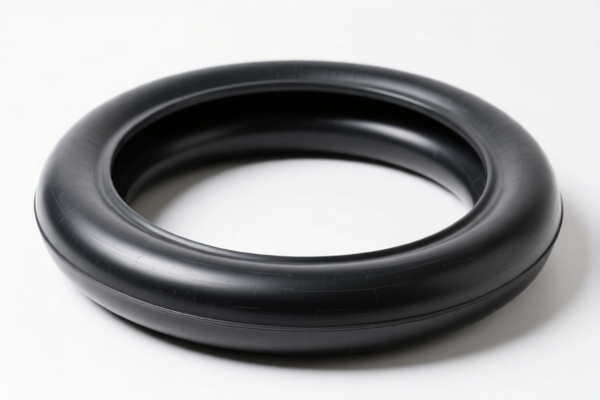
AI Analysis
💉 Rubber Enema Bulb (Medical Rubber Catheters & Sondes)
🌐 HS Code Reference & Clearance Guide | 2026 Latest Tariff Analysis | Professional Clearance Strategy
📌 I. Product Definition & Classification: What exactly is a "Rubber Enema Bulb"?
A Rubber Enema Bulb is a manual medical device used for administering enemas or cleansing the rectum and colon. In international trade and customs classification, it falls under the broader category of Syringes, Needles, Catheters, Cannulae, and the Like.
Specifically, because it is made of rubber and functions as a sonde/catheter-like instrument (used for introducing or removing fluids from the body), it is classified under HS Code 9018.39.00.20.
⚠️ Key Distinction:
- If the item is a Rubber Catheter/Bulb → It falls under 9018.39.00.20 (Rubber catheters).
- If the item is a Plastic/Metal/Other Material catheter or sonde → It falls under 9018.39.00.40 (Other bougies, catheters, drains, and sondes).
📦 II. HS Code Classification Details (2026 Latest Tariff Authority)
| HS Code | Product Description | Applicable Scenario | Material Type |
|---|---|---|---|
9018.39.00.20 |
Rubber catheters | Rubber enema bulbs, rubber urinary catheters, rubber probes | ✅ Rubber |
9018.39.00.40 |
Other bougies, catheters, drains, and sondes | Plastic enema bulbs, metal probes, silicone catheters (if not specified as rubber) | ❌ Non-Rubber (Plastic, Silicone, Metal, etc.) |
🔍 Important Note:
- The Material Composition is the primary determinant for this classification.
- "Rubber" includes natural rubber and synthetic rubber materials used in the manufacturing of the bulb/catheter body.
- If the product is made of silicone, it is often classified under "Other" (9018.39.00.40) unless specific national tariff schedules define silicone as rubber. For general US customs purposes, rubber is explicitly separated from other materials.
💰 III. 2026 Latest Tariff Rate Details
✅ Applicable Country: United States (US)
✅ Origin: China (CN)
✅ Effective Date: Current rates as per 2026 tariff data provided in<DATA>
🎯 1. 9018.39.00.20 —— Rubber Catheters (Includes Rubber Enema Bulbs)
| Item | Content |
|---|---|
| Base Tariff Rate | 0.0% |
| Additional Tariff (Section 301/IEEPA) | 0.0% |
| Total Tax Rate | 0.0% |
| Tax Detail | Basic Tariff: 0.0%, Additional Tariff: 0.0% |
📌 Explanation:
- Medical instruments, including rubber catheters and enema bulbs, are currently classified under a 0% tariff line item for this specific subheading.
- No additional Section 301 or IEEPA tariffs apply to this specific HS code (9018.39.00.20) based on the provided<DATA>.
- This makes 9018.39.00.20 a highly cost-effective classification for rubber medical devices.
🎯 2. 9018.39.00.40 —— Other Bougies, Catheters, Drains, and Sondes
| Item | Content |
|---|---|
| Base Tariff Rate | 0.0% |
| Additional Tariff (Section 301/IEEPA) | 0.0% |
| Total Tax Rate | 0.0% |
| Tax Detail | Basic Tariff: 0.0%, Additional Tariff: 0.0% |
📌 Explanation:
- Even if the product is made of plastic or other materials (falling under "Other"), the tax rate remains 0.0% for this specific subheading.
- However, misclassifying a rubber product as "Other" can lead to compliance issues, even if the tax rate is the same.
🛠️ IV. Clearance Practical Advice (Real-World Pitfall Avoidance)
✅ 1. Preparation Checklist (All Documents Required)
| Document | Must Provide | Explanation |
|---|---|---|
| ✅ Product Specification Sheet | ✔️ | Clearly state material (e.g., "Natural Rubber"), size, and usage (Enema Bulb). |
| ✅ Material Declaration | ✔️ | Explicitly confirm the primary material is Rubber. If silicone, specify "Silicone Rubber" or "Plastic". |
| ✅ Product Photos | ✔️ | Show the bulb, nozzle, and any markings (e.g., volume, material symbol). |
| ✅ Commercial Invoice | ✔️ | Use precise description: "Rubber Enema Bulb, for Medical Use". Avoid vague terms like "Health Product". |
| ✅ Bill of Lading/Air Waybill | ✔️ | Ensure cargo description matches the invoice. |
| ✅ Certificate of Origin (CO) | ✔️ | To prove origin for tariff determination (though 0% here, it's standard for medical goods). |
✅ 2. Declaration Tips (Key Rules)
🔥 "Material Matters, Name Must Be Precise!"
| Scenario | Correct Declaration | Incorrect Action |
|---|---|---|
| Rubber Enema Bulb | 9018.39.00.20 - "Rubber Catheter / Enema Bulb" |
Misclassifying as "Plastic" → 9018.39.00.40 |
| Plastic Enema Bulb | 9018.39.00.40 - "Other Catheter / Enema Bulb" |
Calling it "Rubber" → Compliance Risk |
| Sterile vs. Non-Sterile | Both fall under the same HS Code, but sterile may require additional FDA registration if marketed as such. | Ignoring sterilization status if required for medical use. |
| Parts & Accessories | If sending only rubber tips, still 9018.39.00.20 if rubber. |
Misclassifying parts as general "Medical Supplies". |
✅ 3. Special Handling Notes
| Situation | Handling Advice |
|---|---|
| Silicone Enema Bulbs | Classify under 9018.39.00.40 (Other) unless your country's schedule defines silicone as rubber. Always specify "Silicone" on the invoice. |
| Sterile Medical Devices | If the enema bulb is sterile and intended for medical use in the US, ensure it complies with FDA regulations (510(k) exemption or clearance may be needed depending on classification). |
| Private Label/OEM | Provide a letter of authorization if using a branded name. |
| Bulk vs. Retail | Declaration should reflect the unit type (e.g., "100 pcs" or "1000 units"). |
🌍 V. Global Market Clearance Comparison (2026 Latest)
| Country/Region | Recommended HS Code | Tariff Rate | Certification Requirements | Notes |
|---|---|---|---|---|
| 🇺🇸 USA | 9018.39.00.20 (Rubber) |
0.0% | FDA Compliance (if medical device) | Zero tariff, but FDA rules apply. |
| 🇨🇳 China | 9018.39.00.20 |
0.0% | NMPA Registration (if medical) | Low duty, strict medical device regulation. |
| 🇪🇺 EU | 9018.39.00 (Varies by member) |
0% - 2.5% | CE Marking, MDR Compliance | EU often classifies under 9018 broadly; check local nomenclature. |
| 🇬🇧 UK | 9018.39.00 |
0% | UKCA Marking | Post-Brexit, similar to EU but with UKCA. |
| 🇦🇺 Australia | 9018.39.00 |
0% | TGA Registration | Zero tariff for medical devices. |
📌 Conclusion:
- USA, China, EU, and Australia all offer 0% or very low tariffs for rubber catheters/enema bulbs.
- The main barrier is regulatory compliance (FDA, CE, NMPA), not tariffs.
- Accurate material declaration is critical to avoid audits, even if the tax rate is the same for both subheadings.
📌 VI. Common Mistakes & Pitfall Guide (Lessons Learned)
❌ Mistake 1: Calling a Silicone enema bulb "Rubber"
👉 Consequence: Customs may classify under 9018.39.00.40 (Other), leading to potential discrepancies in trade statistics or future audits.
👉 Fix: Always specify "Silicone" on the invoice and packing list.
❌ Mistake 2: Using vague description like "Medical Rubber Item"
👉 Consequence: Customs may delay clearance for classification review.
👉 Fix: Use specific HS Code description: "Rubber Enema Bulb".
❌ Mistake 3: Assuming all "Catheters" are the same
👉 Consequence: Misclassification between Rubber (...20) and Other (...40).
👉 Fix: Verify material. Rubber → ...20. Plastic/Metal/Silicone → ...40.
✅ Correct Declaration Example:
"Rubber Enema Bulb, Medical Device, Non-Sterile, Natural Rubber Material, Model: EB-100, Quantity: 500 Pcs"
🎯 VII. Conclusion: Precise Classification, Smooth Clearance!
🎯 Remember the Rule:
🔹 "Rubber goes to .20, Other goes to .40."
🔹 "Both are 0% Tax, but Accuracy Matters."
🔹 "FDA/CE is the real hurdle, not Tariffs."
📌 Pro Tip:
If you are importing into the USA, ensure your supplier has FDA Establishment Registration if the enema bulb is classified as a medical device. Even with 0% tariffs, regulatory non-compliance can lead to seizure or refusal of entry.
📣 Immediate Action:
📞 Contact your customs broker with product samples and material specs.
🚀 Apply for FDA clearance if required.
✨ Your zero-tariff advantage starts with accurate documentation!
✨ Professional Clearance Starts with Precise Classification!
💼 Every detail counts in medical device trade!
Customer Reviews
About HS Code Classification
The Harmonized System (HS) is an internationally standardized nomenclature developed by the World Customs Organization (WCO) to classify traded products. Over 200 countries use the HS system as the basis for customs tariffs, trade statistics, and import/export regulations.
Each HS code follows a hierarchical structure:
- Chapter (2 digits) — Broad category of goods (e.g., Chapter 84: Machinery and Mechanical Appliances)
- Heading (4 digits) — More specific grouping within the chapter
- Subheading (6 digits) — Internationally standardized breakdown, used by all WCO member countries
- National subdivisions (8-10 digits) — Country-specific extensions for further classification, such as US HTSUS 10-digit codes
Correct HS code classification is essential for smooth customs clearance, accurate duty payment, and compliance with trade regulations. Misclassification can lead to customs delays, overpayment of duties, or penalties.
When importing from CN to US, the applicable tariff rates may include:
- Most-Favored-Nation (MFN) rate — The standard duty rate applied to WTO members
- General rate — Applied to countries without trade agreements
- Trade remedy duties — Additional tariffs such as Section 301 (anti-dumping), Section 232 (national security), or countervailing duties
The information provided on this page is for reference purposes only. For official classification, please consult with your local customs authority or a licensed customs broker.