Rubber Filler Compound
CN → US| HS Code | Tariff Rate | Origin | Destination | Doc |
|---|---|---|---|---|
| 4005100000 | 35.0% | CN | US | Official Doc |
| 4005200000 | 35.0% | CN | US | Official Doc |
Product Images
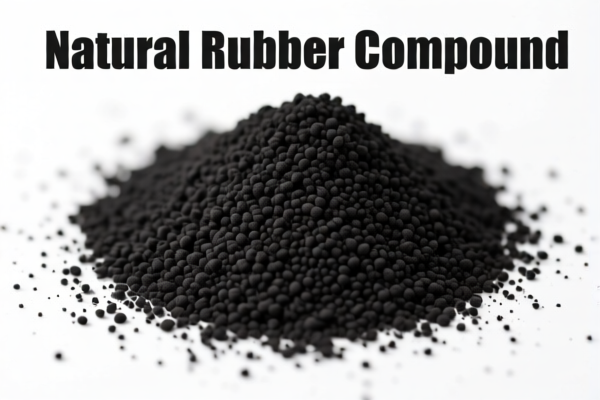
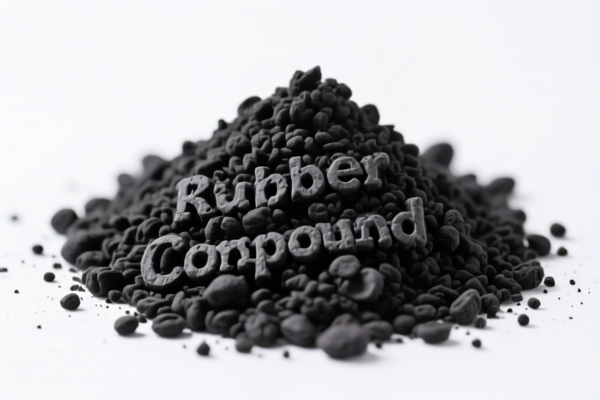
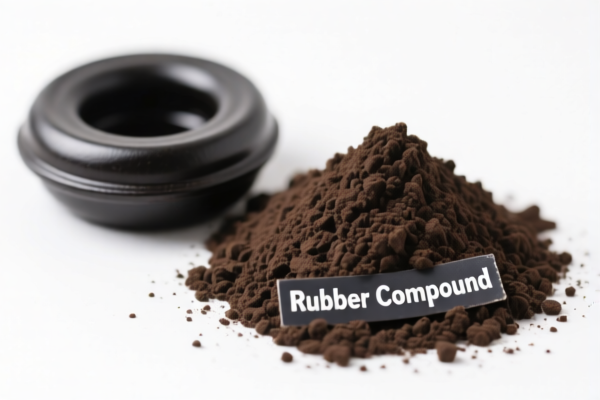

AI Analysis
🧪 Rubber Filler Compound (Unvulcanized, Primary Forms)
🌐 HS Code Reference & Customs Clearance Guide | 2026 Latest Tariff Analysis | Professional Compliance Strategy
📌 I. Product Definition & Classification: What is "Rubber Filler Compound"?
Rubber Filler Compound (specifically unvulcanized rubber in primary forms) refers to rubber that has been mixed with additives (fillers, plasticizers, activators) but has not yet been cured/vulcanized. It is typically supplied in primary forms such as blocks, logs, or in plates, sheets, or strips.
In international trade, this product is strictly categorized based on the type of filler used, which significantly impacts its classification and tariff liability. The two primary classifications are:
Carbon Black or Silica Compounded Rubber:
Rubber mixed with carbon black (for reinforcement and color) or silica. This is the most common industrial grade for tires and heavy-duty applications.
Solutions and Dispersions (Other than Subheading 4005.10):
Rubber dissolved in solvents (solutions) or dispersed in water/media (dispersions), such as latex or adhesives, which do not fall under the solid plate/sheet category.
⚠️ Key Distinction:
- If the rubber is in solid primary forms (plates, sheets, strips) and compounded with carbon black or silica →归入 4005.10.00.00
- If the product is a solution or dispersion (liquid/paste form) or does not use carbon black/silica as the primary compound → 归入 4005.20.00.00
📦 II. HS Code Classification Details (2026 Latest Tariff Authority Comparison)
| HS Code | Product Description | Applicable Scenario | Key Characteristic |
|---|---|---|---|
4005.10.00.00 |
Compounded rubber, unvulcanized, in primary forms or plates/sheets/strip: Compounded with carbon black or silica | Tread stocks, tire compounds, industrial sheets | ✅ Solid Form + Carbon Black/Silica |
4005.20.00.00 |
Compounded rubber, unvulcanized, in primary forms or plates/sheets/strip: Solutions; dispersions other than those of subheading 4005.10 | Rubber adhesives, liquid latex, solvent-based rubber mixtures | ✅ Liquid/Dispersion Form OR Non-Carbon Black/Silica |
🔍 Critical Reminder:
- "Unvulcanized" is crucial. If the rubber has been vulcanized (cured), it falls under different chapters (e.g., Chapter 40, heading 4016).
- Form Matters: If it is a solid block/sheet/strip, check the additive. If it is a liquid/solution/dispersion, it goes to4005.20.
- Do Not Split: Do not separate the "rubber base" from the "filler" for declaration purposes; declare as the compounded product.
💰 III. 2026 Latest Tariff Rate Breakdown (Detailed Tax Terms)
✅ Applicable Country: United States (US)
✅ Country of Origin: China (CN)
✅ Effective Date: Current Trade Policies (Section 301 & IEEPA)
🎯 1. 4005.10.00.00 – Compounded Rubber (Carbon Black/Silica, Solid Forms)
| Item | Detail |
|---|---|
| Base Duty Rate | 0.0% (ad valorem) |
| Section 301 Add-on | +25.0% (USITC Footnote 9903.88.01 / Chapter 40 Specific) |
| IEEPA Add-on | +0.0% (Note: Specific IEEPA rates for Chapter 40 may vary; data indicates 25% total) |
| Total Tax Rate | 25.0% |
| Tax Calculation | CIF Value × 25% |
| De Minimis Eligibility | ❌ Not Eligible (Section 301 goods are generally excluded from de minimis) |
| Legal Basis Path | USITC:4005.10.00.00 → SECTION301:Chapter40 → FOOTNOTE:9903.88.01 |
📌 Explanation:
- Although the base duty is 0%, the Section 301 additional duty of 25% applies strictly to unvulcanized rubber compounds from China.
- This applies specifically to rubber compounded with carbon black or silica, which is the standard for most industrial rubber products.
🎯 2. 4005.20.00.00 – Solutions/Dispersions (Unvulcanized)
| Item | Detail |
|---|---|
| Base Duty Rate | 0.0% (ad valorem) |
| Section 301 Add-on | +25.0% (USITC Footnote 9903.88.01 / Chapter 40 Specific) |
| IEEPA Add-on | +0.0% (Consistent with Chapter 40 policy) |
| Total Tax Rate | 25.0% |
| Tax Calculation | CIF Value × 25% |
| De Minimis Eligibility | ❌ Not Eligible |
| Legal Basis Path | USITC:4005.20.00.00 → SECTION301:Chapter40 → FOOTNOTE:9903.88.01 |
📌 Note:
- Same tax rate as4005.10.
- Applies to liquid or dispersed rubber forms (e.g., rubber cement, latex dispersions).
- Even if not solid, if it is "compounded rubber" from China, the 25% surcharge applies.
🛠️ IV. Customs Clearance Practical Advice (Real-World Pitfall Avoidance)
✅ 1. Required Documentation Checklist (Non-Negotiable)
| Document | Must Provide | Description |
|---|---|---|
| ✅ Certificate of Non-Vulcanization | ✔️ | Critical! Must explicitly state the rubber is UNVULCANIZED / Raw / Unprocessed. If vulcanized, HS Code changes. |
| ✅ Product Specification Sheet | ✔️ | Must list: Base rubber type (SBR, NR, BR), Filler type (Carbon Black? Silica? Other?), Form (Sheet? Strip? Liquid?). |
| ✅ Chemical Composition Report | ✔️ | To prove if it contains Carbon Black or Silica (for 4005.10) or is a solution/dispersion (for 4005.20). |
| ✅ Commercial Invoice | ✔️ | Must clearly describe the product as "Unvulcanized Rubber Compound" and specify the form. |
| ✅ Material Safety Data Sheet (MSDS) | ✔️ | Required for chemical handling and customs hazard assessment. |
| ✅ Packing List | ✔️ | Detail net/gross weight and packaging type (drums for liquids, pallets for sheets). |
✅ 2. Declaration Strategy (Key Mantra)
🔥 “State Form Clearly, Declare Filler Precisely, Unvulcanized is Key!”
| Scenario | Correct Declaration | Incorrect Practice |
|---|---|---|
| Solid Sheets/Strips with Carbon Black | HS 4005.10.00.00, Description: "Unvulcanized SBR Rubber Compounded with Carbon Black, Sheets" |
Misdeclare as "Natural Rubber" or "Vulcanized Rubber" |
| Liquid Rubber Adhesive/Dispersion | HS 4005.20.00.00, Description: "Unvulcanized Rubber Dispersion, Solvent-Based" |
Misdeclare as "Adhesive" (Glue) → Wrong Chapter |
| Mixed Forms in One Shipment | Separate Declaration Lines | Combining sheets and liquids on one line → Audit Risk |
| Vulcanized Rubber Parts | HS Chapter 4016 (e.g., 4016.93) | Using 4005 codes → Severe Penalty |
✅ 3. Special Circumstances Handling
| Situation | Handling Advice |
|---|---|
| Is it Carbon Black or Silica? | If yes → 4005.10. If it uses other fillers (e.g., clay, clay-based) AND is solid, it may still fall under 4005.10 depending on specific legal notes, but generally 4005.10 is broad for "compounded with carbon black or silica". Check MSDS. |
| Liquid vs. Solid | If it flows/pours → 4005.20. If it holds shape/can be cut → 4005.10 (if solid form). |
| Sample Shipments | No De Minimis! Even small samples (e.g., <$800) are subject to the 25% duty and require full customs entry documentation because Section 301 goods are excluded from 1349.04(d)(2). |
| Re-export / Foreign Trade Zone | If using FTZ or Bonded Warehouses, duties can be deferred, but the classification remains the same. |
🌍 V. Global Market Customs Comparison (2026 Latest)
| Country/Region | Recommended HS Code | Tariff (China Origin) | Certification | Notes |
|---|---|---|---|---|
| 🇺🇸 USA | 4005.10.00.00 / 4005.20.00.00 |
25.0% (Section 301) | MSDS, FDA (if food contact) | High tariff, no de minimis. |
| 🇨🇳 China | 4005.10.00.00 / 4005.20.00.00 |
0% - 5% (Check specific MFN) | N/A | Low entry barrier. |
| 🇪🇺 EU | 4005.10.00 / 4005.20.00 |
0% (Most MFN rates are 0%) | REACH Registration | REACH Compliance is Critical for chemical substances. |
| 🇬🇧 UK | 4005.10.00 / 4005.20.00 |
0% | UK REACH | Post-Brexit UK REACH applies. |
| 🇲🇽 Mexico | 4005.10.00 / 4005.20.00 |
0% (USMCA eligible) | NOM Standards | Preferential duty if USMCA rules met. |
📌 Conclusion:
- The US 25% tariff is a major cost factor.
- EU/UK focus heavily on chemical safety (REACH), not just duty.
- Ensure your MSDS is up-to-date and compliant with destination country chemical regulations.
📌 VI. Common Mistakes & Pitfall Guide (Lessons Learned)
❌ Mistake 1: Declaring "Unvulcanized" but providing no proof.
👉 Consequence: Customs may reclassify as "Vulcanized" (higher duty) or demand expensive lab testing.
Solution: Always attach a Certificate of Non-Vulcanization or lab test report.
❌ Mistake 2: Confusing "Rubber Compound" with "Adhesive".
👉 Consequence: Misclassification leads to duty evasion alerts.
Solution: If it’s a solution/dispersion, declare as 4005.20. If it’s a solid sheet, declare as 4005.10.
❌ Mistake 3: Assuming De Minimis ($800) applies to small samples.
👉 Consequence: Packages seized or delayed for full entry filing.
Solution: Never rely on de minimis for Section 301 goods from China. Prepare full entry documents regardless of value.
✅ Correct Declaration Example:
"UNVULCANIZED SOLUBS RUBBER COMPOUNDED WITH CARBON BLACK, IN SHEET FORM, HS 4005.10.00.00, SECTION 301 APPLICABLE, REACH REGISTERED (For EU)"
🎯 VII. Conclusion: Precision in Chemical Classification Saves Money!
🎯 Remember the Mantra:
🔹 "Unvulcanized is King, Form Defines the Code, 25% Tax Hits China Goods Hard!"
🔹 "Solid + Carbon Black = 4005.10. Liquid/Dispersion = 4005.20. Both Pay 25% in the US!"
📌 Pro Tip:
If your product contains high percentages of carbon black, ensure the MSDS correctly identifies it, as this triggers the specific 4005.10 classification. For dispersions, ensure the solvent content is declared accurately, as this may impact hazardous material shipping regulations (DOT/IMO).
📣 Immediate Action:
📞 Consult with a customs broker specializing in chemicals/rubber.
📄 Request REACH/MSDS compliance for EU/UK markets.
🚀 Pre-clear classification with US CBP if shipping high-value bulk to avoid delays.
✨ Professional Classification Starts Here!
💼 Your Profit Margin Depends on Accurate HS Codes!
Customer Reviews
About HS Code Classification
The Harmonized System (HS) is an internationally standardized nomenclature developed by the World Customs Organization (WCO) to classify traded products. Over 200 countries use the HS system as the basis for customs tariffs, trade statistics, and import/export regulations.
Each HS code follows a hierarchical structure:
- Chapter (2 digits) — Broad category of goods (e.g., Chapter 84: Machinery and Mechanical Appliances)
- Heading (4 digits) — More specific grouping within the chapter
- Subheading (6 digits) — Internationally standardized breakdown, used by all WCO member countries
- National subdivisions (8-10 digits) — Country-specific extensions for further classification, such as US HTSUS 10-digit codes
Correct HS code classification is essential for smooth customs clearance, accurate duty payment, and compliance with trade regulations. Misclassification can lead to customs delays, overpayment of duties, or penalties.
When importing from CN to US, the applicable tariff rates may include:
- Most-Favored-Nation (MFN) rate — The standard duty rate applied to WTO members
- General rate — Applied to countries without trade agreements
- Trade remedy duties — Additional tariffs such as Section 301 (anti-dumping), Section 232 (national security), or countervailing duties
The information provided on this page is for reference purposes only. For official classification, please consult with your local customs authority or a licensed customs broker.