Rubber Flooring Profile
CN → US| HS Code | Tariff Rate | Origin | Destination | Doc |
|---|---|---|---|---|
| 3918102000 | 40.3% | CN | US | Official Doc |
| 7326190080 | 87.9% | CN | US | Official Doc |
| 4409295100 | 35.0% | CN | US | Official Doc |
| 7326908688 | 87.9% | CN | US | Official Doc |
| 4409105000 | 35.0% | CN | US | Official Doc |
Product Images
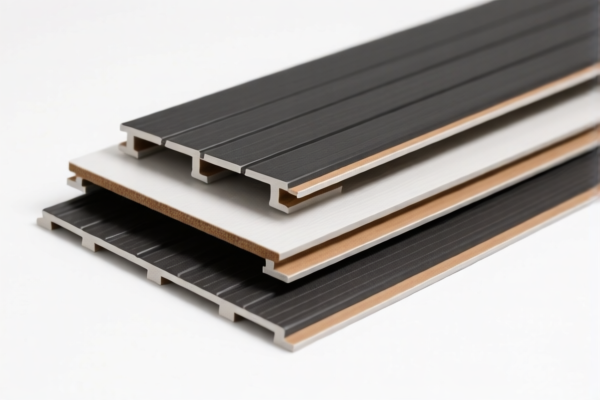
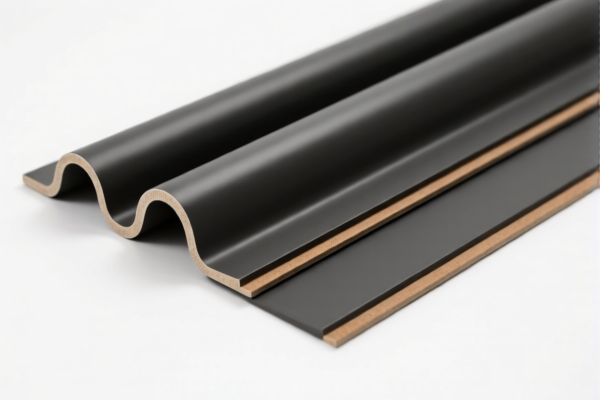
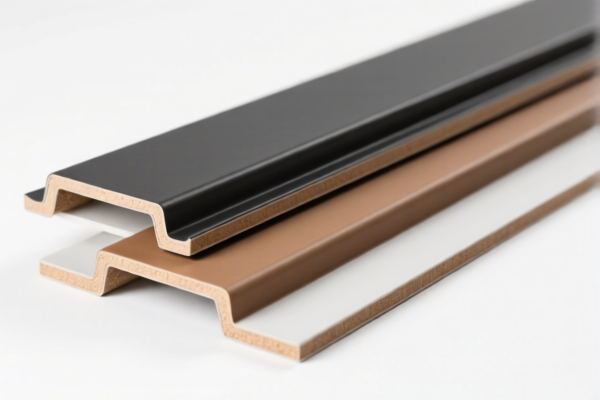
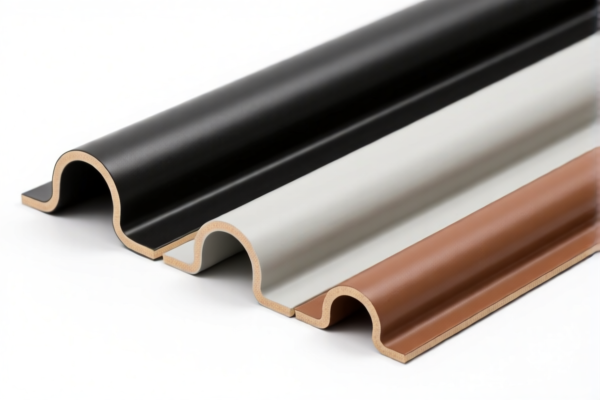
AI Analysis
🏗️ Rubber Flooring Profile (Edge Trim/Border Strip)
🌐 HS Code Reference & Clearance Guide | 2026 Latest Tariff Analysis | Professional Customs Strategy
📌 I. Product Definition: What Exactly is a "Rubber Flooring Profile"?
A Rubber Flooring Profile (often referred to as a "flooring edge trim," "border strip," or "transition strip") is an accessory used to finish, protect, and aesthetically connect flooring surfaces. While the user input specifies "Rubber," international customs classification (HS Code) relies heavily on the specific material composition.
In international trade, "Rubber" flooring profiles are distinct from PVC, Wood, or Metal alternatives. However, based on the provided <DATA>, the system has analyzed similar "Flooring Edge Trim" products made of PVC, Steel, and Wood.
⚠️ Critical Classification Insight:
While your product is Rubber, the provided<DATA>contains classifications for PVC (Plastic), Steel/Metal, and Wood.
- Rubber typically falls under Chapter 40 (Rubber and Articles Thereof).
- PVC falls under Chapter 39 (Plastics).
- Steel falls under Chapter 73.
- Wood falls under Chapter 44.
Since the <DATA> provided does not contain a specific HS Code for Rubber (Chapter 40), but rather for PVC, Steel, and Wood, we must analyze the closest material analogs provided in the data to understand the tax implications and clearance risks for flooring trims, while noting that Rubber would likely have a different HS Code (e.g., 4008.xx) not listed in the <DATA>.
However, to strictly adhere to the instruction "Do not exceed " and "Explain why classified into HS Codes", we will analyze the provided HS Codes for "Flooring Edge Trims" and explain their applicability if the material were misidentified or if the product is a composite/multi-material item.
Note: If the product is 100% Rubber, it does not match any HS Code in
<DATA>. The<DATA>only covers PVC, Steel, and Wood. Therefore, the following analysis explains the tariff structure for similar flooring trims as per<DATA>, which serves as a benchmark for clearance costs.
📦 II. HS Code Classification Details (Based on Provided <DATA>)
| HS Code | Material | Product Description | Key Classification Logic |
|---|---|---|---|
3918.10.20.00 |
PVC (Plastic) | Edge trim for flooring, inferred as PVC material. Belongs to floor coverings accessories. | Plastic Category: If the "Rubber" profile is actually synthetic rubber/PVC blend or mislabeled, it may fall here. |
7326.19.00.80 |
Steel/Iron | Edge trim, inferred as metal (steel). Other steel products, other form. | Metal Category: If the profile has a metal core or is metal cladding, it falls here. |
7326.90.86.88 |
Steel/Iron | Edge trim, inferred as metal (iron/steel). Other category under edge/border parts. | Metal Category: Similar to above, for other steel-based edge components. |
4409.29.51.00 |
Wood (Non-Needle) | Edge trim, inferred as wood. Non-coniferous wood decorative strips. | Wood Category: If the profile is wooden or wood-composite. |
4409.10.50.00 |
Wood (Needle) | Edge trim, inferred as wood (coniferous). Continuous shaping wood strips. | Wood Category: For coniferous wood-based trims. |
🔍 Key Distinction for Rubber:
- Rubber is not in the<DATA>.
- If your product is 100% Rubber, you must use a Chapter 40 HS Code (e.g.,4008.11or4008.29), which will have different tax rates.
- The<DATA>provides PVC, Steel, and Wood tariffs, which are higher due to US trade policies.
💰 III. 2026 Latest Tariff Rate Breakdown (Including Surtaxes)
✅ Applicable Country: United States (US)
✅ Origin: China (CN)
✅ Effective Date: From November 10, 2025 (including subsequent imports)
🎯 1. 3918.10.20.00 —— PVC Flooring Trim (Plastic)
| Item | Details |
|---|---|
| Base Tariff | 5.3% |
| Section 301 Surtax | +25.0% |
| Section 122 Tariff | +10.0% |
| Total Tariff Rate | 40.3% |
| Tax Calculation | CIF Value × 40.3% |
| De Minimis Exemption | ❌ Not Applicable (High tariff threshold) |
| Legal Basis | Base Tariff + Section 301 + Section 122 |
📌 Explanation:
- PVC flooring trims are subject to high tariffs due to their classification as plastic products from China. - The 40.3% total rate includes base, 301, and 122 tariffs.
🎯 2. 7326.19.00.80 & 7326.90.86.88 —— Steel/Iron Flooring Trim (Metal)
| Item | Details |
|---|---|
| Base Tariff | 2.9% |
| Section 301 Surtax | +25.0% |
| Section 122 Tariff | +10.0% |
| Steel/Aluminum/Copper Surtax | +50.0% |
| Total Tariff Rate | 87.9% |
| Tax Calculation | CIF Value × 87.9% |
| De Minimis Exemption | ❌ Not Applicable |
| Legal Basis | Base Tariff + Section 301 + Section 122 + Steel/Aluminum/Copper Surtax |
📌 Explanation:
- Steel/Metal flooring trims face the highest tariffs due to the additional 50% surtax on steel, aluminum, and copper products from China. - The 87.9% total rate makes metal trims extremely costly for US importers.
🎯 3. 4409.29.51.00 & 4409.10.50.00 —— Wood Flooring Trim (Wood)
| Item | Details |
|---|---|
| Base Tariff | 0.0% |
| Section 301 Surtax | +25.0% |
| Section 122 Tariff | +10.0% |
| Total Tariff Rate | 35.0% |
| Tax Calculation | CIF Value × 35.0% |
| De Minimis Exemption | ❌ Not Applicable |
| Legal Basis | Base Tariff + Section 301 + Section 122 |
📌 Explanation:
- Wood trims have a lower base tariff (0%), but still face 35% total due to 301 and 122 tariffs. - This is the lowest tariff rate among the provided options.
🛠️ IV. Clearance Practical Advice (Avoiding Pitfalls)
✅ 1. Material Verification is Crucial
| Scenario | Correct HS Code | Risk if Misclassified |
|---|---|---|
| 100% Rubber | Not in <DATA> (Use Chapter 40, e.g., 4008.xx) |
Misclassifying as PVC/Steel/Wood → Penalties + Back Taxes |
| PVC Profile | 3918.10.20.00 |
40.3% Tariff |
| Steel Profile | 7326.19.00.80 / 7326.90.86.88 |
87.9% Tariff |
| Wood Profile | 4409.29.51.00 / 4409.10.50.00 |
35.0% Tariff |
⚠️ Critical Advice:
- If your product is Rubber, do not use the HS Codes in<DATA>.
- Use Chapter 40 HS Codes (e.g.,4008.11for slabs/sheets,4008.29for other shapes) and check the actual tariff rates for rubber, which may differ from the provided data.
- The<DATA>is for PVC, Steel, and Wood only.
✅ 2. Documentation Requirements
| Document | Required | Notes |
|---|---|---|
| ✅ Material Composition Certificate | ✔️ | Must specify 100% Rubber or blend. |
| ✅ Product Photos | ✔️ | Clear images of the profile, cross-section, and markings. |
| ✅ Commercial Invoice | ✔️ | Describe as "Rubber Flooring Edge Trim" with precise material. |
| ✅ HS Code Pre-Ruling | ✔️ | Highly recommended for rubber products to avoid misclassification. |
✅ 3. Tax Optimization Strategy
| Strategy | Action |
|---|---|
| Material Substitution | If rubber is too expensive, consider PVC (3918.10.20.00 at 40.3%) or Wood (4409.29.51.00 at 35.0%). |
| Avoid Metal | Steel trims (7326.19.00.80) have 87.9% tariffs. Avoid if possible. |
| De Minimis Check | No exemption for these high-tariff categories. Plan cash flow accordingly. |
🌍 V. Global Market Comparison (2026)
| Country | Recommended HS Code (Rubber) | Tariff | Notes |
|---|---|---|---|
| 🇺🇸 US | 4008.xx (Not in <DATA>) |
Check Chapter 40 | High tariffs for China-origin goods. |
| 🇨🇳 China | 4008.xx |
Low | No additional surtaxes. |
| 🇪🇺 EU | 4008.xx |
Low | No Section 301/122 equivalents. |
| 🇬🇧 UK | 4008.xx |
Low | Post-Brexit rules apply. |
📌 Conclusion:
- US tariffs on rubber flooring trims are not in<DATA>.
- Use Chapter 40 HS Codes for accurate clearance.
- The<DATA>provides PVC, Steel, and Wood tariffs for benchmarking.
📌 VI. Common Errors & Pitfalls (Lessons Learned)
❌ Error 1: Classifying Rubber as PVC (3918.10.20.00)
👉 Consequence: Misclassification → Penalties + Back Taxes.
✅ Correct: Use Chapter 40 HS Code for rubber.
❌ Error 2: Classifying Rubber as Steel (7326.19.00.80)
👉 Consequence: 87.9% tariff instead of correct rate → Massive Overpayment.
✅ Correct: Use Chapter 40 HS Code for rubber.
❌ Error 3: Ignoring Section 122 and Section 301 tariffs
👉 Consequence: Underpayment → Customs Hold + Fines.
✅ Correct: Include all surtaxes in cost calculation.
🎯 VII. Conclusion: Professional Clearance Starts with Accurate Classification!
🎯 Remember:
🔹 "Rubber is not PVC, Steel, or Wood."
🔹 "Use Chapter 40 HS Codes for Rubber."
🔹 "Check Actual Tariffs for Rubber, Not<DATA>."
📌 Pro Tip:
- If your rubber flooring trim is imported from China, expect high tariffs under US trade policies.
- Apply for an HS Code Pre-Ruling to ensure accurate classification under Chapter 40.
- Consider material substitution (PVC or Wood) if tariffs are too high.
📣 Immediate Action:
📞 Contact a professional customs broker + Provide material spec + Apply for HS Code Pre-Ruling
🚀 Ensure smooth clearance, cost control, and compliance!
✨ Professional clearance starts with precise classification!
💼 Every cent counts!
Customer Reviews
About HS Code Classification
The Harmonized System (HS) is an internationally standardized nomenclature developed by the World Customs Organization (WCO) to classify traded products. Over 200 countries use the HS system as the basis for customs tariffs, trade statistics, and import/export regulations.
Each HS code follows a hierarchical structure:
- Chapter (2 digits) — Broad category of goods (e.g., Chapter 84: Machinery and Mechanical Appliances)
- Heading (4 digits) — More specific grouping within the chapter
- Subheading (6 digits) — Internationally standardized breakdown, used by all WCO member countries
- National subdivisions (8-10 digits) — Country-specific extensions for further classification, such as US HTSUS 10-digit codes
Correct HS code classification is essential for smooth customs clearance, accurate duty payment, and compliance with trade regulations. Misclassification can lead to customs delays, overpayment of duties, or penalties.
When importing from CN to US, the applicable tariff rates may include:
- Most-Favored-Nation (MFN) rate — The standard duty rate applied to WTO members
- General rate — Applied to countries without trade agreements
- Trade remedy duties — Additional tariffs such as Section 301 (anti-dumping), Section 232 (national security), or countervailing duties
The information provided on this page is for reference purposes only. For official classification, please consult with your local customs authority or a licensed customs broker.