Rubber Full Body Protective Suit
CN → US| HS Code | Tariff Rate | Origin | Destination | Doc |
|---|---|---|---|---|
| 4015900010 | 39.0% | CN | US | Official Doc |
| 4015900050 | 39.0% | CN | US | Official Doc |
| 6210207000 | 13.3% | CN | US | Official Doc |
| 6210203000 | 13.8% | CN | US | Official Doc |
Product Images

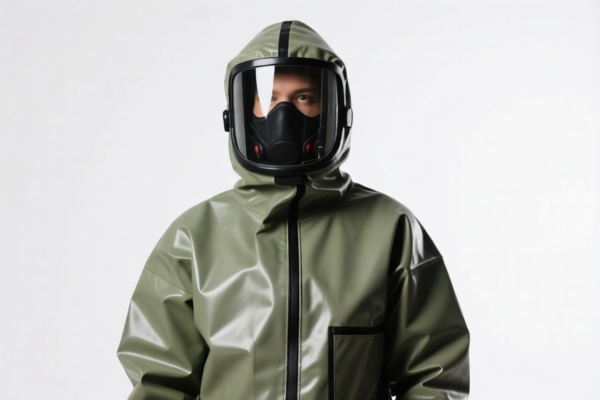

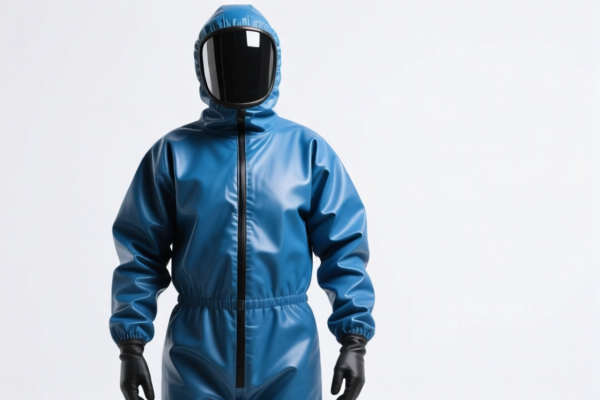
AI Analysis
🛡️ Rubber Full Body Protective Suits: The Ultimate Guide to HS Classification & Duty Optimization (2026)
🌐 HS Code Reference & Customs Clearance Guide | 2026 Latest Tariff Analysis | Professional-Level Compliance Strategy
📌 I. Product Definition & Classification: Do You Really Understand "Rubber Protective Suits"?
A Rubber Full Body Protective Suit is a critical personal protective equipment (PPE) item designed to shield the wearer from hazardous chemicals, biological agents, or extreme environments. In international trade, its classification is not monolithic; it depends heavily on the manufacturing method and material composition.
Trade distinguishes between two main categories:
- Chapter 40 Goods (Raw Rubber Articles): Suits made directly from vulcanized rubber, behaving more like "articles of rubber" than traditional textiles.
- Chapter 62 Goods (Textiles/Apparel): Suits made from textile substrates (like fabric) that are impregnated, coated, covered, or laminated with rubber.
⚠️ Critical Distinction Point:
- If the suit is primarily defined as a vulcanized rubber article with textile reinforcement merely as an accessory → It falls under Chapter 40.
- If the suit is primarily a garment where the rubber is a surface treatment (coating/lamination) on a textile base → It falls under Chapter 62.
📦 II. HS Code Classification Details (2026 Latest Tariff Authority Match)
Based on the provided data, here are the precise HS codes, summaries, and tax structures for Rubber Protective Suits:
| HS Code | Product Description & Summary | Material/Structure Characteristic | Total Tax Rate |
|---|---|---|---|
4015.90.00.10 |
Rubber protective suit; material is rubber; purpose is protection; similar nature to aprons. | Pure/Primary Vulcanized Rubber Article | 39.0% |
4015.90.00.50 |
Rubber protective suit; belongs to clothing/accessories of vulcanized rubber; fits other subheading characteristics. | Other Vulcanized Rubber Clothing/Accessories | 39.0% |
6210.20.70.00 |
Rubber protective suit; outer surface impregnated, coated, covered, or laminated with rubber; form is a garment. | Textile Base + Rubber Surface Treatment | 13.3% |
6210.20.30.00 |
Rubber protective suit; form is a garment; material fits artificial fiber/rubber coated characteristics. | Artificial Fiber Textile + Rubber Coating | 13.8% |
🔍 Key Insight:
- Chapter 40 (4015...) suits carry a significantly higher tariff burden (39%) due to the nature of rubber articles. - Chapter 62 (6210...) suits enjoy substantially lower tariffs (13.3% - 13.8%) because they are classified as textiles with rubber treatment. - Strategic Implication: If your suit is made of a fabric base with a rubber coating, ensuring it is classified under 6210 can save you over 25% in duties compared to 4015.
💰 III. 2026 Latest Tariff Rate Detailed Breakdown (Including Additional Taxes)
✅ Applicable Country: United States (US)
✅ Origin: China (CN)
✅ Effective Date: Rates apply to imports as per 2026 trade policy.
🎯 1. 4015.90.00.10 & 4015.90.00.50 —— Vulcanized Rubber Protective Suits
| Item | Content |
|---|---|
| Base Tariff | 4.0% |
| Additional Duty (Section 301) | +25.0% |
| 122 Section Duty | +10.0% |
| Total Effective Rate | 39.0% |
| Calculation Basis | CIF Value × 39% |
| De Minimis Exemption? | ❌ No (High risk of seizure/duty evasion flags) |
| Legal Pathway | USITC:4015.90.00.10 → Section 301: Footnote 9903.88.01 → 122 Section: IEEPA |
📌 Explanation:
- These goods are classified as "Articles of apparel and clothing accessories, knitted or crocheted or of nonwoven material, other; other." However, the rubber content triggers specific high-duty treatments. - The 39% total rate is a "perfect storm" of base tariff + Section 301 + 122 Clause tariffs. - Warning: Misclassifying a Chapter 62 suit as Chapter 40 will result in a massive duty overpayment. Misclassifying Chapter 40 as Chapter 62 will result in severe penalties for duty evasion.
🎯 2. 6210.20.70.00 —— Rubber-Coated/Laminated Textile Protective Suits
| Item | Content |
|---|---|
| Base Tariff | 3.3% |
| Additional Duty (Section 301) | 0.0% (Note: Specific exemptions or lower tier applications may apply to certain textile-rubber blends) |
| 122 Section Duty | +10.0% |
| Total Effective Rate | 13.3% |
| Calculation Basis | CIF Value × 13.3% |
| De Minimis Exemption? | ❌ No (Still subject to high-value scrutiny) |
| Legal Pathway | USITC:6210.20.70.00 → Section 301 → 122 Section: IEEPA |
📌 Explanation:
- This classification recognizes the textile nature of the garment. The rubber is a "treatment," not the primary structural material. - The 13.3% rate is significantly more competitive, making this the preferred classification for suits made from coated fabrics.
🎯 3. 6210.20.30.00 —— Artificial Fiber + Rubber Coated Suits
| Item | Content |
|---|---|
| Base Tariff | 3.8% |
| Additional Duty (Section 301) | 0.0% |
| 122 Section Duty | +10.0% |
| Total Effective Rate | 13.8% |
| Calculation Basis | CIF Value × 13.8% |
| De Minimis Exemption? | ❌ No |
| Legal Pathway | USITC:6210.20.30.00 → Section 301 → 122 Section: IEEPA |
📌 Explanation:
- Specifically for suits using artificial fibers (like polyester or nylon) as the base, coated with rubber. - Slightly higher than6210.20.70.00but still far below Chapter 40 rates.
🛠️ IV. Customs Clearance Practical Advice (Real-World Pitfall Guide)
✅ 1. Preparation Checklist (Mandatory Documents)
| Document | Required? | Purpose |
|---|---|---|
| ✅ Product Specification Sheet | ✔️ | Must detail: Base fabric type (e.g., Nylon, Polyester), Rubber layer thickness, Coating method (Lamination vs. Impregnation). |
| ✅ Material Composition Breakdown | ✔️ | Crucial for proving Chapter 62 vs. Chapter 40. Show % of textile vs. rubber by weight. |
| ✅ Product Photos (Including Labels) | ✔️ | Clear view of seams, cuffs, zippers, and brand tags. |
| ✅ Commercial Invoice | ✔️ | Must describe item as "Protective Garment, Rubber-Coated Fabric," NOT just "Rubber Suit." |
| ✅ Packing List | ✔️ | Verify no mixed shipments that confuse classification. |
✅ 2. Classification Strategy (The "Golden Rule")
🔥 Mnemonic:
"Textile Base + Rubber Coat = Ch. 62 (Low Tax); Pure Rubber Article = Ch. 40 (High Tax)."
| Scenario | Correct HS Code | Consequence of Error |
|---|---|---|
| Suit made of woven fabric with rubber coating/lamination | 6210.20.70.00 or 6210.20.30.00 |
Misclassifying as 4015 → Overpay ~25% in duties. |
| Suit made of solid vulcanized rubber (no fabric base) | 4015.90.00.10 |
Misclassifying as 6210 → Customs Penalty for Evasion. |
| Suit with fabric reinforcements but primarily rubber | 4015.90.00.50 |
Depends on "essential character" test. |
✅ 3. Special Cases & Handling
| Case | Handling Advice |
|---|---|
| Multi-Layer Suits | If there is a lining (e.g., cotton) + rubber layer + outer fabric, analyze which layer provides the "essential character." If the rubber coating is the primary protective feature on a textile base, lean towards 6210. |
| OEM/Custom Orders | Provide the buyer's design specs. If the buyer specifies "rubberized fabric," it supports 6210. If they specify "molded rubber suit," it supports 4015. |
| High-Value Chemical Suits | Ensure compliance with safety standards (e.g., OSHA, EPA). While not a customs issue, lack of compliance can lead to seizure unrelated to HS code. |
🌍 V. Global Market Comparison (2026 Outlook)
| Country/Region | Recommended HS Code | Estimated Duty (China Origin) | Key Certification | Note |
|---|---|---|---|---|
| 🇺🇸 USA | 6210.20.70.00 |
13.3% | FCC (if electronic), OSHA (PPE) | Best Rate. Avoid 4015 (39%). |
| 🇺🇸 USA | 4015.90.00.10 |
39.0% | OSHA (PPE) | Avoid if possible. High tax burden. |
| 🇪🇺 EU | 6210.20 |
0-6.5% | CE Mark (PPE Reg. 2016/425) | VAT applies. No Section 301. |
| 🇨🇳 China | 6210.20 |
5-10% | CCC (if applicable) | Standard import duty. |
📌 Conclusion:
- US Market is Price-Sensitive: The difference between 13.3% and 39% is decisive for profitability. - Documentation is King: To secure the 13.3% rate, you MUST prove the product is a "garment" with a rubber coating, not a "rubber article."
📌 VI. Common Mistakes & Pitfall Guide (Blood & Tears Lessons)
❌ Mistake 1: Using generic terms like "Rubber Suit" on the Invoice
👉 Consequence: Customs officer may default to the highest duty rate or request extensive clarification → Delays.
✅ Fix: Use precise description: "Protective Garment, Synthetic Fabric Base, Rubber-Coated, ISO 16603 Certified."
❌ Mistake 2: Assuming all Rubber Suits are HS 4015
👉 Consequence: Overpayment of ~25% duties. If your suit is made of coated fabric, you are likely eligible for the lower 6210 rate.
✅ Fix: Analyze material composition. If >50% of the protective barrier is a textile substrate with rubber treatment, argue for 6210.
❌ Mistake 3: Ignoring the "122 Section" Tax
👉 Consequence: Underestimating landed cost. Even if base duty is low, the 10% 122 Clause tax applies to both chapters.
✅ Fix: Include 10% in all Landed Cost calculations.
🎯 VII. Conclusion: Precision Classification Saves Money
🎯 Remember the Key Takeaway:
🔹 "Chapter 62 = Textile Base + Rubber Coat = ~13% Duty."
🔹 "Chapter 40 = Rubber Article = ~39% Duty."
🔹 "Describe Your Product Precisely to Secure the Lower Rate!"
📌 Pro Tip:
If your suit is made in Vietnam, Thailand, or Malaysia, you may qualify for preferential tariff rates (e.g., under USMCA, ASEAN, or bilateral FTAs), further reducing the effective duty below even the 13.3% US-China rate.
📣 Immediate Action Required:
📞 Contact a Customs Broker to review your Bill of Materials (BOM).
📄 Prepare a Material Composition Report showing the ratio of textile to rubber.
🚀 Classify Under6210.20.70.00if applicable to save thousands in duties.
✨ Customs Compliance: From Ambiguity to Profitability!
💼 Every Percentage Point Saved is Pure Profit!
Customer Reviews
About HS Code Classification
The Harmonized System (HS) is an internationally standardized nomenclature developed by the World Customs Organization (WCO) to classify traded products. Over 200 countries use the HS system as the basis for customs tariffs, trade statistics, and import/export regulations.
Each HS code follows a hierarchical structure:
- Chapter (2 digits) — Broad category of goods (e.g., Chapter 84: Machinery and Mechanical Appliances)
- Heading (4 digits) — More specific grouping within the chapter
- Subheading (6 digits) — Internationally standardized breakdown, used by all WCO member countries
- National subdivisions (8-10 digits) — Country-specific extensions for further classification, such as US HTSUS 10-digit codes
Correct HS code classification is essential for smooth customs clearance, accurate duty payment, and compliance with trade regulations. Misclassification can lead to customs delays, overpayment of duties, or penalties.
When importing from CN to US, the applicable tariff rates may include:
- Most-Favored-Nation (MFN) rate — The standard duty rate applied to WTO members
- General rate — Applied to countries without trade agreements
- Trade remedy duties — Additional tariffs such as Section 301 (anti-dumping), Section 232 (national security), or countervailing duties
The information provided on this page is for reference purposes only. For official classification, please consult with your local customs authority or a licensed customs broker.