Rubber Gasket
CN → US| HS Code | Tariff Rate | Origin | Destination | Doc |
|---|---|---|---|---|
| 8484900000 | 37.5% | CN | US | Official Doc |
| 4016935010 | 37.5% | CN | US | Official Doc |
| 3926904510 | 38.5% | CN | US | Official Doc |
| 4016931010 | 37.5% | CN | US | Official Doc |
| 4016100000 | 35.0% | CN | US | Official Doc |
Product Images
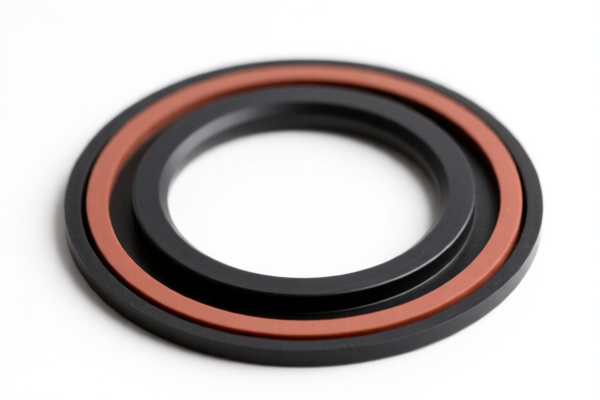

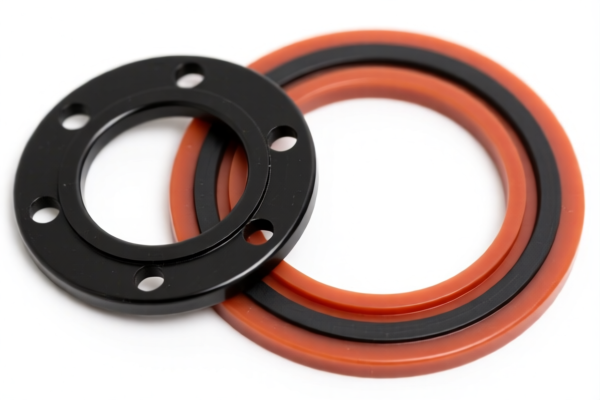

AI Analysis
🛡️ Rubber Gasket & Seals: The Ultimate 2026 Clearance Guide
🌐 HS Code Reference & Clearance Strategy | 2026 Tariff Deep Dive | Professional Export Compliance
📌 I. Product Definition & Classification: What Exactly is a "Rubber Gasket"?
Rubber Gaskets are non-metallic sealing components critical for preventing leaks in piping systems, engines, valves, and industrial machinery. In international trade, their classification is highly sensitive because a minor difference in material composition (Sulfurized Rubber vs. Plastic/Synthetic) or function (Mechanical Seal vs. Simple Washer) can drastically alter the HS Code and tax burden.
The Three Main Categories: 1. Pure Rubber Seals (Sulfurized): Made from processed natural or synthetic rubber. Typically falls under Chapter 40. 2. Mechanical Seals: High-precision rubber components used in rotating machinery (pumps/fans). Typically falls under Chapter 84. 3. Plastic/Synthetic Mixes: If the material is deemed "Synthetic Rubber" or "Plastic" rather than pure rubber, it may fall under Chapter 39.
⚠️ Critical Distinction:
- If the product is a pure rubber seal (sulfurized) → Chapter 40 (4016 series).
- If the product is a part of a machine acting as a mechanical seal → Chapter 84 (8484).
- If the material is classified as Plastic/Synthetic → Chapter 39 (3926).
🚫 Error Alert: Misclassifying a mechanical seal as a simple washer can trigger a 45% penalty tax due to misdeclaration of origin and type.
📦 II. HS Code Classification Matrix (2026 Data Analysis)
Based on the provided DATA, here are the exact classifications for Rubber Gaskets:
| HS Code | Product Description | Material Type | Specific Category | Tax Rate (Total) |
|---|---|---|---|---|
| 8484.90.00.00 | Rubber Gasket (Mechanical) | Rubber | Mechanical Seals (Part of machinery) | 37.5% |
| 4016.93.50.10 | Rubber Gasket (Washer/Seal) | Sulfurized Rubber | Washers, Washers, Seals | 37.5% |
| 3926.90.45.10 | Rubber Gasket (Synthetic) | Plastic/Synthetic Rubber | Gaskets, Washers, Seals | 38.5% |
| 4016.93.10.10 | Rubber Gasket (Standard) | Rubber | Washers, Seals (General) | 37.5% |
| 4016.10.00.00 | Rubber Floor Mats | Sulfurized Rubber | Rubber Mats/Products | 35.0% |
🔍 Key Insight:
- Codes 4016.x are for general rubber washers/seals. - Code 8484.x is specifically for mechanical seals (high precision). - Code 3926.x applies if the "rubber" is actually a synthetic plastic compound (higher tax base).
💰 III. 2026 Tariff Rate Breakdown (Detailed Tax Analysis)
✅ Origin: China (CN)
✅ Destination: United States (US)
✅ Policy: 2026 Tariff Schedule (Section 301 + 122)
🎯 Scenario A: Pure Rubber Seals (Codes 8484.90.00.00, 4016.93.50.10, 4016.93.10.10)
Total Tax: 37.5%
| Tax Component | Rate | Source/Clause | Explanation |
|---|---|---|---|
| Base Duty (MFN) | 2.5% | General MFN | Standard duty for rubber products. |
| Section 301 (Added) | 25.0% | USITC / Section 301 | "Add-on Tariff" imposed on Chinese goods. |
| Section 122 | 10.0% | Section 122 | "122 Clause Tariff" (Specific policy add-on). |
| TOTAL | 37.5% | Sum of all three components. |
📌 Explanation:
- This 37.5% rate is cumulative. It is NOT an "OR" condition; it is Base + 25% + 10%. - Applies to: Mechanical rubber seals and standard sulfurized rubber gaskets.
🎯 Scenario B: Synthetic/Plastic Rubber Seals (Code 3926.90.45.10)
Total Tax: 38.5%
| Tax Component | Rate | Source/Clause | Explanation |
|---|---|---|---|
| Base Duty (MFN) | 3.5% | General MFN | Slightly higher base for plastic-like rubber. |
| Section 301 (Added) | 25.0% | USITC / Section 301 | Same "Add-on Tariff". |
| Section 122 | 10.0% | Section 122 | Same "122 Clause Tariff". |
| TOTAL | 38.5% | Highest rate in the list. |
📌 Explanation:
- The base duty increases to 3.5% because the material is categorized under Plastics (Chapter 39) rather than Rubber (Chapter 40). - Result: Even a slight change in material definition adds 1% to the total burden.
🎯 Scenario C: Rubber Floor Mats (Code 4016.10.00.00)
Total Tax: 35.0%
| Tax Component | Rate | Source/Clause | Explanation |
|---|---|---|---|
| Base Duty (MFN) | 0.0% | General MFN | Duty-Free base rate for certain rubber mats. |
| Section 301 (Added) | 25.0% | USITC / Section 301 | Add-on applies. |
| Section 122 | 10.0% | Section 122 | Add-on applies. |
| TOTAL | 35.0% | Lowest rate (due to 0% base). |
📌 Note: This specific code applies to floor mats, not gaskets. If your product is a gasket, do not use this code to save tax, as it is a fraudulent classification.
🛠️ IV. Clearance实操建议 (Practical Clearance Strategy)
✅ 1. Documentation Checklist (Must-Have for Customs)
| Document | Status | Critical Details |
|---|---|---|
| Material Safety Data Sheet (MSDS) | 🔴 Critical | Must explicitly state "Sulfurized Rubber" vs "Plastic/Synthetic". |
| Detailed Product Description | 🔴 Critical | Specify "Mechanical Seal" (for 8484) vs "Washer/Seal" (for 4016). |
| Composition Breakdown | 🔴 Critical | % of rubber vs. other additives. Helps distinguish Chapter 40 vs. 39. |
| Commercial Invoice | 🔴 Critical | Must match HS Code logic (e.g., don't call a mechanical seal a "washer"). |
| Packaging List | ✅ | Show quantity and weight. |
| Original Certificate of Origin | ✅ | Essential for verifying Chinese origin (triggers Section 301). |
✅ 2. Declaration Strategy (Avoiding Penalties)
🔥 The Golden Rule: "Material Defines Chapter, Function Defines Subheading."
| Scenario | Recommended Action | Risk if Wrong |
|---|---|---|
| Product is a Mechanical Seal | Declare as 8484.90.00.00 (Mechanical Seal). | Misdeclaring as 4016 (General) → Customs may audit material, leading to reclassification. |
| Product is General Rubber Gasket | Declare as 4016.93.50.10 (Sulfurized Rubber). | Misdeclaring as 3926 (Plastic) → Higher tax (38.5% vs 37.5%). |
| Product is Synthetic Rubber | Declare as 3926.90.45.10. | If it's actually pure rubber, declaring as plastic might trigger "False Declaration" fines. |
| Product is Floor Mat | Declare as 4016.10.00.00. | Do not use this for gaskets! |
✅ 3. Special Case Handling
| Situation | Strategy |
|---|---|
| Material Ambiguity | If the "rubber" contains >40% synthetic plastic, lean towards 3926. If <40%, lean towards 4016. Request a pre-classification ruling. |
| "122 Clause" Confusion | Ensure the origin is correctly marked as China (CN). The 122 Clause (10%) applies specifically to Chinese goods. |
| Small Value Shipments | De Minimis ($800): Does NOT apply to Section 301/122 taxed items. You still pay the 37.5% regardless of value. |
🌍 V. Global Market Comparison (2026)
| Region | HS Code | Base Tax | Add-on (China) | Total Effective Rate | Notes |
|---|---|---|---|---|---|
| 🇺🇸 USA | 4016 / 8484 / 3926 | 2.5% - 3.5% | +35% (25+10) | 35.0% - 38.5% | Highest burden. |
| 🇨🇳 China | Same Codes | 2.5% - 3.5% | 0% | 2.5% - 3.5% | No Section 301. |
| 🇪🇺 EU | Same Codes | 2.0% - 3.0% | 0% | 2.0% - 3.0% | Lower than US. |
| 🇯🇵 Japan | Same Codes | 1.5% - 3.0% | 0% | 1.5% - 3.0% | Lowest in developed nations. |
📌 Conclusion:
The US market is currently the most expensive destination for rubber gaskets from China due to the Section 301 + 122叠加 (stacking). Exporters must strictly ensure HS Code accuracy to avoid paying double the necessary tax.
📌 VI. Common Mistakes & "Red Flags"
❌ Mistake 1: Calling a "Mechanical Seal" a "Washer" (4016).
👉 Consequence: Customs may audit the functional intent. If it's a mechanical seal, it belongs in 8484. If misdeclared, you risk penalties for misclassification.
❌ Mistake 2: Declaring "Rubber" as "Plastic" (3926) to hide material.
👉 Consequence: Higher tax (38.5% vs 37.5%) + Suspicion of fraud. If proven to be rubber, you pay the base + penalties.
❌ Mistake 3: Using Code 4016.10.00.00 (Floor Mats) for Gaskets.
👉 Consequence: Fraud. This is a "low tax" code (35% base 0%). Using it for gaskets is a clear de minimis violation.
❌ Mistake 4: Ignoring the "122 Clause".
👉 Consequence: The 10% tax is mandatory for Chinese goods. Failing to include it in the calculation leads to underpayment and future audits.
✅ Correct Declaration Example:
"Rubber Gasket, Sulfurized Rubber, Mechanical Seal, HS Code 8484.90.00.00, Origin: China, Country of Export: USA."
🎯 VII. Conclusion: Precision is Profit!
🔹 Rule 1: Material First. Is it Sulfurized Rubber (4016) or Synthetic/Plastic (3926)? 🔹 Rule 2: Function Second. Is it a Mechanical Seal (8484) or a General Washer (4016)? 🔹 Rule 3: Tax Math. Base + 25% + 10% = 37.5% (or 38.5%).
📣 Final Advice:
Before shipping, verify your MSDS and consult a customs broker for a pre-classification ruling. The difference between 37.5% and 38.5% might seem small, but on bulk orders, it equals thousands of dollars. Don't let a wrong HS code bankrupt your margin!
✨ Professional Clearance, Start with the Right Code!
💼 Your Tax Liability is Calculated to the Cent.
Customer Reviews
About HS Code Classification
The Harmonized System (HS) is an internationally standardized nomenclature developed by the World Customs Organization (WCO) to classify traded products. Over 200 countries use the HS system as the basis for customs tariffs, trade statistics, and import/export regulations.
Each HS code follows a hierarchical structure:
- Chapter (2 digits) — Broad category of goods (e.g., Chapter 84: Machinery and Mechanical Appliances)
- Heading (4 digits) — More specific grouping within the chapter
- Subheading (6 digits) — Internationally standardized breakdown, used by all WCO member countries
- National subdivisions (8-10 digits) — Country-specific extensions for further classification, such as US HTSUS 10-digit codes
Correct HS code classification is essential for smooth customs clearance, accurate duty payment, and compliance with trade regulations. Misclassification can lead to customs delays, overpayment of duties, or penalties.
When importing from CN to US, the applicable tariff rates may include:
- Most-Favored-Nation (MFN) rate — The standard duty rate applied to WTO members
- General rate — Applied to countries without trade agreements
- Trade remedy duties — Additional tariffs such as Section 301 (anti-dumping), Section 232 (national security), or countervailing duties
The information provided on this page is for reference purposes only. For official classification, please consult with your local customs authority or a licensed customs broker.