Rubber Gasket Profiles
CN → US| HS Code | Tariff Rate | Origin | Destination | Doc |
|---|---|---|---|---|
| 4016935010 | 37.5% | CN | US | Official Doc |
| 3926904510 | 38.5% | CN | US | Official Doc |
| 8481909085 | 85.0% | CN | US | Official Doc |
| 4016931010 | 37.5% | CN | US | Official Doc |
| 8481909060 | 85.0% | CN | US | Official Doc |
Product Images
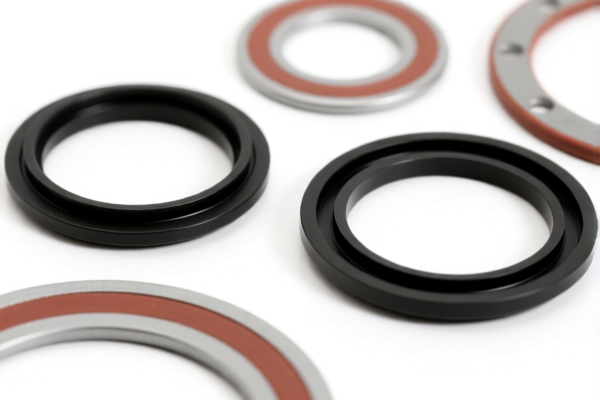
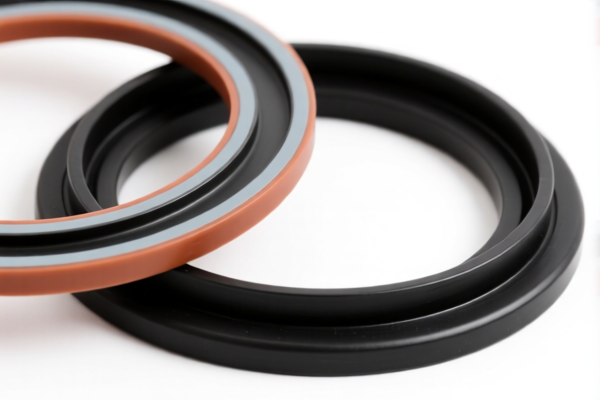
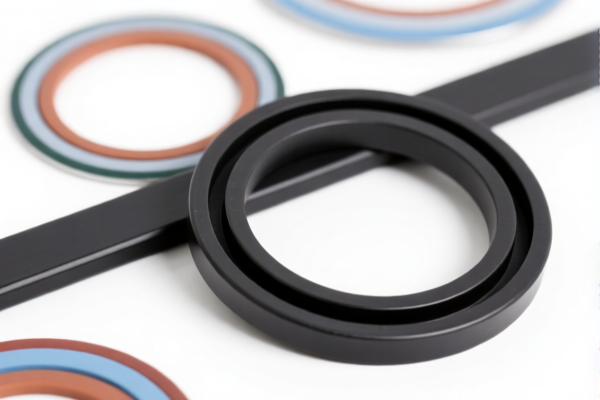
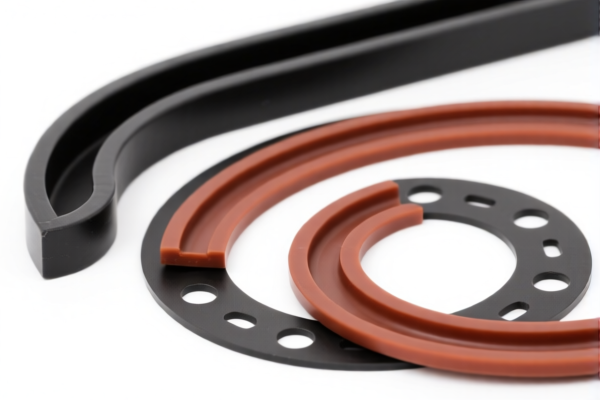
AI Analysis
🧱 Rubber Gasket Profiles (Hygienic Grade)
🌐 HS Code Reference & Customs Clearance Guide | 2026 Latest Tariff Analysis | Professional-Level Clearance Strategy
📌 1. Product Definition & Classification: Do You Really Understand "Rubber Gasket Profiles"?
Rubber Gasket Profiles (specifically Hygienic Grade) are critical sealing components used in food, beverage, pharmaceutical, and biotechnology industries. They are designed to prevent contamination and ensure sanitary conditions in piping systems, tanks, and processing equipment.
In international trade, the classification of these gaskets depends heavily on their material composition, form, and intended application. Misclassification can lead to significant tariff discrepancies due to Section 301 and IEEPA tariffs targeting Chinese goods.
⚠️ Key Classification Distinction:
- If the gasket is classified under Chapter 40 (Rubber Articles): Generally subject to lower base duties but still subject to retaliatory tariffs. - If the gasket is classified as a part of valves/pumps (Chapter 84): Often subject to higher base duties due to specific provisions for mechanical parts, leading to a much higher total tax burden.
📦 2. HS Code Classification Details (2026 Latest Tariff Authority Comparison)
Based on the provided data, here are the specific HS Codes associated with Hygienic Rubber Gaskets:
| HS Code | Product Description | Applicable Scenario | Total Tax Rate | Base Duty |
|---|---|---|---|---|
4016.93.50.10 |
Hygienic rubber gaskets, rubber material, gasket form, for hygienic sealing. | General hygienic sealing applications. | 37.5% | 2.5% |
3926.90.45.10 |
Hygienic rubber gaskets, rubber material, gasket form, for hygienic sealing. | Note: HS Code 3926 usually refers to塑料制品 (Plastics), but data lists it for rubber gaskets. May indicate a specific composite or regulatory quirk. | 38.5% | 3.5% |
8481.90.90.85 |
Hygienic rubber gaskets, gasket form, rubber material, parts of valves and similar devices. | Classified specifically as valve parts. | 85.0% | 0.0% |
4016.93.10.10 |
Hygienic rubber gaskets, rubber material, gasket form, classified under other categories. | Alternative classification for rubber articles. | 37.5% | 2.5% |
8481.90.90.60 |
Hygienic rubber gaskets, rubber material, gasket form, parts of valves or similar devices. | Another sub-category for valve parts. | 85.0% | 0.0% |
🔍 Critical Reminder:
- HS Codes4016and3926result in a Total Tax of ~37.5%-38.5%. - HS Codes8481result in a Total Tax of 85.0% due to higher base duties or additional surcharges. - Do not misclassify a simple rubber gasket as a "valve part" (8481) if it is sold as a standalone sealing component, as this could double your tariff costs.
💰 3. 2026 Latest Tariff Rate Breakdown (Including Additional Taxes, Policy Add-ons)
✅ Applicable Country: United States (US)
✅ Origin: China (CN)
✅ Effective Date: As per current IEEPA and USITC regulations
🎯 1. 4016.93.50.10 & 4016.93.10.10 —— Rubber Gaskets (Chapter 40)
| Item | Content |
|---|---|
| Base Duty | 2.5% |
| USITC Additional Duty (Section 301) | +25.0% |
| IEEPA Additional Duty | +10.0% |
| Total Effective Rate | 37.5% |
| Calculation Basis | CIF Value × 37.5% |
| De Minimis Exemption | ❌ Not Applicable (Denied for Section 301/IEEPA goods) |
| Legal Basis Path | IEEPA:9903.01.25 → USITC:4016.93.xxxx → FOOTNOTE:301 |
📌 Explanation:
- The 25% Section 301 duty applies to most rubber articles from China. - The 10% IEEPA duty is applied specifically to goods originating from China under Executive Orders targeting strategic sectors. - Total: 37.5%. This is a significant cost burden. Ensure your pricing model accounts for this.
🎯 2. 3926.90.45.10 —— Rubber Gaskets (Chapter 39 Note)
| Item | Content |
|---|---|
| Base Duty | 3.5% |
| USITC Additional Duty (Section 301) | +25.0% |
| IEEPA Additional Duty | +10.0% |
| Total Effective Rate | 38.5% |
| Calculation Basis | CIF Value × 38.5% |
| De Minimis Exemption | ❌ Not Applicable |
📌 Note:
- Although the HS code3926typically refers to plastics, if customs classifies this specific rubber gasket under this code (possibly due to mixed materials or specific regulatory classification), the base duty is slightly higher (3.5% vs 2.5%), resulting in a 38.5% total rate.
🎯 3. 8481.90.90.85 & 8481.90.90.60 —— Parts of Valves (Chapter 84)
| Item | Content |
|---|---|
| Base Duty | 0.0% |
| USITC Additional Duty (Section 301) | +25.0% |
| IEEPA Additional Duty | +10.0% |
| Steel/Aluminum/Copper Surcharge | +50.0% (if applicable to metal components) |
| Total Effective Rate | 85.0% |
| Calculation Basis | CIF Value × 85.0% |
| De Minimis Exemption | ❌ Not Applicable |
📌 Warning:
- Even though the base duty is 0%, the Section 301 (25%) + IEEPA (10%) + Potential 50% surcharge for metal parts leads to a devastating 85% total tax. - Crucial: If your gasket is purely rubber and does not contain metal inserts, argue against classification under8481. If it is a complex valve assembly part, be prepared for this high rate.
🛠️ 4. Customs Clearance Practical Advice (Battle-Tested Pitfall Avoidance)
✅ 1. Documentation Checklist (Non-negotiable)
| Document | Required | Explanation |
|---|---|---|
| ✅ Product Specification Sheet | ✔️ | Must specify: Material (e.g., FDA Silicone, EPDM), Shape (Gasket Profile), Hardness, Temperature Resistance. |
| ✅ Commercial Invoice | ✔️ | Clearly state: "Hygienic Rubber Gasket, Not a Valve, Not a Machine Part." Avoid vague terms like "Seal Assembly." |
| ✅ Packing List | ✔️ | List quantities and weights accurately. |
| ✅ Certificate of Origin (CO) | ✔️ | To prove origin. If from China, expect full tariffs. |
| ✅ Material Safety Data Sheet (MSDS) | ✔️ | Required for customs valuation and safety checks, especially for food/pharma grade. |
| ✅ FDA Compliance Statement | ✔️ | Proof that the rubber meets 21 CFR requirements for food contact. |
✅ 2. Declaration Strategy (Key Mantra)
🔥 "Material Defines Chapter, Form Defines Subheading, Function Defines Rate!"
| Scenario | Correct Declaration | Wrong Declaration |
|---|---|---|
| Standalone Rubber Gasket | 4016.93.50.10 |
8481.90.90.85 → Cost increases by ~47.5% |
| Gasket with Metal Ring | 8481.90.90.85 (if metal is integral) |
4016.93.50.10 → Risk of penalty for misclassification |
| Hygienic Seal for Bioreactor | 4016.93.50.10 (if sold separately) |
8481.90.90.60 → Unjustified high tariff |
| Plastic-Rubber Composite Gasket | 3926.90.45.10 (if plastic dominant) |
4016.93.50.10 → Potential duty discrepancy |
✅ 3. Special Situations
| Situation | Handling Advice |
|---|---|
| Gaskets Sold as Parts of a Valve Kit | If bundled with a valve, the entire kit might be classified as a valve assembly (8481). Consider shipping gaskets separately if possible. |
| OEM Custom Profiles | Provide detailed drawings showing the profile shape. Custom profiles are still 4016 if rubber. |
| Mixed Container (Gaskets + Other Goods) | Ensure clear separation in the invoice. Do not mix high-tariff 8481 items with low-tariff 4016 items if you want to optimize for the gaskets. |
🌍 5. Global Market Customs Comparison (2026 Latest)
| Country/Region | Recommended HS Code | Est. Tariff (China Origin) | Certification Required | Notes |
|---|---|---|---|---|
| 🇺🇸 USA | 4016.93.50.10 |
37.5% | FDA 21 CFR, RoHS | High Section 301/IEEPA impact. |
| 🇨🇳 China (Import) | 4016.93.50.10 |
~10-15% | CCC (if applicable) | Lower base duty, no US-style surcharges. |
| 🇪🇺 EU | 4016.93.00 |
~3-6% | REACH, FDA Equivalent | No Section 301 equivalent. |
| 🇬🇧 UK | 4016.93.00 |
~3-6% | UKCA, REACH | Post-Brexit rules apply. |
| 🇯🇵 Japan | 4016.93.00 |
~3-5% | JIS, FDA | Low tariffs, strict quality checks. |
📌 Conclusion:
- USA is the most challenging market due to叠加 tariffs (Base + 301 + IEEPA). - EU/UK/Japan offer significantly better duty rates for rubber gaskets. Consider supply chain diversification if targeting the US heavily.
📌 6. Common Errors & Pitfall Guide (Blood & Tears Lessons)
❌ Mistake 1: Declaring "Rubber Gasket" as "Valve Part" (8481)
👉 Consequence: Tax jumps from 37.5% to 85%. Loss of profit margin!
❌ Mistake 2: Ignoring IEEPA 10% Surcharge
👉 Consequence: Under-declaration leads to penalties, seizures, and back-taxes upon audit.
❌ Mistake 3: Vague Description "Seals" or "Rubber Parts"
👉 Consequence: Customs may assign a default higher rate or delay shipment for review.
👉 Fix: Use precise description: "Hygienic Rubber Gasket Profile, FDA Compliant, For Food Processing."
❌ Mistake 4: Assuming De Minimis Exemption Applies
👉 Consequence: Section 301 and IEEPA goods are explicitly excluded from de minimis (Section 321) benefits. Even small shipments are taxed.
✅ Correct Approach:
"Hygienic Rubber Gasket, EPDM Material, FDA 21 CFR Compliant, Circular Profile, For Pharmaceutical Piping Systems"
🎯 7. Conclusion: Professional Declaration, Save Time, Reduce Costs!
🎯 Remember the Mantra:
🔹 "Chapter 40 is King for Rubber; Chapter 84 is a Trap for Gaskets!"
🔹 "37.5% vs 85%: A 47.5% Gap Can Make or Break Your Profit!"
🔹 "IEEPA 10% is Not Optional; Plan for It!"
📌 Tips:
- If your gaskets contain metal reinforcements (e.g., metal core gaskets), they may fall under 8481 or even 7318/7616. Re-evaluate your BOM.
- Consider Advance Rulings from US CBP if you are importing large volumes. A pre-classification ruling can provide legal certainty for up to 5 years.
📣 Call to Action:
📞 Contact a Licensed Customs Broker
📄 Prepare Detailed Product Specs
📊 Calculate True Landed Cost (Including 37.5%-85% Tariffs)
🚀 Ensure Smooth Clearance, Protect Margins, Expand Global Reach!
✨ Professional Customs Clearance Starts with Precise Classification!
💼 Every Cent of Cost Must Be Accurately Calculated!
Customer Reviews
About HS Code Classification
The Harmonized System (HS) is an internationally standardized nomenclature developed by the World Customs Organization (WCO) to classify traded products. Over 200 countries use the HS system as the basis for customs tariffs, trade statistics, and import/export regulations.
Each HS code follows a hierarchical structure:
- Chapter (2 digits) — Broad category of goods (e.g., Chapter 84: Machinery and Mechanical Appliances)
- Heading (4 digits) — More specific grouping within the chapter
- Subheading (6 digits) — Internationally standardized breakdown, used by all WCO member countries
- National subdivisions (8-10 digits) — Country-specific extensions for further classification, such as US HTSUS 10-digit codes
Correct HS code classification is essential for smooth customs clearance, accurate duty payment, and compliance with trade regulations. Misclassification can lead to customs delays, overpayment of duties, or penalties.
When importing from CN to US, the applicable tariff rates may include:
- Most-Favored-Nation (MFN) rate — The standard duty rate applied to WTO members
- General rate — Applied to countries without trade agreements
- Trade remedy duties — Additional tariffs such as Section 301 (anti-dumping), Section 232 (national security), or countervailing duties
The information provided on this page is for reference purposes only. For official classification, please consult with your local customs authority or a licensed customs broker.