Rubber Gloves Experiment Use
CN → US| HS Code | Tariff Rate | Origin | Destination | Doc |
|---|---|---|---|---|
| 6116106500 | 24.5% | CN | US | Official Doc |
| 4014905000 | 14.2% | CN | US | Official Doc |
| 4014901000 | 10.0% | CN | US | Official Doc |
| 6116109500 | 24.5% | CN | US | Official Doc |
| 4015195100 | 49.0% | CN | US | Official Doc |
Product Images
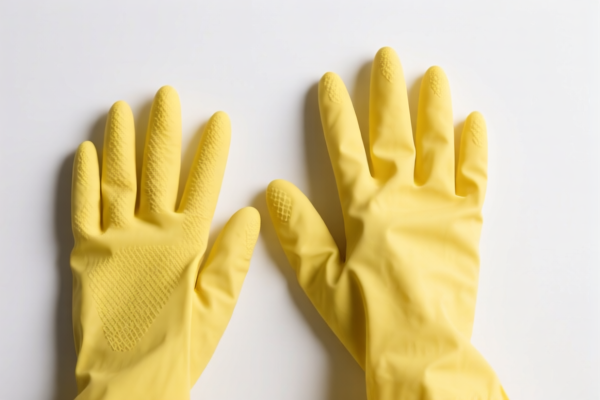
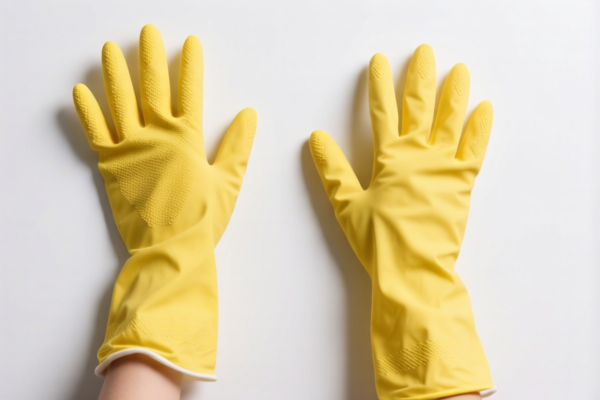
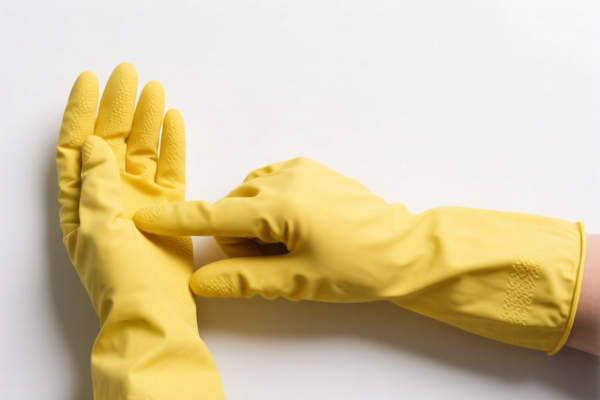
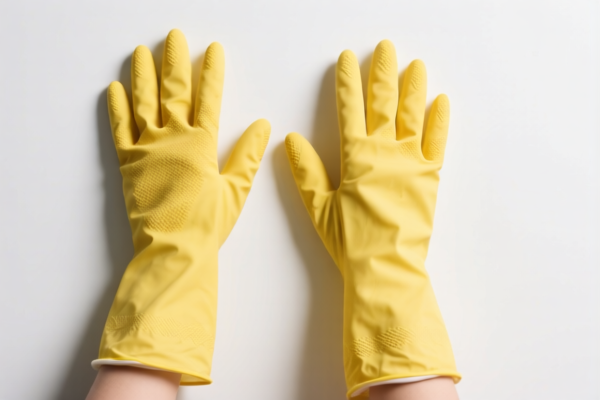
AI Analysis
🧪 Rubber Gloves – Experiment Use (Lab Protective Gear)
🌐 HS Code Reference & Customs Clearance Guide | 2026 Latest Tariff Analysis | Professional-Level Classification Strategy
📌 1. Product Definition: What Exactly Are "Experiment Rubber Gloves"?
Experiment rubber gloves are personal protective equipment (PPE) designed for laboratory, medical, or hygiene purposes. In international trade, they are categorized primarily by material and usage:
- Latex/Nitrile Disposable Gloves (HS 4014): Typically made from natural rubber (latex) or synthetic polymers (nitrile), used for hygiene, medical, or sanitary purposes. These are often classified under Chapter 40 (Rubber).
- Heavy-Duty/Industrial Rubber Gloves (HS 6116): Made from rubber or plastic, often knitted or woven base with rubber coating, used for industrial or experimental handling of hazardous materials. These fall under Chapter 61 (Knitted/Crocheted Apparel) if they have a textile base, or Chapter 39/40 if purely rubber/plastic.
⚠️ Critical Distinction:
- If the gloves are medical/hygiene focused (e.g., exam gloves, surgical gloves) and made of vulcanized rubber → Chapter 40 (4014).
- If the gloves are industrial/experimental handling (e.g., chemical resistant, heavy-duty) with a knitted liner or pure rubber/plastic construction → Chapter 61 (6116) or general rubber goods.
- Material Conflict: Do not confuse "latex exam gloves" (4014) with "rubber-coated work gloves" (6116). The latter often has a higher tariff burden due to different origin rules and trade restrictions.
📦 2. HS Code Classification Details (2026 Latest Tariff Authority Match)
Based on the provided data, here are the four possible classifications for "Experiment Rubber Gloves," along with their tax implications:
| HS Code | Product Description & Summary | Total Tax Rate | Tax Breakdown Details |
|---|---|---|---|
6116.10.65.00 |
Experiment Rubber Gloves: Material is rubber, form is glove, fits "rubber/plastic dipped glove" category. | 24.5% | Base Tariff: 7.0% Additional Tariff: 7.5% Section 301 (122-Clause) Tariff: 10% |
4014.90.50.00 |
Experiment Rubber Gloves: Material is vulcanized rubber, use for hygiene or medical purposes, fits relevant classification. | 14.2% | Base Tariff: 4.2% Additional Tariff: 0.0% Section 301 (122-Clause) Tariff: 10% |
4014.90.10.00 |
Experiment Rubber Gloves: Material is rubber, use falls under hygiene/medical supplies, fits vulcanized rubber hygiene product features. | 10.0% | Base Tariff: 0.0% Additional Tariff: 0.0% Section 301 (122-Clause) Tariff: 10% |
6116.10.95.00 |
Experiment Rubber Gloves: Material is rubber, form is glove, no obvious material conflict, fits glove product classification. | 24.5% | Base Tariff: 7.0% Additional Tariff: 7.5% Section 301 (122-Clause) Tariff: 10% |
4015.19.51.00 |
Agricultural Rubber Gloves: Material is rubber, form is glove, fits vulcanized rubber clothing & accessories classification. (Note: Misclassified for "Experiment" use) | 49.0% | Base Tariff: 14.0% Additional Tariff: 25.0% Section 301 (122-Clause) Tariff: 10% |
🔍 Key Insight:
-4014.90.10.00is the most cost-effective option for medical/hygiene-focused experiment gloves (10% total).
-6116.10.65.00and6116.10.95.00carry a much higher burden (24.5%) due to combined base + additional tariffs.
-4015.19.51.00is for agricultural use (49.0% total) and is highly discouraged for experiment/lab use unless explicitly mislabeled (which risks penalties).
💰 3. 2026 Latest Tariff Rate Detailed Breakdown (Including Surtax & Policy Additions)
✅ Applicable Country: United States (US)
✅ Origin: China (CN)
✅ Effective Date: 2025/2026 Tariff Schedule
🎯 1. 4014.90.10.00 – Vulcanized Rubber Hygiene/Medical Gloves (Best Case)
| Item | Content |
|---|---|
| Base Tariff | 0% |
| USITC Additional Tariff | 0% |
| IEEPA / Section 301 Tariff | 10% |
| Total Tax Rate | 10.0% |
| Tax Calculation | CIF Value × 10% |
| De Minimis Eligibility | ❌ Not Eligible (High duty rate exceeds threshold) |
| Legal Basis Path | USITC:4014.90.10.00 → FOOTNOTE:122-Clause |
📌 Explanation:
- This code benefits from 0% base and 0% additional tariffs.
- Only the 10% Section 301 (122-Clause) tariff applies.
- Ideal for medical-grade experiment gloves (latex/nitrile exam gloves).
🎯 2. 4014.90.50.00 – Other Vulcanized Rubber Hygiene Products
| Item | Content |
|---|---|
| Base Tariff | 4.2% |
| USITC Additional Tariff | 0% |
| IEEPA / Section 301 Tariff | 10% |
| Total Tax Rate | 14.2% |
| Tax Calculation | CIF Value × 14.2% |
| De Minimis Eligibility | ❌ Not Eligible |
| Legal Basis Path | USITC:4014.90.50.00 → FOOTNOTE:122-Clause |
📌 Note:
- Slightly higher base tariff (4.2%) than4014.90.10.00.
- Still no additional USITC surtax, making it competitive for non-medical hygiene gloves.
🎯 3. 6116.10.65.00 & 6116.10.95.00 – Rubber/Plastic Dipped Gloves (Chapter 61)
| Item | Content |
|---|---|
| Base Tariff | 7.0% |
| USITC Additional Tariff | 7.5% |
| IEEPA / Section 301 Tariff | 10% |
| Total Tax Rate | 24.5% |
| Tax Calculation | CIF Value × 24.5% |
| De Minimis Eligibility | ❌ Not Eligible |
| Legal Basis Path | USITC:6116.10.65.00 → FOOTNOTE:122-Clause |
📌 Warning:
- These codes incur both base (7%) and additional (7.5%) tariffs.
- Commonly used for industrial rubber gloves with knitted liners.
- 24.5% is significantly higher than medical glove classifications.
- Misclassification here can lead to overpayment of tariffs.
🎯 4. 4015.19.51.00 – Agricultural Rubber Gloves (Avoid!)
| Item | Content |
|---|---|
| Base Tariff | 14.0% |
| USITC Additional Tariff | 25.0% |
| IEEPA / Section 301 Tariff | 10% |
| Total Tax Rate | 49.0% |
| Tax Calculation | CIF Value × 49.0% |
| De Minimis Eligibility | ❌ Not Eligible |
| Legal Basis Path | USITC:4015.19.51.00 → FOOTNOTE:122-Clause |
📌 Critical Warning:
- This code is for agricultural use (e.g., gardening, farming).
- 49.0% total tariff is extremely high.
- DO NOT classify experiment gloves as agricultural gloves unless explicitly intended for farm use.
🛠️ 4. Customs Clearance Practical Advice (Pitfall Avoidance Guide)
✅ 1. Required Documentation Checklist (Mandatory)
| Document | Required | Description |
|---|---|---|
| ✅ Product Specification Sheet | ✔️ | Must specify material (latex, nitrile, PVC), thickness, size, and intended use (lab/medical). |
| ✅ Certificate of Analysis (COA) | ✔️ | For chemical-resistant gloves, prove compliance with lab safety standards. |
| ✅ Product Photos (Clear Labels) | ✔️ | Show packaging, "Made in China," and any medical/lab certifications (FDA, CE). |
| ✅ Commercial Invoice | ✔️ | Clearly state "Rubber Gloves for Laboratory/Experiment Use" – do not use vague terms like "gloves." |
| ✅ Packing List | ✔️ | Detail quantity, weight, and dimensions. Ensure no mixed classifications in one shipment. |
| ✅ Original Certificate of Origin | ✔️ | If claiming any preference (unlikely for US/China), provide CO. |
✅ 2. Declaration Tips (Key Mantra)
🔥 "Specify Use, Material Matters, Avoid Agri-Glove Trap!"
| Scenario | Correct Declaration | Wrong Practice |
|---|---|---|
| Medical/Lab Exam Gloves | 4014.90.10.00 (Hygiene/Medical) |
Mislabel as "Work Gloves" → 24.5% tax |
| Heavy-Duty Lab Gloves | 6116.10.65.00 or 6116.10.95.00 |
Mislabel as "Medical" → Risk of penalty |
| Agricultural Gloves | 4015.19.51.00 |
Mislabel as "Lab Gloves" → 49% tax! |
| Mixed Shipment | Separate HS Codes | Combine all gloves under one code → Audit risk |
✅ 3. Special Cases Handling
| Scenario | Handling Advice |
|---|---|
| OEM Custom Gloves | Provide design specs and client order. Clarify if "experiment" means "R&D" or "lab testing." |
| Nitrile vs. Latex | Both can fall under 4014 if for hygiene/medical. Nitrile is often preferred for lab use due to chemical resistance. |
| Chemical Resistant Gloves | If not for hygiene/medical, but for industrial/lab handling, 6116 may be more accurate but costs more. |
| Gloves with Textile Liner | If knitted/crocheted base, likely 6116. If pure rubber/plastic, 4014 or 4015. |
🌍 5. Global Market Comparison (2026 Latest)
| Country/Region | Recommended HS Code | Tariff (China Origin) | Certification Required | Notes |
|---|---|---|---|---|
| 🇺🇸 USA | 4014.90.10.00 |
10% (Medical/Hygiene) | FDA, CE | Highest cost for 6116 (24.5%) |
| 🇨🇳 China | 4014.90.10.00 |
~5-7% | CCC (if applicable) | Lower import duty |
| 🇪🇺 EU | 4014.90.10.00 |
0% (if CE certified) | CE, REACH | No Section 301 equivalent |
| 🇬🇧 UK | 4014.90.10.00 |
0% | UKCA | Post-Brexit standards |
| 🇯🇵 Japan | 4014.90.10.00 |
0% | PSE (if electrical) | Low duty environment |
📌 Conclusion:
- USA imposes Section 301 tariffs on Chinese rubber gloves, making4014.90.10.00the most efficient.
- EU/UK/Japan generally have lower or zero tariffs for medical rubber gloves.
- Avoid6116for lab gloves unless specifically designed as industrial workwear.
📌 6. Common Errors & Pitfall Guide (Lessons Learned)
❌ Error 1: Misclassifying medical/lab gloves as agricultural gloves (4015.19.51.00)
👉 Consequence: 49% tariff instead of 10% → Massive overpayment!
❌ Error 2: Using "Work Gloves" for lab exam gloves
👉 Consequence: May trigger 6116 classification → 24.5% tariff instead of 10%
❌ Error 3: Failing to specify "Medical/Hygiene Use" in description
👉 Consequence: Customs may reclassify to higher-duty category → Delays & penalties
❌ Error 4: Mixing textile-lined gloves with pure rubber gloves in one HS Code
👉 Consequence: Audit risk → Customs may demand separate declarations
✅ Correct Practice:
"Nitrile Examination Gloves, Powder-Free, 6-inch, For Laboratory/Medical Use, Box of 100, Made in China"
🎯 7. Conclusion: Precise Classification Saves Money!
🎯 Remember the Mantra:
🔹 "Medical Lab = 4014 (10%) | Industrial Lab = 6116 (24.5%) | Agri = 4015 (49%)"
🔹 "HS Code is King, Tax Rate is Queen, Misclassification is Death!"
📌 Pro Tip:
If your gloves are originally manufactured in Vietnam, Thailand, or Mexico, you may qualify for Section 301 exemptions or lower tariffs.
Recommendation: Request an Advance Ruling from CBP before shipping high-volume lots.
📣 Immediate Action:
📞 Contact a licensed customs broker + Provide product specs + Verify HS Code
🚀 Ensure your lab gloves clear customs smoothly, legally, and cost-effectively!
✨ Professional Classification Starts with Precision!
💼 Every percentage point saved is pure profit!
Customer Reviews
About HS Code Classification
The Harmonized System (HS) is an internationally standardized nomenclature developed by the World Customs Organization (WCO) to classify traded products. Over 200 countries use the HS system as the basis for customs tariffs, trade statistics, and import/export regulations.
Each HS code follows a hierarchical structure:
- Chapter (2 digits) — Broad category of goods (e.g., Chapter 84: Machinery and Mechanical Appliances)
- Heading (4 digits) — More specific grouping within the chapter
- Subheading (6 digits) — Internationally standardized breakdown, used by all WCO member countries
- National subdivisions (8-10 digits) — Country-specific extensions for further classification, such as US HTSUS 10-digit codes
Correct HS code classification is essential for smooth customs clearance, accurate duty payment, and compliance with trade regulations. Misclassification can lead to customs delays, overpayment of duties, or penalties.
When importing from CN to US, the applicable tariff rates may include:
- Most-Favored-Nation (MFN) rate — The standard duty rate applied to WTO members
- General rate — Applied to countries without trade agreements
- Trade remedy duties — Additional tariffs such as Section 301 (anti-dumping), Section 232 (national security), or countervailing duties
The information provided on this page is for reference purposes only. For official classification, please consult with your local customs authority or a licensed customs broker.