Rubber Gloves Outdoor Work Use
CN → US| HS Code | Tariff Rate | Origin | Destination | Doc |
|---|---|---|---|---|
| 4015191150 | 38.0% | CN | US | Official Doc |
| 3926204050 | 16.5% | CN | US | Official Doc |
| 6116106500 | 24.5% | CN | US | Official Doc |
| 4015195100 | 49.0% | CN | US | Official Doc |
| 6116109500 | 24.5% | CN | US | Official Doc |
Product Images


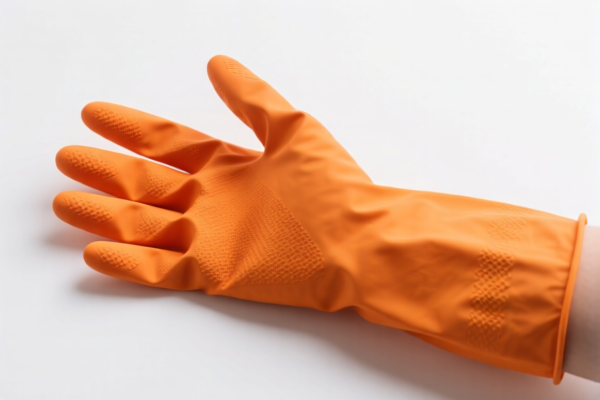

AI Analysis
🧤 Rubber Gloves for Outdoor Work Use
🌐 HS Code Reference & Customs Clearance Guide | 2026 Latest Tariff Analysis | Professional-Level Entry Strategy
📌 I. Product Definition and Classification: Do You Really Understand "Rubber Gloves"?
Rubber gloves for outdoor work are essential protective equipment used in agriculture, gardening, construction, and sanitation. In international trade, their classification depends heavily on the material composition, manufacturing process (vulcanized vs. unvulcanized), and structural features (knitted/crocheted vs. solid). Misclassification can lead to significant tariff discrepancies, especially under current US trade policies (Section 301 and IEEPA).
⚠️ Key Distinction Points:
- If the gloves are solid rubber/vulcanized and not made by knitting/crocheting → Classified under Chapter 40 (Rubber Articles);
- If the gloves are knitted or crocheted with rubber impregnation/coating → Classified under Chapter 61 (Clothing Accessories);
- Some customs authorities may apply Chapter 39 (Plastics) if the rubber-like material is considered a plastic polymer for specific glove uses.
📦 II. HS Code Classification Details (2026 Latest Tariff Authoritative Comparison)
| HS Code | Product Description | Applicable Scenario | Material/Structure Logic |
|---|---|---|---|
4015.19.11.50 |
Rubber agricultural gloves, vulcanized rubber clothing/accessories | Solid rubber gloves, no knitting, agricultural use | ✅ Solid Rubber |
3926.20.40.50 |
Rubber agricultural gloves, treated as plastic gloves due to functional similarity | Gloves where rubber material is classified as plastic for tariff purposes | ✅ Plastic-like Rubber |
6116.10.65.00 |
Rubber gloves, knitted/crocheted base with rubber impregnation/coating | Gloves with fabric base coated/impregnated with rubber | ✅ Knitted + Rubber Coating |
4015.19.51.00 |
Rubber agricultural gloves, vulcanized rubber clothing/accessories (higher tariff tier) | Solid rubber gloves, higher tariff classification due to specific subheading | ✅ Solid Rubber (High Tier) |
6116.10.95.00 |
Rubber gloves, knitted/crocheted with plastic/rubber logic | Knitted gloves with rubber/plastic coating, different subheading | ✅ Knitted + Rubber/Plastic |
🔍 Important Reminder:
- Solid rubber gloves (no fabric base) generally fall under Chapter 40;
- Knitted/crocheted gloves with rubber coating fall under Chapter 61;
- Misclassification risk: Claiming "rubber gloves" as "plastic gloves" (Chapter 39) may lead to disputes if the material is clearly rubber.
💰 III. 2026 Latest Tariff Rate Details (Including Additional Taxes, Policy Surcharges)
✅ Applicable Country: United States (US)
✅ Origin: China (CN)
✅ Effective Date: November 10, 2025 onwards (including subsequent imports)
🎯 1. 4015.19.11.50 —— Rubber Agricultural Gloves (Vulcanized, Solid)
| Item | Content |
|---|---|
| Base Tariff Rate | 3.0% (ad valorem) |
| Section 301 Additional Tariff | +25.0% |
| IEEPA Additional Tariff (Section 122) | +10.0% |
| Total Tariff Rate | 49.0% |
| Tax Calculation | CIF Value × 49.0% |
| De Minimis Eligibility | ❌ Not Eligible (deny_de_minimis) |
| Legal Basis Path | USITC:4015.19.11.50 → SECTION301:25% → IEEPA:10% |
📌 Explanation:
- This is a solid rubber glove classification under Chapter 40;
- Subject to both Section 301 (25%) and IEEPA Section 122 (10%) surcharges;
- Total tariff is extremely high at 49.0%, requiring careful cost planning.
🎯 2. 3926.20.40.50 —— Rubber Agricultural Gloves (Plastic-Like Classification)
| Item | Content |
|---|---|
| Base Tariff Rate | 6.5% (ad valorem) |
| Section 301 Additional Tariff | +0.0% |
| IEEPA Additional Tariff (Section 122) | +10.0% |
| Total Tariff Rate | 16.5% |
| Tax Calculation | CIF Value × 16.5% |
| De Minimis Eligibility | ❌ Not Eligible (deny_de_minimis) |
| Legal Basis Path | USITC:3926.20.40.50 → IEEPA:10% |
📌 Note:
- This classification treats rubber gloves as plastic gloves for tariff purposes;
- No Section 301 surcharge, only IEEPA 10%;
- Total tariff is significantly lower at 16.5%, making this a preferred classification if legally justifiable.
🎯 3. 6116.10.65.00 —— Rubber Gloves (Knitted/Crocheted with Coating)
| Item | Content |
|---|---|
| Base Tariff Rate | 7.0% (ad valorem) |
| Section 301 Additional Tariff | +7.5% |
| IEEPA Additional Tariff (Section 122) | +10.0% |
| Total Tariff Rate | 24.5% |
| Tax Calculation | CIF Value × 24.5% |
| De Minimis Eligibility | ❌ Not Eligible (deny_de_minimis) |
| Legal Basis Path | USITC:6116.10.65.00 → SECTION301:7.5% → IEEPA:10% |
📌 Explanation:
- Knitted/crocheted gloves with rubber coating fall under Chapter 61;
- Subject to Section 301 (7.5%) and IEEPA (10%);
- Total tariff is 24.5%, moderate compared to solid rubber.
🎯 4. 4015.19.51.00 —— Rubber Agricultural Gloves (Higher Tier, Solid)
| Item | Content |
|---|---|
| Base Tariff Rate | 14.0% (ad valorem) |
| Section 301 Additional Tariff | +25.0% |
| IEEPA Additional Tariff (Section 122) | +10.0% |
| Total Tariff Rate | 49.0% |
| Tax Calculation | CIF Value × 49.0% |
| De Minimis Eligibility | ❌ Not Eligible (deny_de_minimis) |
| Legal Basis Path | USITC:4015.19.51.00 → SECTION301:25% → IEEPA:10% |
📌 Note:
- Similar to4015.19.11.50but under a different subheading;
- Same high tariff rate of 49.0%;
- Avoid this classification if possible.
🎯 5. 6116.10.95.00 —— Rubber Gloves (Knitted/Crocheted, Different Subheading)
| Item | Content |
|---|---|
| Base Tariff Rate | 7.0% (ad valorem) |
| Section 301 Additional Tariff | +7.5% |
| IEEPA Additional Tariff (Section 122) | +10.0% |
| Total Tariff Rate | 24.5% |
| Tax Calculation | CIF Value × 24.5% |
| De Minimis Eligibility | ❌ Not Eligible (deny_de_minimis) |
| Legal Basis Path | USITC:6116.10.95.00 → SECTION301:7.5% → IEEPA:10% |
📌 Explanation:
- Similar to6116.10.65.00but under a different subheading;
- Total tariff is 24.5%, same as6116.10.65.00;
- Use when the product structure matches this specific subheading.
🛠️ IV. Customs Clearance Practical Advice (Battle-Proven Pitfall Avoidance Guide)
✅ 1. Required Documentation Checklist (All Must Be Provided)
| Document | Required | Description |
|---|---|---|
| ✅ Product Specifications | ✔️ | Include material type, thickness, coating method, size range |
| ✅ Material Test Report | ✔️ | Confirm rubber vs. plastic composition |
| ✅ Product Photos (with Labels) | ✔️ | Clear images showing texture, lining, and packaging |
| ✅ Third-Party Certification | ✔️ | ASTM, EN388, ISO 374 (if applicable) |
| ✅ Commercial Invoice | ✔️ | Clearly state "Rubber Gloves for Outdoor Work" |
| ✅ Packing List | ✔️ | Detail unit count, weight, and dimensions |
| ✅ Certificate of Origin (CO) | ✔️ | If non-China origin, may qualify for preferential rates |
✅ 2. Declaration Tips (Key Mnemonics)
🔥 “Knit Base = Chapter 61, Solid Rubber = Chapter 40, Plastic Logic = Chapter 39!”
| Scenario | Correct Declaration | Wrong Practice |
|---|---|---|
| Solid rubber gloves (no fabric) | 4015.19.11.50 or 4015.19.51.00 |
Misdeclare as "plastic gloves" → 16.5% |
| Knitted gloves with rubber coating | 6116.10.65.00 or 6116.10.95.00 |
Misdeclare as "solid rubber" → 49.0% |
| Rubber-like plastic gloves | 3926.20.40.50 |
Misdeclare as "rubber" → 49.0% |
✅ 3. Special Cases Handling
| Scenario | Handling Advice |
|---|---|
| OEM Custom Gloves | Provide client orders + design specs to avoid "non-standard" classification |
| Gloves with Fabric Lining | Declare under Chapter 61 (knitted/crocheted logic) |
| Gloves for Medical Use | If for medical, may require FDA registration, but tariff classification remains the same |
| Gloves for Military/Industrial Use | Provide usage proof; may apply for "special purpose" declaration |
🌍 V. Global Market Customs Comparison (2026 Latest)
| Country/Region | Recommended HS Code | Tariff | Certification | Notes |
|---|---|---|---|---|
| 🇺🇸 USA | 3926.20.40.50 (if applicable) |
16.5% (China) | ASTM + EN388 | 49.0% if solid rubber |
| 🇨🇳 China | 4015.19.11.50 |
5% | CCC + RoHS | No additional surcharges |
| 🇪🇺 EU | 4015.19.11.50 |
0% (if compliant) | CE + REACH | No surcharges |
| 🇦🇺 Australia | 4015.19.11.50 |
5% | RCM | No surcharges |
| 🇯🇵 Japan | 4015.19.11.50 |
0% | PSE | No surcharges |
📌 Conclusion:
- USA imposes the highest tariffs on rubber gloves from China;
- China production in the US faces high costs; consider supply chain diversification.
📌 VI. Common Errors & Pitfall Avoidance (Lessons Learned)
❌ Error 1: Declaring "solid rubber gloves" as "plastic gloves"
👉 Consequence: 49.0% vs 16.5% → Overpayment of 32.5% per unit!
❌ Error 2: Declaring "knitted gloves with rubber coating" as "solid rubber"
👉 Consequence: 24.5% vs 49.0% → Overpayment of 24.5% per unit!
❌ Error 3: Failing to provide material test reports
👉 Consequence: Customs cannot determine classification → Delays or Rejection
❌ Error 4: Using generic terms like "Gloves" without specifying material
👉 Consequence: Ambiguous classification → Highest possible tariff applied
✅ Correct Approach:
“Rubber Work Gloves, Outdoor Use, Knitted Cotton Lining with Nitrile Coating, ASTM D6319 Compliant, Model XYZ”
🎯 VII. Conclusion: Professional Declaration Saves Time, Effort, and Money!
🎯 Remember These Mantras:
🔹 “Solid Rubber = Chapter 40 (High Tax), Knitted + Coating = Chapter 61 (Medium Tax), Plastic Logic = Chapter 39 (Lowest Tax)”
🔹 “HS Code Determines Tariff, 32.5% Difference Can Make or Break Your Profit Margin!”
📌 Pro Tip:
If your rubber gloves are originating from Vietnam, Mexico, Thailand, or Malaysia, you may apply for IEEPA Exemptions, reducing tariffs to 0%~5%;
Consider Applying for Advance Rulings to minimize customs risks.
📣 Take Action Now:
📞 Contact Professional Customs Brokers + Provide Product Images + Apply for HS Code Advance Ruling
🚀 Ensure Smooth Clearance, Efficient Export, and Maximized Profit Margins!
✨ Professional Customs Clearance Starts with Precise Classification!
💼 Every Cent of Your Cost Deserves Precise Calculation!
Customer Reviews
About HS Code Classification
The Harmonized System (HS) is an internationally standardized nomenclature developed by the World Customs Organization (WCO) to classify traded products. Over 200 countries use the HS system as the basis for customs tariffs, trade statistics, and import/export regulations.
Each HS code follows a hierarchical structure:
- Chapter (2 digits) — Broad category of goods (e.g., Chapter 84: Machinery and Mechanical Appliances)
- Heading (4 digits) — More specific grouping within the chapter
- Subheading (6 digits) — Internationally standardized breakdown, used by all WCO member countries
- National subdivisions (8-10 digits) — Country-specific extensions for further classification, such as US HTSUS 10-digit codes
Correct HS code classification is essential for smooth customs clearance, accurate duty payment, and compliance with trade regulations. Misclassification can lead to customs delays, overpayment of duties, or penalties.
When importing from CN to US, the applicable tariff rates may include:
- Most-Favored-Nation (MFN) rate — The standard duty rate applied to WTO members
- General rate — Applied to countries without trade agreements
- Trade remedy duties — Additional tariffs such as Section 301 (anti-dumping), Section 232 (national security), or countervailing duties
The information provided on this page is for reference purposes only. For official classification, please consult with your local customs authority or a licensed customs broker.