Rubber Gloves for Car Beauty
CN → US| HS Code | Tariff Rate | Origin | Destination | Doc |
|---|---|---|---|---|
| 5603110070 | 35.0% | CN | US | Official Doc |
| 3926204050 | 16.5% | CN | US | Official Doc |
| 5603920070 | 35.0% | CN | US | Official Doc |
| 3926201050 | 10.0% | CN | US | Official Doc |
| 6116105510 | 30.7% | CN | US | Official Doc |
Product Images
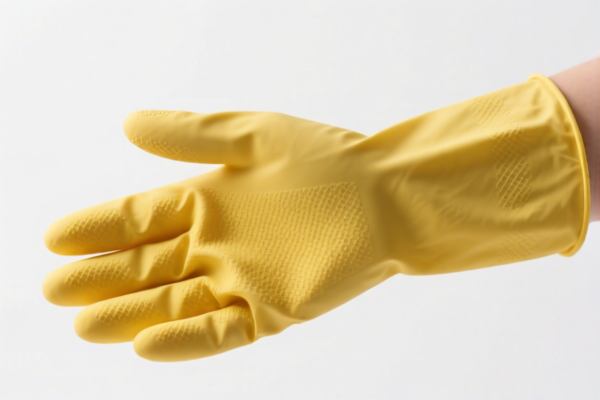
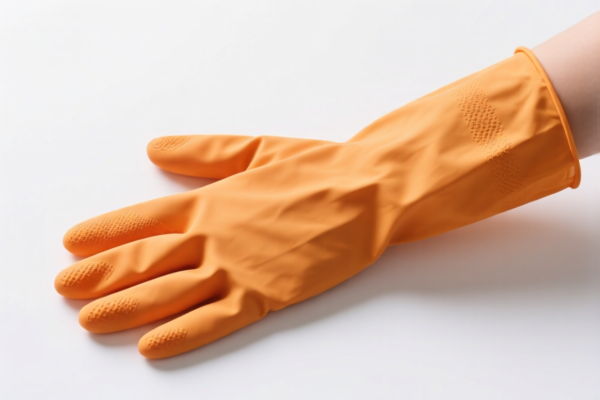
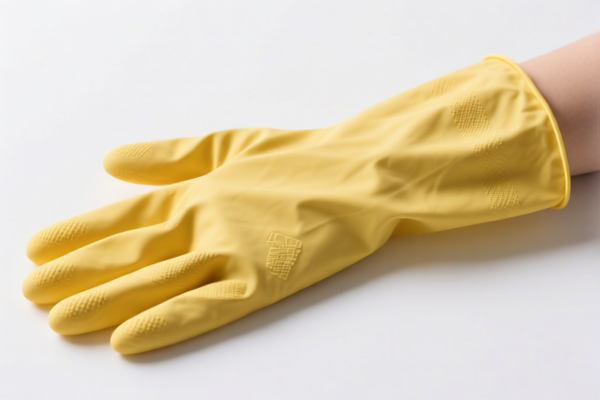
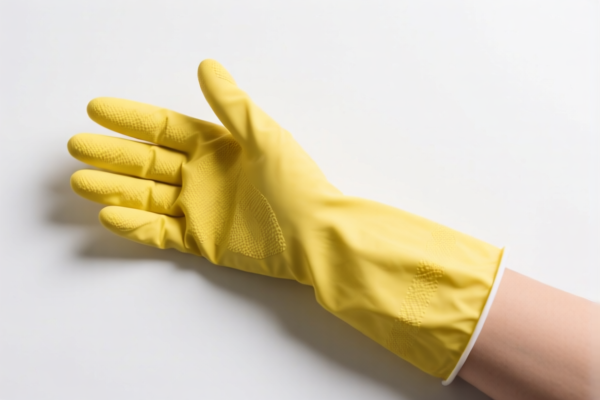
AI Analysis
🚗 Car Beauty Rubber Gloves (Washing Gloves)
🌐 HS Code Reference & Customs Clearance Guide | 2026 Latest Tariff Analysis | Professional Clearance Strategy
📌 I. Product Definition & Classification: What Exactly Are "Car Beauty Gloves"?
Car beauty gloves, often referred to as washing gloves, are essential tools in vehicle detailing and cleaning. They are primarily designed to hold soap suds and water while cleaning the car body without scratching the paint. In international trade, their classification depends heavily on their material composition and manufacturing process (knitted vs. non-woven vs. solid plastic).
There are three main categories based on material: 1. Non-Woven Fabric Gloves (e.g., Microfiber/Sponge-like): Soft, absorbent, often disposable or semi-durable. 2. Plastic/Synthetic Rubber Gloves: Solid, molded gloves, often used for heavy-duty cleaning or chemical handling. 3. Textile/Knitted Gloves: Made from synthetic fibers (like polyester or nylon) knitted into a glove shape, often lined with fleece or microfiber.
⚠️ Critical Distinction Point:
- If the glove is non-woven fabric (felt-like, no weaving) → Look at Chapter 56. - If the glove is solid plastic/rubber (molded, seamless) → Look at Chapter 39. - If the glove is knitted or crocheted textile (fibers interlocked) → Look at Chapter 61.
📦 II. HS Code Classification Details (2026 Latest Tariff Authority Cross-Reference)
| HS Code | Product Description | Application Scenario | Material/Type |
|---|---|---|---|
5603.11.00.70 |
Non-woven fabrics, impregnated, coated, covered or laminated; Gloves made from such materials | Soft washing gloves, microfiber wash mitts, sponge-like gloves | ✅ Non-woven fabric |
3926.20.40.50 |
Other articles of plastics and articles of other materials of heading 39.26; Plastic gloves | Solid plastic gloves, synthetic rubber gloves for heavy-duty cleaning | ✅ Solid Plastic/Rubber |
5603.92.00.70 |
Non-woven fabrics, of synthetic fibers, weighing more than 10 g/m² but not more than 25 g/m²; Industrial/Retail non-woven goods | Thicker non-woven cleaning gloves, industrial use car wash gloves | ✅ Non-woven synthetic fiber |
3926.20.10.50 |
Clothing accessories, made of plastics; Plastic gloves for general use | General-purpose plastic gloves, often thinner, retail packaging | ✅ Plastic accessory |
6116.10.55.10 |
Gloves, impregnated, coated, covered or laminated with plastics, rubber or textile materials; Textile gloves | Knitted synthetic gloves (microfiber/polyester), fleece-lined car wash gloves | ✅ Knitted Textile/Fiber |
🔍 Key Reminder:
- Non-woven gloves (soft, fibrous, no knit pattern) must go to 5603. Misclassifying them as plastic (3926) or textile (6116) can lead to incorrect duty calculations. - Knitted gloves (you can see the loop structure of the fiber) fall under 6116. These are common in premium "microfiber" car wash mitts. - Solid molded gloves (smooth surface, no fiber texture) are classified under 3926.
💰 III. 2026 Latest Tariff Rate Detailed Explanation (Including Additional Taxes, Policy Add-ons)
✅ Applicable Country: United States (US)
✅ Origin: China (CN)
✅ Effective Date: 2025 onwards (including subsequent imports)
🎯 1. 5603.11.00.70 & 5603.92.00.70 —— Non-Woven Washing Gloves
| Item | Content |
|---|---|
| Base Tariff Rate | 0% (ad valorem) |
| USITC Additional Tariff | +25% (Under Section 301, Footnote 9903.88.01 or similar for non-wovens) |
| IEEPA Additional Tariff | +10% (Targeting China/Hong Kong products, effective from 2025) |
| Total Tax Rate | 35.0% |
| Tax Calculation | CIF Value × 35% |
| De Minimis Eligibility | ❌ No (deny_de_minimis applies to Section 301 items) |
| Legal Basis Path | IEEPA:9903.01.25 → IEEPA:9903.01.24 → USITC:5603.11.00.70 → FOOTNOTE:9903.88.01 |
📌 Explanation:
- The 25% USITC tariff is part of the broader Section 301 tariffs on Chinese goods. - The 10% IEEPA tariff is an additional layer targeting specific Chinese-origin items under the International Emergency Economic Powers Act. - Total 35% is a high tariff category. Non-woven gloves are frequently scrutinized; ensure the "non-woven" nature is clearly defined in your commercial invoice (e.g., "Microfiber Non-Woven Car Wash Glove").
🎯 2. 3926.20.40.50 & 3926.20.10.50 —— Plastic/Rubber Gloves
| Item | Content |
|---|---|
| Base Tariff Rate | 6.5% (for 3926.20.40.50) / 0% (for 3926.20.10.50) |
| USITC Additional Tariff | 0% (No Section 301 surcharge for these specific subheadings in many cases, or already included) |
| IEEPA Additional Tariff | +10% (China-specific) |
| Total Tax Rate | 16.5% (for 3926.20.40.50) / 10.0% (for 3926.20.10.50) |
| Tax Calculation | CIF Value × 16.5% / 10% |
| De Minimis Eligibility | ❌ No (IEEPA applies) |
| Legal Basis Path | IEEPA:9901.25 → IEEPA:9903.01.24 → USITC:3926.20.40.50 |
📌 Note:
- Plastic gloves enjoy a significantly lower total tax burden (10%-16.5%) compared to non-woven gloves (35%). - If your car glove is a solid molded rubber/plastic type (e.g., thick cleaning mitts), classifying it under 3926 can save you substantial duty costs compared to 5603. - Caution: Ensure the glove is indeed "solid" and not just a plastic-coated fabric. If it has a fabric backing, it might be argued as textile (6116) or composite, changing the tariff.
🎯 3. 6116.10.55.10 —— Knitted/Textile Car Gloves
| Item | Content |
|---|---|
| Base Tariff Rate | 13.2% |
| USITC Additional Tariff | +7.5% (Section 301 surcharge for certain textile/gloves) |
| IEEPA Additional Tariff | +10% (China-specific) |
| Total Tax Rate | 30.7% |
| Tax Calculation | CIF Value × 30.7% |
| De Minimis Eligibility | ❌ No |
| Legal Basis Path | IEEPA:9903.01.25 → IEEPA:9903.01.24 → USITC:6116.10.55.10 |
📌 Warning:
- Knitted microfiber gloves (very common in "premium" car wash kits) fall here. - 30.7% is still high, but slightly better than the 35% for non-wovens. - Proper documentation proving the "knitted" structure is vital to avoid misclassification to the higher 35% bracket.
🛠️ IV. Customs Clearance Practical Advice (实战避坑指南)
✅ 1. Preparation Checklist (Must-Haves)
| Document | Required? | Explanation |
|---|---|---|
| ✅ Product Specification Sheet | ✔️ | Must state material: "Non-woven microfiber," "Solid PVC/Rubber," or "Knitted Polyester." |
| ✅ Material Sample/Photo | ✔️ | Clear photo showing texture. Non-woven looks like felt; Knitted shows loops; Plastic looks smooth/molded. |
| ✅ Commercial Invoice | ✔️ | Description must match HS Code logic. E.g., "Non-Woven Washing Glove" vs. "Plastic Cleaning Glove." |
| ✅ Packing List | ✔️ | Show unit quantity and packaging type. |
| ✅ Certificate of Origin (CO) | ✔️ | Proves Chinese origin to apply correct IEEPA/Section 301 rates. |
✅ 2. Classification Strategy (Key Mnemonics)
🔥 “Look at the Texture: Felt goes to 5603, Knit to 6116, Solid Plastic to 3926!”
| Scenario | Correct HS Code | Risk of Wrong Classification |
|---|---|---|
| Soft, fuzzy, no loops (Felt-like) | 5603.11.00.70 / 5603.92.00.70 |
If misclassified as Plastic (3926) → Underpayment Risk (Tax diff: 35% vs 16.5%) |
| Smooth, molded, rubbery | 3926.20.40.50 / 3926.20.10.50 |
If misclassified as Non-Woven (5603) → Overpayment Risk (Pay 35% instead of 16.5%) |
| Visible fiber loops (Knitted) | 6116.10.55.10 |
If misclassified as Non-Woven (5603) → Overpayment Risk (Pay 35% instead of 30.7%) |
✅ 3. Special Handling Tips
| Situation | Advice |
|---|---|
| Composite Gloves | If a glove has a plastic coating on a textile base, it may still fall under 6116.10. Do not default to 3926. |
| Set/Kits | If sold as a "Car Wash Kit" including gloves, sponges, and soap, declare the gloves separately if possible, or classify the kit based on its essential character. |
| OEM Branding | Ensure the invoice clearly states "Made in China" to trigger accurate IEEPA calculations. |
| Pre-Ruling | For large volumes, apply for a Binding Ruling from CBP to lock in the HS Code and avoid disputes. |
🌍 V. Global Market Comparison (2026 Latest)
| Country/Region | Recommended HS Code | Tariff (China Origin) | Notes |
|---|---|---|---|
| 🇺🇸 USA | 5603.11.00.70 / 3926.20.40.50 / 6116.10.55.10 |
10% - 35% | High Section 301 + IEEPA taxes. Cost-sensitive. |
| 🇨🇳 China | Same HS Codes | 0% - 6.5% | No additional retaliatory tariffs for domestic use. |
| 🇪🇺 EU | 5603.93 / 3926.20 |
0% - 4.5% | Generally lower duties. CE marking may apply if chemical resistant. |
| 🇬🇧 UK | 5603.93 / 3926.20 |
0% - 5% | Post-Brexit tariffs vary; check UK Global Tariff. |
| 🇯🇵 Japan | 5603.93 / 3926.20 |
0% - 8% | Generally competitive. |
📌 Conclusion:
- The US market is the most expensive due to叠加 (stacking) of Section 301 and IEEPA tariffs. - Plastic gloves (3926) are the most cost-effective to export to the US compared to non-woven (5603) or knitted (6116) alternatives. - Consider supply chain diversification (e.g., sourcing from Vietnam or Mexico) if tariffs exceed profit margins, as these may qualify for lower duties under USMCA or other trade agreements.
📌 VI. Common Mistakes & Pitfalls (Blood & Tears Lessons)
❌ Mistake 1: Calling all "car gloves" "Plastic Gloves" to save tax.
👉 Consequence: If customs inspect and find non-woven fibers, they will reclassify to 5603 and charge 35% + penalties.
❌ Mistake 2: Using "Textile Gloves" for non-woven products.
👉 Consequence: Non-wovens are not "textile" in the knitting/weaving sense. Misclassification leads to HS Code disputes and delays.
❌ Mistake 3: Ignoring IEEPA 10% surcharge.
👉 Consequence: Even if base duty is 0%, the 10% IEEPA still applies. Many importers forget this, leading to underpayment.
✅ Correct Practice:
"Non-Woven Microfiber Car Wash Glove, 100% Polyester, for Automotive Cleaning" → HS 5603.11.00.70
"Solid PVC Rubber Cleaning Glove, Unlined" → HS 3926.20.40.50
🎯 VII. Conclusion: Precise Classification Saves Money!
🎯 Remember the Golden Rule:
🔹 "Non-Woven = 35% (5603), Knitted = 30.7% (6116), Plastic = 16.5% (3926). Choose wisely!"
🔹 "Texture is King. Look under the microscope. Don't guess!"
📌 Pro Tip:
If your car gloves are originating from Vietnam, Malaysia, or Thailand, you may be eligible for lower or zero IEEPA tariffs.
Recommend Advance Ruling before bulk shipping to the US to ensure compliance and optimize cost.
📣 Immediate Action:
📞 Contact a licensed customs broker.
📤 Provide high-resolution photos of the glove's texture.
🚀 Ensure smooth clearance, minimize duties, maximize profit!
✨ Professional clearance starts with accurate classification!
💼 Every dollar in duty saved is pure profit!
Customer Reviews
About HS Code Classification
The Harmonized System (HS) is an internationally standardized nomenclature developed by the World Customs Organization (WCO) to classify traded products. Over 200 countries use the HS system as the basis for customs tariffs, trade statistics, and import/export regulations.
Each HS code follows a hierarchical structure:
- Chapter (2 digits) — Broad category of goods (e.g., Chapter 84: Machinery and Mechanical Appliances)
- Heading (4 digits) — More specific grouping within the chapter
- Subheading (6 digits) — Internationally standardized breakdown, used by all WCO member countries
- National subdivisions (8-10 digits) — Country-specific extensions for further classification, such as US HTSUS 10-digit codes
Correct HS code classification is essential for smooth customs clearance, accurate duty payment, and compliance with trade regulations. Misclassification can lead to customs delays, overpayment of duties, or penalties.
When importing from CN to US, the applicable tariff rates may include:
- Most-Favored-Nation (MFN) rate — The standard duty rate applied to WTO members
- General rate — Applied to countries without trade agreements
- Trade remedy duties — Additional tariffs such as Section 301 (anti-dumping), Section 232 (national security), or countervailing duties
The information provided on this page is for reference purposes only. For official classification, please consult with your local customs authority or a licensed customs broker.