Rubber Gloves for Car Detailing
CN → US| HS Code | Tariff Rate | Origin | Destination | Doc |
|---|---|---|---|---|
| 5603110070 | 35.0% | CN | US | Official Doc |
| 3926204050 | 16.5% | CN | US | Official Doc |
| 5603920070 | 35.0% | CN | US | Official Doc |
| 3926201050 | 10.0% | CN | US | Official Doc |
| 6116105510 | 30.7% | CN | US | Official Doc |
Product Images



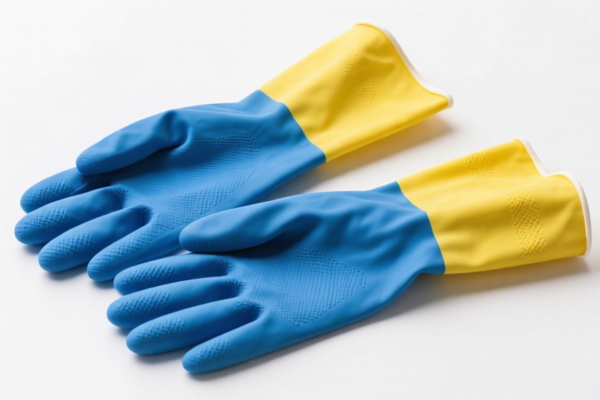
AI Analysis
🚗 Car Detailing Gloves (Professional Cleaning Gear)
🌐 HS Code Reference & Customs Clearance Guide | 2026 Latest Tariff Analysis | Professional Clearance Strategy
📌 I. Product Definition & Classification: What Exactly Are "Car Detailing Gloves"?
Car detailing gloves are specialized protective gear used in automotive care, primarily designed for washing, polishing, and waxing vehicles. In international trade, their classification depends heavily on material composition and physical structure (knitted vs. non-woven vs. plastic-coated).
Because "car detailing gloves" is a functional description rather than a material one, they fall into three primary HS Code categories:
1. Non-Woven Fiber Gloves (Microfiber/Chamois-like):
Made from non-woven fabrics or synthetic fibers. These are often single-use or low-cost disposable gloves used for general washing.
* Key Characteristic: No knitting, felted or bonded fibers.
2. Plastic/Synthetic Coated Gloves:
Made of plastic (PVC, nitrile, or latex) or coated with synthetic materials. These provide waterproofing and chemical resistance.
* Key Characteristic: Solid plastic material or fabric coated with plastic.
3. Textile/Knitted Gloves (Microfiber Suede):
Made from knitted synthetic fibers (like microfiber polyester). These are reusable, high-quality gloves used for drying and buffing.
* Key Characteristic: Knitted or crocheted structure, textile-based.
⚠️ Critical Distinction:
- If it’s a single-use, soft, fuzzy sheet/glove → Likely Non-Woven (5603).
- If it’s a solid, waterproof, plastic-looking glove → Likely Plastic (3926).
- If it’s a reusable, knitted, fuzzy microfiber glove → Likely Textile (6116).
📦 II. HS Code Classification Details (2026 Latest Tariff Authority Comparison)
| HS Code | Product Description | Application Scenario | Material Type |
|---|---|---|---|
5603.11.00.70 |
Non-woven fabrics of synthetic fibers, weight ≤ 25g/m² (Gloves Category) | Disposable car wash mitts, microfiber cleaning wipes/gloves, low-weight non-wovens | ✅ Non-Woven Synthetic |
3926.20.40.50 |
Other articles of plastics: Gloves & Mittens | Plastic-coated work gloves, PVC rubber gloves for detailing, synthetic plastic gloves | ✅ Plastic/Synthetic Coated |
5603.92.00.70 |
Non-woven fabrics of textile materials, weight 25-70g/m² (Gloves Category) | Heavy-duty non-woven detailing gloves, industrial cleaning gloves, sponge-fiber blends | ✅ Non-Woven Textile/Sponge |
3926.20.10.50 |
Other articles of plastics: Gloves & Mittens (Specific Sub-category) | Thin plastic gloves, specific plastic glove classifications for retail/industrial use | ✅ Plastic (Specific) |
6116.10.55.10 |
Gloves, mittens, and mitts, coated or covered with plastic, knitted or crocheted (Textile Base) | Microfiber drying gloves, knitted textile gloves with plastic coating, reusable suede-like detailing gloves | ✅ Knitted Textile/Plastic Coated |
🔍 Key Reminder:
- Disposable, soft, fuzzy gloves are almost always classified under Chapter 56 (Non-wovens) due to their manufacturing process.
- Reinforced, durable, or waterproof gloves are classified under Chapter 39 (Plastics) or Chapter 61 (Apparel).
- Misclassification leads to significant duty differences (0% vs. 35%).
💰 III. 2026 Latest Tariff Rate Breakdown (Including Surtaxes & Policy Add-ons)
✅ Applicable Country: United States (US)
✅ Origin: China (CN)
✅ Effective Date: Post-November 10, 2025 (including subsequent imports)
🎯 1. 5603.11.00.70 & 5603.92.00.70 —— Non-Woven Detailing Gloves (Disposable/Light Duty)
| Item | Content |
|---|---|
| Base Tariff | 0% (ad valorem) |
| Section 301 Surtax | +25% (USITC Footnote) |
| IEEPA Add-on Tariff | +10% (Targeted China/HK products, effective Nov 10, 2025) |
| Total Rate | 35.0% |
| Tax Calculation | CIF Value × 35% |
| De Minimis Eligibility | ❌ Not Eligible (Denied) |
| Legal Basis Path | IEEPA:9903.01.25 → USITC:5603.11.00.70 / 5603.92.00.70 |
📌 Explanation:
- Non-woven gloves, even if used for cleaning, are subject to the 35% total duty if made in China.
- The 0% base rate is offset by the 25% Section 301 tariff and the new 10% IEEPA tariff.
- Cost Impact: High. These are low-value items, so a 35% duty significantly eats into margins.
🎯 2. 3926.20.40.50 —— Plastic/Synthetic Detailing Gloves
| Item | Content |
|---|---|
| Base Tariff | 6.5% |
| Section 301 Surtax | 0% (Exempt or low impact depending on specific sub-classification) |
| IEEPA Add-on Tariff | +10% |
| Total Rate | 16.5% |
| Tax Calculation | CIF Value × 16.5% |
| De Minimis Eligibility | ❌ Not Eligible |
| Legal Basis Path | IEEPA:9903.01.24 → USITC:3926.20.40.50 |
📌 Note:
- Plastic gloves often benefit from lower base duties.
- However, the 10% IEEPA tariff still applies.
- Cost Impact: Moderate. Lower than non-wovens.
🎯 3. 3926.20.10.50 —— Specific Plastic Gloves (Lower Duty Category)
| Item | Content |
|---|---|
| Base Tariff | 0% |
| Section 301 Surtax | 0% |
| IEEPA Add-on Tariff | +10% |
| Total Rate | 10.0% |
| Tax Calculation | CIF Value × 10% |
| De Minimis Eligibility | ❌ Not Eligible |
| Legal Basis Path | IEEPA:9903.01.24 → USITC:3926.20.10.50 |
📌 Advantage:
- This is the most favorable classification among the options if your gloves fit this specific plastic category.
- Only 10% total duty. Ideal for bulk imports of standard plastic detailing gloves.
🎯 4. 6116.10.55.10 —— Knitted Textile/Microfiber Detailing Gloves
| Item | Content |
|---|---|
| Base Tariff | 13.2% |
| Section 301 Surtax | +7.5% (Partial surtax applied) |
| IEEPA Add-on Tariff | +10% |
| Total Rate | 30.7% |
| Tax Calculation | CIF Value × 30.7% |
| De Minimis Eligibility | ❌ Not Eligible |
| Legal Basis Path | IEEPA:9903.01.24 → USITC:6116.10.55.10 |
📌 Note:
- High-end microfiber drying gloves (knitted) fall here.
- While the material is textile, the 7.5% Section 301 surtax and 10% IEEPA make the total 30.7%.
- Cost Impact: High. Comparable to non-wovens.
🛠️ IV. Customs Clearance Practical Advice (Real-World Pitfall Guide)
✅ 1. Documentation Checklist (Non-Negotiable)
| Document | Required? | Description |
|---|---|---|
| ✅ Product Specification Sheet | ✔️ | Must specify: Material (e.g., "100% Polyester Microfiber Non-Woven" vs. "Nitrile Coated Cotton") |
| ✅ Material Composition Label | ✔️ | Clear indication of % synthetic fiber vs. plastic vs. textile |
| ✅ Product Photos (Front/Back/Tag) | ✔️ | Show texture (knitted vs. non-woven) and any coating |
| ✅ Commercial Invoice | ✔️ | Clearly state "Gloves for Car Washing" but specify material in description |
| ✅ Packing List | ✔️ | Ensure quantity matches invoice; avoid mixed shipments with different HS codes |
| ✅ Import License (if applicable) | ❌ | Generally not required for gloves, but check for restricted plastic imports |
✅ 2. Declaration Tips (Key Mnemonics)
🔥 “Material Defines Code, Function Defines Use, Avoid ‘Generic’ Terms!”
| Scenario | Correct Declaration | Wrong Declaration | Consequence |
|---|---|---|---|
| Disposable Microfiber Mitt | "Non-woven synthetic fiber gloves for cleaning" | "Car Washing Gloves" | ❌ Customs may reclassify based on material → Potential audit |
| Plastic-Coated Work Glove | "Plastic coated cotton gloves" | "Rubber Gloves" | ❌ "Rubber" implies natural rubber (Chapter 40) → Wrong HS Code |
| Microfiber Drying Glove | "Knitted polyester microfiber gloves" | "Suede Gloves" | ❌ "Suede" implies leather (Chapter 41) → Wrong HS Code |
| Mixed Pack (Gloves + Sponge) | Split HS Codes | "Cleaning Kit" | ❌ If not split, may be taxed as highest duty item |
💡 Pro Tip:
- Never use just "Rubber Gloves." If it’s synthetic plastic, use "Plastic-coated" or "Synthetic Gloves."
- If it’s non-woven, explicitly state "Non-woven fabric" to justify Chapter 56.
✅ 3. Special Circumstances Handling
| Situation | Handling Advice |
|---|---|
| OEM Private Label | Provide brand authorization if claiming trademark benefits; otherwise, ship as unbranded generic gloves |
| Mixed Materials (e.g., Plastic Palm, Cotton Back) | Declare based on the principal material or the material giving the essential character. Usually, if plastic coating >50% weight, it goes to Ch. 39 |
| Samples for Evaluation | Mark as "Samples - Not for Resale" to avoid commercial duty, but value must still be declared |
| High-Value Microfiber Sets | Consider declaring gloves separately from towels if packaged together, to optimize HS code usage |
🌍 V. Global Market Clearance Comparison (2026 Latest)
| Country/Region | Recommended HS Code | Duty Rate (China Origin) | Certification Required | Notes |
|---|---|---|---|---|
| 🇺🇸 USA | 3926.20.10.50 (Best Case) |
10.0% | N/A | 5603 items face 35% duty. Optimize material description! |
| 🇨🇳 China | 6116.10.55.10 |
10-13% | N/A | Import duty depends on material |
| 🇪🇺 EU | 4015.11.00 (Latex) / 6216.00 (Textile) |
4-12% | REACH Compliance | Lower tariffs than US, but strict chemical regulations |
| 🇬🇧 UK | Similar to EU | 4-12% | UKCA Mark (if applicable) | Post-Brexit rules apply |
| 🇦🇺 Australia | 4015.11.00 |
5% | N/A | Competitive duty rates |
📌 Conclusion:
- USA is the most challenging market due to the 10% IEEPA surtax + Section 301 tariffs.
- Optimization Strategy: If possible, structure products to qualify for3926.20.10.50(10% total) rather than5603(35% total) or6116(30.7% total).
📌 VI. Common Mistakes & Pitfalls (Blood & Tears Lessons)
❌ Mistake 1: Calling "Microfiber Gloves" "Rubber Gloves"
👉 Consequence: Incorrect HS Code (Chapter 40 vs 56/39) → Customs seizure or reclassification penalties
❌ Mistake 2: Ignoring the "Non-Woven" structure
👉 Consequence: Declaring non-woven gloves as "Knitted Textile" → 30.7% duty instead of 35% (or vice versa) → Audit risk
❌ Mistake 3: Failing to disclose Material Composition
👉 Consequence: Customs uses default duty rates (often highest) → Unexpected high duties + delays
❌ Mistake 4: Combining Gloves with Other Items (e.g., Buckets) in One Line Item
👉 Consequence: Mixed duties apply → Complex clearance, potential misdeclaration
✅ Correct Practice:
"Non-woven synthetic fiber gloves for automotive cleaning, model XYZ, 100% Polyester, Weight: 20g/m²"
🎯 VII. Conclusion: Smart Classification Saves Money!
🎯 Remember the Rules:
🔹 "Non-Woven = 35%, Plastic = 10-16%, Knitted Textile = 30.7%"
🔹 "Specify Material, Not Just Function. 'Car Glove' is not an HS Code!"
🔹 "IEEPA 10% hits all categories from China. Plan accordingly."
📌 Tips for Importers:
- If you are importing high volumes, consider sourcing Plastic-coated gloves (
3926.20.10.50) to minimize duty at 10%.- If your product is truly Non-Woven Microfiber, budget for 35% duty or explore Country of Origin Shifts (e.g., Vietnam, Thailand) for IEEPA exemption.
- Apply for Pre-Ruling with CBP if your product structure is complex (e.g., mixed materials).
📣 Immediate Action:
📞 Review your BOM (Bill of Materials).
🚀 Declare with exact material percentages.
✅ Ensure your invoice matches the HS Code description perfectly.
✨ Professional Customs Clearance Starts with Precise Classification!
💼 Every percentage point of duty saved is pure profit!
Customer Reviews
About HS Code Classification
The Harmonized System (HS) is an internationally standardized nomenclature developed by the World Customs Organization (WCO) to classify traded products. Over 200 countries use the HS system as the basis for customs tariffs, trade statistics, and import/export regulations.
Each HS code follows a hierarchical structure:
- Chapter (2 digits) — Broad category of goods (e.g., Chapter 84: Machinery and Mechanical Appliances)
- Heading (4 digits) — More specific grouping within the chapter
- Subheading (6 digits) — Internationally standardized breakdown, used by all WCO member countries
- National subdivisions (8-10 digits) — Country-specific extensions for further classification, such as US HTSUS 10-digit codes
Correct HS code classification is essential for smooth customs clearance, accurate duty payment, and compliance with trade regulations. Misclassification can lead to customs delays, overpayment of duties, or penalties.
When importing from CN to US, the applicable tariff rates may include:
- Most-Favored-Nation (MFN) rate — The standard duty rate applied to WTO members
- General rate — Applied to countries without trade agreements
- Trade remedy duties — Additional tariffs such as Section 301 (anti-dumping), Section 232 (national security), or countervailing duties
The information provided on this page is for reference purposes only. For official classification, please consult with your local customs authority or a licensed customs broker.