Rubber Gloves for Food Service
CN → US| HS Code | Tariff Rate | Origin | Destination | Doc |
|---|---|---|---|---|
| 4015191150 | 38.0% | CN | US | Official Doc |
| 3926204050 | 16.5% | CN | US | Official Doc |
| 6116106500 | 24.5% | CN | US | Official Doc |
| 6116109500 | 24.5% | CN | US | Official Doc |
| 4015195100 | 49.0% | CN | US | Official Doc |
Product Images
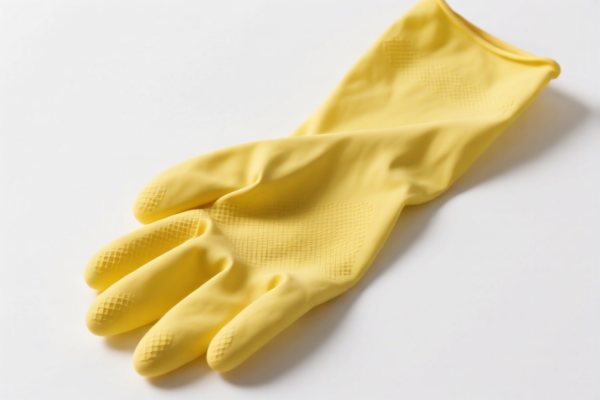
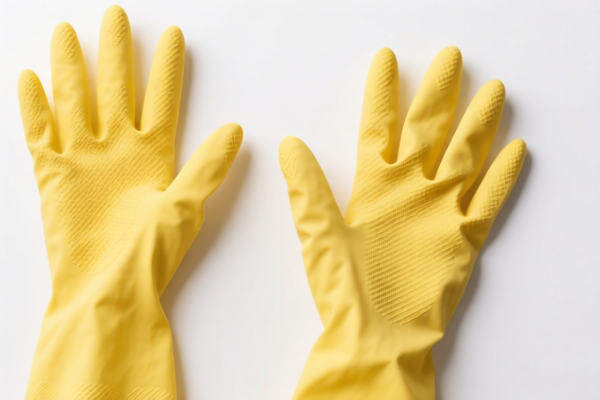

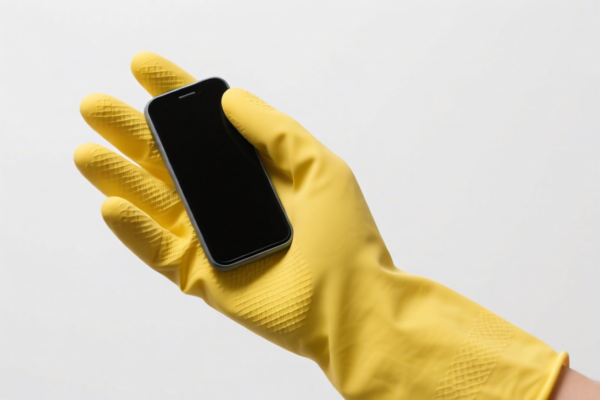
AI Analysis
🧤 Rubber Gloves for Food Service (Rubber Cleaners)
🌐 HS Code Reference & Customs Clearance Guide | 2026 Latest Tariff Analysis | Professional Compliance Strategy
📌 I. Product Definition & Classification: Do You Really Understand "Rubber Gloves"?
Rubber gloves for food service are essential protective equipment used in food handling, cleaning, and hygiene maintenance. In international trade, their classification depends heavily on material composition, manufacturing process (impregnated vs. molded), and specific use case.
Key Distinctions: * Sulfur-Vulcanized Rubber Gloves (Chapter 40): Typically durable, reusable industrial/cleaning gloves. * Textile-Based Impregnated Gloves (Chapter 61): Fabric gloves coated/impregnated with rubber for disposable or light-duty use. * Other Plastic Rubber Articles (Chapter 39): A less common but possible classification if the material is interpreted as a general plastic/rubber composite not meeting Chapter 40 criteria.
⚠️ Critical Classification Point:
- If the glove is made of pure sulfur-vulcanized rubber and intended for cleaning/industrial use → Chapter 40.
- If the glove is textile (knitted/woven) impregnated/coated with rubber → Chapter 61.
- Misclassification can lead to significant tariff differences (16.5% vs. 49.0%).
📦 II. HS Code Classification Details (2026 Latest Tariff Authority Comparison)
| HS Code | Product Description | Application Scenario | Material/Process | Total Tax Rate |
|---|---|---|---|---|
4015.19.11.50 |
Rubber gloves, form-specific, for food cleaning, classified under clothing/accessories | Heavy-duty food service cleaning, reusable | Sulfur-vulcanized rubber | 38.0% |
3926.20.40.50 |
Gloves, form-specific, inferred as rubber-like products, for cleaning, no material conflict | General cleaning, ambiguous rubber/plastic mix | Plastic/Rubber composite | 16.5% |
6116.10.65.00 |
Rubber gloves, impregnated/coated, classified as other items | Disposable light-duty food service, textile base | Textile impregnated with rubber | 24.5% |
6116.10.95.00 |
Rubber gloves, for cleaning, meeting impregnation/coating requirements | General cleaning, textile-based | Textile impregnated with rubber | 24.5% |
4015.19.51.00 |
Rubber gloves, sulfured rubber category, for gloves | Heavy-duty industrial/food cleaning | Sulfur-vulcanized rubber | 49.0% |
🔍 Key Reminder:
- Chapter 40 (4015) vs. Chapter 61 (6116): The primary distinction is whether the glove is made entirely of rubber (Ch 40) or has a textile substrate coated with rubber (Ch 61).
- Chapter 39 (3926): Rarely used for pure rubber gloves; only if the material is ambiguous and fits "other articles of plastics."
- Highest Tax Risk:4015.19.51.00at 49.0% is the most expensive due to higher base tariffs and Section 301 duties.
💰 III. 2026 Latest Tariff Rate Details (Including Surtaxes & Policy Add-ons)
✅ Applicable Country: United States (US)
✅ Origin: China (CN)
✅ Effective Date: From 2025-11-10 onwards (including subsequent imports)
🎯 1. 4015.19.11.50 —— Rubber Gloves for Food Cleaning (Clothing Category)
| Item | Content |
|---|---|
| Base Tariff | 3.0% (ad valorem) |
| Section 301 Surtax | +25.0% (From USITC Footnote 9903.40.01) |
| IEEPA Surtax | +10.0% (For China/HK products, effective from 2025-11-10) |
| Total Tax Rate | 38.0% |
| Tax Calculation | CIF Value × 38.0% |
| De Minimis Exemption | ❌ Not Available (deny_de_minimis) |
| Legal Basis Path | IEEPA:9903.01.25 → IEEPA:9903.01.24 → USITC:4015.19.11.50 → FOOTNOTE:9903.40.01 |
📌 Explanation:
- The 25% Section 301 is imposed under the US Trade Act Section 301 for Chinese goods;
- The 10% IEEPA is an additional levy under the International Emergency Economic Powers Act targeting Chinese imports;
- Total 38% is a high tariff, requiring proactive cost management.
🎯 2. 3926.20.40.50 —— Other Plastic/Rubber Articles (Gloves)
| Item | Content |
|---|---|
| Base Tariff | 6.5% |
| Section 301 Surtax | +0.0% (Exempt from Section 301) |
| IEEPA Surtax | +10.0% |
| Total Tax Rate | 16.5% |
| Tax Calculation | CIF Value × 16.5% |
| De Minimis Exemption | ❌ Not Available |
| Legal Basis Path | IEEPA:9901.25 → IEEPA:9903.01.24 → USITC:3926.20.40.50 |
📌 Note:
- This is the lowest tariff option among the listed codes.
- However, misclassification risk is high. Customs may challenge if the product is clearly rubber (Ch 40).
- Only applicable if the material cannot be definitively classified as sulfur-vulcanized rubber under Chapter 40.
🎯 3. 6116.10.65.00 & 6116.10.95.00 —— Textile Gloves Impregnated with Rubber
| Item | Content |
|---|---|
| Base Tariff | 7.0% |
| Section 301 Surtax | +7.5% |
| IEEPA Surtax | +10.0% |
| Total Tax Rate | 24.5% |
| Tax Calculation | CIF Value × 24.5% |
| De Minimis Exemption | ❌ Not Available |
| Legal Basis Path | IEEPA:9903.01.25 → IEEPA:9903.01.24 → USITC:6116.10.65.00 |
📌 Note:
- Applies to textile-based gloves coated with rubber (e.g., cotton gloves with rubber dip).
- 24.5% is moderate but higher than3926.20.40.50.
- Must provide evidence of textile substrate.
🎯 4. 4015.19.51.00 —— Sulfur-Vulcanized Rubber Gloves (Highest Tax)
| Item | Content |
|---|---|
| Base Tariff | 14.0% |
| Section 301 Surtax | +25.0% |
| IEEPA Surtax | +10.0% |
| Total Tax Rate | 49.0% |
| Tax Calculation | CIF Value × 49.0% |
| De Minimis Exemption | ❌ Not Available |
| Legal Basis Path | IEEPA:9903.01.25 → IEEPA:9903.01.24 → USITC:4015.19.51.00 → FOOTNOTE:9903.40.01 |
📌 Warning:
- This is the most expensive classification due to the 14% base tariff.
- Applies to heavy-duty, fully rubber gloves (e.g., industrial cleaning gloves).
- Avoid unless necessary due to high cost impact.
🛠️ IV. Customs Clearance Practical Advice (Real-World Pitfall Guide)
✅ 1. Document Checklist (All Required)
| Document | Required | Description |
|---|---|---|
| ✅ Product Specification Sheet | ✔️ | Material composition, manufacturing process, use case |
| ✅ Material Test Report | ✔️ | Third-party lab report confirming rubber vs. plastic vs. textile |
| ✅ Product Photos (with Label) | ✔️ | Clear view of label, texture, and packaging |
| ✅ Commercial Invoice | ✔️ | Must specify "Rubber Gloves for Food Service" and HS Code |
| ✅ Packing List | ✔️ | Detailed item count, weight, dimensions |
| ✅ Certificate of Origin (CO) | ✔️ | If applicable for non-Chinese origin |
| ✅ FDA Registration (if food contact) | ✔️ | Required for food service gloves in the US |
✅ 2. Declaration Tips (Key Mnemonics)
🔥 "Material First, Process Second, Name Precise, Tax Reduced!"
| Scenario | Correct Declaration | Incorrect Practice |
|---|---|---|
| Fully rubber gloves | 4015.19.11.50 or 4015.19.51.00 |
Misclassified as 3926 → Risk of penalty |
| Textile + rubber coated | 6116.10.65.00 or 6116.10.95.00 |
Misclassified as 4015 → Higher tax |
| Ambiguous material | 3926.20.40.50 (if provable) |
Forced classification → Customs audit |
| Food-contact gloves | Include FDA compliance | Missing FDA info → Seizure risk |
✅ 3. Special Cases Handling
| Case | Handling Advice |
|---|---|
| OEM Custom Gloves | Provide customer order + design specs to avoid "non-standard" classification |
| Disposable vs. Reusable | Clearly state in description; affects Chapter 40 vs. 61 |
| Food-Grade Certification | Provide FDA 21 CFR 177.2600 compliance proof |
| Mixed Containers | Declare each HS Code separately; do not mix codes |
🌍 V. Global Market Clearance Comparison (2026 Latest)
| Country/Region | Recommended HS Code | Tariff | Certification Requirement | Remarks |
|---|---|---|---|---|
| 🇺🇸 USA | 3926.20.40.50 (if possible) |
16.5% | FDA + RoHS | 4015.19.51.00 is 49% |
| 🇨🇳 China | 4015.19.11.50 |
5% | CCC + RoHS | No extra surtaxes |
| 🇪🇺 EU | 4015.19.11 |
0% (if CE) | CE + REACH | No surtaxes |
| 🇦🇺 Australia | 4015.19.11 |
5% | TGA | No surtaxes |
| 🇯🇵 Japan | 4015.19.11 |
0% | PSE | No surtaxes |
📌 Conclusion:
- USA is the only market with high surtaxes;
- China-produced gloves face high tariffs in the US, so consider supply chain adjustments or legal classification strategies.
📌 VI. Common Errors & Pitfall Guide (Blood Lesson)
❌ Error 1: Declaring "rubber gloves" without specifying material
👉 Consequence: Customs assigns highest duty (4015.19.51.00 → 49%)
❌ Error 2: Mixing textile and rubber gloves in one declaration
👉 Consequence: Each item re-classified separately → Higher total tax + penalties
❌ Error 3: No FDA documentation for food-contact gloves
👉 Consequence: Seizure by CBP or FDA hold
❌ Error 4: Using vague terms like "cleaning gloves"
👉 Consequence: Ambiguity leads to manual classification → Delays + extra fees
✅ Correct Practice:
"Sulfur-Vulcanized Rubber Gloves, Food Service Grade, FDA Compliant, Model XYZ, Pack of 100"
🎯 VII. Conclusion: Professional Declaration Saves Money!
🎯 Remember:
🔹 "Material defines HS Code, Process defines Chapter, Name defines Clarity"
🔹 "Tax rate difference: 16.5% vs 49% = Huge profit impact!"
🔹 "FDA compliance is non-negotiable for food service products"
📌 Pro Tip:
- If your gloves are originating from Vietnam, Mexico, Thailand, or Malaysia, you may qualify for IEEPA exemptions, reducing rates to 0%~5%.
- Apply for an Advance Ruling from CBP to confirm the correct HS Code before shipment.
📣 Take Action Now:
📞 Consult a professional customs broker + Provide product images + Apply for HS Code Advance Ruling
🚀 Ensure smooth clearance, efficient export, and maximized profit margins!
✨ Professional clearance starts with accurate classification!
💼 Every cent of cost deserves precise calculation!
Customer Reviews
About HS Code Classification
The Harmonized System (HS) is an internationally standardized nomenclature developed by the World Customs Organization (WCO) to classify traded products. Over 200 countries use the HS system as the basis for customs tariffs, trade statistics, and import/export regulations.
Each HS code follows a hierarchical structure:
- Chapter (2 digits) — Broad category of goods (e.g., Chapter 84: Machinery and Mechanical Appliances)
- Heading (4 digits) — More specific grouping within the chapter
- Subheading (6 digits) — Internationally standardized breakdown, used by all WCO member countries
- National subdivisions (8-10 digits) — Country-specific extensions for further classification, such as US HTSUS 10-digit codes
Correct HS code classification is essential for smooth customs clearance, accurate duty payment, and compliance with trade regulations. Misclassification can lead to customs delays, overpayment of duties, or penalties.
When importing from CN to US, the applicable tariff rates may include:
- Most-Favored-Nation (MFN) rate — The standard duty rate applied to WTO members
- General rate — Applied to countries without trade agreements
- Trade remedy duties — Additional tariffs such as Section 301 (anti-dumping), Section 232 (national security), or countervailing duties
The information provided on this page is for reference purposes only. For official classification, please consult with your local customs authority or a licensed customs broker.