Rubber Hose Assembly and Accessories
CN → US| HS Code | Tariff Rate | Origin | Destination | Doc |
|---|---|---|---|---|
| 4009110000 | 37.5% | CN | US | Official Doc |
| 4009120050 | 20.0% | CN | US | Official Doc |
| 5909002000 | 38.3% | CN | US | Official Doc |
Product Images
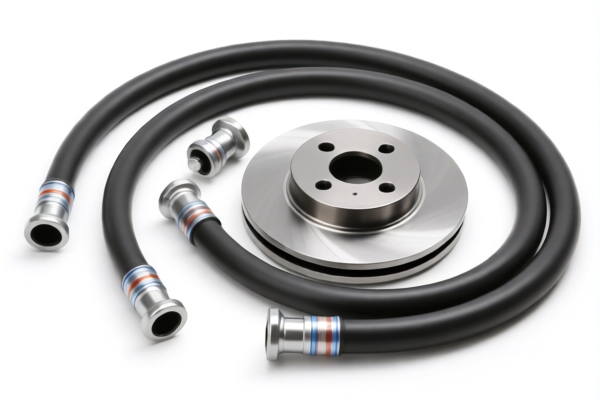
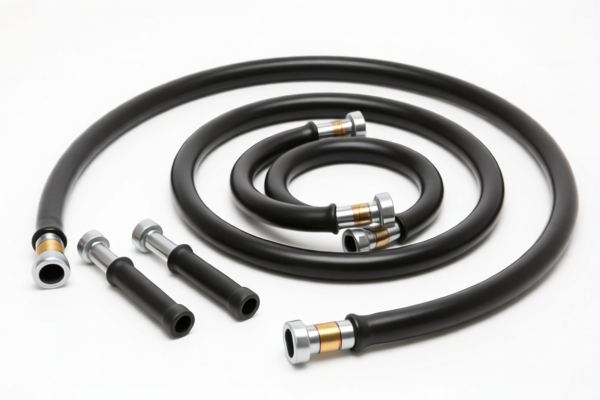
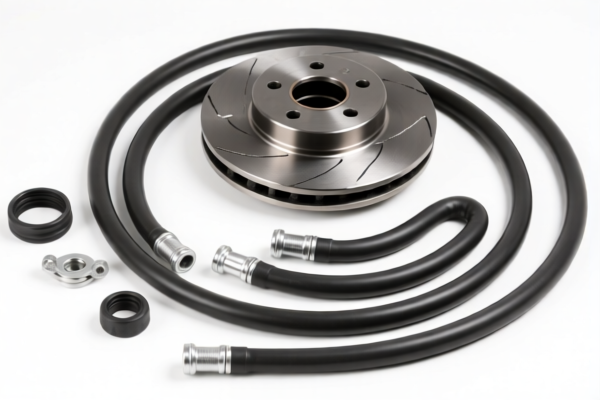
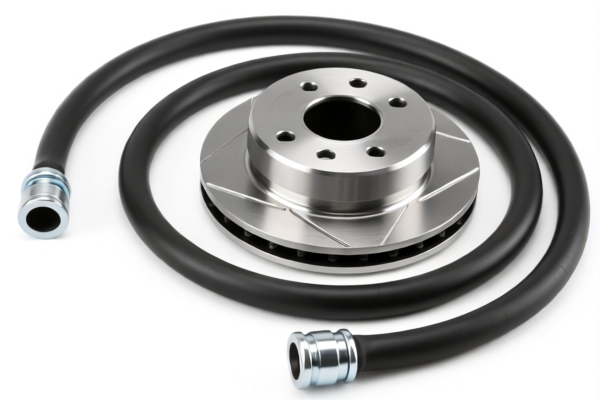
AI Analysis
🛢️ Rubber Hose Assembly and Accessories
🌐 HS Code Reference & Customs Clearance Guide | 2026 Latest Tariff Analysis | Professional Clearance Strategy
📌 I. Product Definition and Classification: Do You Really Understand "Rubber Hoses"?
Rubber hoses are critical components in fluid transmission systems, used extensively in automotive, industrial, construction, and agricultural machinery. In international trade, the classification hinges on material composition (Vulcanized Rubber vs. Textiles) and structure (With/Without Fittings).
Rubber Hoses (Chapter 40): Made primarily of vulcanized rubber. This is the most common classification for flexible tubes used for oil, air, water, or chemicals. Textile Hoses (Chapter 59): Made of textile materials with a rubber or similar coating, often used for high-pressure or specialized industrial applications.
⚠️ Key Distinction Point:
- If the hose is purely rubber (with or without fittings/accessories) → Falls under 4009
- If the hose is textile-based with rubber coating/lining → Falls under 5909
- "Assembly": The presence of fittings (flanges, couplings) does not change the classification from rubber/textile to metal/plastic, provided the rubber/textile constitutes the essential character.
📦 II. HS Code Classification Details (2026 Latest Tariff Authority Comparison)
| HS Code | Product Description | Applicability | Material/Structure Key |
|---|---|---|---|
4009.11.00.00 |
Rubber hoses, without fittings, with reinforcement only | Basic rubber tubes, no external fittings | ✅ Vulcanized Rubber |
4009.12.00.50 |
Rubber hoses, with fittings/accessories | Hoses equipped with couplings, flanges, or connectors | ✅ Vulcanized Rubber + Accessories |
5909.00.20.00 |
Textile hose and similar tubing, of rubber or similar material | Hose made of textile fabric, coated/lined with rubber | ❌ Textile Core + Rubber |
🔍 Important Reminder:
- 4009.11 vs 4009.12: The main difference is the presence of fittings. If the hose has ends joined to metal/plastic fittings for immediate use, it generally falls under 4009.12. If it’s a raw hose sold for cutting and fitting later, it’s 4009.11. - 4009 vs 5909: If the structural integrity comes from textile reinforcement (not just rubber), customs may scrutinize for 5909. However, most standard "rubber hoses" are classified under 4009.
💰 III. 2026 Latest Tariff Rate Breakdown (Including Surtaxes, Policy Add-ons)
✅ Applicable Country: United States (US)
✅ Country of Origin: China (CN)
✅ Effective Time: November 10, 2025 onwards (including subsequent imports)
🎯 1. 4009.11.00.00 – Rubber Hoses, Without Fittings
| Item | Detail |
|---|---|
| Base Tariff Rate | 2.5% (Ad Valorem) |
| Section 301 Surcharge | +25.0% (Additional Duty under US Trade Act Sec. 301) |
| IEEPA Surcharge | +10.0% (Section 122 Tariff on China/HK Products, effective Nov 10, 2025) |
| Total Tariff Rate | 37.5% |
| Tax Calculation | CIF Value × 37.5% |
| De Minimis Eligibility | ❌ No (deny_de_minimis) |
| Legal Basis Path | IEEPA:9903.01.25 → Section 301: 9903.88.01 → USITC:4009.11.00.00 |
📌 Explanation:
- Base 2.5%: Standard Most Favored Nation (MFN) rate for rubber hoses.
- 301 Surtax 25%: Applied to most Chinese rubber products due to trade tensions.
- IEEPA 10%: New surcharge under International Emergency Economic Powers Act targeting specific Chinese imports.
- Total 37.5%: High burden. Importers must factor this into landed cost calculations.
🎯 2. 4009.12.00.50 – Rubber Hoses, With Fittings/Accessories
| Item | Detail |
|---|---|
| Base Tariff Rate | 2.5% |
| Section 301 Surcharge | +7.5% (Reduced Section 301 rate for certain specific items with accessories) |
| IEEPA Surcharge | +10.0% (Section 122 Tariff) |
| Total Tariff Rate | 20.0% |
| Tax Calculation | CIF Value × 20.0% |
| De Minimis Eligibility | ❌ No (deny_de_minimis) |
| Legal Basis Path | IEEPA:9903.01.25 → Section 301: 9903.88.01 → USITC:4009.12.00.50 |
📌 Explanation:
- Base 2.5%: Same base rate as without fittings.
- 301 Surtax 7.5%: Significant Savings! Certain rubber hose assemblies with fittings may qualify for a lower 301 exclusion or reduced rate compared to bare hoses (25%). Verify specific HTS subheading exclusion lists.
- IEEPA 10%: Still applies.
- Total 20.0%: Much more competitive than4009.11(37.5%).
- Strategy: If your product includes fittings (couplings, flanges), ensure you classify under 4009.12 to benefit from the lower 301 surcharge.
🎯 3. 5909.00.20.00 – Textile Hose & Similar Tubing
| Item | Detail |
|---|---|
| Base Tariff Rate | 3.3% |
| Section 301 Surcharge | +25.0% |
| IEEPA Surcharge | +10.0% (Section 122 Tariff) |
| Total Tariff Rate | 38.3% |
| Tax Calculation | CIF Value × 38.3% |
| De Minimis Eligibility | ❌ No (deny_de_minimis) |
| Legal Basis Path | IEEPA:9903.01.25 → Section 301: 9903.88.01 → USITC:5909.00.20.00 |
📌 Explanation:
- Base 3.3%: Slightly higher base rate than rubber hoses.
- 301 Surtax 25%: Full additional duty applies.
- IEEPA 10%: Applies.
- Total 38.3%: Highest among the three options. Avoid this classification unless the product is genuinely textile-based and cannot be classified under Chapter 40.
🛠️ IV. Customs Clearance Practical Advice (Battle-Proven Pitfall Guide)
✅ 1. Required Documentation Checklist (Non-Negotiable)
| Document | Mandatory | Explanation |
|---|---|---|
| ✅ Product Specification Sheet | ✔️ | Must state: Material (Vulcanized Rubber vs. Textile), Diameter, Length, Pressure Rating. |
| ✅ Material Composition Statement | ✔️ | Explicitly declare "Vulcanized Rubber" to support 4009 classification. Avoid vague terms like "flexible tube." |
| ✅ Product Photos (Including Fittings) | ✔️ | Show if the hose has pre-attached fittings (for 4009.12) or is bare (for 4009.11). |
| ✅ Commercial Invoice | ✔️ | Clearly describe as "Rubber Hose Assembly" or "Vulcanized Rubber Hose." |
| ✅ Packing List | ✔️ | Detail units, weights, and dimensions. |
| ✅ Country of Origin Certificate | ✔️ | Crucial for applying Section 122 and 301 surcharges. |
✅ 2. Declaration Tips (Key Mnemonic)
🔥 "Rubber Base, Fittings Matter! Bare vs. Assembly, Tax Varies!"
| Scenario | Correct HS Code | Incorrect Practice | Consequence |
|---|---|---|---|
| Bare Rubber Hose (No fittings) | 4009.11.00.00 |
Declaring as "With Fittings" | Risk of misclassification, penalties. |
| Hose with Fittings/Couplings | 4009.12.00.50 |
Declaring as "Bare Hose" | Overpaying tariff (37.5% vs 20%). |
| Textile Core with Rubber Coating | 5909.00.20.00 |
Declaring as "Rubber Hose" | Underpaying base rate? No, but risk of audit. Higher total tax (38.3%). |
| Metal Hose | Not in this list | Classifying as Rubber | Complete misclassification, seizure risk. |
✅ 3. Special Situation Handling
| Situation | Handling Advice |
|---|---|
| Mixed Shipment (Rubber + Textile) | Separate declarations. Do not bundle. Each HS code has different tax rates. |
| OEM Rubber Hoses for Auto Industry | Ensure invoice states "For Automotive Use" but does not change HS code. Still 4009. |
| High-Pressure Industrial Hoses | Provide pressure rating specs. If reinforced with textile, double-check if 5909 is more accurate, but 4009 is often accepted if rubber is dominant. |
| Accessories Sold Separately | If fittings (e.g., flanges) are packed separately, declare them separately (likely 7307 or 8481) to avoid inflating the hose value incorrectly. |
🌍 V. Global Market Comparison (2026 Latest)
| Country/Region | Recommended HS Code | Tariff (China Origin) | Certification Required | Notes |
|---|---|---|---|---|
| 🇺🇸 USA | 4009.12.00.50 |
20.0% (Best Option) | None Specific | 37.5% if bare (4009.11). 38.3% if textile (5909). |
| 🇨🇳 China | 4009.12.00.50 |
2.5% | CCC (if applicable) | No additional surtaxes. |
| 🇪🇺 EU | 4009.12.00.00 |
3.5% | REACH Compliance | No Section 301/IEEPA. |
| 🇬🇧 UK | 4009.12.00.00 |
3.5% | UKCA Marking | Post-Brexit tariff alignment. |
| 🇦🇺 Australia | 4009.12.00.00 |
5.0% | ATEX (if explosive) | No major surcharges. |
📌 Conclusion:
- USA is the most complex market due to Section 301 and IEEPA surcharges.
- Choosing4009.12.00.50(With Fittings) over4009.11.00.00(Bare) saves 17.5% in total tariffs (20% vs 37.5%).
- Always ensure fittings are pre-attached or clearly part of the assembly to qualify for the lower rate.
📌 VI. Common Errors & Pitfall Guide (Lessons Learned)
❌ Error 1: Declaring "Rubber Hose Assembly" as 4009.11 (Bare) when fittings are present.
👉 Consequence: Overpaying 17.5% in tariffs. Fix: Use 4009.12.
❌ Error 2: Declaring "Textile-Reinforced Hose" as 4009 without proof.
👉 Consequence: Customs audit, potential penalty, and retroactive tax adjustment to 38.3%. Fix: Provide material composition tests.
❌ Error 3: Ignoring IEEPA Section 122 Tariff.
👉 Consequence: Underpayment of 10%. Customs will demand back payment + interest. Fix: Always include IEEPA in cost calculation.
❌ Error 4: Using "Flexible Tube" as a generic description.
👉 Consequence: Customs officer discretion may lead to misclassification. Fix: Use precise terms: "Vulcanized Rubber Hose with Fittings."
✅ Correct Practice:
"Vulcanized Rubber Hose Assembly, 2-inch Diameter, 10ft Length, With Steel Flange Fittings, Model XYZ, For Industrial Fluid Transfer."
🎯 VII. Conclusion: Precision in Classification, Profit in Clearance
🎯 Remember Mnemonic:
🔹 "Bare Hose 37.5%, Assembly 20% Fit! Textile Hose 38.3% Don’t Quit!"
🔹 "Fittings Change Everything, Save 17.5% Today!"
📌 Pro Tip:
If your rubber hoses are originating from Vietnam, Mexico, or Malaysia, you may qualify for IEEPA Exemptions and reduced/zero Section 301 rates, lowering total tariffs to 0%-5%.
Recommend Advance Ruling (Pre-Classification) for large shipments to mitigate risk.
📣 Immediate Action:
📞 Contact Professional Customs Broker + Provide Product Photos + Confirm Fitting Presence
🚀 Let your rubber hoses clear smoothly, efficiently, and profitably!
✨ Professional Clearance Starts with Accurate Classification!
💼 Every Dollar of Cost Deserves Precision!
Customer Reviews
About HS Code Classification
The Harmonized System (HS) is an internationally standardized nomenclature developed by the World Customs Organization (WCO) to classify traded products. Over 200 countries use the HS system as the basis for customs tariffs, trade statistics, and import/export regulations.
Each HS code follows a hierarchical structure:
- Chapter (2 digits) — Broad category of goods (e.g., Chapter 84: Machinery and Mechanical Appliances)
- Heading (4 digits) — More specific grouping within the chapter
- Subheading (6 digits) — Internationally standardized breakdown, used by all WCO member countries
- National subdivisions (8-10 digits) — Country-specific extensions for further classification, such as US HTSUS 10-digit codes
Correct HS code classification is essential for smooth customs clearance, accurate duty payment, and compliance with trade regulations. Misclassification can lead to customs delays, overpayment of duties, or penalties.
When importing from CN to US, the applicable tariff rates may include:
- Most-Favored-Nation (MFN) rate — The standard duty rate applied to WTO members
- General rate — Applied to countries without trade agreements
- Trade remedy duties — Additional tariffs such as Section 301 (anti-dumping), Section 232 (national security), or countervailing duties
The information provided on this page is for reference purposes only. For official classification, please consult with your local customs authority or a licensed customs broker.