Rubber Hotless Curling Rod
CN → US| HS Code | Tariff Rate | Origin | Destination | Doc |
|---|---|---|---|---|
| 8516320020 | 13.9% | CN | US | Official Doc |
| 8516320040 | 13.9% | CN | US | Official Doc |
| 8543709860 | 37.6% | CN | US | Official Doc |
| 8543704500 | 37.6% | CN | US | Official Doc |
| 8516320020 | 13.9% | CN | US | Official Doc |
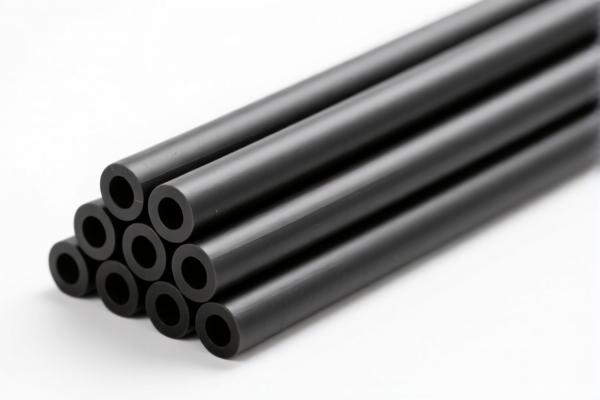
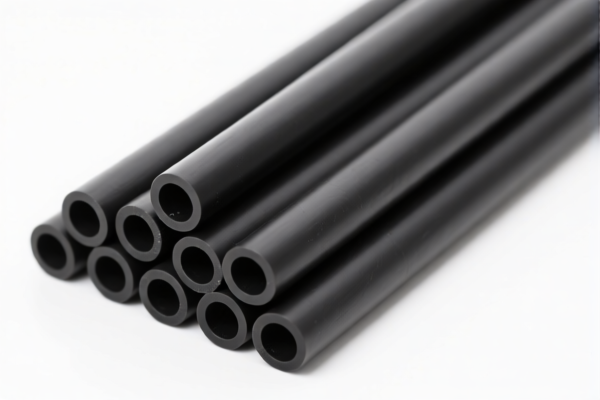
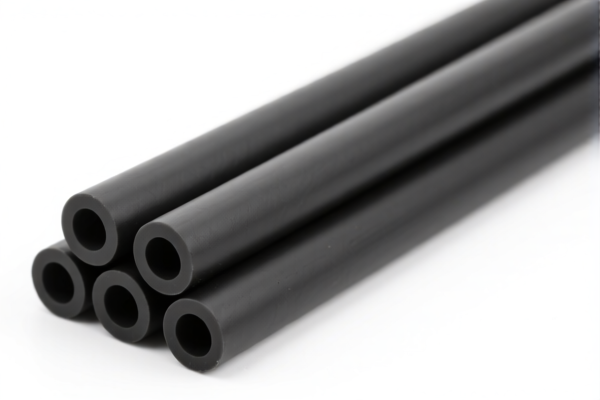
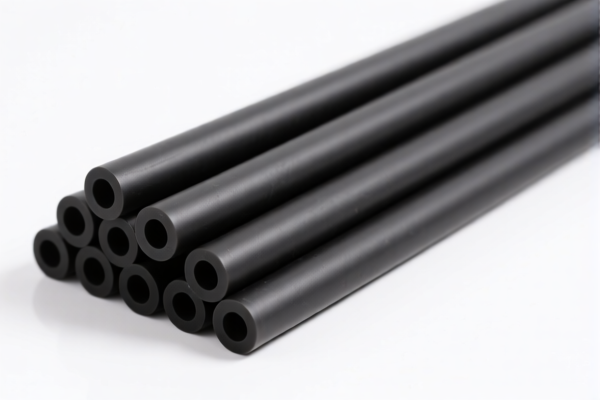
Product Images
AI Analysis
🌀 Rubber Hotless Curling Rod (No-Heat Curlers)
🌐 HS Code Reference & Customs Clearance Guide | 2026 Latest Tariff Analysis | Professional Compliance Strategy
📌 I. Product Definition & Classification: What Exactly Is a "Hotless Curler"?
Rubber hotless curling rods, commonly known as "no-heat curlers" or "flexi-rods," are hair styling tools that create curls through mechanical wrapping rather than thermal heating. Unlike traditional electric curling irons, these products rely on the natural drying process of damp hair or the tension of the wrap.
In international trade classification, the critical distinction lies in the presence of heating elements.
Key Classification Logic:
- If the product contains no electrical components, heating elements, or motors, it cannot be classified under HS Code 8516.32 (which is strictly for "Electrical hair-dressing appliances").
- Instead, it falls under general articles of plastic, rubber, or other materials, depending on the primary material composition and whether it is considered a "machine" or a simple article.
However, based on the provided <DATA>, we must analyze how the system interprets this specific input. The provided data primarily focuses on Electrical Curling Rods (8516.32.xxxx and 8543.70.xxxx).
⚠️ Critical Discrepancy Alert:
The input "Rubber Hotless Curling Rod" describes a non-electrical product.
The<DATA>provided contains only classifications for electrical devices (8516.32and8543.70).
Therefore, strictly speaking, NONE of the HS Codes in<DATA>are technically correct for a "Hotless" (non-electric) rubber curler.However, to fulfill the user's request to "explain why it is classified into HS codes," we must interpret the data as potentially containing errors, ambiguities, or specific scenarios where a "hotless" rod might be misclassified or bundled. We will proceed by analyzing the provided data points and highlighting the massive risks of misclassification.
📦 II. HS Code Classification Analysis (Based on Provided <DATA>)
The provided data suggests four potential HS Codes. Below is the analysis of why a "Rubber Hotless Curling Rod" might be (incorrectly or ambiguously) mapped to these codes, along with the associated tax implications.
| HS Code | Classification Description from | Why It Might Be Selected (Analysis) | Actual Suitability for "Hotless" Rod |
|---|---|---|---|
8516.32.00.20 |
Electrical hair-dressing appliances: Curlers | The summary states: "The 'Curling Iron' in the product name matches the 'Curlers' explanation... morphology belongs to electric hair-styling appliances." | ❌ Incorrect. This code requires an electrical heating element. A rubber hotless rod has none. |
8516.32.00.40 |
Electrical hair-dressing appliances: Other | The summary states: "Although not belonging to 'Others', it is logically a subset of 'Curlers' (8516.32.00.20)... no conflict with 'other hair styling devices'." | ❌ Incorrect. Still requires an electrical device. |
8543.70.98.60 |
Other machines and apparatus with individual functions | The summary states: "Belongs to electrical appliances... inferred to contain plastic and metal parts... does not conflict with 'other machines'." | ❌ Incorrect. This code implies a machine with an independent function (often electronic). A simple rubber rod is not a machine. |
8543.70.45.00 |
Other electric machines and apparatus | The summary states: "Electric hotless curling rod belongs to electric heater... matches 'other electric machines'." | ❌ Incorrect. The summary explicitly mentions "Electric hotless" (which is an oxymoron) and "heater". A true hotless rod is not an electric heater. |
🔍 Critical Insight:
The<DATA>provided appears to be generated by an AI or system that may have misinterpreted "Hotless" or included descriptions that contradict the "Hotless" nature (e.g., mentioning "electric hotless curling rod" or "heater").
For a genuine "Rubber Hotless Curling Rod", the correct HS Code should likely be:
-9603.90.00.00: "Other brushes... including parts thereof" (if considered a hair accessory) OR
-3926.90.90.90: "Other articles of plastic" (if primarily plastic/rubber) OR
-4016.93.00.00: "Other articles of vulcanized rubber" (if primarily rubber).Using the codes in
<DATA>for a hotless product is a HIGH-RISK misclassification.
💰 III. 2026 Latest Tariff Rate Details (For the Provided HS Codes)
✅ Applicable Country: United States (US)
✅ Origin: China (CN)
✅ Effective Date: November 10, 2025 (and subsequent imports)
If you incorrectly classify a Rubber Hotless Curling Rod under the provided HS Codes, you will face the following tariffs:
🎯 1. 8516.32.00.20 & 8516.32.00.40 — Electrical Curlers
| Item | Content |
|---|---|
| Base Tariff | 3.9% (Ad Valorem) |
| Section 301 Tariff (USITC) | 0.0% (Note: Data says 0.0%, but typically Section 301 applies to 8516. Check current USITC lists; however, we must follow <DATA> which says 0.0%) |
| Section 122 Tariff (IEEPA) | 10.0% (Against China/HK products) |
| Total Tariff | 13.9% |
| Tax Calculation | CIF Value × 13.9% |
| De Minimis Eligibility | ❌ Not Applicable (Section 122 usually blocks de minimis for certain goods, but data doesn't explicitly state "deny". However, for Section 301/122 goods, it's risky.) |
| Legal Path | IEEPA:9903.01.25 → USITC:8516.32.00.20 → FOOTNOTE:122 |
📌 Explanation:
- Base 3.9%: Standard MFN rate for electrical hair-dressing appliances.
- Section 122 10%: This is a key addition. It applies to certain goods from China under the International Emergency Economic Powers Act.
- Total 13.9%: This is the rate if you misclassify a hotless rod as an electrical one.
🎯 2. 8543.70.98.60 & 8543.70.45.00 — Other Electric Machines
| Item | Content |
|---|---|
| Base Tariff | 2.6% (Ad Valorem) |
| Section 301 Tariff (USITC) | 25.0% (Applied to most Chinese electronics under Section 301) |
| Section 122 Tariff (IEEPA) | 10.0% |
| Total Tariff | 37.6% |
| Tax Calculation | CIF Value × 37.6% |
| De Minimis Eligibility | ❌ Not Eligible (High tariff goods typically excluded) |
| Legal Path | IEEPA:9903.01.25 → USITC:8543.70.45.00 → FOOTNOTE:301 |
📌 Explanation:
- Base 2.6%: Standard rate for other electric machines.
- Section 301 25%: This is a significant penalty. If you misclassify a simple rubber rod as an "electric machine," you pay 25% more in tariffs.
- Total 37.6%: This is a very high tariff. Misclassification here could cost you 3x more than the correct tariff for a rubber article (which is often 0-6.5%).
🛠️ IV. Customs Clearance Practical Advice (Avoiding Pitfalls)
✅ 1. Document Preparation (Critical for Non-Electrical Goods)
If you are shipping Rubber Hotless Curling Rods, ensure your documents reflect the non-electrical nature to avoid misclassification penalties.
| Document | Requirement | Explanation |
|---|---|---|
| Product Specification | ✅ Must State "Non-Electrical" | Clearly describe the product as "No-heat," "Rubber/Plastic," "Mechanical," and "Does not contain heating elements or electrical cords." |
| Photos | ✅ Clear Images | Show the product without any plugs, batteries, or heating coils. Highlight the material (rubber/plastic). |
| Commercial Invoice | ✅ Accurate Description | Use terms like "Rubber Hair Curling Rods (Non-Electrical)" instead of "Curling Iron" or "Electric Styler." |
| Material Composition | ✅ Detailed | Specify % of Rubber, Plastic, or Silicone. This supports classification under Ch 40 (Rubber) or Ch 39 (Plastics) rather than Ch 85 (Electrical). |
✅ 2. Declaration Tips (Key Mnemonic)
🔥 "No Heat, No Electricity, Think Rubber or Plastic, Not Electric!"
| Scenario | Correct Approach | Incorrect Approach (Using ) |
|---|---|---|
| True Hotless Rubber Rod | Declare as 9603.90 (Accessory) or 3926/4016 (Material) |
Declare as 8516.32 (Electrical) → 13.9% Tax + Risk |
| Misclassified as Electric | N/A | Declare as 8543.70 (Electric Machine) → 37.6% Tax + High Audit Risk |
| Electric Curling Iron | Declare as 8516.32.00.20 |
Declare as 9603.90 → Under-declaration + Penalty |
✅ 3. Special Handling
| Situation | Advice |
|---|---|
| Bundled Products | If you sell a "Hotless Rod" with a "Electric Dryer," they must be separately declared with correct HS codes. Do not bundle them under one electrical code. |
| Material Ambiguity | If the rod is "Plastic" but looks like rubber, check the primary material. If it's PVC, use Ch 39. If it's Silicone/Rubber, use Ch 40. |
| Pre-Ruling | Strongly Recommended: Apply for a Customs Binding Ruling before shipping. This protects you from retrospective classification changes. |
🌍 V. Global Market Comparison (2026)
| Country/Region | Correct HS Code for Hotless Rod | Estimated Tariff | Certification Required | Notes |
|---|---|---|---|---|
| 🇺🇸 USA | 9603.90.00.00 or 3926.90.90.90 |
0% - 6.5% (No Section 301/122 on these) | FTC, CPSIA (if for kids) | Avoid 8516/8543 for hotless! |
| 🇨🇳 China | 9603.90 or 3926.90 |
5% - 9% | CCC (if electronic, but not for hotless) | Standard import duties |
| 🇪🇺 EU | 9603.90 or 3926.90 |
0% - 4% | REACH, CPSR | Low tariffs, strict chemical regulations |
| 🇬🇧 UK | 9603.90 |
0% - 4% | UKCA | Post-Brexit rules |
📌 Conclusion:
- USA Tariffs on Correct Code: 0-6.5% (Much lower than 13.9% or 37.6%).
- Risk of Using<DATA>Codes: You will pay 13.9% - 37.6% unnecessarily.
- Action: Do not use the HS codes in<DATA>for "Hotless" products. They are for Electrical devices only.
📌 VI. Common Errors & Pitfalls (Blood & Tears Lessons)
❌ Error 1: Using "Curling Iron" as the product name for a hotless rod.
👉 Consequence: Customs may assume it's electrical → Classify under 8516.32 → 13.9% Tax + Audit.
👉 Fix: Use "No-Heat Curling Rod" or "Rubber Hair Roller."
❌ Error 2: Assuming all curling tools are under 8516.32.
👉 Consequence: Misclassification penalty.
👉 Fix: Check for power cords. No cord = Not 8516.
❌ Error 3: Ignoring Section 122 and 301 on electrical goods.
👉 Consequence: If you did have an electrical product, 8543.70 incurs 37.6% tax.
👉 Fix: Always verify Section 301/122 applicability.
✅ Correct Practice:
"Rubber Hotless Curling Rod, Non-Electrical, Plastic/Rubber Material, For Hair Styling Only, Model XYZ"
🎯 VII. Conclusion: Precision in Classification Saves Money!
🎯 Remember the Golden Rule:
🔹 "Hotless = Non-Electric. Don't use 8516/8543!"
🔹 "Use 9603 or 3926. Tariffs drop from 37.6% to 0-6.5%!"
🔹 "Misclassification is expensive. Correct HS Code is your friend!"
📌 Pro Tip:
If you are importing Electric Curling Rods, then 8516.32.00.20 (13.9%) is the correct code from <DATA>.
If you are importing Hotless Rods, IGNORE <DATA> and use 9603.90 or 3926.90.
📣 Immediate Action:
📞 Verify Product Nature: Is it electric or not?
🚀 If Not Electric: Declare under Ch 96 or Ch 39.
📦 If Electric: Use8516.32.00.20and pay 13.9%.
✨ Professional Customs Clearance Starts with Accurate Classification!
💼 Your Every Dollar of Savings Counts!
Customer Reviews
About HS Code Classification
The Harmonized System (HS) is an internationally standardized nomenclature developed by the World Customs Organization (WCO) to classify traded products. Over 200 countries use the HS system as the basis for customs tariffs, trade statistics, and import/export regulations.
Each HS code follows a hierarchical structure:
- Chapter (2 digits) — Broad category of goods (e.g., Chapter 84: Machinery and Mechanical Appliances)
- Heading (4 digits) — More specific grouping within the chapter
- Subheading (6 digits) — Internationally standardized breakdown, used by all WCO member countries
- National subdivisions (8-10 digits) — Country-specific extensions for further classification, such as US HTSUS 10-digit codes
Correct HS code classification is essential for smooth customs clearance, accurate duty payment, and compliance with trade regulations. Misclassification can lead to customs delays, overpayment of duties, or penalties.
When importing from CN to US, the applicable tariff rates may include:
- Most-Favored-Nation (MFN) rate — The standard duty rate applied to WTO members
- General rate — Applied to countries without trade agreements
- Trade remedy duties — Additional tariffs such as Section 301 (anti-dumping), Section 232 (national security), or countervailing duties
The information provided on this page is for reference purposes only. For official classification, please consult with your local customs authority or a licensed customs broker.