Rubber Impact Resistant Gloves
CN → US| HS Code | Tariff Rate | Origin | Destination | Doc |
|---|---|---|---|---|
| 6216002600 | 24.5% | CN | US | Official Doc |
| 4015195100 | 49.0% | CN | US | Official Doc |
| 6216000500 | 17.5% | CN | US | Official Doc |
| 4015191150 | 38.0% | CN | US | Official Doc |
| 4015129000 | 49.0% | CN | US | Official Doc |
Product Images
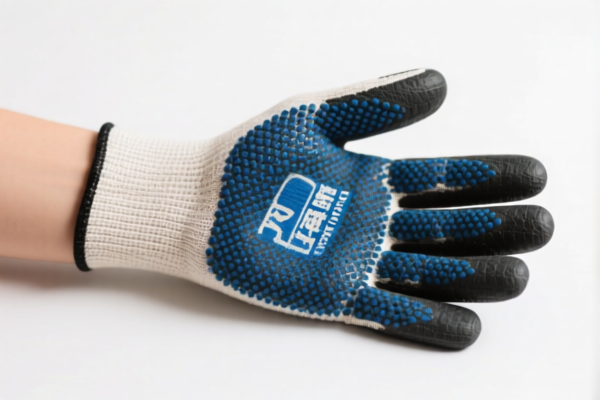
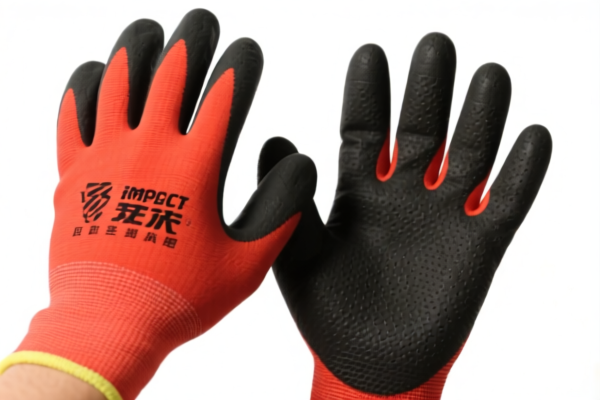
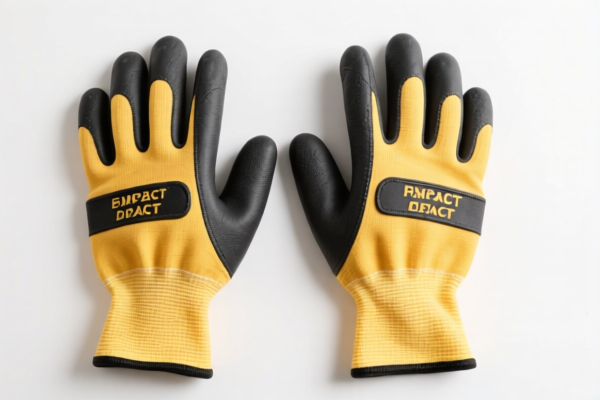
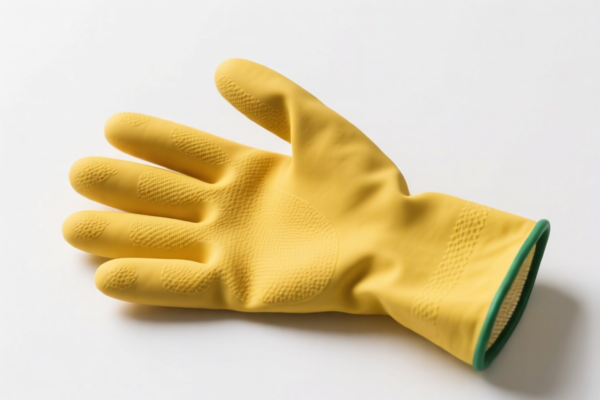
AI Analysis
🧤 Rubber Impact Resistant Gloves (Industrial Protective Gear)
🌐 HS Code Reference & Customs Clearance Guide | 2026 Latest Tariff Analysis | Professional-Level通关 Strategy
📌 I. Product Definition & Classification: Do You Really Understand "Impact-Resistant Gloves"?
Rubber impact-resistant gloves are specialized personal protective equipment (PPE) designed to protect hands from mechanical hazards, chemical exposure, and physical impact in industrial, construction, and laboratory settings. In international trade, they are strictly categorized based on material composition and processing method:
Raw Rubber Gloves (Chapter 62):
Made from non-vulcanized or lightly processed rubber, often intended for specific protective applications. These are classified under textile/apparel headings despite being rubber-based due to specific customs interpretations.
Vulcanized Rubber Gloves (Chapter 40):
Made from chemically treated (vulcanized) rubber, offering higher durability and impact resistance. These fall under the general heading for articles of rubber.
⚠️ Key Distinction Point:
- If the rubber is non-vulcanized or classified under specific protective glove codes in Chapter 62 →归入 6216.00 series
- If the rubber is vulcanized (hardened, chemically cross-linked) →归入 4015.19 series
📦 II. HS Code Classification Details (2026 Latest Tariff Authority Comparison)
| HS Code | Product Description | Applicable Scenario | Material State |
|---|---|---|---|
6216.00.26.00 |
Rubber material, used as gloves, meets classification requirements | General protective gloves, non-vulcanized or light process | ✅ Non-Vulcanized / Light Process |
4015.19.51.00 |
Vulcanized rubber material, used as gloves, meets classification requirements | High-impact, heavy-duty industrial gloves | ✅ Vulcanized |
6216.00.05.00 |
Rubber material, used for protective gloves, meets classification requirements | Specific "protective glove" category, lower base tariff | ✅ Non-Vulcanized / Light Process |
4015.19.11.50 |
Vulcanized rubber material, shape is gloves, meets classification requirements | Standard vulcanized impact gloves | ✅ Vulcanized |
4015.12.90.00 |
Rubber material, used as gloves, meets other category requirements | General vulcanized rubber gloves (fallback category) | ✅ Vulcanized |
🔍 Key Reminder:
- Vulcanization is the critical factor. If the rubber has been chemically hardened for impact resistance, it likely falls under Chapter 40.
- If the product is marketed specifically as "protective gloves" under Chapter 62, it may attract lower base tariffs but must meet strict material definitions.
- Impact resistance itself does not define the HS code; the material processing does.
💰 III. 2026 Latest Tariff Rate Breakdown (Including Additional Taxes, Policy Surcharges)
✅ Applicable Country: United States (US)
✅ Country of Origin: China (CN)
✅ Effective Date: November 10, 2025 onwards (including subsequent imports)
🎯 1. 6216.00.26.00 —— Rubber Gloves (Non-Vulcanized/Light Process)
| Item | Details |
|---|---|
| Base Tariff | 7.0% (ad valorem) |
| Section 301 Surcharge | +7.5% |
| 122 Clause Tariff | +10.0% |
| Total Tariff | 24.5% |
| Tax Calculation | CIF Value × 24.5% |
| De Minimis Exemption? | ❌ Not Eligible (deny_de_minimis) |
| Legal Basis Path | Section 301: 6216.00.26.00 → 122 Clause: 6216.00.26.00 |
📌 Explanation:
- This code has the lowest total tariff among the options, but only applies if the gloves are classified under Chapter 62.
- The 7.5% Section 301 surcharge is significant compared to some other categories.
- Must provide material proof to prove non-vulcanized or light-processing status.
🎯 2. 4015.19.51.00 —— Vulcanized Rubber Gloves (High-Impact)
| Item | Details |
|---|---|
| Base Tariff | 14.0% (ad valorem) |
| Section 301 Surcharge | +25.0% |
| 122 Clause Tariff | +10.0% |
| Total Tariff | 49.0% |
| Tax Calculation | CIF Value × 49.0% |
| De Minimis Exemption? | ❌ Not Eligible (deny_de_minimis) |
| Legal Basis Path | Section 301: 4015.19.51.00 → 122 Clause: 4015.19.51.00 |
📌 Note:
- This is a high-tax category. The 25% Section 301 surcharge is the standard for most vulcanized rubber goods from China.
- Suitable for heavy-duty industrial use where impact resistance is critical.
- Risk: High tariff cost may erode margins; consider supply chain optimization.
🎯 3. 6216.00.05.00 —— Protective Gloves (Chapter 62 Specific)
| Item | Details |
|---|---|
| Base Tariff | 0.0% (ad valorem) |
| Section 301 Surcharge | +7.5% |
| 122 Clause Tariff | +10.0% |
| Total Tariff | 17.5% |
| Tax Calculation | CIF Value × 17.5% |
| De Minimis Exemption? | ❌ Not Eligible (deny_de_minimis) |
| Legal Basis Path | Section 301: 6216.00.05.00 → 122 Clause: 6216.00.05.00 |
📌 Optimal Choice?
- Lowest total tax at 17.5%.
- Requires strict compliance with "protective glove" definition under Chapter 62.
- Base tariff is 0%, making it the most cost-effective if classification is accepted.
- Caution: Customs may challenge if the product is clearly vulcanized rubber.
🎯 4. 4015.19.11.50 —— Vulcanized Rubber Gloves (Standard)
| Item | Details |
|---|---|
| Base Tariff | 3.0% (ad valorem) |
| Section 301 Surcharge | +25.0% |
| 122 Clause Tariff | +10.0% |
| Total Tariff | 38.0% |
| Tax Calculation | CIF Value × 38.0% |
| De Minimis Exemption? | ❌ Not Eligible (deny_de_minimis) |
| Legal Basis Path | Section 301: 4015.19.11.50 → 122 Clause: 4015.19.11.50 |
📌 Note:
- Lower base tariff (3%) compared to other vulcanized codes, but Section 301 surcharge remains 25%.
- Total 38% is moderate but still high.
- Suitable for standard vulcanized gloves where classification is uncontested.
🎯 5. 4015.12.90.00 —— Other Rubber Gloves (Vulcanized Fallback)
| Item | Details |
|---|---|
| Base Tariff | 14.0% (ad valorem) |
| Section 301 Surcharge | +25.0% |
| 122 Clause Tariff | +10.0% |
| Total Tariff | 49.0% |
| Tax Calculation | CIF Value × 49.0% |
| De Minimis Exemption? | ❌ Not Eligible (deny_de_minimis) |
| Legal Basis Path | Section 301: 4015.12.90.00 → 122 Clause: 4015.12.90.00 |
📌 Warning:
- Highest tax bracket (49%).
- This is a fallback category for vulcanized rubber gloves that do not fit other specific subheadings.
- Avoid if possible; seek more specific classification.
🛠️ IV. Customs Clearance Practical Advice (Battle-Tested Pitfall Avoidance Guide)
✅ 1. Required Documentation Checklist (All are mandatory)
| Document | Required? | Explanation |
|---|---|---|
| ✅ Product Specification Sheet | ✔️ | Must detail material (vulcanized vs. non-vulcanized), thickness, impact resistance rating |
| ✅ Material Test Report | ✔️ | Proof of rubber type, vulcanization process, chemical composition |
| ✅ Product Photos (Clear) | ✔️ | Show gloves with labels, packaging, and any impact-resistant features |
| ✅ Commercial Invoice | ✔️ | Must clearly state "Rubber Gloves, Impact Resistant, [HS Code]" |
| ✅ Packing List | ✔️ | Itemized list, no missing parts |
| ✅ Certificate of Origin | ✔️ | To prove Chinese origin (triggers tariffs) |
| ✅ Third-Party Compliance Certs | ✔️ | OSHA, ANSI, CE, or other safety standards proof |
✅ 2. Declaration Tips (Key Mantra)
🔥 "Material Defines Code, Vulcanization Dictates Tax, Name Must Match!"
| Scenario | Correct Declaration | Incorrect Practice |
|---|---|---|
| Non-Vulcanized Rubber Gloves | 6216.00.05.00 or 6216.00.26.00 |
Misdeclared as vulcanized → 49% |
| Vulcanized High-Impact Gloves | 4015.19.51.00 or 4015.19.11.50 |
Misdeclared as non-vulcanized → Penalty + Back Taxes |
| Gloves with Liners/Inserts | Declare as One Unit | Split into "gloves" + "liners" → Higher combined tax |
| OEM Private Label | Use brand name + model, but keep material description generic | Over-specifying brand may not help, under-specifying causes audits |
✅ 3. Special Circumstances Handling
| Situation | Handling Advice |
|---|---|
| Gloves with Composite Materials | If rubber is bonded to fabric, classify based on dominant material. Rubber usually dominates → Chapter 40 |
| Antimicrobial Coating | Does not change HS code; declare as additional feature |
| Custom-Made Impact Gloves | Provide design drawings and material proof to support Chapter 62 if possible |
| Samples for Evaluation | Still subject to tariffs; declare as "Sample" but provide full documentation |
🌍 V. Global Market Comparison (2026 Latest)
| Country/Region | Recommended HS Code | Tariff (China Origin) | Certification Required | Notes |
|---|---|---|---|---|
| 🇺🇸 USA | 6216.00.05.00 |
17.5% | OSHA/ANSI | Lowest tax if Chapter 62 accepted |
| 🇨🇳 China | 4015.19.51.00 |
5-8% | CCC (if applicable) | Lower import tariffs |
| 🇪🇺 EU | 4015.19.51.00 |
4% | CE + EN388 | No Section 301 surcharge |
| 🇬🇧 UK | 4015.19.51.00 |
4% | UKCA + EN388 | Post-Brexit rules apply |
| 🇯🇵 Japan | 4015.19.51.00 |
0-3% | PSE/Industrial Safety | Low tariffs, high standards |
📌 Conclusion:
- USA has the highest tax burden due to Section 301 and 122 Clause tariffs.
- EU/UK/Japan have much lower tariffs but stricter safety certifications (EN388, ANSI).
- Chapter 62 classification (6216.00.05.00) is the most cost-effective for US imports, but requires strong material proof.
📌 VI. Common Errors & Pitfalls (Blood-Teaching Lessons)
❌ Error 1: Declaring vulcanized gloves as 6216.00.05.00 to avoid 25% surcharge
👉 Consequence: Customs audit → Back taxes + 10% penalty + shipment delay
❌ Error 2: Failing to prove "impact-resistant" feature
👉 Consequence: Reclassified to lower-tier code → Higher tax or rejection
❌ Error 3: Missing material test report
👉 Consequence: Unable to verify vulcanization status → 30-day hold
❌ Error 4: Using "Rubber Gloves" without specifying vulcanization
👉 Consequence: Customs assumes worst-case scenario → 49% tariff applied
✅ Correct Practice:
"Vulcanized Rubber Impact-Resistant Gloves, ANSI/ISEA 105 Rated, No Liner, Model XYZ, Compliant with OSHA Standards"
🎯 VII. Conclusion: Precision Classification Saves Money!
🎯 Remember the Mantra:
🔹 "Vulcanized = Chapter 40 = High Tax; Non-Vulcanized = Chapter 62 = Low Tax"
🔹 "Proof is Key: Test Reports Win Customs Disputes"
🔹 "17.5% vs 49%: A 31.5% Difference Can Make or Break Your Profit"
📌 Pro Tip:
If your gloves can be legitimately classified under Chapter 62, pursue 6216.00.05.00 for the 17.5% total tariff.
If they are clearly vulcanized, use 4015.19.11.50 for 38% rather than 4015.12.90.00 at 49%.
Apply for an Advance Ruling from US Customs and Border Protection (CBP) to secure your HS code classification before shipment.
📣 Immediate Action:
📞 Engage a licensed customs broker
📄 Submit material test reports and product specs
🚀 Ensure smooth clearance, minimize taxes, maximize ROI!
✨ Professional Customs Clearance Starts with Accurate Classification!
💼 Every percent of tariff saved is pure profit!
Customer Reviews
About HS Code Classification
The Harmonized System (HS) is an internationally standardized nomenclature developed by the World Customs Organization (WCO) to classify traded products. Over 200 countries use the HS system as the basis for customs tariffs, trade statistics, and import/export regulations.
Each HS code follows a hierarchical structure:
- Chapter (2 digits) — Broad category of goods (e.g., Chapter 84: Machinery and Mechanical Appliances)
- Heading (4 digits) — More specific grouping within the chapter
- Subheading (6 digits) — Internationally standardized breakdown, used by all WCO member countries
- National subdivisions (8-10 digits) — Country-specific extensions for further classification, such as US HTSUS 10-digit codes
Correct HS code classification is essential for smooth customs clearance, accurate duty payment, and compliance with trade regulations. Misclassification can lead to customs delays, overpayment of duties, or penalties.
When importing from CN to US, the applicable tariff rates may include:
- Most-Favored-Nation (MFN) rate — The standard duty rate applied to WTO members
- General rate — Applied to countries without trade agreements
- Trade remedy duties — Additional tariffs such as Section 301 (anti-dumping), Section 232 (national security), or countervailing duties
The information provided on this page is for reference purposes only. For official classification, please consult with your local customs authority or a licensed customs broker.