Rubber Long Sleeve Gloves
CN → US| HS Code | Tariff Rate | Origin | Destination | Doc |
|---|---|---|---|---|
| 3926204050 | 16.5% | CN | US | Official Doc |
| 4015191150 | 38.0% | CN | US | Official Doc |
| 4015195100 | 49.0% | CN | US | Official Doc |
| 6116109500 | 24.5% | CN | US | Official Doc |
| 6116106500 | 24.5% | CN | US | Official Doc |
Product Images
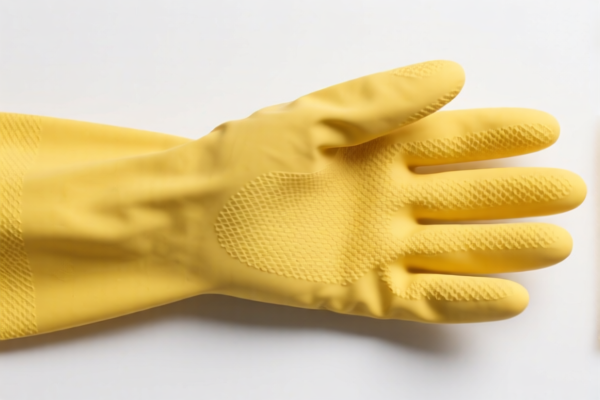
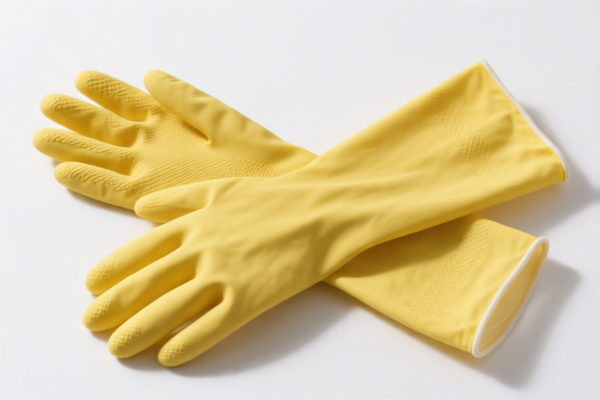

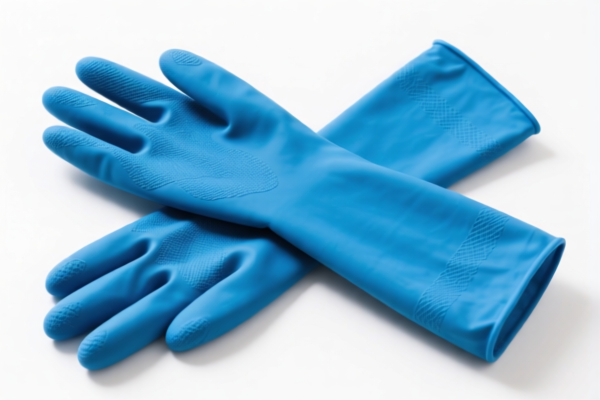
AI Analysis
🧤 Rubber Long Sleeve Gloves (Industrial/Agricultural Protection)
🌐 HS Code Reference & Customs Clearance Guide | 2026 Latest Tariff Analysis | Professional-Level Clearance Strategy
📌 I. Product Definition & Classification: Do You Really Understand "Rubber Long Sleeve Gloves"?
Rubber long-sleeve gloves are critical personal protective equipment (PPE) used in chemical handling, agriculture, and heavy industrial cleaning. They extend beyond the wrist to protect the forearm. However, in international trade, material composition and manufacturing method drastically alter their classification.
They are generally categorized into two main branches based on their structure: 1. Knitted/Hook-knitted Rubber/Plastic Coated Gloves: The base is knitted fabric, dipped in rubber/plastic. 2. Vulcanized Rubber Gloves: Solid rubber, molded or hand-made, without a knitted base structure (or classified as apparel/other rubber goods).
⚠️ Key Distinction Point:
- If the glove is knitted fabric dipped in rubber/plastic → It falls under Heading 6116.
- If the glove is solid vulcanized rubber (molded) → It falls under Heading 4015 or 3926 (depending on specific material nuances like "rubber gloves for agricultural use" vs. "other rubber articles").
📦 II. HS Code Classification Details (2026 Latest Tariff Authority Cross-Reference)
| HS Code | Product Description | Application Scenario | Classification Logic |
|---|---|---|---|
3926.20.40.50 |
Rubber agricultural gloves (non-vulcanized or specific rubber articles) | Light agricultural tasks, gardening | ✅ Agricultural Use + Rubber Material |
4015.19.11.50 |
Vulcanized rubber gloves (Other) | Industrial chemical handling, heavy-duty protection | ✅ Vulcanized Rubber + Glove Form |
4015.19.51.00 |
Vulcanized rubber apparel and accessories (Gloves) | Fashion rubber gloves, specialized rubber wear | ✅ Rubber Apparel Category |
6116.10.95.00 |
Knitted/Hook-knitted gloves with plastic/rubber coating | General purpose, light industrial, food processing | ✅ Knitted Base + Plastic/Rubber Coating |
6116.10.65.00 |
Rubber-impregnated or coated gloves (Agricultural/Specific) | Agricultural work, general dipping gloves | ✅ Knitted Base + Rubber Impregnation |
🔍 Key Reminder:
-6116Series: If the glove has a knitted fabric base that is dipped or coated in rubber/plastic, it MUST go to 6116. This is often the most common category for "dipped gloves."
-4015Series: If the glove is made of solid vulcanized rubber (no fabric base), it goes here.
-3926Series: Specifically for agricultural rubber gloves that may not fit the standard "vulcanized" or "knitted" definitions strictly, or specific rubber articles for farming.
💰 III. 2026 Latest Tariff Rate Breakdown (Including Surtaxes & Policy Add-ons)
✅ Applicable Country: United States (US)
✅ Origin: China (CN)
✅ Effective Date: 2025 November 10 onwards (including subsequent imports)
🎯 1. 3926.20.40.50 —— Rubber Agricultural Gloves
| Item | Content |
|---|---|
| Basic Rate | 6.5% (ad valorem) |
| USITC Surtax | +0.0% (No Section 301 surtax applied to this specific agricultural code) |
| IEEPA Surcharge | +10% (Targeting China/HK products, from Nov 10, 2025) |
| 122 Clause Tariff | +10% (Specific Section 122 surcharge) |
| Total Rate | 16.5% |
| Tax Calculation | CIF Value × 16.5% |
| De Minimis Eligibility | ❌ No (deny_de_minimis) |
| Legal Path | IEEPA:9903.01.25 → Section 122:10% → USITC:3926.20.40.50 |
📌 Explanation:
- This code benefits from a lower base rate (6.5%) and no Section 301 (25%) surtax, making it significantly cheaper than other rubber glove categories.
- The total 16.5% includes the 10% IEEPA and 10% Section 122.
- Optimal Choice: If your gloves are strictly for agriculture and can be classified under this code, this is the most cost-effective option.
🎯 2. 4015.19.11.50 —— Vulcanized Rubber Gloves (Other)
| Item | Content |
|---|---|
| Basic Rate | 3.0% (ad valorem) |
| USITC Surtax | +25% (Section 301) |
| IEEPA Surcharge | +10% |
| 122 Clause Tariff | +10% |
| Total Rate | 38.0% |
| Tax Calculation | CIF Value × 38.0% |
| De Minimis Eligibility | ❌ No (deny_de_minimis) |
| Legal Path | IEEPA:9903.01.25 → Section 122:10% → USITC:4015.19.11.50 → FOOTNOTE:301 |
📌 Note:
- Despite a low base rate (3.0%), the 25% Section 301 surtax makes this category expensive.
- Suitable for industrial chemical-resistant gloves made of solid vulcanized rubber.
🎯 3. 4015.19.51.00 —— Vulcanized Rubber Apparel & Accessories
| Item | Content |
|---|---|
| Basic Rate | 14.0% (ad valorem) |
| USITC Surtax | +25% (Section 301) |
| IEEPA Surcharge | +10% |
| 122 Clause Tariff | +10% |
| Total Rate | 49.0% |
| Tax Calculation | CIF Value × 49.0% |
| De Minimis Eligibility | ❌ No (deny_de_minimis) |
| Legal Path | IEEPA:9903.01.25 → Section 122:10% → USITC:4015.19.51.00 |
📌 Warning:
- This is the most expensive category at 49%.
- Applies if the gloves are classified as "rubber apparel" (e.g., fashion gloves or specialized rubber wearables) rather than protective industrial gloves. Avoid this classification if possible.
🎯 4 & 5. 6116.10.95.00 & 6116.10.65.00 —— Knitted Rubber/Plastic Coated Gloves
| Item | Content |
|---|---|
| Basic Rate | 7.0% (ad valorem) |
| USITC Surtax | +7.5% (Specific Section 301 exclusion or reduced rate for this subheading) |
| IEEPA Surcharge | +10% |
| 122 Clause Tariff | +10% |
| Total Rate | 24.5% |
| Tax Calculation | CIF Value × 24.5% |
| De Minimis Eligibility | ❌ No (deny_de_minimis) |
| Legal Path | IEEPA:9903.01.25 → Section 122:10% → USITC:6116.10.65.00/95.00 |
📌 Comparison:
-6116.10.65.00: Specifically for rubber-impregnated gloves (often agricultural or general dipping).
-6116.10.95.00: For plastic or other rubber-coated knitted gloves.
- Both carry a lower Section 301 surtax (7.5%) compared to solid rubber gloves (25%), resulting in a moderate 24.5% total rate.
- Best for: Standard "dipped" gloves with a knitted liner.
🛠️ IV. Customs Clearance Practical Advice (Real-World Pitfall Guide)
✅ 1. Required Documentation Checklist (Missing Any One = Delay)
| Document | Must Provide | Explanation |
|---|---|---|
| ✅ Product Specification Sheet | ✔️ | Must detail: Knitted vs. Solid, Material (Nitrile/Latex/Butyl), Thickness, Sleeve Length. |
| ✅ Material Composition Statement | ✔️ | Explicitly state: "Knitted Cotton/Nylon Liner" vs. "100% Vulcanized Rubber." |
| ✅ Product Photos (Front/Back/Tag) | ✔️ | Clear view of texture (knitted weave vs. smooth rubber) and labeling. |
| ✅ Commercial Invoice | ✔️ | Description must match HS code (e.g., "Knitted Rubber-Coated Gloves" for 6116). |
| ✅ Packing List | ✔️ | Weight and dimensions. |
| ✅ Third-Party Test Report | ✔️ | For chemical resistance, durability, or agricultural safety standards. |
| ✅ Origin Certificate (CO) | ✔️ | To verify Country of Origin for tariff calculations. |
✅ 2. Declaration Tips (Key Mantra)
🔥 "Knitted Base = 6116 (24.5%), Solid Rubber = 4015 (38-49%), Agri-Special = 3926 (16.5%)."
| Scenario | Correct Declaration | Wrong Practice |
|---|---|---|
| Knitted fabric dipped in rubber | 6116.10.65.00 or 6116.10.95.00 |
Misclassified as solid rubber → 38-49% tax! |
| Solid vulcanized rubber gloves | 4015.19.11.50 |
Misclassified as knitted → 24.5% but high audit risk. |
| Agricultural rubber gloves | 3926.20.40.50 |
Misclassified as general rubber → 38-49% tax! |
| Fashion Rubber Gloves | 4015.19.51.00 |
Misclassified as protective gear → 49% tax! |
✅ 3. Special Circumstances Handling
| Situation | Handling Advice |
|---|---|
| OEM Custom Gloves | Provide customer design drawings. If the liner is custom-knitted, emphasize 6116. If solid molded, emphasize 4015. |
| Chemical Resistance Claims | If claiming chemical resistance, ensure the material (Nitrile, Neoprene, etc.) matches the HS code description. |
| "Agricultural" Labeling | To use 3926.20.40.50, ensure the gloves are marketed and used specifically for farming. General-purpose gloves may be rejected for this code. |
| Mixed Shipments | Do not mix 6116 and 4015 in one line item. Declare separately to avoid misclassification penalties. |
🌍 V. Global Market Comparison for Rubber Gloves (2026 Latest)
| Country/Region | Recommended HS Code | Tariff (China Origin) | Certification Requirements | Notes |
|---|---|---|---|---|
| 🇺🇸 USA | 3926.20.40.50 (Agri) 6116.10.65.00 (Knitted) |
16.5% (Agri) 24.5% (Knitted) |
ASTM F1670/F1671, EPA (if biocidal) | Highest complexity due to Section 301/122/IEEPA. |
| 🇨🇳 China | 4015.19 or 6116 |
5-10% | CCC (if applicable) | Lower tax burden, but domestic market is competitive. |
| 🇪🇺 EU | 4015.11 or 6116.10 |
0-6.5% | CE Mark, PPE Regulation (EU) 2016/425 | No Section 301 taxes. Focus on CE certification. |
| 🇬🇧 UK | 4015.11 or 6116.10 |
0-6.5% | UKCA Mark, PPE Regulation | Post-Brexit, UKCA required for goods from 2024+. |
📌 Conclusion:
- USA has the most complex tariff structure for rubber gloves, with rates ranging from 16.5% to 49% depending on classification.
- EU/UK offers lower base tariffs but strict CE/UKCA PPE regulations.
- China remains the primary manufacturing hub, but US importers must carefully select the lowest possible HS code (3926or6116) to mitigate high surtaxes.
📌 VI. Common Mistakes & Pitfall Guide (Lessons Learned)
❌ Mistake 1: Declaring Knitted Dipped Gloves as Solid Rubber Gloves (4015).
👉 Consequence: Overpaying tariff (24.5% vs 38-49%? No, wait, 4015 is 38-49%, 6116 is 24.5%. So declaring as 4015 when it's 6116 is underpaying? No, 4015 is higher. So if you declare 6116 (24.5%) but it's actually 4015 (38%), you are underpaying → Penalty & Back Taxes.
Correction: If the glove is knitted, declare 6116 (24.5%). If you declare 4015 (38%) for knitted gloves, you are overpaying. If you declare 6116 for solid rubber, you are underpaying.
❌ Mistake 2: Claiming Agricultural Use (3926) for Industrial Gloves.
👉 Consequence: Customs audit reveals industrial use (e.g., chemical lab) → Reassigned to 4015 or 6116 → Back Taxes (16.5% to 38-49%) + Penalties.
❌ Mistake 3: Ignoring IEEPA & Section 122.
👉 Consequence: These are mandatory additions to all Chinese-origin goods. Forgetting them leads to underpayment and holds at customs.
✅ Correct Approach:
"Rubber Coated Knitted Gloves, 13 Gauge Liner, Nitrile Dip, 30cm Length, Model XYZ, ASTM Certified"
🎯 VII. Conclusion: Professional Declaration, Cost Optimization!
🎯 Remember the Mantra:
🔹 "Knitted Base = 6116 (24.5%); Solid Rubber = 4015 (38-49%); Agri Special = 3926 (16.5%)."
🔹 "HS Code Decides Fate; Tax Differs by 25 Points; One Step Wrong, Tax Doubles!"
📌 Pro Tip:
If your gloves can be proven to be agricultural in nature, aggressively pursue 3926.20.40.50 for the lowest 16.5% rate.
For standard industrial/medical gloves, use 6116.10.65.00 for the 24.5% rate.
Avoid 4015.19.51.00 (49%) unless they are explicitly rubber apparel.
📣 Immediate Action:
📞 Contact a professional customs broker + Provide material samples + Apply for Pre-Ruling if unsure.
🚀 Let your rubber gloves clear customs smoothly, efficiently, and profitably!
✨ Professional Customs Clearance, Starting with Precise Classification!
💼 Every cent of your cost deserves precise calculation!
Customer Reviews
About HS Code Classification
The Harmonized System (HS) is an internationally standardized nomenclature developed by the World Customs Organization (WCO) to classify traded products. Over 200 countries use the HS system as the basis for customs tariffs, trade statistics, and import/export regulations.
Each HS code follows a hierarchical structure:
- Chapter (2 digits) — Broad category of goods (e.g., Chapter 84: Machinery and Mechanical Appliances)
- Heading (4 digits) — More specific grouping within the chapter
- Subheading (6 digits) — Internationally standardized breakdown, used by all WCO member countries
- National subdivisions (8-10 digits) — Country-specific extensions for further classification, such as US HTSUS 10-digit codes
Correct HS code classification is essential for smooth customs clearance, accurate duty payment, and compliance with trade regulations. Misclassification can lead to customs delays, overpayment of duties, or penalties.
When importing from CN to US, the applicable tariff rates may include:
- Most-Favored-Nation (MFN) rate — The standard duty rate applied to WTO members
- General rate — Applied to countries without trade agreements
- Trade remedy duties — Additional tariffs such as Section 301 (anti-dumping), Section 232 (national security), or countervailing duties
The information provided on this page is for reference purposes only. For official classification, please consult with your local customs authority or a licensed customs broker.