Rubber Migration Inhibitor
CN → US| HS Code | Tariff Rate | Origin | Destination | Doc |
|---|---|---|---|---|
| 3812396000 | 41.5% | CN | US | Official Doc |
| 3901905501 | 41.5% | CN | US | Official Doc |
| 4005100000 | 35.0% | CN | US | Official Doc |
| 4005200000 | 35.0% | CN | US | Official Doc |
| 3901909000 | 41.5% | CN | US | Official Doc |
Product Images
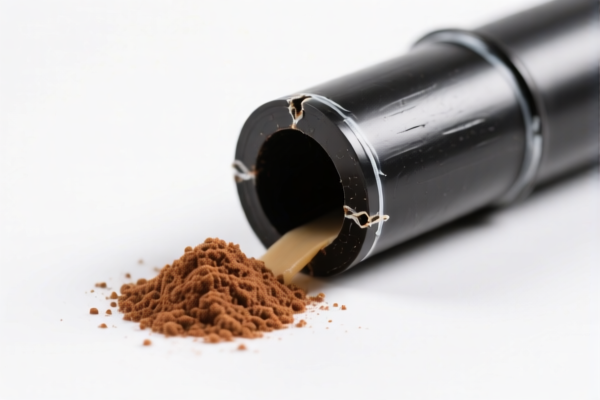
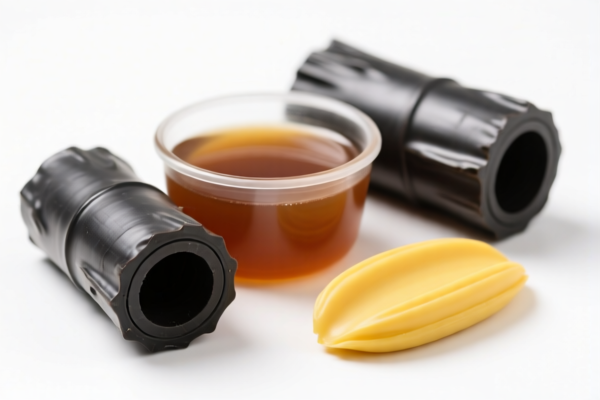
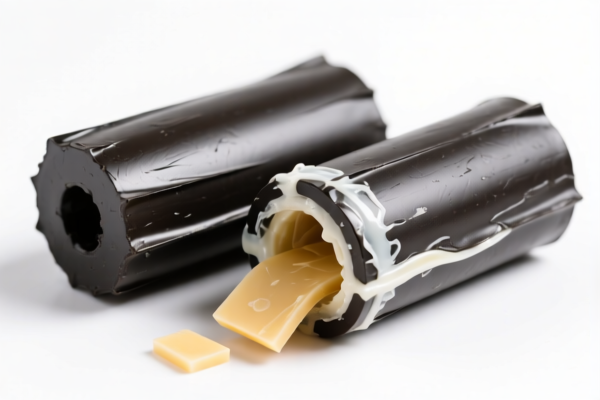
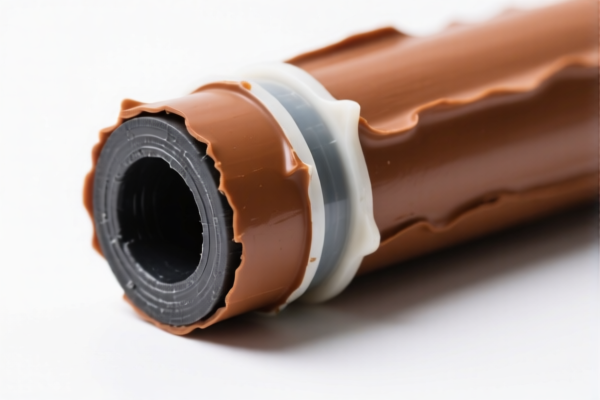
AI Analysis
🛡️ Rubber Migration Inhibitor (Anti-Migration Agent)
🌐 HS Code Reference & Customs Clearance Guide | 2026 Latest Tariff Analysis | Professional Entry Strategy
📌 1. Product Definition: What is a "Rubber Migration Inhibitor"?
A Rubber Migration Inhibitor (often called an Anti-Migration Agent) is a specialized chemical additive used primarily in the polymer and rubber industries. Its main function is to prevent plasticizers, lubricants, or other low-molecular-weight compounds from migrating out of rubber or plastic materials, which can cause surface stickiness, contamination, or degradation of adjacent materials.
In international trade, this product is classified based on its chemical nature (additive/stabilizer) or its base material (if it is a rubber-based compound). The interpretation varies depending on whether it is viewed as a standalone chemical additive or a rubber compound.
⚠️ Key Classification Distinction:
- If it is a pure chemical additive (e.g., organic esters, waxes, or specialized stabilizers): It falls under Chapter 38 (Chemical Products) or Chapter 39 (Plastics/Raw Polymers as additives).
- If it is a pre-mixed rubber compound containing these inhibitors: It falls under Chapter 40 (Rubber and Articles Thereof).
📦 2. HS Code Classification Details (2026 Latest Tariff Concordance)
Based on the provided data, here are the five most likely HS Codes and the rationale for each:
| HS Code | Product Description | Rationale for Classification | Material/Type |
|---|---|---|---|
| 3812.39.60.00 | Anti-migration agents as functional additives | Explicitly matches "Rubber" material and "Anti-migration agent" function. Classified under Antioxidants and other复合 stabilizers. | Chemical Additive / Stabilizer |
| 3901.90.55.01 | Additive/Raw Chemical Raw Material | Anti-migration agents are chemical raw materials. Compatible with Ethylene Copolymers (primary form) as no chemical conflict exists. | Polymer Additive / Raw Material |
| 4005.10.00.00 | Unvulcanized Rubber Compounds | Inferred from "Rubber" material name. Matches Unvulcanized Milled Rubber attributes. Chemical助剂 (additives) are deemed compatible in the absence of conflicts. | Unvulcanized Rubber Compound |
| 4005.20.00.00 | Rubber Solutions/Dispersions | "Rubber" matches HS 4005 material. "Anti-migration agent" is inferred as a chemical additive suitable for solution or dispersion forms. | Rubber Solution/Dispersion |
| 3901.90.90.00 | Other Ethylene Polymers | Inferred chemical nature as high-molecular-weight additives. Fits into the "Other" category for ethylene polymers with no material conflict. | Polymer / Plastic Additive |
🔍 Key Takeaway:
- Chapter 38 (3812) is the most precise for pure chemical anti-migration agents used as stabilizers.
- Chapter 40 (4005) is appropriate if the product is a rubber-based compound containing the inhibitor.
- Chapter 39 (3901) applies if it is considered a polymeric additive or raw material.
💰 3. 2026 Latest Tariff Rate Breakdown (Including Surcharge & Policy Add-ons)
✅ Applicable Country: United States (US)
✅ Origin: China (CN)
✅ Effective Date: From November 10, 2025 (for subsequent imports)
🎯 1. 3812.39.60.00 — Antioxidants & Composite Stabilizers (Chemical Additives)
| Item | Content |
|---|---|
| Base Tariff | 6.5% (Ad Valorem) |
| USITC Surcharge | +25.0% (Under USITC Footnote 9903.88.01 / Section 301) |
| IEEPA Surcharge | +10.0% (Under IEEPA for Chinese/Hong Kong products, effective Nov 10, 2025) |
| Total Tariff Rate | 41.5% |
| Tax Calculation | CIF Value × 41.5% |
| De Minimis Exemption | ❌ Not Eligible (deny_de_minimis) |
| Legal Authority Path | IEEPA:9903.01.25 → IEEPA:9903.01.24 → USITC:3812.39.60.00 → FOOTNOTE:9903.88.01 |
📌 Explanation:
- The 6.5% base rate is standard for chemical stabilizers.
- The 25% Section 301 tariff is critical for chemical additives from China.
- The 10% IEEPA tariff is an additional layer for Chinese-origin goods post-Nov 2025.
- Total 41.5% is high. Proper documentation as a "Chemical Stabilizer" is crucial to avoid misclassification as a higher-tariff rubber good.
🎯 2. 3901.90.55.01 — Ethylene Copolymers / Polymer Additives
| Item | Content |
|---|---|
| Base Tariff | 6.5% |
| USITC Surcharge | +25.0% |
| IEEPA Surcharge | +10.0% |
| Total Tariff Rate | 41.5% |
| Tax Calculation | CIF Value × 41.5% |
| De Minimis Exemption | ❌ Not Eligible |
| Legal Authority Path | IEEPA:9903.01.25 → IEEPA:9903.01.24 → USITC:3901.90.55.01 → FOOTNOTE:9903.88.01 |
📌 Note:
- If the anti-migration agent is imported as a polymer raw material or ethylene copolymer additive, this code applies.
- Tariff is identical to3812.39.60.00. Ensure the product description emphasizes "Polymer Additive" or "Raw Material" to match this code.
🎯 3. 4005.10.00.00 — Unvulcanized Rubber Compounds
| Item | Content |
|---|---|
| Base Tariff | 0.0% |
| USITC Surcharge | +25.0% |
| IEEPA Surcharge | +10.0% |
| Total Tariff Rate | 35.0% |
| Tax Calculation | CIF Value × 35.0% |
| De Minimis Exemption | ❌ Not Eligible |
| Legal Authority Path | IEEPA:9903.01.25 → IEEPA:9903.01.24 → USITC:4005.10.00.00 → FOOTNOTE:9903.88.01 |
📌 Advantage:
- Lower total tariff (35%) compared to Chapter 38/39 (41.5%).
- Applies if the product is a pre-mixed rubber compound containing the anti-migration agent.
- Risk: Must prove the product is indeed a "Rubber Compound" (milled, unvulcanized) and not just a chemical powder.
🎯 4. 4005.20.00.00 — Rubber Solutions or Dispersions
| Item | Content |
|---|---|
| Base Tariff | 0.0% |
| USITC Surcharge | +25.0% |
| IEEPA Surcharge | +10.0% |
| Total Tariff Rate | 35.0% |
| Tax Calculation | CIF Value × 35.0% |
| De Minimis Exemption | ❌ Not Eligible |
| Legal Authority Path | IEEPA:9903.01.25 → IEEPA:9903.01.24 → USITC:4005.20.00.00 → FOOTNOTE:9903.88.01 |
📌 Note:
- Also 35% total.
- Applies if the anti-migration agent is in liquid/solution form dispersed in rubber.
- Must provide evidence of "Solution/Dispersion" state (e.g., MSDS, physical state description).
🎯 5. 3901.90.90.00 — Other Ethylene Polymers
| Item | Content |
|---|---|
| Base Tariff | 6.5% |
| USITC Surcharge | +25.0% |
| IEEPA Surcharge | +10.0% |
| Total Tariff Rate | 41.5% |
| Tax Calculation | CIF Value × 41.5% |
| De Minimis Exemption | ❌ Not Eligible |
| Legal Authority Path | IEEPA:9903.01.25 → IEEPA:9903.01.24 → USITC:3901.90.90.00 → FOOTNOTE:9903.88.01 |
📌 Note:
- 41.5% total.
- General "Other" category for ethylene polymers. Use only if no more specific code applies.
🛠️ 4. Customs Clearance Practical Advice (Real-World Pitfall Guide)
✅ 1. Preparation Checklist (Mandatory)
| Document | Required | Purpose |
|---|---|---|
| ✅ Technical Data Sheet (TDS) | ✔️ | Proves chemical composition (Additive vs. Rubber Compound). |
| ✅ MSDS (Material Safety Data Sheet) | ✔️ | Confirms physical state (Solid, Liquid, Powder) and chemical nature. |
| ✅ Product Photos | ✔️ | Clear images of packaging, label, and product form. |
| ✅ Commercial Invoice | ✔️ | Must specify "Rubber Migration Inhibitor" or "Anti-Migration Additive". |
| ✅ Origin Certificate | ✔️ | For Chinese origin confirmation. |
| ✅ Formulation/Ingredient List | ✔️ | Critical for Chapter 38 vs. 40 classification. |
| ✅ Packing List | ✔️ | Details net/gross weight, packages. |
✅ 2. Declaration Strategy (Key Mnemonics)
🔥 “Pure Chemical → Ch 38/39; Rubber Mix → Ch 40; State Matters!”
| Scenario | Correct HS Code | Tariff | Risk if Misclassified |
|---|---|---|---|
| Pure Chemical Additive (Powder/Liquid) | 3812.39.60.00 |
41.5% | Misclassifying as Rubber (Ch 40) → 35% (Risk of Underpayment Penalty) |
| Pre-mixed Rubber Compound | 4005.10.00.00 |
35.0% | Misclassifying as Chemical (Ch 38) → 41.5% (Overpayment, but safer) |
| Rubber Solution/Dispersion | 4005.20.00.00 |
35.0% | Must prove liquid/discrete state. |
| Polymer Additive (Raw Material) | 3901.90.55.01 |
41.5% | Ensure it’s not a finished rubber product. |
📌 Critical Tip:
- If the product is a standalone chemical (not mixed with rubber), use Chapter 38.
- If it is already mixed into rubber, use Chapter 40.
- Do not declare it as "Plasticizer" or "Lubricant" unless specified, as this may trigger different duties.
✅ 3. Special Handling
| Situation | Recommendation |
|---|---|
| OEM/Custom Formulation | Provide formula sheet.海关 may request chemical analysis to confirm it’s not a restricted substance. |
| Solid vs. Liquid Form | Clearly state physical state in invoice. Solids often go to Ch 38/39; Liquids to Ch 40 (if rubber-based) or Ch 38. |
| Dual-Use Products | If it can be used in both rubber and plastics, clarify primary use in documentation. |
| Origin: China | All codes attract 35-41.5% duty. No de minimis exemption. Budget accordingly. |
🌍 5. Global Market Comparison (2026 Latest)
| Country/Region | Recommended HS Code | Duty Rate (China Origin) | Certification | Notes |
|---|---|---|---|---|
| 🇺🇸 USA | 3812.39.60.00 or 4005.10.00.00 |
35% - 41.5% | None specific | High due to Section 301 + IEEPA. |
| 🇨🇳 China | 3812.39.60.00 |
6.5% | None | Base rate only. |
| 🇪🇺 EU | 3824.99.92 |
6.5% | REACH | Standard chemical duty. |
| 🇦🇺 Australia | 3824.99.99 |
5% | None | Low duty. |
| 🇯🇵 Japan | 3824.99.90 |
6.0% | None | Standard. |
📌 Conclusion:
- USA has the highest duty burden (35-41.5%) due to recent IEEPA/Section 301 tariffs.
- EU, Australia, Japan have significantly lower duties (5-6.5%).
- Strategy: If shipping to USA, consider Origin Diversification (e.g., Vietnam, Thailand) for potential tariff exemptions (if applicable under US trade rules).
📌 6. Common Errors & Pitfalls (Blood & Tears Lessons)
❌ Error 1: Declaring "Chemical Additive" when it’s a "Rubber Compound"
👉 Consequence: Customs may reclassify to 4005, leading to 35% duty (lower than 41.5%), but risk of penalty for misdeclaration.
👉 Fix: Clearly state "Unvulcanized Rubber Compound" if it’s mixed.
❌ Error 2: Ignoring Physical State (Solid vs. Liquid)
👉 Consequence: HS Code 4005.20 (Solution) vs 4005.10 (Unvulcanized) distinction leads to different sub-headings, though duty is same (35%). Misdeclaration can cause delays.
👉 Fix: Specify "Liquid Dispersion" or "Solid Compound" in description.
❌ Error 3: Missing IEEPA Declaration (Post-Nov 2025)
👉 Consequence: Under-declaration of duty by 10%. Heavy fines and potential seizure.
👉 Fix: Ensure invoice and entry data reflect Chinese Origin and apply IEEPA 10% correctly.
❌ Error 4: Using "Plasticizer" as Product Name
👉 Consequence: May fall under different HS code with different duty.
👉 Fix: Use "Anti-Migration Agent" or "Rubber Stabilizer".
✅ Correct Declaration Example:
"Rubber Migration Inhibitor (Anti-Migration Additive), Chemical Compound for Rubber Stabilization, Solid Powder, HS 3812.39.60.00, Origin: China"
🎯 7. Conclusion: Precise Classification, Cost Control, Smooth Clearance
🎯 Key Mnemonic:
🔹 "Pure Chemical → Ch 38 (41.5%); Rubber Mix → Ch 40 (35%); State Matters; Origin Dictates Surcharge!"
🔹 "HS Code determines duty; 6.5% Base + 25% Section 301 + 10% IEEPA = Final Rate."
📌 Pro Tip:
If your product originates from Vietnam, Mexico, Thailand, or Malaysia, you may qualify for IEEPA/Section 301 exemptions (depending on specific US rules).
Recommendation: Apply for a Pre-Ruling from CBP to confirm the exact HS Code and duty rate.
📣 Immediate Action:
📞 Contact Professional Customs Broker + Provide MSDS + Apply for HS Code Pre-Ruling
🚀 Ensure smooth clearance, cost efficiency, and compliance for your Rubber Migration Inhibitors.
✨ Professional Clearance Starts with Accurate Classification!
💼 Every Percent of Duty Saved is Pure Profit!
Customer Reviews
About HS Code Classification
The Harmonized System (HS) is an internationally standardized nomenclature developed by the World Customs Organization (WCO) to classify traded products. Over 200 countries use the HS system as the basis for customs tariffs, trade statistics, and import/export regulations.
Each HS code follows a hierarchical structure:
- Chapter (2 digits) — Broad category of goods (e.g., Chapter 84: Machinery and Mechanical Appliances)
- Heading (4 digits) — More specific grouping within the chapter
- Subheading (6 digits) — Internationally standardized breakdown, used by all WCO member countries
- National subdivisions (8-10 digits) — Country-specific extensions for further classification, such as US HTSUS 10-digit codes
Correct HS code classification is essential for smooth customs clearance, accurate duty payment, and compliance with trade regulations. Misclassification can lead to customs delays, overpayment of duties, or penalties.
When importing from CN to US, the applicable tariff rates may include:
- Most-Favored-Nation (MFN) rate — The standard duty rate applied to WTO members
- General rate — Applied to countries without trade agreements
- Trade remedy duties — Additional tariffs such as Section 301 (anti-dumping), Section 232 (national security), or countervailing duties
The information provided on this page is for reference purposes only. For official classification, please consult with your local customs authority or a licensed customs broker.