Rubber Mountain Bike Handlebar Grips
CN → US| HS Code | Tariff Rate | Origin | Destination | Doc |
|---|---|---|---|---|
| 8714998000 | 27.5% | CN | US | Official Doc |
| 4016996010 | 37.5% | CN | US | Official Doc |
| 4016991000 | 20.8% | CN | US | Official Doc |
| 8714991000 | 17.5% | CN | US | Official Doc |
| 4016996010 | 37.5% | CN | US | Official Doc |
Product Images
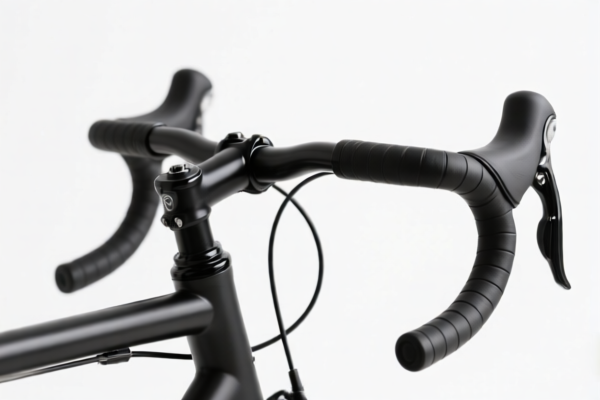
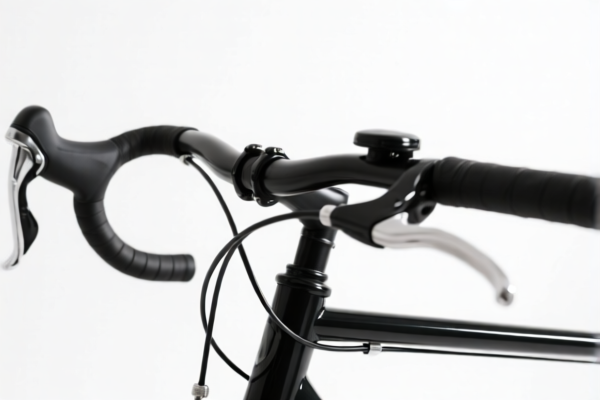
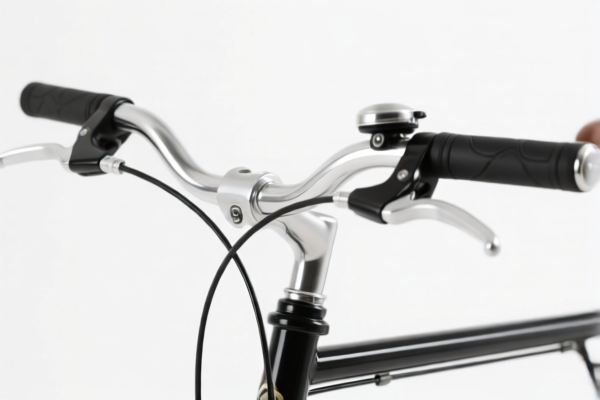
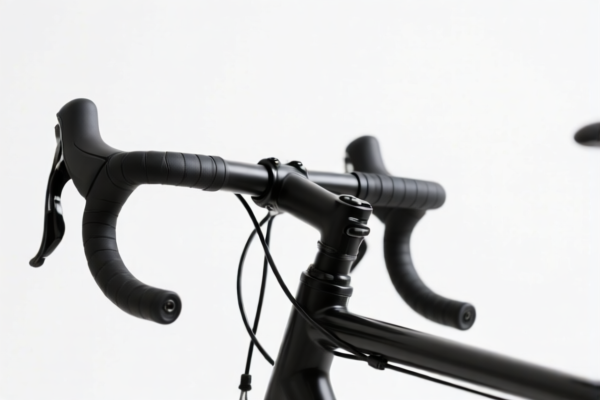
AI Analysis
🚴♂️ Rubber Mountain Bike Handlebar Grips
🌐 HS Code Reference & Clearance Guide | 2026 Latest Tariff Analysis | Professional Customs Strategy
📌 I. Product Definition & Classification: Do You Really Understand "Handlebar Grips"?
Rubber Mountain Bike Handlebar Grips are essential components for bicycle control and rider comfort. In international trade, their classification depends heavily on the material composition, physical form, and specific usage. Because they are primarily made of rubber, customs authorities often debate whether to classify them as general rubber products or specific vehicle parts.
⚠️ Key Distinction Point:
- If classified under Chapter 87 (Vehicle Parts): The focus is on the end-use (bicycle accessory). This usually results in lower base tariffs. - If classified under Chapter 40 (Rubber Articles): The focus is on the material (vulcanized rubber). This often triggers higher additional tariffs due to trade restrictions on general rubber goods from specific origins.
📦 II. HS Code Classification Details (2026 Latest Tariff Authority Comparison)
Based on the provided data, here are the four potential HS Codes for Rubber Mountain Bike Handlebar Grips, ranked by potential cost efficiency.
| HS Code | Product Description | Application Scenario | Estimated Total Tax Rate |
|---|---|---|---|
8714.99.10.00 |
Vehicle Parts & Accessories, Click-Type Twist Grips, Material: Rubber, Form: Grip | Mountain bike twist shifters/grips | 17.5% ✅ Most Favorable |
8714.99.80.00 |
Vehicle Parts & Accessories, Material: Rubber | General bicycle grips, standard rubber handles | 27.5% |
4016.99.10.00 |
Vulcanized Rubber Articles, Form: Handles & Knobs, Material: Rubber | Rubber handles, generic rubber knobs | 20.8% |
4016.99.60.10 |
Other Vulcanized Rubber Articles, Material: Rubber, For MTB Components | Other rubber parts, generic rubber grips | 37.5% ❌ Highest Cost |
🔍 Critical Insight:
- Chapter 87 (8714) is specifically for "Parts and Accessories of Vehicles." If your product is explicitly a bicycle part, this chapter is generally more accurate for "specific use." - Chapter 40 (4016) covers "Other articles of vulcanized rubber." This is a "basket" category. Using this code often attracts higher punitive tariffs (especially the 25% Section 301 duty). - Note on8714.99.10.00: The description mentions "Click-Type Twist Grips." If your grips are simple squeeze-on grips (not twist shifters), this might be a mismatch. However,8714.99.80.00is the broader "vehicle part" bucket.
💰 III. 2026 Latest Tariff Rate Breakdown (Including Surcharges & Policy Add-ons)
✅ Applicable Country: USA (US)
✅ Origin: China (CN)
✅ Effective Date: November 10, 2025 (and subsequent imports)
🎯 1. 8714.99.10.00 —— Vehicle Parts: Click-Type Twist Grips (Best Rate Option)
| Item | Details |
|---|---|
| Base Tariff | 0.0% |
| Section 301 Surcharge | +7.5% (Standard trade war rate for vehicle parts) |
| Section 122 Surcharge | +10% (Specific to certain Chinese imports) |
| Total Tax Rate | 17.5% |
| Tax Calculation | CIF Value × 17.5% |
| De Minimis Eligibility | ❌ Not Eligible (Denied) |
| Legal Authority Path | Section 122: 10% → Section 301: 7.5% → Base: 0% |
📌 Explanation:
- This is the most advantageous classification among the provided options. - The 0% base tariff significantly lowers the burden compared to Chapter 40 codes. - Even with the 7.5% + 10% surcharges, the total is still lower than the Chapter 40 alternatives.
🎯 2. 8714.99.80.00 —— Vehicle Parts (General Rubber Grips)
| Item | Details |
|---|---|
| Base Tariff | 10.0% |
| Section 301 Surcharge | +7.5% |
| Section 122 Surcharge | +10% |
| Total Tax Rate | 27.5% |
| Tax Calculation | CIF Value × 27.5% |
| De Minimis Eligibility | ❌ Not Eligible (Denied) |
| Legal Authority Path | Section 122: 10% → Section 301: 7.5% → Base: 10% |
📌 Explanation:
- Higher base rate (10%) makes this less competitive than8714.99.10.00. - Suitable if the product is not a "click-type twist grip" but still clearly a bicycle part.
🎯 3. 4016.99.10.00 —— Vulcanized Rubber: Handles & Knobs
| Item | Details |
|---|---|
| Base Tariff | 3.3% |
| Section 301 Surcharge | +7.5% |
| Section 122 Surcharge | +10% |
| Total Tax Rate | 20.8% |
| Tax Calculation | CIF Value × 20.8% |
| De Minimis Eligibility | ❌ Not Eligible (Denied) |
| Legal Authority Path | Section 122: 10% → Section 301: 7.5% → Base: 3.3% |
📌 Explanation:
- A middle-ground option. - Lower than the worst-case scenario (4016.99.60.10) but higher than the best vehicle part option (8714.99.10.00).
🎯 4. 4016.99.60.10 —— Other Vulcanized Rubber Articles (Worst Case)
| Item | Details |
|---|---|
| Base Tariff | 2.5% |
| Section 301 Surcharge | +25.0% 🔥 High Penalty |
| Section 122 Surcharge | +10% |
| Total Tax Rate | 37.5% |
| Tax Calculation | CIF Value × 37.5% |
| De Minimis Eligibility | ❌ Not Eligible (Denied) |
| Legal Authority Path | Section 122: 10% → Section 301: 25% → Base: 2.5% |
📌 Explanation:
- AVOID THIS CODE IF POSSIBLE. - The 25% Section 301 surcharge is punitive and applies to broader categories of rubber goods not specifically exempted or defined as vehicle parts. - This code is often used for "other" rubber items that don't fit neatly into specific subheadings, leading to the highest tax burden.
🛠️ IV. Clearance Practical Advice (Battle-Tested Pitfall Guide)
✅ 1. Preparation Checklist (Non-Negotiable)
| Document | Required? | Description |
|---|---|---|
| ✅ Product Specs | ✔️ | Material (e.g., 100% Silicone, TPE, Rubber), Hardness, Dimensions. |
| ✅ Photos | ✔️ | Clear images of the grip, logo, and how it attaches (twist-on vs. slide-on). |
| ✅ Commercial Invoice | ✔️ | Must clearly state: "Rubber Handlebar Grips for Mountain Bikes" or "Bicycle Parts". Avoid vague terms like "Rubber Accessories." |
| ✅ Packing List | ✔️ | Confirm if grips are sold individually, in pairs, or with shifter knobs. |
| ✅ Usage Proof | ✔️ | Catalogs or website links showing the product is used on bicycles. |
✅ 2. Declaration Strategy (Key Mnemonic)
🔥 "Be Specific: 'Bicycle Part' is Key. Avoid 'General Rubber'!"
| Scenario | Correct Declaration | Wrong Declaration |
|---|---|---|
| Standard Rubber Grips | 8714.99.80.00 (Vehicle Part) |
4016.99.60.10 (General Rubber) |
| Twist Shifters/Grips | 8714.99.10.00 (Vehicle Part) |
8483.90 (Transmission parts - risky) |
| Generic Rubber Tubes | 4016.99.90.00 |
N/A |
📌 Why It Matters:
- Declaring as8714(Vehicle Parts) leverages the 0% or 10% base rate. - Declaring as4016.99.60.10(General Rubber) triggers the 25% Section 301 penalty. - Difference: A $1,000 shipment could cost $175 in tax (8714) vs. $375 in tax (4016.99.60.10). That’s a $200 difference on a small shipment!
✅ 3. Special Handling
| Situation | Recommendation |
|---|---|
| Composite Materials | If grips have plastic cores or metal inserts, ensure the description emphasizes the rubber exterior but qualifies as a vehicle part. |
| OEM Customization | Provide design files or customer POs to prove these are custom bicycle parts, not generic rubber goods. |
| "Silicone" vs. "Rubber" | If the product is silicone, ensure the HS code still applies. 8714 is material-agnostic if it's a vehicle part. 4016 is specifically vulcanized rubber. Silicone might fall under 4016 or 3926 depending on composition. Check with your broker! |
🌍 V. Global Market Comparison (2026 Latest)
| Country/Region | Recommended HS Code | Est. Tariff (China Origin) | Notes |
|---|---|---|---|
| 🇺🇸 USA | 8714.99.10.00 or 8714.99.80.00 |
17.5% - 27.5% | Critical to avoid 4016.99.60.10 (37.5%). Section 301 and 122 apply. |
| 🇪🇺 EU | 8714.99.95 |
~3.7% (MFN) | Generally lower base duties. Check for anti-dumping if applicable. |
| 🇨🇳 China | 8714.99.90 |
0% (Favorable) | Exporting to China? No tariff. |
| 🇨🇦 Canada | 8714.99.00 |
0% (If RCEP/USMCA applicable) | Check FTAs. |
📌 Conclusion:
- The USA is the most challenging market due to Section 301 (7.5%-25%) and Section 122 (10%) surcharges. - Accuracy is paramount. Misclassifying a $10 grip as "general rubber" can destroy your profit margin.
📌 VI. Common Mistakes & Pitfall Guide (Lessons Learned)
❌ Mistake 1: Using 4016.99.60.10 because it's "just rubber."
👉 Consequence: You pay 37.5% instead of 17.5%. Extra 20% tax!
❌ Mistake 2: Declaring as "Bicycle Accessories" without specifying "Parts."
👉 Consequence: Customs may reclassify to Chapter 40 or 9511 (Gearing), leading to delays.
❌ Mistake 3: Ignoring Section 122.
👉 Consequence: Even with a good base rate, the 10% Section 122 surcharge still applies. Plan for it.
✅ Correct Approach:
"Rubber Mountain Bike Handlebar Grips, Part Number XYZ, Made of TPE/Rubber, for Bicycle Control, Not Included in Vehicle, Model ABC."
🎯 VII. Conclusion: Precision Saves Profit!
🎯 Remember the Mnemonic:
🔹 "Vehicle Part (8714) beats General Rubber (4016)."
🔹 "Base 0% + 7.5% + 10% = 17.5% (Win!). Base 2.5% + 25% + 10% = 37.5% (Lose!)."
🔹 "Check if it's a Twist Grip (8714.99.10.00) for the best rate!"
📌 Pro Tip:
- If your grips are not twist-shifters, try to justify 8714.99.80.00 (27.5%) over 4016.99.60.10 (37.5%). The 10% savings is significant.
- Request a Customs Ruling if you have high volume. A pre-classification ruling can protect you from audits.
📣 Immediate Action:
📞 Consult your customs broker to confirm if your specific grip design qualifies for
8714.99.10.00or8714.99.80.00.
🚀 Stop overpaying 20% tax by using the wrong HS code!
✨ Professional Clearance Starts with Accurate Classification!
💼 Every percentage point matters in high-tariff markets.
Customer Reviews
About HS Code Classification
The Harmonized System (HS) is an internationally standardized nomenclature developed by the World Customs Organization (WCO) to classify traded products. Over 200 countries use the HS system as the basis for customs tariffs, trade statistics, and import/export regulations.
Each HS code follows a hierarchical structure:
- Chapter (2 digits) — Broad category of goods (e.g., Chapter 84: Machinery and Mechanical Appliances)
- Heading (4 digits) — More specific grouping within the chapter
- Subheading (6 digits) — Internationally standardized breakdown, used by all WCO member countries
- National subdivisions (8-10 digits) — Country-specific extensions for further classification, such as US HTSUS 10-digit codes
Correct HS code classification is essential for smooth customs clearance, accurate duty payment, and compliance with trade regulations. Misclassification can lead to customs delays, overpayment of duties, or penalties.
When importing from CN to US, the applicable tariff rates may include:
- Most-Favored-Nation (MFN) rate — The standard duty rate applied to WTO members
- General rate — Applied to countries without trade agreements
- Trade remedy duties — Additional tariffs such as Section 301 (anti-dumping), Section 232 (national security), or countervailing duties
The information provided on this page is for reference purposes only. For official classification, please consult with your local customs authority or a licensed customs broker.