Rubber Mouse Pad
CN → US| HS Code | Tariff Rate | Origin | Destination | Doc |
|---|---|---|---|---|
| 4016990500 | 20.9% | CN | US | Official Doc |
| 8473309100 | 35.0% | CN | US | Official Doc |
| 3926901000 | 20.9% | CN | US | Official Doc |
| 3926100000 | 15.3% | CN | US | Official Doc |
| 4016910000 | 37.7% | CN | US | Official Doc |
Product Images
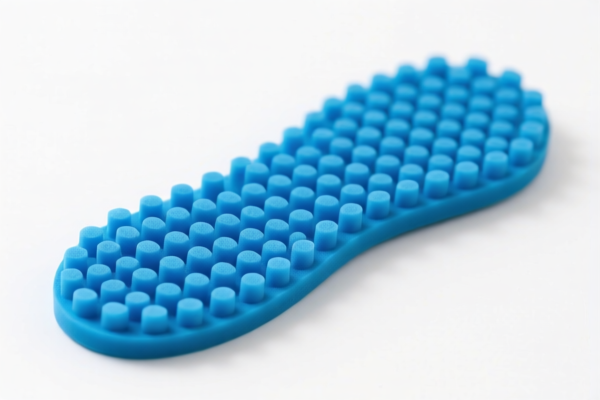
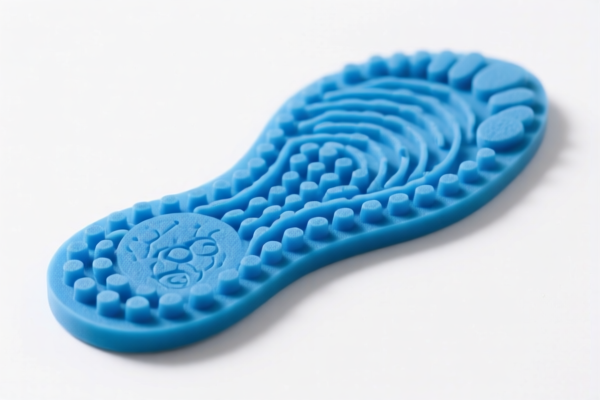
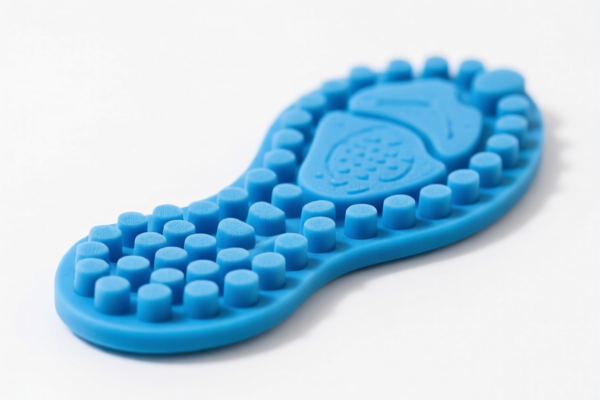
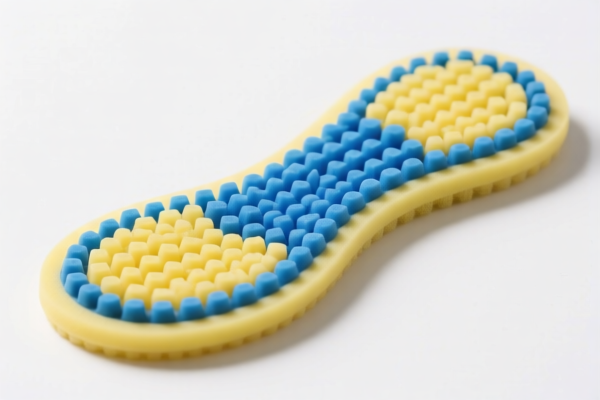
AI Analysis
🖱️ Rubber Mouse Pad (Mouse Mats)
🌐 HS Code Reference & Customs Clearance Guide | 2026 Latest Tariff Analysis | Professional Clearance Strategy
📌 I. Product Definition & Classification: Do You Really Understand "Rubber Mouse Pad"?
A rubber mouse pad is a peripheral device used with computers to improve the accuracy of mouse tracking. In international trade, its classification is complex because it sits at the intersection of IT accessories, rubber products, and household/office supplies. The key to correct classification lies in identifying the primary material (Rubber vs. Plastic/Synthetic) and the primary function (Accessory for Machine vs. General Use Item).
⚠️ Key Distinction Point:
- If considered a part/attachment of a computer system (HS Chapter 84): It falls under IT accessories.
- If considered a rubber article or household item (HS Chapter 40 or 39): It falls under material-based classifications.
- Note: Many classifiers debate whether a mouse pad is a "part" of the computer or a separate "accessory." This debate directly impacts the tariff rate from 15.3% to 37.7%.
📦 II. HS Code Classification Details (2026 Latest Tariff Authority Comparison)
Based on the provided data, here are the five potential HS Codes for "Rubber Mouse Pad," analyzed by their logic and tax implications.
| HS Code | Product Description | Matching Logic (Based on Data) | Total Tax Rate (China Origin) |
|---|---|---|---|
4016.99.05.00 |
Other articles of vulcanized rubber other than hard rubber | Material Match: "Rubber" matches "Vulcanized Rubber"; "Mouse Pad" is a household item. | 20.9% |
8473.30.91.00 |
Parts and accessories of automatic data processing machines | Functional Match: Treated as an attachment for "8471 machines" (Computers). No material conflict. | 35.0% |
3926.90.10.00 |
Other articles of plastic and articles of other materials of headings 3901 to 3914 | Common Sense/Material Inference: Assumes rubber/synthetic material falls under Plastic/Chapter 39 categories as "Other." | 20.9% |
3926.10.00.00 |
Office or school supplies, of plastic | Office Use Match: Infers material as plastic/synthetic rubber; matches "Office/Stationery" use case. | 15.3% |
4016.91.00.00 |
Rubber mats and flooring | Exact Fit: Explicitly matches "Rubber" material and "Mat/Pad" morphology under "Vulcanized Rubber Products." | 37.7% |
🔍 Critical Warning:
-8473.30.91.00has the highest tax burden (35.0%) due to high additional tariffs, despite being functionally accurate for IT accessories.
-3926.10.00.00offers the lowest tax rate (15.3%) but relies on classifying rubber as "plastic/synthetic office supplies."
-4016.91.00.00is the most literal material fit but carries the highest single rate (37.7%) due to aggressive 122-Section and Section 301 tariffs.
💰 III. 2026 Latest Tariff Rate Breakdown (Including Surcharges & Policy Add-ons)
✅ Applicable Country: United States (US)
✅ Origin: China (CN)
✅ Effective Date: Post-2025 (Current Tariff Structure)
🎯 1. 4016.99.05.00 — Other Articles of Vulcanized Rubber (Household/General)
| Item | Content |
|---|---|
| Base Rate | 3.4% (ad valorem) |
| Section 301 Surcharge | +7.5% (USITC Footnote related to Chapter 40) |
| Section 122 Surcharge | +10% (Specific to certain rubber articles/122-list) |
| Total Rate | 20.9% |
| Tax Calculation | CIF Value × 20.9% |
| De Minimis Eligibility | ❌ No (Deny de_minimis for Section 301/122 goods) |
| Legal Path | USITC:4016.99.05.00 → Section 301: 7.5% → Section 122: 10% |
📌 Explanation:
- This classification treats the mouse pad as a general rubber good rather than an IT part.
- The 7.5% is a standard Section 301 surcharge for certain rubber items.
- The 10% is a specific Section 122 tariff applied to this subheading.
🎯 2. 8473.30.91.00 — Parts and Accessories of Automatic Data Processing Machines
| Item | Content |
|---|---|
| Base Rate | 0.0% |
| Section 301 Surcharge | +25.0% (High-tier Section 301 for IT accessories/parts) |
| Section 122 Surcharge | +10% |
| Total Rate | 35.0% |
| Tax Calculation | CIF Value × 35.0% |
| De Minimis Eligibility | ❌ No |
| Legal Path | USITC:8473.30.91.00 → Section 301: 25% → Section 122: 10% |
📌 Explanation:
- Although the base tariff is 0%, the Section 301 surcharge is extremely high (25%) because IT accessories are heavily targeted in US-China trade disputes.
- Total 35.0% makes this the most expensive functional classification for high-volume shipments.
🎯 3. 3926.90.10.00 — Other Plastic/Composite Articles (General)
| Item | Content |
|---|---|
| Base Rate | 3.4% |
| Section 301 Surcharge | +7.5% |
| Section 122 Surcharge | +10% |
| Total Rate | 20.9% |
| Tax Calculation | CIF Value × 20.9% |
| De Minimis Eligibility | ❌ No |
| Legal Path | USITC:3926.90.10.00 → Section 301: 7.5% → Section 122: 10% |
📌 Explanation:
- This classification assumes the "rubber" is actually a synthetic polymer falling under Chapter 39 (Plastics).
- Rates mirror4016.99.05.00but may offer easier clearance if material composition is ambiguous.
🎯 4. 3926.10.00.00 — Office/Stationery Supplies of Plastic
| Item | Content |
|---|---|
| Base Rate | 5.3% |
| Section 301 Surcharge | 0.0% (Exempt/Low tier) |
| Section 122 Surcharge | +10% |
| Total Rate | 15.3% |
| Tax Calculation | CIF Value × 15.3% |
| De Minimis Eligibility | ❌ No (122 Section still applies) |
| Legal Path | USITC:3926.10.00.00 → Section 122: 10% |
📌 Explanation:
- Lowest Total Tax (15.3%).
- This classification benefits from a 0% Section 301 surcharge for office supplies, retaining only the 10% Section 122 and base rate.
- Risk: Requires proving the item is "Office Supplies" and not a pure "Rubber Good" (Chapter 40).
🎯 5. 4016.91.00.00 — Rubber Mats and Flooring
| Item | Content |
|---|---|
| Base Rate | 2.7% |
| Section 301 Surcharge | +25.0% (High tier for specific rubber articles) |
| Section 122 Surcharge | +10% |
| Total Rate | 37.7% |
| Tax Calculation | CIF Value × 37.7% |
| De Minimis Eligibility | ❌ No |
| Legal Path | USITC:4016.91.00.00 → Section 301: 25% → Section 122: 10% |
📌 Explanation:
- Highest Total Tax (37.7%).
- Although "mat" matches literally, the Section 301 rate for this specific rubber subheading is punitive (25%).
- Avoid unless no other classification fits.
🛠️ IV. Customs Clearance Practical Advice (Avoid Pitfalls Guide)
✅ 1. Preparation Checklist (All Required)
| Material | Must Provide | Description |
|---|---|---|
| ✅ Product Specification Sheet | ✔️ | Dimensions, thickness, material composition (e.g., "Natural Rubber + SBR + Fabric Backing"). |
| ✅ Product Photos (Clear) | ✔️ | Show texture, backing, and any branding. |
| ✅ Commercial Invoice | ✔️ | Explicitly state "Mouse Pad, Rubber, for Computer Use." |
| ✅ Packing List | ✔️ | Weight and quantity per box. |
| ✅ Material Safety Data Sheet (MSDS) | ✔️ | If applicable for rubber compounds. |
| ✅ Third-Party Test Report | ✔️ | RoHS, REACH, CPSIA (if for kids). |
✅ 2. Declaration Strategy (Key Mnemonic)
🔥 "Office Supply Low Tax, IT Accessory High Tax, Rubber Match Careful!"
| Scenario | Recommended HS Code | Tax Rate | Strategy |
|---|---|---|---|
| Standard Office Mouse Pad | 3926.10.00.00 |
15.3% | Best Option: Declare as "Office Supply" of plastic/synthetic. Avoids 25% Section 301. |
| Heavy-Duty Gaming Mouse Pad (Rubber) | 4016.99.05.00 |
20.9% | Safe Option: If clearly rubber, use this. Lower tax than IT accessories. |
| Pure IT Accessory Claim | 8473.30.91.00 |
35.0% | Avoid: Unless necessary. High tax burden. |
| Large Rubber Mats (Flooring Type) | 4016.91.00.00 |
37.7% | Avoid: Highest tax. Only for actual floor mats. |
✅ 3. Special Situations & Handling
| Situation | Handling Advice |
|---|---|
| Mixed Material (Rubber Top + Plastic Base) | Declare as Plastic Office Supply (3926.10.00.00) if plastic is the structural component or base. Lower tax. |
| Custom Logo Printing | Clearly state "Custom Printed Mouse Pad" in description. Does not change HS Code but aids customs inspection. |
| Sample Shipment (< $800) | ❌ De Minimis Does NOT Apply due to Section 301/122. Even samples under $800 may face duties if declared from China. |
| Bundles (Mouse + Pad) | If sold together, declare as a Set. If the mouse is the essential element, the whole set might be classified under the mouse's HS Code (usually 8471/8543), potentially avoiding high rubber tariffs. |
🌍 V. Global Market Comparison (2026 Latest)
| Country/Region | Recommended HS Code | Tariff (China Origin) | Certification Required | Notes |
|---|---|---|---|---|
| 🇺🇸 USA | 3926.10.00.00 |
15.3% | FCC (if electronic), RoHS, CPSIA | Avoid 8473 due to 35% tax. |
| 🇨🇳 China | 3926.10.00.00 / 4016.99.05.00 |
5-10% | CCC (if applicable), RoHS | No Section 301/122. |
| 🇪🇺 EU | 4016.99 or 3926.90 |
0-4% | CE, REACH, RoHS | No additional punitive tariffs. |
| 🇬🇧 UK | 4016.99 or 3926.90 |
0-4% | UKCA, REACH | Post-Brexit tariffs similar to EU for many goods. |
| 🇦🇺 Australia | 4016.99 |
5% | RCMA, Standards | No Section 301. |
📌 Conclusion:
- The USA is the most complex market for mouse pads due to Section 301 and 122 tariffs.
- China-origin mouse pads face a 15.3%-37.7% tariff range depending on classification.
- EU/UK/Australia are significantly cheaper (0-5%) with fewer punitive measures.
📌 VI. Common Mistakes & Pitfalls (Blood Lessons)
❌ Mistake 1: Classifying as 8473.30.91.00 (IT Accessory)
👉 Result: 35.0% Tax. You pay 20% more than necessary by ignoring the material-based lower-tax options.
❌ Mistake 2: Classifying as 4016.91.00.00 (Rubber Mats)
👉 Result: 37.7% Tax. The highest possible rate. Only use for actual floor mats, not computer mice pads.
❌ Mistake 3: Assuming De Minimis ($800) applies
👉 Result: Seizure or Duty Charge. Section 301 and 122 goods are explicitly excluded from de minimis exemption. Small batches still pay tax.
❌ Mistake 4: Vague Description "Computer Part"
👉 Result: Customs Inspection Delay. Customs will ask for clarification, potentially re-classifying to the higher tax code.
✅ Correct Approach:
"Mouse Pad, Office Supply, Synthetic Rubber/Plastic Composite, Printed, For Computer Use" → HS 3926.10.00.00
🎯 VII. Conclusion: Professional Declaration, Save Costs!
🎯 Remember the Mnemonic:
🔹 "Office Plastic 15%, Rubber 20%, IT Accessory 35%, Floor Mat 37%!"
🔹 "Choose 3926.10 to save 20% compared to 8473.30!"
📌 Tips:
- If your mouse pad has a plastic base or is made of synthetic rubber, lean towards 3926.10.00.00 (Office Supplies) for the 15.3% rate.
- If it is 100% Natural Rubber, use 4016.99.05.00 (20.9%).
- Avoid 8473.30.91.00 unless you have no choice, as the 35.0% tax is punitive.
- Always check Section 122 applicability on your invoice description.
📣 Immediate Action:
📞 Consult a professional customs broker + Provide material specs + Pre-classify as
3926.10.00.00if possible.
🚀 Minimize tax, ensure smooth clearance, maximize profit!
✨ Professional Clearance Starts with Accurate Classification!
💼 Every percentage point matters in US-China Trade!
Customer Reviews
About HS Code Classification
The Harmonized System (HS) is an internationally standardized nomenclature developed by the World Customs Organization (WCO) to classify traded products. Over 200 countries use the HS system as the basis for customs tariffs, trade statistics, and import/export regulations.
Each HS code follows a hierarchical structure:
- Chapter (2 digits) — Broad category of goods (e.g., Chapter 84: Machinery and Mechanical Appliances)
- Heading (4 digits) — More specific grouping within the chapter
- Subheading (6 digits) — Internationally standardized breakdown, used by all WCO member countries
- National subdivisions (8-10 digits) — Country-specific extensions for further classification, such as US HTSUS 10-digit codes
Correct HS code classification is essential for smooth customs clearance, accurate duty payment, and compliance with trade regulations. Misclassification can lead to customs delays, overpayment of duties, or penalties.
When importing from CN to US, the applicable tariff rates may include:
- Most-Favored-Nation (MFN) rate — The standard duty rate applied to WTO members
- General rate — Applied to countries without trade agreements
- Trade remedy duties — Additional tariffs such as Section 301 (anti-dumping), Section 232 (national security), or countervailing duties
The information provided on this page is for reference purposes only. For official classification, please consult with your local customs authority or a licensed customs broker.