Rubber Plasticizer
CN → US| HS Code | Tariff Rate | Origin | Destination | Doc |
|---|---|---|---|---|
| 3812105000 | 40.0% | CN | US | Official Doc |
| 3812399000 | 40.0% | CN | US | Official Doc |
| 3901901000 | 35.0% | CN | US | Official Doc |
| 3901909000 | 41.5% | CN | US | Official Doc |
| 3402901000 | 38.8% | CN | US | Official Doc |
Product Images
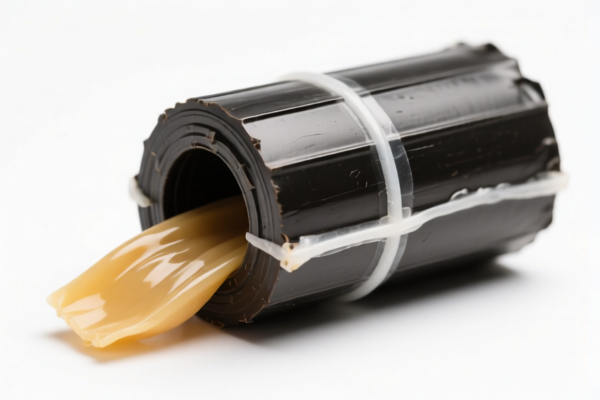


AI Analysis
🧪 Rubber Plasticizer: HS Code Classification & Customs Clearance Guide (2026)
🌐 HS Code Reference & Customs Strategy | Detailed Tax Breakdown for US Imports | Professional Clearance Protocol
📌 I. Product Definition & Classification: What is a "Rubber Plasticizer"?
Rubber Plasticizers (often referred to interchangeably with rubber processing aids, thickening agents, or plasticizing oils in trade data) are chemical additives used in the rubber manufacturing industry. Their primary function is to soften the rubber compound, improve workability, enhance flexibility, and reduce viscosity during processing.
In international trade, these products are often ambiguous because they can be classified either as chemical preparations (Chapter 38) or plastic materials (Chapter 39), depending on their chemical composition, physical state, and specific function.
⚠️ Critical Distinction:
- If the product is primarily a chemical additive (e.g., esters, phthalates, specialized polymers) designed to modify rubber properties → Chapter 38.
- If the product is a polymer/raw material (e.g., PVC compounds, elastomers) that itself acts as a plasticizer → Chapter 39.
- If the product is a surface-active agent or complex functional additive → Chapter 34.
📦 II. HS Code Classification Matrix (Based on Provided Data)
The following HS Codes are derived from the specific characteristics of "Rubber Plasticizers" as described in the source data. Note that all codes listed below are subject to significant additional duties for products originating from China.
| HS Code | Product Description & Logic | Tax Rate (China Origin) | Key Characteristics |
|---|---|---|---|
| 3812.10.50.00 | Rubber Thickening/Plasticizing Agents Matched material: Rubber. Classified under "Other" categories. Similar to accelerators/stabilizers. |
40.0% (Base 5% + 25% Sec 301 + 10% 122) |
Primary choice if the product is a dedicated additive for rubber compounding. |
| 3812.39.90.00 | Composite Stabilizers & Antioxidants Grouped with antioxidants and other composite stabilizers. |
40.0% (Base 5% + 25% Sec 301 + 10% 122) |
If the plasticizer also functions as a stabilizer or antioxidant complex. |
| 3901.90.10.00 | Polymer Raw Material (Primary Form) Inferred as polymer raw material, primary form. No conflict with elastomer/polymer attributes. |
35.0% (Base 0% + 25% Sec 301 + 10% 122) |
If the plasticizer is a polymer (e.g., plasticized PVC or specific elastomeric oil) in its primary form. |
| 3901.90.90.00 | Chemical/Polymer Raw Material Inferred as chemical/polymer raw material. No conflict with ethylene polymer attributes. |
41.5% (Base 6.5% + 25% Sec 301 + 10% 122) |
If the product is a specific ethylene-based polymer or complex chemical raw material. |
| 3402.90.10.00 | Chemical Auxiliary Agent (Surface Active) Inferred as chemical auxiliary, belonging to surface-active or functional additive categories. |
38.8% (Base 3.8% + 25% Sec 301 + 10% 122) |
If the product has strong surface-active properties or is a complex functional blend not strictly a polymer. |
💰 III. 2026 Tariff Rate Breakdown (Detailed Tax Analysis)
✅ Applicable Country: United States (US)
✅ Origin: China (CN)
✅ Effective Date: Current rates apply (2025-2026 timeframe)
✅ Note: All rates include Section 301 Tariffs (25%) and Section 122 Tariffs (10%) where applicable.
🎯 1. Classification: 3812.10.50.00 (Most Common for Dedicated Plasticizers)
| Item | Detail |
|---|---|
| Base Duty | 5.0% |
| Section 301 Duty | +25.0% |
| Section 122 Duty | +10.0% |
| Total Effective Rate | 40.0% |
| Calculation Base | CIF Value × 40% |
| De Minimis Exemption | ❌ Not Applicable (Value > $800 threshold for duty-free entry) |
| Legal Basis | HTSUS:3812.10.50 → USITC:Section301:Footnote25 → USITC:Section122 |
📌 Explanation:
- Base 5%: Standard Most Favored Nation (MFN) rate for chemical preparations.
- 25% (Sec 301): Trump-era tariff still in effect for most Chapter 38 chemicals from China.
- 10% (Sec 122): Specific additional tariff on certain industrial inputs.
- Total 40%: This is a high-cost import. Cost optimization must consider supply chain alternatives or precise classification.
🎯 2. Classification: 3901.90.10.00 (Lowest Total Rate)
| Item | Detail |
|---|---|
| Base Duty | 0.0% |
| Section 301 Duty | +25.0% |
| Section 122 Duty | +10.0% |
| Total Effective Rate | 35.0% |
| Calculation Base | CIF Value × 35% |
| De Minimis Exemption | ❌ Not Applicable |
| Legal Basis | HTSUS:3901.90.10 → USITC:Section301 |
📌 Strategic Insight:
- If your "plasticizer" is technically a polymer (e.g., a specific type of rubber oil or polymer blend), classifying under 3901.90.10.00 saves 5% compared to the 3812 codes.
- Risk: Misclassification risk is high. Must prove it is a "primary form polymer" and not a finished chemical additive.
🎯 3. Classification: 3901.90.90.00 (Highest Base Rate)
| Item | Detail |
|---|---|
| Base Duty | 6.5% |
| Section 301 Duty | +25.0% |
| Section 122 Duty | +10.0% |
| Total Effective Rate | 41.5% |
| Calculation Base | CIF Value × 41.5% |
📌 Warning:
- This code has the highest base rate (6.5%) and is often used for "other" ethylene polymers. Only use if the product is definitively an ethylene-based polymer that does not fit 3901.90.10.00.
🎯 4. Classification: 3402.90.10.00 (Chemical Auxiliary)
| Item | Detail |
|---|---|
| Base Duty | 3.8% |
| Section 301 Duty | +25.0% |
| Section 122 Duty | +10.0% |
| Total Effective Rate | 38.8% |
| Calculation Base | CIF Value × 38.8% |
📌 Niche Use:
- Use only if the product has significant surface-active properties (e.g., emulsifiers, wetting agents) in addition to plasticizing effects. Common in complex rubber processing aids.
🛠️ IV. Customs Clearance Practical Advice (Avoiding Pitfalls)
✅ 1. Documentation Checklist (Mandatory)
| Document | Required? | Purpose |
|---|---|---|
| Technical Data Sheet (TDS) | ✔️ Yes | To prove chemical composition (polymer vs. chemical prep). |
| Formula/Composition | ✔️ Yes | Critical for distinguishing between Chapter 38 (prep) and Chapter 39 (polymer). |
| Product Photos | ✔️ Yes | Show physical state (liquid, granule, powder). |
| Labeling/MSDS | ✔️ Yes | For safety and chemical identification. |
| Commercial Invoice | ✔️ Yes | Must clearly state "Rubber Plasticizer" or specific chemical name (e.g., "DINP," "DOS," "PVC Plasticizer"). |
| Certificate of Origin | ✔️ Yes | To confirm Chinese origin (triggering 301/122 duties). |
✅ 2. Classification Strategy (Key Decision Points)
| Scenario | Recommended HS Code | Reason |
|---|---|---|
| Standard Rubber Oil/Plasticizer (e.g., aromatic oil, paraffinic oil) | 3812.10.50.00 | Best fit for "rubber processing aids" and "thickening agents." |
| Polymer-Based Plasticizer (e.g., plasticized PVC resin, polymer oil) | 3901.90.10.00 | If it is a primary form polymer, base duty is 0%. |
| Complex Additive Mix (with surfactants) | 3402.90.10.00 | If surface-active properties are dominant. |
| Unclear/Ethylene-Based | 3901.90.90.00 | Last resort if other polymer codes don't fit. |
🔥 Golden Rule:
"Function dictates Chapter, Composition dictates Subheading."
- If it acts like an additive → Chapter 38.
- If it is a polymer → Chapter 39.
✅ 3. Special Considerations
| Issue | Solution |
|---|---|
| Misclassification Risk | Provide detailed chemical structure. If it's a polymer, emphasize "primary form." If it's a prep, emphasize "rubber processing aid." |
| Section 122 Applicability | Verify if the specific product is listed under Section 122 exclusions. Most rubber chemicals are not excluded. |
| De Minimis | Shipments under $800 are not exempt from these duties if they are classified under these HS codes. Plan accordingly. |
| Alternative Origins | Consider sourcing from Vietnam, Thailand, or Mexico to avoid Section 301 (25%) and potentially Section 122 (10%) tariffs. |
🌍 V. Global Comparison & Tariff Impact
| Country | HS Code | Tariff (China Origin) | Notes |
|---|---|---|---|
| 🇺🇸 USA | 3812.10.50.00 | 40.0% | High burden. 301 + 122 duties apply. |
| 🇪🇺 EU | 3812.10.00 | 6.5% | No Section 301/122 equivalent. Lower base duty. |
| 🇨🇳 China | 3812.10.50.00 | 5.0% | Only base duty. No additional tariffs on exports. |
| 🇬🇧 UK | 3812.10.00 | 6.5% | Post-Brexit standard rate. |
📌 Conclusion:
- The US market is the most expensive for Chinese rubber plasticizers due to layered tariffs.
- Cost-saving Strategy:
1. Reclassify to 3901.90.10.00 if chemically justified (saves 5%).
2. Supply Chain Diversification: Source from non-China origins to avoid 25% + 10% surcharges.
3. Advance Ruling: Request a Binding Ruling from CBP before shipment to lock in the HS Code.
📌 VI. Common Errors & Pitfalls (Blood Lessons)
❌ Error 1: Classifying a polymer plasticizer as a chemical prep (3812).
👉 Consequence: Pay 40% instead of 35%. Unnecessary cost.
✅ Fix: Prove polymer nature via TDS.
❌ Error 2: Classifying a chemical additive as a polymer (3901).
👉 Consequence: Customs rejection, penalty, retroactive duties, and potential fraud charges.
✅ Fix: Accurate chemical analysis.
❌ Error 3: Ignoring Section 122 duties.
👉 Consequence: Underpayment by 10%.
✅ Fix: Always add 10% to base + 301 rates unless excluded.
❌ Error 4: Using generic terms like "Plasticizer" on Invoice.
👉 Consequence: Customs delays, requests for more info.
✅ Fix: Use specific chemical names (e.g., "Diisononyl Phthalate (DINP)") or precise functional descriptions.
🎯 VII. Conclusion: Professional Declaration for Cost Optimization
🎯 Key Takeaway:
🔹 "Check Composition First, Then Choose Chapter."
🔹 "3812 = 40%, 3901.10 = 35%, 3402 = 38.8%."
🔹 "Avoid China Origin if Possible to Save 35%+ in Duties."
📌 Action Plan:
1. Verify Chemical Structure: Is it a polymer or a prep?
2. Select Best HS Code: Aim for 3901.90.10.00 if polymer-based.
3. Document Thoroughly: TDS, MSDS, and Chemical Analysis.
4. Consider Origin: Look into non-China suppliers to mitigate tariffs.
📣 Immediate Action:
📞 Consult a Customs Broker: Get a pre-filing review.
📄 Request Binding Ruling: From CBP to ensure compliance.
🚀 Optimize Supply Chain: Evaluate Vietnam/Thailand sourcing.
✨ Professional Customs Clearance Starts with Accurate Classification!
💼 Every Percent Saved in Duty is Pure Profit!
Customer Reviews
About HS Code Classification
The Harmonized System (HS) is an internationally standardized nomenclature developed by the World Customs Organization (WCO) to classify traded products. Over 200 countries use the HS system as the basis for customs tariffs, trade statistics, and import/export regulations.
Each HS code follows a hierarchical structure:
- Chapter (2 digits) — Broad category of goods (e.g., Chapter 84: Machinery and Mechanical Appliances)
- Heading (4 digits) — More specific grouping within the chapter
- Subheading (6 digits) — Internationally standardized breakdown, used by all WCO member countries
- National subdivisions (8-10 digits) — Country-specific extensions for further classification, such as US HTSUS 10-digit codes
Correct HS code classification is essential for smooth customs clearance, accurate duty payment, and compliance with trade regulations. Misclassification can lead to customs delays, overpayment of duties, or penalties.
When importing from CN to US, the applicable tariff rates may include:
- Most-Favored-Nation (MFN) rate — The standard duty rate applied to WTO members
- General rate — Applied to countries without trade agreements
- Trade remedy duties — Additional tariffs such as Section 301 (anti-dumping), Section 232 (national security), or countervailing duties
The information provided on this page is for reference purposes only. For official classification, please consult with your local customs authority or a licensed customs broker.