Rubber Plasticizer Concentrate
CN → US| HS Code | Tariff Rate | Origin | Destination | Doc |
|---|---|---|---|---|
| 3812105000 | 40.0% | CN | US | Official Doc |
| 3812399000 | 40.0% | CN | US | Official Doc |
| 3901901000 | 35.0% | CN | US | Official Doc |
| 3901909000 | 41.5% | CN | US | Official Doc |
| 3402901000 | 38.8% | CN | US | Official Doc |
Product Images
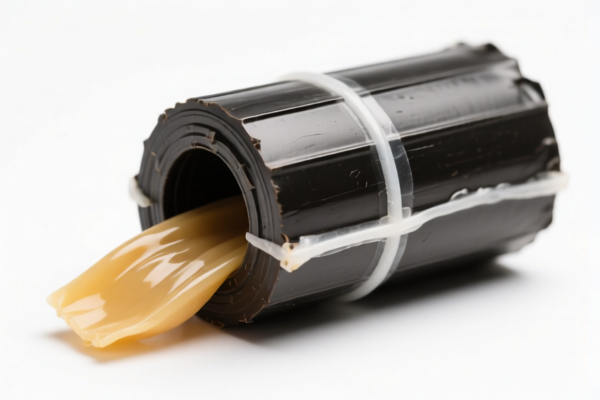



AI Analysis
🧪 Rubber Plasticizer Concentrate (Rubber Processing Aid)
🌐 HS Code Reference & Customs Clearance Guide | 2026 Latest Tariff Analysis | Professional Clearance Strategy
📌 I. Product Definition & Classification: Do You Truly Understand "Rubber Plasticizer"?
Rubber Plasticizer Concentrate is a specialized chemical additive used in the rubber and polymer industries to improve processability, reduce viscosity, and enhance the flow of rubber compounds during mixing and molding. In international trade, it is typically classified based on its chemical function (plasticizer/stabilizer) and material composition (rubber-based or polymer-based).
⚠️ Key Distinction:
- Is it a specialized rubber additive (Group 38)? → Best fit for chemical specialty products.
- Is it a generic plasticizer/chemical concentrate (Group 34)? → Possible if viewed as a detergent-like or surface-active agent.
- Is it a polymer/resin form (Group 39)? → Possible if classified as a raw polymer material.
📦 II. HS Code Classification Details (2026 Latest Tariff Authority Comparison)
| HS Code | Product Description | Application Scenario | Material Logic |
|---|---|---|---|
3812.10.50.00 |
Rubber Processing Aids, Compounds | Specialized rubber additives, thickeners, stabilizers | ✅ Best Fit: Explicitly covers "rubber" materials and chemical additives like thickening agents/stabilizers. |
3812.39.90.00 |
Other Chemical Additives for Rubber/Plastic | Anti-oxidants, stabilizers, plasticizers for rubber/plastic | ✅ Strong Fit: Covers "other" chemical additives with no material conflict. |
3901.90.10.00 |
Ethylene Polymers, Other Forms | Polymer-based concentrates, raw material additives | ⚠️ Inferred Fit: Based on logic that plasticizers are polymer-related raw materials. |
3901.90.90.00 |
Other Ethylene Polymers | Generic polymer concentrates, bottom-category match | ⚠️ Inferred Fit: General polymer category, less specific than Group 38. |
3402.90.10.00 |
Organic Surface Active Agents | Detergent-like chemical aids, surface modifiers | ⚠️ Alternative Fit: Views the product as a chemical surface-active agent. |
🔍 Priority Recommendation:
-3812.10.50.00is the most accurate classification because it explicitly mentions "Rubber" and covers thickening/stabilizing agents.
-3812.39.90.00is a strong alternative if the product is classified as a "chemical additive" rather than a specific rubber compound.
💰 III. 2026 Latest Tariff Rate Details (Including Additional Taxes & Policy Surcharges)
✅ Applicable Country: USA (US)
✅ Origin: China (CN)
✅ Effective Date: From November 10, 2025 (including subsequent imports)
🎯 1. 3812.10.50.00 — Rubber Processing Aids (Thickening Agents/Stabilizers)
| Item | Content |
|---|---|
| Base Tariff Rate | 5.0% (Ad Valorem) |
| USITC Additional Tax | +25% (Section 301 Tariffs) |
| IEEPA Additional Tax | +10% (China/HK Products, IEEPA) |
| Total Tariff Rate | 40.0% |
| Tax Calculation | CIF Value × 40% |
| De Minimis Exemption | ❌ Not Eligible (deny_de_minimis) |
| Legal Basis Path | IEEPA:9903.01.25 → USITC:3812.10.50.00 → FOOTNOTE:3812.10.50.00 |
📌 Explanation:
- 5% Base: Standard MFN tariff for rubber chemicals.
- 25% Section 301: Additional tariff on Chinese rubber chemicals.
- 10% IEEPA: National emergency tariffs on Chinese products.
- Total 40%: High tariff burden; requires precise declaration to avoid misclassification penalties.
🎯 2. 3812.39.90.00 — Other Chemical Additives for Rubber/Plastic
| Item | Content |
|---|---|
| Base Tariff Rate | 5.0% |
| USITC Additional Tax | +25% |
| IEEPA Additional Tax | +10% |
| Total Tariff Rate | 40.0% |
| Tax Calculation | CIF × 40% |
| De Minimis Exemption | ❌ Not Eligible |
| Legal Basis Path | IEEPA:9903.01.24 → USITC:3812.39.90.00 |
📌 Note:
- Same tariff rate as3812.10.50.00.
- Suitable if the product is not a "processing aid" but a "chemical additive" (e.g., antioxidant, plasticizer).
🎯 3. 3901.90.10.00 — Ethylene Polymers (Other Forms)
| Item | Content |
|---|---|
| Base Tariff Rate | 0.0% |
| USITC Additional Tax | +25% |
| IEEPA Additional Tax | +10% |
| Total Tariff Rate | 35.0% |
| Tax Calculation | CIF × 35% |
| De Minimis Exemption | ❌ Not Eligible |
| Legal Basis Path | IEEPA:9903.01.24 → USITC:3901.90.10.00 |
📌 Note:
- Lower total tariff (35%) but less accurate classification.
- Only use if the product is confirmed to be a polymer resin rather than a chemical additive.
🎯 4. 3901.90.90.00 — Other Ethylene Polymers
| Item | Content |
|---|---|
| Base Tariff Rate | 6.5% |
| USITC Additional Tax | +25% |
| IEEPA Additional Tax | +10% |
| Total Tariff Rate | 41.5% |
| Tax Calculation | CIF × 41.5% |
| De Minimis Exemption | ❌ Not Eligible |
| Legal Basis Path | IEEPA:9903.01.24 → USITC:3901.90.90.00 |
📌 Note:
- Highest tariff rate among polymer categories.
- General "other polymers" category; not recommended for specific rubber plasticizers.
🎯 5. 3402.90.10.00 — Organic Surface Active Agents
| Item | Content |
|---|---|
| Base Tariff Rate | 3.8% |
| USITC Additional Tax | +25% |
| IEEPA Additional Tax | +10% |
| Total Tariff Rate | 38.8% |
| Tax Calculation | CIF × 38.8% |
| De Minimis Exemption | ❌ Not Eligible |
| Legal Basis Path | IEEPA:9903.01.24 → USITC:3402.90.10.00 |
📌 Note:
- Views the product as a detergent-like chemical.
- Lower tariff (38.8%) but risky classification; only use if product is surface-active.
🛠️ IV. Customs Clearance Practical Advice (Pitfall Avoidance Guide)
✅ 1. Documentation Checklist (All Required)
| Document | Must Provide | Explanation |
|---|---|---|
| ✅ Product Spec Sheet | ✔️ | Must include composition, function (plasticizer/thickener), and CAS numbers. |
| ✅ MSDS/SDS | ✔️ | Critical for chemical products; confirms hazardous/non-hazardous status. |
| ✅ Product Photos | ✔️ | Clear labels showing "Rubber Plasticizer," concentration, and usage. |
| ✅ Commercial Invoice | ✔️ | Must clearly state "Rubber Processing Aid/Plasticizer Concentrate", not generic "chemical." |
| ✅ Packing List | ✔️ | Detail net/gross weight, volume, and packaging type. |
| ✅ Certificate of Origin | ✔️ | Required for tariff determination and IEEPA assessment. |
✅ 2. Declaration Tips (Key Mantra)
🔥 “Declare as Rubber Additive, Not Polymer Resin! Specify Function, Avoid Penalty!”
| Scenario | Correct Declaration | Wrong Practice |
|---|---|---|
| Rubber Plasticizer/Thickener | 3812.10.50.00 or 3812.39.90.00 |
Misreport as 3901 (Polymer) → Higher tax risk |
| Chemical Surface Agent | 3402.90.10.00 |
Only if truly surface-active; otherwise, incorrect |
| Mixed Polymer/Chemical | Stick to 3812 (Rubber Chemicals) |
Split declaration → Audit risk |
| Generic "Chemical Concentrate" | Provide MSDS + Function Description | Vague name → Customs delay or reclassification |
✅ 3. Special Case Handling
| Scenario | Handling Advice |
|---|---|
| OEM Private Label | Provide customer contract + product spec to prove usage as rubber aid. |
| High Concentration (>50%) | Declare as "Concentrate"; provide dilution instructions if applicable. |
| Hazardous Chemical | Ensure IMDG/ADN compliance if shipped by sea/air; provide UN number. |
| Small Samples (<$2,500) | Still subject to 40% tariff due to IEEPA; no de minimis exemption. |
🌍 V. Global Market Comparison (2026 Latest)
| Country/Region | Recommended HS Code | Tariff Rate | Certification | Notes |
|---|---|---|---|---|
| 🇺🇸 USA | 3812.10.50.00 |
40% (China) | None | High tariff due to Section 301 + IEEPA |
| 🇨🇳 China | 3812.10.50.00 |
5% | None | No additional surcharges |
| 🇪🇺 EU | 3812.10.50.00 |
4.5% | REACH | No additional tariffs |
| 🇦🇺 Australia | 3812.10.50.00 |
5% | None | No additional tariffs |
| 🇯🇵 Japan | 3812.10.50.00 |
4.2% | None | No additional tariffs |
📌 Conclusion:
- USA is the highest-cost market for this product due to 40% total tariff.
- China, EU, AU, JP have significantly lower tariffs (4–5%).
- Consider supply chain diversification if shipping to USA.
📌 VI. Common Errors & Pitfall Guide (Lessons Learned)
❌ Error 1: Declaring as "Rubber Compound" instead of "Plasticizer/Concentrate"
👉 Consequence: Misclassification → Higher tax or detention.
❌ Error 2: Omitting MSDS/SDS
👉 Consequence: Chemical clearance delay → Storage fees + demurrage.
❌ Error 3: Using "Plasticizer" without specifying "Rubber"
👉 Consequence: Customs may classify as 3901 (Polymer) → Incorrect tariff assessment.
❌ Error 4: Assuming De Minimis Exemption applies
👉 Consequence: 40% tariff applies even for small shipments under $2,500.
✅ Correct Declaration Example:
"Rubber Plasticizer Concentrate, CAS No. XXXX-XX-X, Used for Rubber Processing Aid, 5kg Drum, No Hazardous Classification, MSDS Attached."
🎯 VII. Conclusion: Precise Classification Saves Money!
🎯 Remember the Mantra:
🔹 “Rubber Aid = 3812, Polymer = 3901, Don’t Mix Up!”
🔹 “40% Tax in USA, 5% in China, Choose Wisely!”
🔹 “MSDS is Key, De Minimis Doesn’t Apply!”
📌 Pro Tip:
- If your plasticizer is non-Chinese origin, IEEPA 10% may not apply → Lower total tax.
- Apply for Pre-Ruling (Advance Ruling) from CBP to confirm
3812.10.50.00.
📣 Immediate Action:
📞 Contact a licensed customs broker + Provide MSDS + Request HS Code Pre-Ruling
🚀 Ensure Smooth Clearance, Minimize Tariffs, Maximize Profit!
✨ Professional Customs Clearance Starts with Accurate Classification!
💼 Every Dollar Saved on Tariffs is Pure Profit!
Customer Reviews
About HS Code Classification
The Harmonized System (HS) is an internationally standardized nomenclature developed by the World Customs Organization (WCO) to classify traded products. Over 200 countries use the HS system as the basis for customs tariffs, trade statistics, and import/export regulations.
Each HS code follows a hierarchical structure:
- Chapter (2 digits) — Broad category of goods (e.g., Chapter 84: Machinery and Mechanical Appliances)
- Heading (4 digits) — More specific grouping within the chapter
- Subheading (6 digits) — Internationally standardized breakdown, used by all WCO member countries
- National subdivisions (8-10 digits) — Country-specific extensions for further classification, such as US HTSUS 10-digit codes
Correct HS code classification is essential for smooth customs clearance, accurate duty payment, and compliance with trade regulations. Misclassification can lead to customs delays, overpayment of duties, or penalties.
When importing from CN to US, the applicable tariff rates may include:
- Most-Favored-Nation (MFN) rate — The standard duty rate applied to WTO members
- General rate — Applied to countries without trade agreements
- Trade remedy duties — Additional tariffs such as Section 301 (anti-dumping), Section 232 (national security), or countervailing duties
The information provided on this page is for reference purposes only. For official classification, please consult with your local customs authority or a licensed customs broker.