Rubber Plasticizer Emulsion
CN → US| HS Code | Tariff Rate | Origin | Destination | Doc |
|---|---|---|---|---|
| 3901909000 | 41.5% | CN | US | Official Doc |
| 3901901000 | 35.0% | CN | US | Official Doc |
| 4002110000 | 35.0% | CN | US | Official Doc |
| 4002910000 | 35.0% | CN | US | Official Doc |
| 3809921000 | 41.5% | CN | US | Official Doc |
| 3809925000 | 41.0% | CN | US | Official Doc |
Product Images
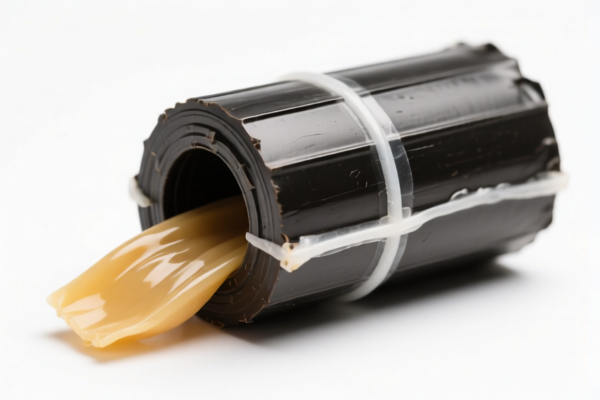

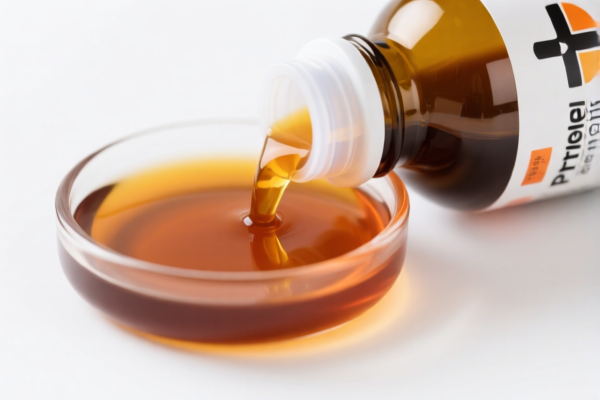
AI Analysis
🧪 Rubber Plasticizer Emulsion (Synthetic Rubber Latices & Polymers)
🌐 HS Code Reference & Customs Clearance Guide | 2026 Latest Tariff Analysis | Professional Entry Strategy
📌 I. Product Definition & Classification: What Exactly is "Rubber Plasticizer Emulsion"?
In international trade, the term "Rubber Plasticizer Emulsion" is often a trade name or functional description that needs to be mapped to specific chemical compositions to determine the correct Harmonized System (HS) Code. Based on the provided data, these products primarily fall under two major categories: 1. Synthetic Rubber Latex: Specifically Styrene-Butadiene Rubber (SBR) or Carboxylated SBR (XSBR) in latex form. These are often used as plasticizers or binders in rubber manufacturing. 2. Polymer Emulsions/Preparations: Other ethylene polymers or finishing agents used in textile/paper industries that may have plasticizing effects.
⚠️ Key Distinction Point:
- If the product is primarily Styrene-Butadiene Rubber (SBR) in Latex form → It belongs to 4002.
- If the product is Ethylene Polymer in Primary Forms (e.g., granules, powders, or liquid polymers not classified as latex) → It belongs to 3901.
- If the product is a Chemical Finisher/Agent containing aromatic substances for paper/leather → It belongs to 3809.
📦 II. HS Code Classification Details (Based on Provided Data)
| HS Code | Product Description | Applicable Scenario | Primary Composition |
|---|---|---|---|
4002.11.00.00 |
Synthetic Rubber: Styrene-Butadiene Rubber (SBR); Carboxylated SBR (XSBR): Latex | SBR Latex, XSBR Latex, common "plasticizer" emulsions for rubber compounding | ✅ SBR/XSBR Latex |
4002.91.00.00 |
Synthetic Rubber: Other: Latex | Other synthetic rubber latices (e.g., NBR, BR latex if not SBR) | ✅ Other Synthetic Rubber Latex |
3901.90.90.00 |
Polymers of Ethylene: Other: Other: Other | Non-elastomeric ethylene polymers (e.g., PE resins, powders, liquids not classified as elastomers) | ✅ Ethylene Polymer (Non-Elasmotic) |
3901.90.10.00 |
Polymers of Ethylene: Other: Elastomeric | Ethylene-propylene rubber (EPR/EPDM) or other ethylene-based elastomers in primary forms | ✅ Ethylene Elastomer |
3809.92.10.00 |
Finishing Agents: Of a kind used in paper/like industries: Containing ≥5% aromatic substances | Chemical auxiliaries, dye carriers, or specialized finishing agents with aromatic content | ✅ Chemical Agent (>5% Aromatic) |
3809.92.50.00 |
Finishing Agents: Of a kind used in paper/like industries: Other | Standard finishing agents for paper/leather without high aromatic content | ✅ Chemical Agent (<5% Aromatic) |
🔍 Critical Reminder:
- "Latex" vs. "Primary Form": If it is a liquid emulsion of rubber particles, it is 4002. If it is a solid polymer or non-elastomeric liquid polymer, it may be 3901.
- "Plasticizer" Function: If the product is purely a chemical additive (not rubber or polymer itself) used to soften materials, it might fall under 3809 (if for paper/leather) or other chapters. However, based on the provided data, we focus on 4002 and 3901 for rubber/plasticizer emulsions.
- Do not misclassify SBR Latex as "Plasticizer" under 3809 unless it is explicitly a finishing agent. SBR Latex is a rubber product.
💰 III. 2026 Latest Tariff Rate Details (Including Additional Taxes)
✅ Applicable Country: United States (US)
✅ Origin: China (CN) (Implied by the 25% Additional Tax in all entries)
✅ Effective Date: Current rates apply as per the provided data.
🎯 1. 4002.11.00.00 – Styrene-Butadiene Rubber (SBR) Latex / Carboxylated SBR Latex
| Item | Content |
|---|---|
| Base Tariff | 0.0% |
| Additional Tax (Section 301) | +25.0% |
| Total Tariff Rate | 25.0% |
| Tax Calculation | CIF Value × 25% |
| De Minimis Exemption? | ❌ No (Value > $800 for Section 301 goods usually not exempt; check specific rules) |
| Legal Basis | HTSUS 4002.11.00.00 + USITC Footnote 301 |
📌 Explanation:
- SBR Latex is a key raw material for tires, adhesives, and coatings.
- Although the base tariff is 0%, the 25% additional tariff significantly impacts cost.
- Total duty: 25% on CIF value.
🎯 2. 4002.91.00.00 – Other Synthetic Rubber Latex
| Item | Content |
|---|---|
| Base Tariff | 0.0% |
| Additional Tax (Section 301) | +25.0% |
| Total Tariff Rate | 25.0% |
| Tax Calculation | CIF Value × 25% |
| De Minimis Exemption? | ❌ No |
| Legal Basis | HTSUS 4002.91.00.00 + USITC Footnote 301 |
📌 Explanation:
- Applies to other synthetic rubber latices (e.g., NBR, CR, etc.).
- Same 25% additional tax as SBR.
🎯 3. 3901.90.90.00 – Other Polymers of Ethylene (Non-Elastomeric)
| Item | Content |
|---|---|
| Base Tariff | 6.5% |
| Additional Tax (Section 301) | +25.0% |
| Total Tariff Rate | 31.5% |
| Tax Calculation | CIF Value × 31.5% |
| De Minimis Exemption? | ❌ No |
| Legal Basis | HTSUS 3901.90.90.00 + USITC Footnote 301 |
📌 Explanation:
- This code captures ethylene polymers that are not elastomeric (e.g., standard polyethylene resins).
- Higher base tariff (6.5%) results in a 31.5% total duty.
🎯 4. 3901.90.10.00 – Ethylene Elastomers (e.g., EPDM)
| Item | Content |
|---|---|
| Base Tariff | 0.0% |
| Additional Tax (Section 301) | +25.0% |
| Total Tariff Rate | 25.0% |
| Tax Calculation | CIF Value × 25% |
| De Minimis Exemption? | ❌ No |
| Legal Basis | HTSUS 3901.90.10.00 + USITC Footnote 301 |
📌 Explanation:
- Ethylene-based elastomers benefit from 0% base tariff but still face the 25% additional tax.
🎯 5. 3809.92.10.00 – Finishing Agents for Paper (>5% Aromatic)
| Item | Content |
|---|---|
| Base Tariff | 6.5% |
| Additional Tax (Section 301) | +25.0% |
| Total Tariff Rate | 31.5% |
| Tax Calculation | CIF Value × 31.5% |
| De Minimis Exemption? | ❌ No |
| Legal Basis | HTSUS 3809.92.10.00 + USITC Footnote 301 |
📌 Explanation:
- Only applies if the product is a finishing agent and contains ≥5% aromatic substances.
- Total duty: 31.5%.
🎯 6. 3809.92.50.00 – Finishing Agents for Paper (Other)
| Item | Content |
|---|---|
| Base Tariff | 6.0% |
| Additional Tax (Section 301) | +25.0% |
| Total Tariff Rate | 31.0% |
| Tax Calculation | CIF Value × 31.0% |
| De Minimis Exemption? | ❌ No |
| Legal Basis | HTSUS 3809.92.50.00 + USITC Footnote 301 |
📌 Explanation:
- Finishing agents with <5% aromatic content.
- Total duty: 31.0%.
🛠️ IV. Customs Clearance Practical Advice (Avoiding Pitfalls)
✅ 1. Document Preparation Checklist (Mandatory)
| Document | Required | Description |
|---|---|---|
| ✅ Product Specification Sheet | ✔️ | Must clearly state: Chemical composition, form (Latex/Liquid/Solid), solid content %, pH, viscosity. |
| ✅ Formula/Ingredient List | ✔️ | Detailed list of all components to determine if it is Rubber (4002), Polymer (3901), or Chemical (3809). |
| ✅ Technical Data Sheet (TDS) | ✔️ | Proof of application (e.g., "For Rubber Compounding" vs. "For Paper Finishing"). |
| ✅ Certificate of Analysis (COA) | ✔️ | To verify aromatic content (critical for 3809 classification). |
| ✅ Commercial Invoice | ✔️ | Must accurately describe the product (e.g., "SBR Latex" not just "Plasticizer"). |
| ✅ Packaging List | ✔️ | Net weight, gross weight, number of containers. |
✅ 2. Declaration Tips (Key Mantra)
🔥 “Identify the Base: Rubber? Latex? Polymer? Agent? Name it clearly to avoid 25% shocks!”
| Scenario | Correct Declaration | Incorrect Action |
|---|---|---|
| SBR Latex used as plasticizer | 4002.11.00.00 (SBR Latex) |
Declare as "Chemical Plasticizer" → Risk of misclassification |
| NBR Latex | 4002.91.00.00 (Other Synthetic Rubber Latex) |
Declare as "Emulsion" without specifying type |
| Polyethylene Resin (Liquid/Powder) | 3901.90.90.00 or 3901.90.10.00 |
Declare as "Rubber Latex" → Major violation |
| Finishing Agent for Paper | 3809.92.10.00 or 3809.92.50.00 |
Declare as "Rubber" → Wrong chapter entirely |
✅ 3. Special Situation Handling
| Situation | Handling Advice |
|---|---|
| "Plasticizer" is a Trade Name | Always declare the chemical nature (e.g., "SBR Latex") rather than just "Plasticizer" to ensure correct HS Code. |
| Mixture of Rubber and Chemicals | If the primary character is rubber, classify under 4002. If it is a chemical finishing agent, classify under 3809. Provide ratio analysis. |
| Aromatic Content >5% | Must use 3809.92.10.00. If <5%, use 3809.92.50.00. Accuracy here affects the 0.5% difference in base duty. |
| Elastomeric vs. Non-Elastomeric | For 3901, the distinction is critical. Elastomers (3901.90.10.00) have 0% base duty; non-elastomers (3901.90.90.00) have 6.5%. |
🌍 V. Global Market Customs Comparison (2026)
| Country/Region | Recommended HS Code | Total Duty (China Origin) | Certification Requirements | Notes |
|---|---|---|---|---|
| 🇺🇸 USA | 4002.11.00.00 / 4002.91.00.00 |
25.0% | None specific for rubber, but ensure no prohibited additives | Section 301 Tariffs Apply |
| 🇺🇸 USA | 3901.90.90.00 |
31.5% | Same as above | Higher base duty |
| 🇨🇳 China | 4002.11.00.00 |
8.0% (Typical MFN) | None | Base duty is higher, but no 25% additional tax |
| 🇪🇺 EU | 4002.11.00 |
0% | REACH Compliance | No additional tariffs |
| 🇯🇵 Japan | 4002.11.00 |
0.5% - 1.0% | JIS Standards | Very low duty |
📌 Conclusion:
- US Market: Faces 25-31.5% total duty due to Section 301 tariffs.
- EU/JP/CN: Much lower duties, but stricter chemical regulations (REACH, etc.).
- Strategy: If shipping to the US, ensure precise classification to avoid overpayment or penalties. Consider supply chain diversification if duties are prohibitive.
📌 VI. Common Errors & Pitfalls (Lessons Learned)
❌ Error 1: Declaring "SBR Latex" as "Plasticizer" under Chapter 38
👉 Consequence: Misclassification. Customs may reclassify to 4002, but if already paid at 3809 rates, it may trigger audits.
✅ Correction: Always declare the chemical nature (SBR Latex).
❌ Error 2: Ignoring Aromatic Content in Finishing Agents
👉 Consequence: Using 3809.92.50.00 (6% base) when >5% aromatic, leading to underpayment.
✅ Correction: Test for aromatic content. Use 3809.92.10.00 (6.5% base) if >5%.
❌ Error 3: Confusing "Rubber Latex" with "Polymer Emulsion"
👉 Consequence: SBR Latex is 4002; PE Emulsion might be 3901. Different HS codes, different duties.
✅ Correction: Check the primary chemical composition. SBR = 4002. Ethylene = 3901.
❌ Error 4: Not Accounting for Additional Taxes
👉 Consequence: Assuming 0% base duty means 0% total duty. For US imports from China, 25% additional tax applies.
✅ Correction: Always add 25% (or applicable rate) to base duty for US imports.
✅ Correct Practice:
"Styrene-Butadiene Rubber (SBR) Latex, Solid Content 50%, Carboxylated, for Tire Manufacturing, No Aromatic Additives"
🎯 VII. Conclusion: Precision Classification Saves Money!
🎯 Remember the Mantra:
🔹 "Latex is Rubber (4002), Polymer is Plastic (3901), Agent is Chemical (3809)."
🔹 "US China Import? Add 25%! Check Aromatics for 3809."
🔹 "SBR Latex = 25%, PE Resin = 31.5%, Finishing Agent = 31%."
📌 Pro Tip:
- If your "Plasticizer Emulsion" is not rubber-based (e.g., it’s a petroleum-based plasticizer oil), it may fall under Chapter 27 (Mineral Fuels) or Chapter 38 (Miscellaneous Chemical Products). The provided data does not cover these, so ensure you are not missing a more accurate HS Code if the product is not SBR/Ethylene Polymer.
- For US imports, pre-classification rulings are highly recommended for complex chemical emulsions.
📣 Immediate Action:
📞 Consult with a customs broker to verify the chemical composition.
🚀 Provide TDS and COA to ensure accurate HS Code assignment.
💡 Avoid unexpected 25-31% duty shocks!
✨ Professional Clearance Starts with Accurate Classification!
💼 Every Percent of Duty Matters!
Customer Reviews
About HS Code Classification
The Harmonized System (HS) is an internationally standardized nomenclature developed by the World Customs Organization (WCO) to classify traded products. Over 200 countries use the HS system as the basis for customs tariffs, trade statistics, and import/export regulations.
Each HS code follows a hierarchical structure:
- Chapter (2 digits) — Broad category of goods (e.g., Chapter 84: Machinery and Mechanical Appliances)
- Heading (4 digits) — More specific grouping within the chapter
- Subheading (6 digits) — Internationally standardized breakdown, used by all WCO member countries
- National subdivisions (8-10 digits) — Country-specific extensions for further classification, such as US HTSUS 10-digit codes
Correct HS code classification is essential for smooth customs clearance, accurate duty payment, and compliance with trade regulations. Misclassification can lead to customs delays, overpayment of duties, or penalties.
When importing from CN to US, the applicable tariff rates may include:
- Most-Favored-Nation (MFN) rate — The standard duty rate applied to WTO members
- General rate — Applied to countries without trade agreements
- Trade remedy duties — Additional tariffs such as Section 301 (anti-dumping), Section 232 (national security), or countervailing duties
The information provided on this page is for reference purposes only. For official classification, please consult with your local customs authority or a licensed customs broker.