Rubber Plasticizer Modifier
CN → US| HS Code | Tariff Rate | Origin | Destination | Doc |
|---|---|---|---|---|
| 3801105090 | 35.0% | CN | US | Official Doc |
| 3801105010 | 35.0% | CN | US | Official Doc |
| 2803000010 | 35.0% | CN | US | Official Doc |
| 2803000050 | 35.0% | CN | US | Official Doc |
| 3824999397 | 40.0% | CN | US | Official Doc |
Product Images
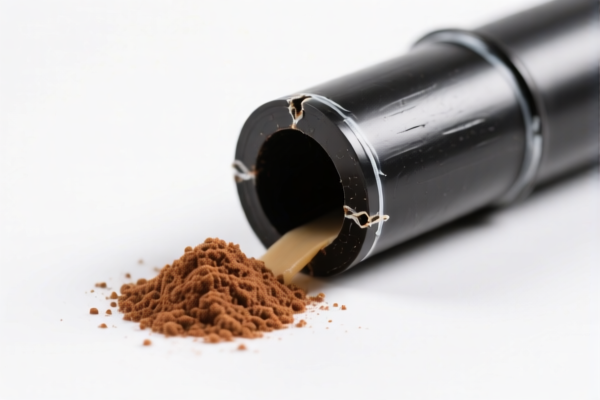
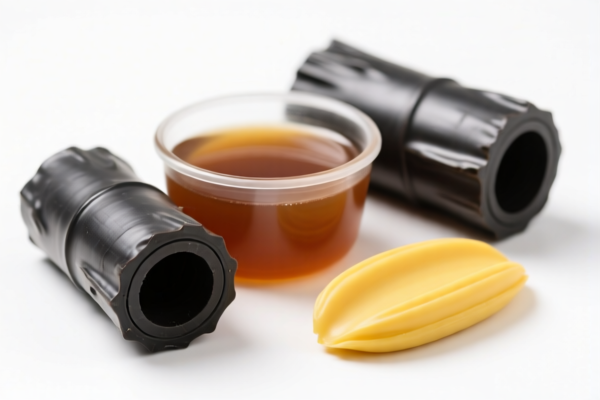

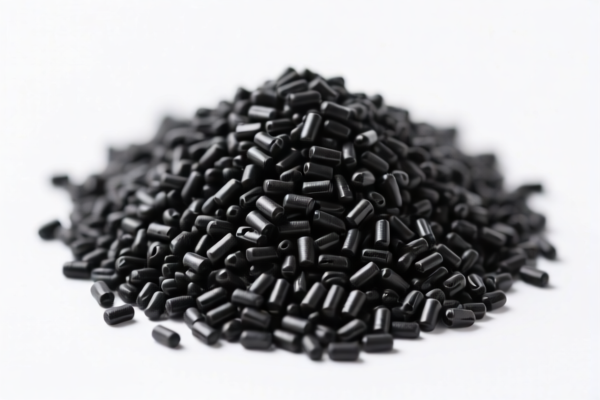
AI Analysis
🧪 Rubber Plasticizer Modifier
🌐 HS Code Classification & Customs Clearance Guide | 2026 Updated Tariff Analysis | Expert-Level Import Strategy
📌 One Product, Multiple HS Codes — Understand Why & How to Avoid 40%+ Tariffs!
📌 I. Product Definition & Classification: What Is a "Rubber Plasticizer Modifier"?
A Rubber Plasticizer Modifier is a chemical additive used to enhance the flexibility, processability, and durability of rubber materials. It is commonly used in automotive tires, industrial hoses, seals, footwear, and construction membranes.
⚠️ Key Distinction:
- If the product is primarily carbon-based, contains graphite or carbon derivatives, and functions as a reinforcing or modifying agent, it may be classified under carbon-based chemical additives.
- If it contains both rubber and graphite, and is formulated as a chemical mixture, it may fall under mixed chemical products.✅ Critical Insight:
The exact HS Code depends on composition, function, and material origin — not just the name. Misclassification can trigger 40%+ tariffs or even detention at U.S. ports.
📦 II. HS Code Breakdown (2026 Updated Tariff Table)
| HS Code | Product Description | Material Focus | Functional Role | Tax Rate |
|---|---|---|---|---|
3801.10.50.90 |
Graphite rubber modifier, made from artificial graphite, used to improve thermal conductivity and wear resistance | Artificial graphite | Reinforcing/Modifying Agent | 35.0% |
3801.10.50.10 |
Graphite rubber modifier, graphite-based, acts as a chemical additive for rubber enhancement | Graphite material | Chemical Additive | 35.0% |
2803.00.00.10 |
Rubber modifier derived from carbon/carbon black, core component: carbon | Carbon / Carbon Black derivative | Chemical additive | 35.0% |
2803.00.00.50 |
Rubber modifier with carbon as main component, fits "other forms of carbon" criteria | Carbon-based material | Functional modifier | 35.0% |
3824.99.93.97 |
Chemical modifier for rubber, contains graphite + rubber, used in industrial chemical mixtures | Graphite + Rubber mixture | Chemical industrial compound | 40.0% |
🔍 Why the Difference?
- Codes 3801.10.50.x0 & 2803.00.00.x0: Focus on carbon/graphite as primary material, even if used in rubber.
- Code 3824.99.93.97: Applies when the product is a deliberate chemical blend of rubber and graphite — treated as a mixed chemical substance under industrial use.
💰 III. 2026 Tariff Breakdown: The Full Tax Story (U.S. Market)
✅ Applicable Country: United States (US)
✅ Origin: China (CN)
✅ Effective Date: November 10, 2025 (including all future imports)
🎯 1. 3801.10.50.90 & 3801.10.50.10 — Graphite-Based Rubber Modifiers
| Item | Detail |
|---|---|
| Base Tariff | 0% (ad valorem) |
| USITC Section 301 Tariff | +25% (from U.S. Trade Act 301) |
| IEEPA Section 101 Tariff | +10% (under International Emergency Economic Powers Act) |
| Total Effective Rate | 35.0% |
| Tax Calculation | CIF Value × 35% |
| De Minimis Exemption | ❌ Not eligible (denied under U.S. 2025 regulations) |
| Legal Pathway | IEEPA:9903.01.25 → IEEPA:9903.01.24 → USITC:3801.10.50.x0 → FOOTNOTE:9903.88.01 |
📌 Explanation:
- 25% USITC Tariff: Applies to all Chinese-origin goods under Section 301 of the Trade Act (targeting unfair trade practices).
- 10% IEEPA Tariff: Imposed under national emergency powers for China-specific trade restrictions.
- Total: 35% — High-risk category, especially if used in automotive or industrial applications.
🎯 2. 2803.00.00.10 & 2803.00.00.50 — Carbon-Based Derivative Modifiers
| Item | Detail |
|---|---|
| Base Tariff | 0% |
| USITC Section 301 Tariff | +25% |
| IEEPA Section 101 Tariff | +10% |
| Total Effective Rate | 35.0% |
| Tax Calculation | CIF × 35% |
| De Minimis Exemption | ❌ Not eligible |
| Legal Pathway | IEEPA:9903.01.25 → IEEPA:9903.01.24 → USITC:2803.00.00.x0 → FOOTNOTE:9903.88.01 |
📌 Key Point:
- Even if the product is not pure graphite, but carbon-based (e.g., carbon black, carbon nanotubes, or carbon-coated particles), it still falls under carbon material classification.
- Same 35% rate applies — no relief based on form or particle size.
🎯 3. 3824.99.93.97 — Chemical Mixture (Graphite + Rubber)
| Item | Detail |
|---|---|
| Base Tariff | 5% (standard chemical tariff) |
| USITC Section 301 Tariff | +25% |
| IEEPA Section 101 Tariff | +10% |
| Total Effective Rate | 40.0% |
| Tax Calculation | CIF × 40% |
| De Minimis Exemption | ❌ Not eligible |
| Legal Pathway | IEEPA:9903.01.25 → IEEPA:9903.01.24 → USITC:3824.99.93.97 → FOOTNOTE:9903.88.01 |
📌 Why Higher?
- This code applies to formulated chemical mixtures where rubber and graphite are blended intentionally for industrial performance.
- Treated as a chemical compound, not a raw material → higher base tariff (5%) + full附加 taxes → 40% total.⚠️ Red Flag:
If your product is a pre-mixed rubber compound with graphite, even in powder or paste form, this code applies — don’t assume it’s a “material”.
🛠️ IV. Customs Clearance Best Practices (Real-World Pro Tips)
✅ 1. Required Documentation (MUST-HAVE)
| Document | Required? | Why It Matters |
|---|---|---|
| ✅ Product Specification Sheet | ✔️ | Shows composition: % graphite, carbon, rubber, additives |
| ✅ Material Safety Data Sheet (MSDS) | ✔️ | Proves chemical identity and safety |
| ✅ Chemical Composition Report | ✔️ | Critical for proving whether it’s a mixture or raw material |
| ✅ Product Photos (with labels) | ✔️ | Helps customs verify form (powder, paste, granules) |
| ✅ Commercial Invoice | ✔️ | Must state: “Graphite Rubber Modifier” or “Chemical Additive for Rubber” |
| ✅ Certificate of Origin (CO) | ✔️ | If from Vietnam, Mexico, or Thailand, IEEPA exemption possible |
| ✅ Test Reports (e.g., ASTM, ISO) | ✔️ | Proves intended use and function |
✅ 2.申报技巧(申报口诀)
🔥 “成分定税,混合加税,纯碳35,混合40,别拆别混,一错全赔!”
| Scenario | Correct HS Code | Wrong Approach | Risk |
|---|---|---|---|
| Pure graphite powder used in rubber | 3801.10.50.90 or 2803.00.00.50 |
Misclassify as 3824.99.93.97 |
+5% tariff |
| Graphite + rubber pre-mixed in paste | 3824.99.93.97 |
Misclassify as 3801.10.50.10 |
+5% tariff + penalties |
| Carbon black-based modifier | 2803.00.00.10 |
Claim as “rubber additive” | Misclassification → seizure |
| OEM compound (custom blend) | 3824.99.93.97 |
Break into parts | Each part taxed at 40%+ |
✅ 3. Special Cases & Workarounds
| Situation | Recommended Action |
|---|---|
| Product is 100% graphite | Use 3801.10.50.90 — 35% tariff |
| Product is 70% carbon, 30% rubber | Use 3824.99.93.97 — 40% tariff |
| Origin is Vietnam/Mexico | Apply for IEEPA exemption — 0% additional tax |
| Used in non-industrial applications | Provide proof of end-use — may qualify for exemption |
| Custom formulation with proprietary blend | Apply for Advance Ruling (Pre-Review) — avoid disputes |
🌍 V. Global Market Tariff Comparison (2026)
| Country/Region | Recommended HS Code | Base Tariff | Additional Taxes | Total Effective Rate | Notes |
|---|---|---|---|---|---|
| 🇺🇸 USA | 3801.10.50.90 / 3824.99.93.97 |
0%–5% | +25% +10% | 35%–40% | No de minimis |
| 🇨🇳 China | 3801.10.50.90 |
5% | None | 5% | No附加税 |
| 🇪🇺 EU | 3801.10.50.90 |
0% | None | 0% | CE/REACH compliance |
| 🇦🇺 Australia | 3801.10.50.90 |
5% | None | 5% | No附加税 |
| 🇯🇵 Japan | 3801.10.50.90 |
0% | None | 0% | No附加税 |
📌 Insight:
- The U.S. is the only market with 35–40% tariffs on this product.
- China, EU, Japan, and Australia have much lower or zero additional taxes.
📌 VI. Common Mistakes & How to Avoid Them (Real Cases)
❌ Mistake 1: Treating a graphite-rubber paste as a "graphite powder"
👉 Result: Misclassified → 40% instead of 35% → $20,000+ extra tax on $500k shipment.
❌ Mistake 2: Not providing chemical composition report
👉 Result: Customs delays → 2-week hold, potential seizure.
❌ Mistake 3: Using "rubber additive" as product name without details
👉 Result: Customs assumes it’s a chemical mixture → 3824.99.93.97 → 40% tariff.
❌ Mistake 4: Splitting shipment into “graphite” + “rubber” parts
👉 Result: Each part taxed at 40%+ → total over 80% → financial disaster.
✅ Correct Way:
“Graphite Rubber Modifier, 60% artificial graphite, 40% synthetic rubber, chemical additive for tire compounds, for industrial use, Form: Powder, Origin: China”
🎯 VII. Final Verdict: How to Win the Tariff Battle
🎯 Golden Rule:
🔹 "If it’s graphite → 35%
🔹 If it’s mixed → 40%
🔹 If it’s pure carbon → 35%
🔹 If it’s from Vietnam/Mexico → 0% extra!"🚨 Warning:
- Do not rely on product name alone — composition and function decide the code.
- Always verify with a chemical analysis report.
- Apply for pre-ruling if unsure — save thousands in penalties.
📣 Call to Action: Protect Your Profit Today!
📞 Contact a U.S.-licensed customs broker + submit product data + request HS Code pre-determination
🚀 Avoid 40% tariffs, prevent delays, and secure your supply chain
💼 Your margins depend on accurate classification — don’t gamble!
✨ Pro Tip:
If your product is produced in Vietnam, Mexico, or Thailand, you may qualify for IEEPA exemption — tariff drops to 5% or 0%.
✅ Apply for Certificate of Origin (CO) and pre-approve your HS Code.
📌 Summary:
📦 Graphite Rubber Modifier = 35%–40% tariffs in the U.S.
🧪 Key to success: Know your composition, function, and origin
🛑 Never guess — verify with experts!
🔐 Your product. Your risk. Your profit.
✅ Accurate HS Code = Lower Tariff = Faster Clearance = Higher ROI!
Customer Reviews
About HS Code Classification
The Harmonized System (HS) is an internationally standardized nomenclature developed by the World Customs Organization (WCO) to classify traded products. Over 200 countries use the HS system as the basis for customs tariffs, trade statistics, and import/export regulations.
Each HS code follows a hierarchical structure:
- Chapter (2 digits) — Broad category of goods (e.g., Chapter 84: Machinery and Mechanical Appliances)
- Heading (4 digits) — More specific grouping within the chapter
- Subheading (6 digits) — Internationally standardized breakdown, used by all WCO member countries
- National subdivisions (8-10 digits) — Country-specific extensions for further classification, such as US HTSUS 10-digit codes
Correct HS code classification is essential for smooth customs clearance, accurate duty payment, and compliance with trade regulations. Misclassification can lead to customs delays, overpayment of duties, or penalties.
When importing from CN to US, the applicable tariff rates may include:
- Most-Favored-Nation (MFN) rate — The standard duty rate applied to WTO members
- General rate — Applied to countries without trade agreements
- Trade remedy duties — Additional tariffs such as Section 301 (anti-dumping), Section 232 (national security), or countervailing duties
The information provided on this page is for reference purposes only. For official classification, please consult with your local customs authority or a licensed customs broker.