Rubber Products (Technical Use)
CN → US| HS Code | Tariff Rate | Origin | Destination | Doc |
|---|---|---|---|---|
| 8487900040 | 38.9% | CN | US | Official Doc |
| 8487900080 | 88.9% | CN | US | Official Doc |
| 8708990300 | 35.0% | CN | US | Official Doc |
| 8708992700 | 35.0% | CN | US | Official Doc |
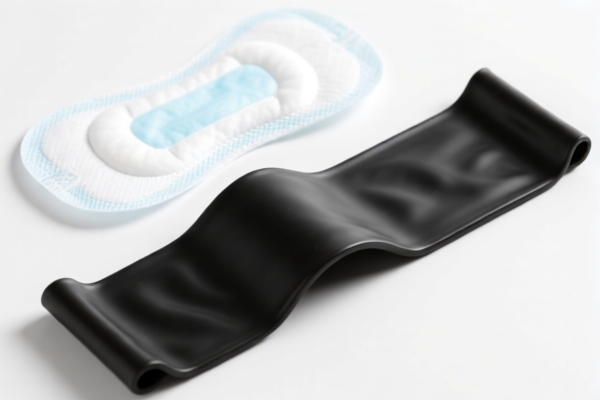
Product Images



AI Analysis
🛠️ Rubber Products (Technical/Industrial Use)
🌐 HS Code Reference & Clearance Guide | 2026 Latest Tariff Analysis | Professional Clearance Strategy
📌 I. Product Definition & Classification: What Are "Technical Rubber Products"?
Technical Rubber Products refer to rubber components or accessories specifically designed for industrial machinery, automotive systems, or mechanical equipment. Unlike general-purpose rubber goods (e.g., gloves, belts, or simple seals), these items are integral to the functionality, durability, or safety of larger mechanical systems.
In international trade, they are classified based on their specific application and structural role:
- General Mechanical Parts: Rubber components used as generic spare parts for machinery (e.g., gaskets, bushings, simple mounts).
- Automotive/Transport Parts: Rubber components specifically shaped or identified for use in vehicles (e.g., shock absorbers, control arms, specific vehicle accessories).
⚠️ Key Distinction Point:
- If the product is a generic rubber part without specific automotive designations → Classified under Chapter 84 (Machinery Parts).
- If the product is a specific automotive component (e.g., a rubber shock mount) → Classified under Chapter 87 (Vehicles).
- Material Note: Even if made of metal with rubber coating (e.g., steel/aluminum/copper), specific "122 Clause" tariffs may apply if not correctly identified.
📦 II. HS Code Classification Details (2026 Latest Tariff Authority Comparison)
| HS Code | Product Description | Application Scenario | Key Identification Feature |
|---|---|---|---|
8487.90.00.40 |
Machinery parts of rubber, industrial use | Generic industrial machinery, pumps, compressors | Matches mechanical parts classification logic; no specific automotive designation. |
8487.90.00.80 |
Other machinery parts, rubber, non-electrical | General mechanical spare parts | Rubber material, no electrical characteristics; inferred as mechanical accessory. |
8708.99.03.00 |
Parts and accessories for vehicles (rubber) | Automotive industry, vehicle maintenance | Contains rubber; matches "parts and accessories" attribute for vehicles. |
8708.99.27.00 |
Shock absorbers/control devices (rubber) | Vehicle suspension systems, vibration control | Contains rubber; specifically matches "shock absorption/control" goods attribute. |
🔍 Critical Reminder:
- 8487 vs. 8708: The primary split is between general industrial machinery parts (8487) and automotive vehicle parts (8708).
- Material Complexity: If the rubber product contains steel, aluminum, or copper cores, Section 122 tariffs (50% additional) may apply to the 8487.90.00.80 classification, significantly impacting cost.
- Specificity:8708.99.27.00is more specific than8708.99.03.00. If the item is a shock absorber, use the specific code to avoid misclassification penalties.
💰 III. 2026 Latest Tariff Rate Breakdown (Including Surcharges & Policy Add-ons)
✅ Applicable Country: United States (US)
✅ Origin: China (CN)
✅ Effective Time: 2025 onwards (Includes subsequent imports)
🎯 1. 8487.90.00.40 —— Machinery Parts (Rubber, Industrial)
| Item | Detail |
|---|---|
| Base Tariff | 3.9% (ad valorem) |
| Section 301 Surcharge | +25.0% |
| Section 122 Tariff | +10.0% |
| Total Tax Rate | 38.9% |
| Tax Calculation | CIF Value × 38.9% |
| De Minimis Exemption | ❌ Not Applicable (High tariff threshold) |
| Legal Basis Path | Base: 8487.90.00.40 → Sec 301: 25% → Sec 122: 10% |
📌 Explanation:
- This code is for generic industrial rubber parts.
- The 10% Section 122 tariff is applied in addition to the standard 301 tariff.
- Total 38.9% is high but lower than the "mixed material" alternative.
🎯 2. 8487.90.00.80 —— Other Machinery Parts (Rubber, Non-Electrical)
| Item | Detail |
|---|---|
| Base Tariff | 3.9% |
| Section 301 Surcharge | +25.0% |
| Section 122 Tariff | +10.0% |
| Steel/Aluminum/Copper Surcharge | +50.0% (If applicable to composite parts) |
| Total Tax Rate | 88.9% (If mixed materials) 38.9% (If pure rubber) |
| Tax Calculation | CIF Value × 88.9% (Worst Case) |
| De Minimis Exemption | ❌ Not Applicable |
| Legal Basis Path | Base: 8487.90.00.80 → Sec 301: 25% → Sec 122: 10% → Sec 232/301 Metals: 50% |
📌 Warning:
- The 88.9% rate applies if the rubber product includes steel, aluminum, or copper components.
- Do not misdeclare pure rubber as mixed material to avoid penalties.
- If purely rubber, the rate is 38.9%, but customs may scrutinize for hidden metal parts.
🎯 3. 8708.99.03.00 —— Vehicle Parts (Rubber, General)
| Item | Detail |
|---|---|
| Base Tariff | 0.0% |
| Section 301 Surcharge | +25.0% |
| Section 122 Tariff | +10.0% |
| Total Tax Rate | 35.0% |
| Tax Calculation | CIF Value × 35.0% |
| De Minimis Exemption | ❌ Not Applicable |
| Legal Basis Path | Base: 8708.99.03.00 → Sec 301: 25% → Sec 122: 10% |
📌 Advantage:
- Base tariff is 0%, making the total 35.0% lower than the 8487 codes.
- Suitable for general automotive rubber accessories (e.g., hoses, generic mounts).
🎯 4. 8708.99.27.00 —— Vehicle Shock Absorbers/Control Devices (Rubber)
| Item | Detail |
|---|---|
| Base Tariff | 0.0% |
| Section 301 Surcharge | +25.0% |
| Section 122 Tariff | +10.0% |
| Total Tax Rate | 35.0% |
| Tax Calculation | CIF Value × 35.0% |
| De Minimis Exemption | ❌ Not Applicable |
| Legal Basis Path | Base: 8708.99.27.00 → Sec 301: 25% → Sec 122: 10% |
📌 Advantage:
- Same low base rate as8708.99.03.00.
- Specifically identified for shock absorption/control, reducing ambiguity during customs inspection.
🛠️ IV. Clearance Practical Advice (Real-World Pitfall Guide)
✅ 1. Required Documentation Checklist
| Document | Mandatory | Description |
|---|---|---|
| ✅ Product Specification Sheet | ✔️ | Must detail material composition (pure rubber vs. reinforced with metal). |
| ✅ Technical Drawing | ✔️ | Show if the part is automotive-specific (e.g., shaped for a chassis) or generic. |
| ✅ Product Photos | ✔️ | Clear images of labeling, including part numbers and manufacturer marks. |
| ✅ Commercial Invoice | ✔️ | Must clearly state "Rubber Part for Industrial Machinery" or "Rubber Part for Vehicle." |
| ✅ Packing List | ✔️ | Detail weight and dimensions; avoid mixing automotive and industrial parts in one shipment. |
| ✅ Origin Certificate | ✔️ | Essential for verifying China origin to apply correct Section 301/122 rates. |
✅ 2. Declaration Strategy (Key Mantras)
🔥 “Identify Use First, Material Second, Avoid Metal Penalty!”
| Scenario | Correct Declaration | Wrong Practice |
|---|---|---|
| Generic rubber gasket for a pump | 8487.90.00.40 (Industrial) |
Misdeclare as 8708 → Customs rejection |
| Rubber bushing for a car suspension | 8708.99.27.00 (Shock Absorber) |
Declare as 8487 → Higher scrutiny/potential penalty |
| Rubber part with steel core | 8487.90.00.80 (Acknowledge Metal) |
Declare as pure rubber → 88.9% surprise tax + fine |
| Rubber hose for vehicle | 8708.99.03.00 (Vehicle Accessory) |
Declare as 8487 → Misses 0% base rate benefit |
✅ 3. Special Cases Handling
| Situation | Handling Advice |
|---|---|
| Composite Parts (Rubber + Metal) | If steel/aluminum/copper is present, declare as 8487.90.00.80 to ensure the 50% metal surcharge is accounted for. Do not hide it. |
| OEM Automotive Parts | Provide the OEM part number and vehicle compatibility list to justify 8708 classification. |
| Generic Industrial Parts | Provide application manuals showing use in non-vehicle machinery to justify 8487. |
| Mixed Shipment (Auto + Industrial) | Split shipments are recommended. Mixing them can trigger customs audit for the entire batch. |
🌍 V. Global Market Clearance Comparison (2026 Latest)
| Country/Region | Recommended HS Code | Tariff (China Origin) | Certification | Notes |
|---|---|---|---|---|
| 🇺🇸 USA | 8708.99.03.00 / 8487.90.00.40 |
35% - 38.9% (Up to 88.9% for metals) |
None specific | High tariffs due to Sec 301 & 122. |
| 🇨🇳 China | 4016.93.00 (Typical) |
5% (Typical for rubber) | CCC (if auto part) | Lower tariffs for generic rubber goods. |
| 🇪🇺 EU | 4016.93.00 |
0% - 4% | REACH, RoHS | No Section 301 equivalent. |
| 🇲🇽 Mexico | 4016.93.00 |
0% (USMCA if compliant) | NOM | Beneficial for US-bound goods if USMCA rules met. |
📌 Conclusion:
- USA is the most challenging market due to Section 301 (25%) and Section 122 (10%) tariffs.
- Automotive classification (8708) offers a 3.9% lower total tariff than general industrial (8487) due to 0% base rate.
- Metal content is the biggest risk: Always verify if steel/aluminum cores exist to avoid the 88.9% penalty.
📌 VI. Common Errors & Pitfalls (Lessons Learned)
❌ Error 1: Declaring a rubber-covered steel bushing as "Pure Rubber"
👉 Consequence: Customs detects metal → 88.9% tariff applied retroactively + fines!
❌ Error 2: Using 8487 for vehicle-specific shock absorbers
👉 Consequence: Higher tax burden (38.9% vs. 35.0%) + potential misclassification penalty.
❌ Error 3: Mixing automotive and industrial rubber parts in one container
👉 Consequence: Customs audit delays, potential rejection of the entire batch.
❌ Error 4: Using vague terms like "Rubber Goods" on the invoice
👉 Consequence: Customs cannot determine specific use → Manual classification (high cost, delays).
✅ Correct Practice:
“Rubber Shock Absorber Mount for Automotive Suspension, OEM Part #12345, Without Metal Core, Model XYZ”
HS Code:8708.99.27.00| Rate: 35.0%
🎯 VII. Conclusion: Precision Classification Saves Money!
🎯 Remember the Mantra:
🔹 “Auto vs. Industrial: 35% vs. 38.9%”
🔹 “Metal Core: 88.9% Trap – Avoid It!”
🔹 “Specific Use Defines HS Code, Not Just Material!”
📌 Pro Tip:
If your rubber products are OEM parts for US vehicles, ensure the manufacturer’s compatibility list is included. This supports the 8708 classification, saving 3.9% on the total landed cost compared to 8487.
📣 Immediate Action:
📞 Contact a professional broker + Provide technical drawings + Apply for Advance Ruling if volume is high.
🚀 Clear your rubber parts efficiently, avoid the 88.9% trap, and maximize profit margins!
✨ Professional Clearance Starts with Accurate Classification!
💼 Every percentage point of tariff difference is pure profit or loss!
Customer Reviews
About HS Code Classification
The Harmonized System (HS) is an internationally standardized nomenclature developed by the World Customs Organization (WCO) to classify traded products. Over 200 countries use the HS system as the basis for customs tariffs, trade statistics, and import/export regulations.
Each HS code follows a hierarchical structure:
- Chapter (2 digits) — Broad category of goods (e.g., Chapter 84: Machinery and Mechanical Appliances)
- Heading (4 digits) — More specific grouping within the chapter
- Subheading (6 digits) — Internationally standardized breakdown, used by all WCO member countries
- National subdivisions (8-10 digits) — Country-specific extensions for further classification, such as US HTSUS 10-digit codes
Correct HS code classification is essential for smooth customs clearance, accurate duty payment, and compliance with trade regulations. Misclassification can lead to customs delays, overpayment of duties, or penalties.
When importing from CN to US, the applicable tariff rates may include:
- Most-Favored-Nation (MFN) rate — The standard duty rate applied to WTO members
- General rate — Applied to countries without trade agreements
- Trade remedy duties — Additional tariffs such as Section 301 (anti-dumping), Section 232 (national security), or countervailing duties
The information provided on this page is for reference purposes only. For official classification, please consult with your local customs authority or a licensed customs broker.