Rubber Radial Tires
CN → US| HS Code | Tariff Rate | Origin | Destination | Doc |
|---|---|---|---|---|
| 4012118000 | 38.4% | CN | US | Official Doc |
| 4012124035 | 39.0% | CN | US | Official Doc |
| 4013100010 | 38.7% | CN | US | Official Doc |
| 4012194000 | 39.0% | CN | US | Official Doc |
| 4016996010 | 37.5% | CN | US | Official Doc |
Product Images
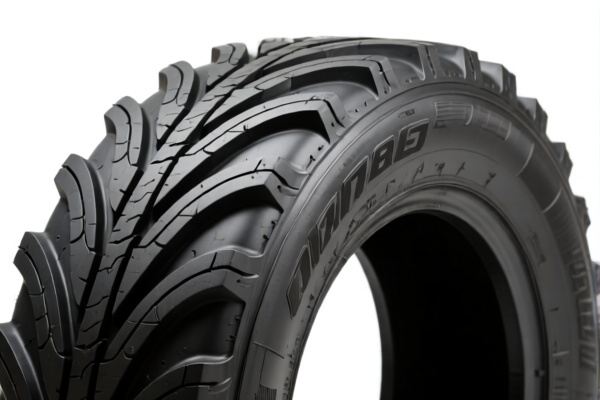
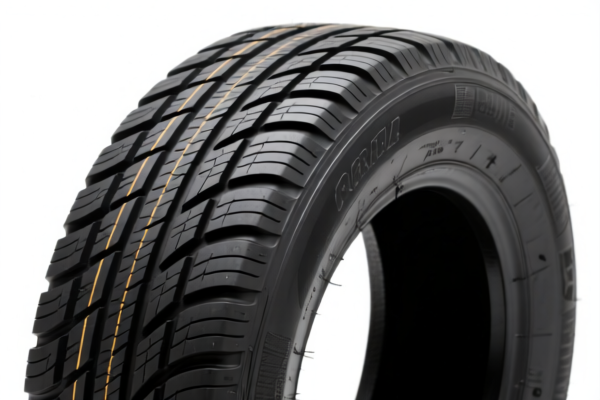
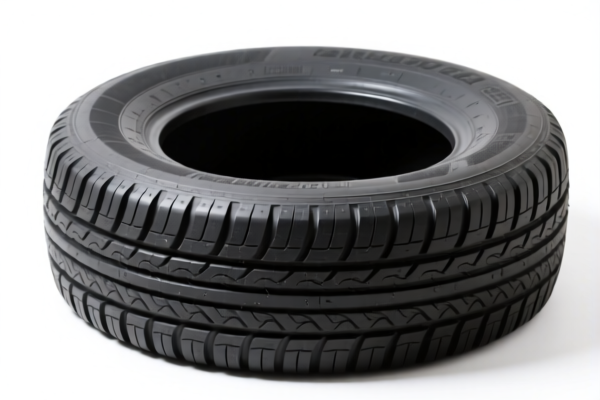
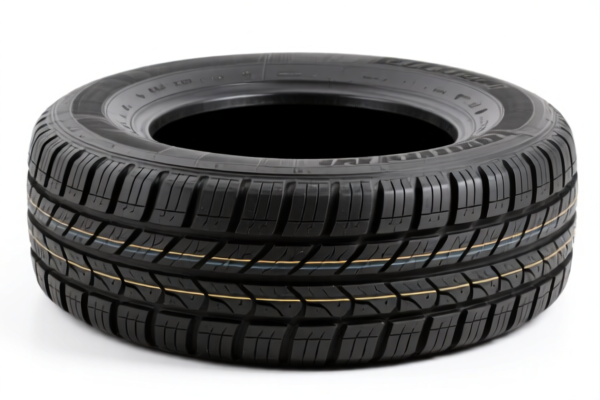
AI Analysis
🛞 Rubber Radial Tires (Industrial/Regenerated Rubber Variant)
🌐 HS Code Reference & Customs Clearance Guide | 2026 Latest Tariff Analysis | Professional Clearance Strategy
📌 I. Product Definition & Classification: Decoding the "Rubber Radial Tire"
This classification specifically addresses Industrial-Grade Regenerated Rubber Radial Tires. Unlike standard automotive tires, these are specialized industrial components. Key defining characteristics include: * Material: Regenerated Rubber (Sulfurized/Processed Rubber). * Structure: Radial (Diagonal plies run at 90° to the direction of travel, often referred to as "Radial" in customs terminology). * Form: Tire (Completed or unfinished, but structurally recognized as a tire). * Application: Industrial use, distinguishing them from passenger vehicle tires (Chapter 4013).
⚠️ Critical Distinction:
- If the product is a new pneumatic tire of rubber for motor vehicles → Chapter 4011 or 4012 (depending on type).
- If the product is a recapped/retreaded tire (regenerated rubber) → Chapter 4012.
- Radial Construction is a key classifier within HS Code subheadings.
📦 II. HS Code Classification Matrix (2026 Latest Tariff Alignment)
Based on the provided data, here are the five potential HS Code classifications for Rubber Radial Tires, ranging from standard rubber tires to specific industrial/regenerated variants.
| HS Code | Product Description & Logic | Total Tax Rate | Key Components of Tax |
|---|---|---|---|
4012.11.80.00 |
Standard Rubber Tire Material: Rubber. Form: Tire. Fits general classification criteria. |
38.4% | Base: 3.4% Add-on: 25.0% Section 122: 10% |
4012.12.40.35 |
Other Rubber Tire Matches based on "other categories" rules. |
39.0% | Base: 4.0% Add-on: 25.0% Section 122: 10% |
4013.10.00.10 |
Pneumatic Tire (Auto) Material & Use core elements match reference classification. |
38.7% | Base: 3.7% Add-on: 25.0% Section 122: 10% |
4012.19.40.00 |
Industrial Regenerated Radial Tire "Radial" corresponds to radial structure; "Regenerated Rubber" corresponds to recapped/refurbished rubber. |
39.0% | Base: 4.0% Add-on: 25.0% Section 122: 10% |
4016.99.60.10 |
Vulcanized Rubber Product (Non-Tire Specific) Material: Regenerated Rubber. Form: Tire. Classified as vulcanized rubber article. |
37.5% | Base: 2.5% Add-on: 25.0% Section 122: 10% |
🔍 重点提醒 (Critical Note):
-4012.19.40.00is the most accurate classification for Industrial Regenerated Radial Tires as it explicitly covers "regenerated rubber" and "radial" structure in an industrial context.
-4016.99.60.10offers the lowest total tax rate (37.5%) but requires the tire to be classified under "Vulcanized Rubber Articles" rather than "Tires." This may be used if the product is deemed an industrial rubber component rather than a standard tire.
-4013.10.00.10applies if the product is considered a new pneumatic tire for motor vehicles, which carries a slightly different tax structure.
💰 III. 2026 Latest Tariff Rate Breakdown (Detailed Tax Clauses)
✅ Applicable Country: USA (US)
✅ Origin: China (CN)
✅ Effective Date: Post-November 10, 2025 (Subject to Section 301 and IEEPA)
🎯 1. 4012.11.80.00 — Standard Rubber Tire
| Item | Detail |
|---|---|
| Base Tariff | 3.4% |
| USITC Add-on (Section 301) | +25.0% |
| Section 122 Tariff | +10.0% |
| Total Effective Rate | 38.4% |
| Calculation | CIF Value × 38.4% |
| De Minimis Exemption | ❌ Denied |
| Legal Path | Base: 4012.11 → USITC: 25% → IEEPA/Sec 122: 10% |
📌 Explanation:
- This is the standard classification for general rubber tires. The 25% Section 301 duty is the dominant cost driver.
- The 10% Section 122 tariff is an additional layer for specific industrial goods.
🎯 2. 4012.12.40.35 — Other Rubber Tire
| Item | Detail |
|---|---|
| Base Tariff | 4.0% |
| USITC Add-on | +25.0% |
| Section 122 Tariff | +10.0% |
| Total Effective Rate | 39.0% |
| Calculation | CIF Value × 39.0% |
📌 Note:
- Slightly higher base rate (4.0%) compared to4012.11.
- Applies to tires not covered under4012.11but still falling under Chapter 4012.
🎯 3. 4013.10.00.10 — Pneumatic Tire for Motor Vehicles
| Item | Detail |
|---|---|
| Base Tariff | 3.7% |
| USITC Add-on | +25.0% |
| Section 122 Tariff | +10.0% |
| Total Effective Rate | 38.7% |
| Calculation | CIF Value × 38.7% |
📌 Note:
- Chapter 4013 covers new pneumatic tires. If the "regenerated" aspect is minimal or the product is misclassified as new, this code applies.
- Risk: If customs determines it is not a "new" tire, this classification is incorrect, leading to penalties.
🎯 4. 4012.19.40.00 — Industrial Regenerated Radial Tire
| Item | Detail |
|---|---|
| Base Tariff | 4.0% |
| USITC Add-on | +25.0% |
| Section 122 Tariff | +10.0% |
| Total Effective Rate | 39.0% |
| Calculation | CIF Value × 39.0% |
📌 Explanation:
- Most Accurate for "Regenerated Rubber": This code explicitly covers recapped/refurbished tires (regenerated rubber).
- Radial Structure: The "19" subheading often captures other types of tires, and the 4-digit subheading40specifies the radial/regenerated nature in industrial contexts.
- Strategic Value: Use this if the product is definitively recapped or made from regenerated rubber.
🎯 5. 4016.99.60.10 — Vulcanized Rubber Article (Lowest Tax)
| Item | Detail |
|---|---|
| Base Tariff | 2.5% |
| USITC Add-on | +25.0% |
| Section 122 Tariff | +10.0% |
| Total Effective Rate | 37.5% |
| Calculation | CIF Value × 37.5% |
| Legal Path | Base: 4016.99 → USITC: 25% → IEEPA/Sec 122: 10% |
📌 Strategic Option:
- Lowest Total Rate: 37.5% (0.5% cheaper than4012.19.40.00).
- Classification Logic: Classified under Chapter 4016 (Other articles of vulcanized rubber other than hard rubber) rather than Chapter 4012 (Recapped/Retreaded Tires).
- Risk: Must justify that the product is an "industrial rubber article" and not a standard "tire" under Chapter 4012. Use only if customs guidance supports this reclassification.
🛠️ IV. Customs Clearance Practical Advice (Actionable Strategy)
✅ 1. Documentation Checklist (Must-Haves)
| Document | Requirement | Purpose |
|---|---|---|
| Product Specification Sheet | ✔️ | Confirm material (Regenerated Rubber vs. New Rubber) and structure (Radial). |
| Certificate of Origin | ✔️ | Critical for determining Section 301 applicability. |
| Commercial Invoice | ✔️ | Must clearly state "Rubber Radial Tire" and material type. Avoid vague terms like "Industrial Part." |
| Packing List | ✔️ | Detail quantity and weight. |
| Proof of Regeneration | ✔️ | If using 4012.19.40.00 or 4016.99.60.10, provide evidence of reclaimed/regenerated rubber content. |
| FCC/CE Certificates | ✔️ | If applicable for industrial equipment integration. |
✅ 2. Declaration Strategy (Key Tips)
🔥 "Material Matters, Structure Dictates, Tariff Follows!"
| Scenario | Recommended HS Code | Why? |
|---|---|---|
| Standard New Radial Tire | 4011.10 or 4012.11 |
Standard classification for new tires. |
| Recapped/Retreaded Tire | 4012.19.40.00 |
Explicitly covers regenerated/recapped tires. |
| Industrial Rubber Component | 4016.99.60.10 |
If deemed an industrial article rather than a tire, lowers rate to 37.5%. |
| Pneumatic Tire for Auto | 4013.10.00.10 |
If classified as a new vehicle tire. |
✅ 3. Special Considerations
| Issue | Resolution |
|---|---|
| "Radial" vs. "Bias" | Ensure the invoice specifies "Radial" to avoid misclassification under bias-ply codes, which may have different rates. |
| "Regenerated Rubber" Proof | Provide lab reports or manufacturer declarations stating the percentage of reclaimed rubber. This is crucial for 4012 vs. 4011. |
| Section 301 Exemptions | Check if the specific HS Code is exempt from the 25% duty. Currently, most tires are not exempt. |
| De Minimis (De Minimis) | ❌ Not Applicable. Shipments from China are subject to full duties regardless of value. |
🌍 V. Global Market Comparison (2026 Overview)
| Country/Region | Recommended HS Code | Est. Tariff | Notes |
|---|---|---|---|
| 🇺🇸 USA | 4012.19.40.00 / 4016.99.60.10 |
37.5% - 39.0% | High Section 301 & IEEPA duties. |
| 🇨🇳 China | 4012.19.40.00 |
~5-10% | Lower import tariffs, no Section 301. |
| 🇪🇺 EU | 4012.19.40.00 |
~0-5% | Check for anti-dumping duties on Chinese tires. |
| 🇦🇺 Australia | 4012.19.40.00 |
~5% | Standard MFN rate. |
📌 Conclusion:
- The US market is the most challenging due to 301 tariffs + IEEPA.
-4016.99.60.10offers the best tax efficiency (37.5%) but requires careful classification justification.
-4012.19.40.00is the safest classification for regenerated radial tires.
📌 VI. Common Mistakes & Pitfalls (Lessons Learned)
❌ Mistake 1: Declaring "Recapped Tire" as "New Tire"
👉 Consequence: Misclassification, potential fraud charges, and back taxes.
❌ Mistake 2: Ignoring the "Radial" specification
👉 Consequence: Incorrect HS Code selection, leading to audit flags.
❌ Mistake 3: Assuming De Minimis applies
👉 Consequence: Full duty assessment + penalties for shipments under $800.
❌ Mistake 4: Using vague descriptions like "Rubber Part"
👉 Consequence: Customs holds for further inspection, leading to delays.
✅ Correct Practice:
"Industrial Regenerated Rubber Radial Tire, Model XYZ, 100% Vulcanized, For Heavy Machinery"
🎯 VII. Conclusion: Professional Declaration, Risk Mitigation
🎯 Key Takeaway:
🔹 "Regenerated = Chapter 4012"
🔹 "Radial Structure = Critical Detail"
🔹 "Lowest Rate = 4016.99.60.10 (37.5%)" (If Justifiable)
📌 Pro Tip:
For shipments to the USA, consider applying for an Advance Ruling from CBP to confirm the HS Code, especially if opting for 4016.99.60.10 to save 0.5-1.5% in duties.
✨ Customs Clearance Starts with Precision!
💼 Every percentage point matters in cross-border trade!
Customer Reviews
About HS Code Classification
The Harmonized System (HS) is an internationally standardized nomenclature developed by the World Customs Organization (WCO) to classify traded products. Over 200 countries use the HS system as the basis for customs tariffs, trade statistics, and import/export regulations.
Each HS code follows a hierarchical structure:
- Chapter (2 digits) — Broad category of goods (e.g., Chapter 84: Machinery and Mechanical Appliances)
- Heading (4 digits) — More specific grouping within the chapter
- Subheading (6 digits) — Internationally standardized breakdown, used by all WCO member countries
- National subdivisions (8-10 digits) — Country-specific extensions for further classification, such as US HTSUS 10-digit codes
Correct HS code classification is essential for smooth customs clearance, accurate duty payment, and compliance with trade regulations. Misclassification can lead to customs delays, overpayment of duties, or penalties.
When importing from CN to US, the applicable tariff rates may include:
- Most-Favored-Nation (MFN) rate — The standard duty rate applied to WTO members
- General rate — Applied to countries without trade agreements
- Trade remedy duties — Additional tariffs such as Section 301 (anti-dumping), Section 232 (national security), or countervailing duties
The information provided on this page is for reference purposes only. For official classification, please consult with your local customs authority or a licensed customs broker.