Rubber Raw Materials
CN → US| HS Code | Tariff Rate | Origin | Destination | Doc |
|---|---|---|---|---|
| 4002990000 | 35.0% | CN | US | Official Doc |
| 4002800000 | 35.0% | CN | US | Official Doc |
| 4002910000 | 35.0% | CN | US | Official Doc |
| 4002110000 | 35.0% | CN | US | Official Doc |
| 3506915000 | 37.1% | CN | US | Official Doc |
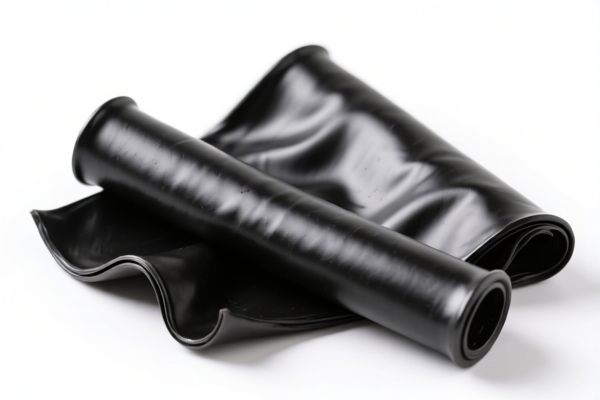
Product Images



AI Analysis
🧪 Rubber Raw Materials (Specialty & Synthetic)
🌐 HS Code Reference & Customs Clearance Guide | 2026 Latest Tariff Analysis | Professional Compliance Strategy
📌 I. Product Definition & Classification: Do You Truly Understand "Rubber Raw Materials"?
Rubber raw materials are the foundational inputs for manufacturing tires, seals, hoses, and industrial components. In international trade, they are primarily classified based on their chemical origin (synthetic vs. natural) and physical state (primary forms, emulsions, powders).
According to the provided data, these materials fall under two main categories:
1. Specialty Synthetic Rubbers (HS 4002 Series):
- Including general specialty rubbers, oil-derived synthetic rubbers, and specific types like Styrene-Butadiene Rubber (SBR).
- Key characteristic: Primary form (raw, unprocessed or semi-processed granules/powders).
2. Rubber Adhesive Raw Materials (HS 3506 Series):
- Polymers or rubber-based adhesives used in bonding applications.
- Key characteristic: Binder/Adhesive properties, often distinct from pure elastomers.
⚠️ Critical Distinction:
- If the material is a pure synthetic elastomer in primary form → It belongs to HS Code 4002.
- If the material is a rubber-based adhesive or binder → It belongs to HS Code 3506.
- Misclassification leads to significant tariff differences and compliance risks.
📦 II. HS Code Classification Details (2026 Latest Tariff Authority)
| HS Code | Product Description | Application Scenario | Material Type |
|---|---|---|---|
4002.99.00.00 |
Specialty Rubber Raw Material; General Synthetic Rubber | General specialty rubber applications | ✅ Synthetic Rubber |
4002.80.00.00 |
Oil-Derived Synthetic Rubber | Oil-based synthetic rubber in primary form | ✅ Synthetic (Oil-Based) |
4002.91.00.00 |
Rubber Adhesive Raw Material (Primary Form) | Synthetic rubber primary form for adhesives | ✅ Synthetic Rubber |
4002.11.00.00 |
SBR (Styrene-Butadiene Rubber) | SBR in primary form | ✅ SBR |
3506.91.50.00 |
Rubber-Based Adhesive Raw Material | Polymer/rubber-based binding agents | ✅ Adhesive/Binder |
🔍 Key Reminder:
- HS 4002 codes apply to elastomers (rubbers that can be stretched and return to shape).
- HS 3506 codes apply to adhesives and prepared binders, even if rubber-based.
- Ensure your Technical Data Sheet (TDS) clearly states whether the product is an "Elastomer" or an "Adhesive" to avoid customs disputes.
💰 III. 2026 Latest Tariff Rate Breakdown (Including Additional Duties & Policy Surcharges)
✅ Applicable Country: USA (US)
✅ Origin: China (CN)
✅ Effective Date: From November 10, 2025 onwards (and subsequent imports)
🎯 1. 4002.99.00.00, 4002.80.00.00, 4002.91.00.00, 4002.11.00.00 — Synthetic Rubbers (Primary Forms)
| Item | Content |
|---|---|
| Base Tariff Rate | 0.0% (ad valorem) |
| Section 301 Additional Tariff | +25.0% (from USITC Footnote 9903.88.01) |
| IEEPA Additional Tariff | +10.0% (Against Chinese/HK products, from Nov 10, 2025) |
| Total Tariff Rate | 35.0% |
| Tax Calculation | CIF Value × 35% |
| De Minimis Exemption Available? | ❌ No (deny_de_minimis) |
| Legal Basis Path | IEEPA:9903.01.25 → IEEPA:9903.01.24 → USITC:4002.11.00.00/4002.80.00.00/4002.91.00.00/4002.99.00.00 → FOOTNOTE:9903.88.01 |
📌 Explanation:
- The "25% Section 301 Tariff" is a retaliatory tariff under U.S. Trade Law Section 301.
- The "10% IEEPA Tariff" is an additional surcharge under the International Emergency Economic Powers Act targeting Chinese goods.
- Combined Total: 35%, which is a high tariff rate. Proper classification is crucial to avoid overpayment or underpayment penalties.
🎯 2. 3506.91.50.00 — Rubber-Based Adhesive Raw Material
| Item | Content |
|---|---|
| Base Tariff Rate | 2.1% (ad valorem) |
| Section 301 Additional Tariff | +25.0% |
| IEEPA Additional Tariff | +10.0% |
| Total Tariff Rate | 37.1% |
| Tax Calculation | CIF Value × 37.1% |
| De Minimis Exemption Available? | ❌ No (deny_de_minimis) |
| Legal Basis Path | IEEPA:9901.25 → IEEPA:9903.01.24 → USITC:3506.91.50.00 → FOOTNOTE:9903.88.01 |
📌 Note:
- Although the base rate is slightly higher (2.1% vs 0%), the total effective rate (37.1%) is even higher than that of pure synthetic rubbers (35%).
- Do not assume adhesives are cheaper to import; the base duty pushes the total higher.
- Classification as "Adhesive" (3506) vs. "Rubber" (4002) changes the base rate, but both face heavy surcharges.
🛠️ IV. Customs Clearance Practical Advice (Battle-Tested Pitfall Avoidance)
✅ 1. Required Documentation Checklist (Mandatory)
| Document | Must Provide | Explanation |
|---|---|---|
| ✅ Product Specification Sheet | ✔️ | Must clearly state: Chemical composition, physical form (powder/liquid/granules), and intended use (elastomer vs. adhesive). |
| ✅ Certificate of Analysis (COA) | ✔️ | Proves the material is "Primary Form" (not finished goods), crucial for HS 4002. |
| ✅ Product Photos | ✔️ | Clear images of packaging, labels, and material texture. |
| ✅ Safety Data Sheet (SDS) | ✔️ | Required for chemical handling; confirms no hazardous restrictions beyond standard tariffs. |
| ✅ Commercial Invoice | ✔️ | Must explicitly state "Synthetic Rubber" or "Rubber Adhesive Raw Material," NOT "Tire" or "Seal." |
| ✅ Packing List | ✔️ | Details weight, volume, and packaging type. |
✅ 2. Declaration Tips (Key Mantras)
🔥 "Define Form, Specify Use, Avoid Ambiguity, Lower Risk!"
| Situation | Correct Declaration Approach | Wrong Approach |
|---|---|---|
| Pure Synthetic Rubber (e.g., SBR, EPDM) | Use HS 4002.xx.xx.xx | Declaring as "Plastic" or "Chemical" → High Audit Risk |
| Rubber-Based Adhesive | Use HS 3506.91.50.00 | Declaring as "Rubber" (4002) → Wrong Base Rate (2.1% vs 0%) |
| Primary Form Granules/Powder | Specify "Primary Form" | Declaring as "Prepared Rubber" → Potential Misclassification |
| Mixed Packages (Rubber + Adhesive) | Split Declaration | Declaring as single item → Customs Seizure |
✅ 3. Special Case Handling
| Situation | Handling Advice |
|---|---|
| OEM Private Label | Provide original manufacturer specs; avoid generic terms like "Rubber Mix." |
| Blends of Rubbers | Declare based on principal character (most significant component). If unsure, consult a customs broker. |
| Liquid vs. Solid Form | Ensure HS code matches physical state. HS 4002 covers both, but description must be precise. |
| Intended Use | If used strictly as an adhesive, do not claim HS 4002 (rubber) to save base duty; use HS 3506. Accuracy prevents penalties. |
🌍 V. Global Main Market Clearance Comparison (2026 Latest)
| Country/Region | Recommended HS Code | Tariff (China Origin) | Certification Requirements | Notes |
|---|---|---|---|---|
| 🇺🇸 USA | 4002.xx.xx.xx or 3506.91.50.00 |
35% / 37.1% | None specific for raw materials | High additional tariffs apply. De minimis exempt. |
| 🇨🇳 China | 4002.xx.xx.xx or 3506.91.50.00 |
~5-7% (Import Duty) | None | No Section 301 or IEEPA surcharges for imports into China. |
| 🇪🇺 EU | 4002.xx.xx.xx or 3506.91.50.00 |
~0-6.5% | REACH Compliance | No US-style retaliatory tariffs. REACH registration may be needed for chemicals. |
| 🇯🇵 Japan | 4002.xx.xx.xx or 3506.91.50.00 |
~0-5% | JIS Standards | FTA benefits may apply depending on origin. |
| 🇻🇳 Vietnam | 4002.xx.xx.xx |
~0-5% | None | Potential for lower tariffs if assembled/processed locally. |
📌 Conclusion:
- The USA is the most challenging market due to the 35-37.1% effective tariff rate.
- EU and Japan offer much more favorable tariff structures, but REACH (EU) and JIS (Japan) compliance is critical.
- For US-bound goods, supply chain diversification or advanced ruling applications are highly recommended.
📌 VI. Common Mistakes & Pitfall Avoidance (Blood-Learned Lessons)
❌ Mistake 1: Declaring "Rubber Adhesive" as "Synthetic Rubber" (HS 4002)
👉 Consequence: Base tariff difference (0% vs 2.1%), potential misclassification penalty, and audit delays.
❌ Mistake 2: Failing to specify "Primary Form" for HS 4002 goods
👉 Consequence: Customs may classify as "Prepared Rubber" or "Finished Goods," leading to wrong HS code and higher duties.
❌ Mistake 3: Ignoring IEEPA 10% surcharge in cost calculations
👉 Consequence: Profit margin erosion due to unexpected 10% additional tax on top of Section 301.
❌ Mistake 4: Using vague descriptions like "Chemical Material" on Invoice
👉 Consequence: Customs holds shipment for further inspection, causing storage fees and demurrage.
✅ Correct Practice:
"Styrene-Butadiene Rubber (SBR), Primary Form, Latex Suspension Polymerized, For Tire Manufacturing, Model XYZ, Non-Hazardous"
🎯 VII. Conclusion: Professional Declaration, Save Time, Reduce Costs
🎯 Remember the Mantras:
🔹 "Rubber is 4002, Adhesive is 3506."
🔹 "Base Rate 0% + 25% + 10% = 35% (USA)."
🔹 "Base Rate 2.1% + 25% + 10% = 37.1% (Adhesives)."
🔹 "Always specify 'Primary Form' for rubber."
📌 Pro Tip:
If your rubber raw materials are sourced from Vietnam, Thailand, or Malaysia, you may qualify for IEEPA Exemptions or Section 301 Exclusions, reducing the tariff to 0%~5%.
Recommendation: Apply for Pre-Classification Rulings with US Customs (CBP) before shipment to ensure accuracy and avoid surprises.
📣 Take Action Now:
📞 Contact a Professional Customs Broker + Provide Product Specs + Apply for Pre-Classification
🚀 Ensure Your Rubber Raw Materials Clear Customs Smoothly, Optimize Costs, and Boost Efficiency!
✨ Professional Clearance Starts with Precise Classification!
💼 Every Penny of Cost Deserves Accurate Calculation!
Customer Reviews
About HS Code Classification
The Harmonized System (HS) is an internationally standardized nomenclature developed by the World Customs Organization (WCO) to classify traded products. Over 200 countries use the HS system as the basis for customs tariffs, trade statistics, and import/export regulations.
Each HS code follows a hierarchical structure:
- Chapter (2 digits) — Broad category of goods (e.g., Chapter 84: Machinery and Mechanical Appliances)
- Heading (4 digits) — More specific grouping within the chapter
- Subheading (6 digits) — Internationally standardized breakdown, used by all WCO member countries
- National subdivisions (8-10 digits) — Country-specific extensions for further classification, such as US HTSUS 10-digit codes
Correct HS code classification is essential for smooth customs clearance, accurate duty payment, and compliance with trade regulations. Misclassification can lead to customs delays, overpayment of duties, or penalties.
When importing from CN to US, the applicable tariff rates may include:
- Most-Favored-Nation (MFN) rate — The standard duty rate applied to WTO members
- General rate — Applied to countries without trade agreements
- Trade remedy duties — Additional tariffs such as Section 301 (anti-dumping), Section 232 (national security), or countervailing duties
The information provided on this page is for reference purposes only. For official classification, please consult with your local customs authority or a licensed customs broker.