Rubber Shock Absorber Pad
CN → US| HS Code | Tariff Rate | Origin | Destination | Doc |
|---|---|---|---|---|
| 8487900040 | 38.9% | CN | US | Official Doc |
| 4016995500 | 37.5% | CN | US | Official Doc |
| 4016993000 | 35.0% | CN | US | Official Doc |
| 8487900080 | 88.9% | CN | US | Official Doc |
| 4008192000 | 35.0% | CN | US | Official Doc |
Product Images
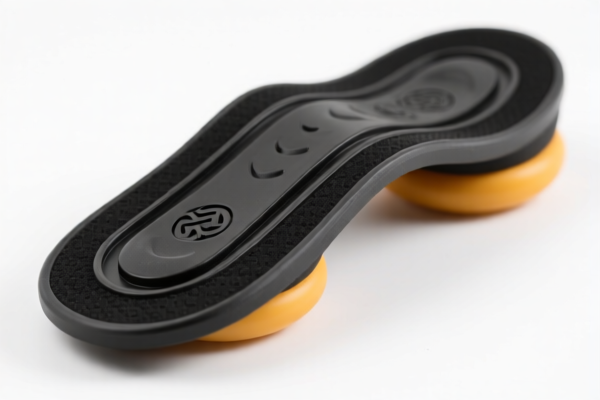
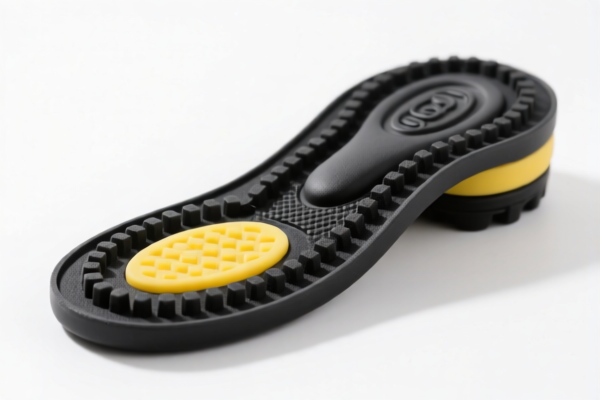
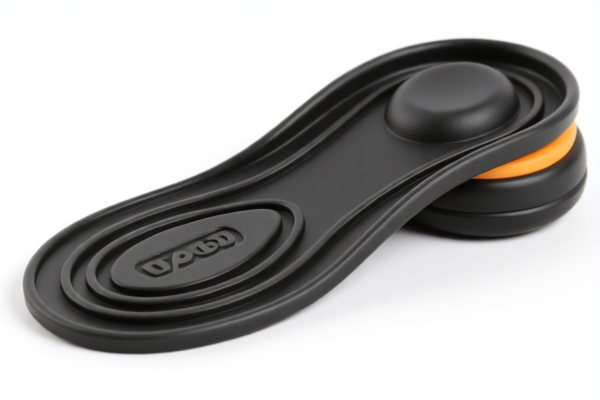

AI Analysis
🛡️ Rubber Shock Absorber Pad (橡胶减震器垫)
🌐 HS Code Reference & Customs Clearance Guide | 2026 Latest Tariff Analysis | Professional-Level Clearance Strategy
📌 I. Product Definition and Classification: Do You Really Understand "Rubber Shock Absorbers"?
Rubber Shock Absorber Pads are critical components used to dampen vibrations, reduce noise, and absorb impact in mechanical systems, automotive applications, and industrial machinery. In international trade, they are primarily classified based on their material composition (Rubber vs. Other Materials) and functional role (Part of Machinery vs. General Rubber Article).
Two Main Categories: 1. Mechanical Parts (HS Chapter 84): Items specifically designed as components for machinery (e.g., engines, motors) where the rubber is integral to the mechanical function. 2. General Rubber Articles (HS Chapter 40): Items made of vulcanized rubber, such as gaskets, seals, or general damping pads not specifically named elsewhere.
⚠️ Key Distinction Point:
- If the pad is a specialized component for a specific machine (e.g., engine mount, motor base) and not a general-purpose rubber sheet → Chapter 84.
- If the pad is a general vulcanized rubber product (e.g., isolation pad, gasket) used for vibration control → Chapter 40.
- CRITICAL WARNING: Misclassification can lead to massive tariff penalties (up to 88.9%) due to US Section 301 and IEEPA tariffs.
📦 II. HS Code Classification Details (2026 Latest Tariff Authority Comparison)
Based on the provided data, here are the specific HS Codes and their corresponding tax implications for Rubber Shock Absorber Pads imported into the USA.
| HS Code | Product Description | Applicability Scenario | Material/Function Nuance |
|---|---|---|---|
8487.90.00.40 |
Rubber Shock Absorber, Rubber Material & Mechanical Damping Component | General mechanical machinery parts; generic rubber vibration pads | ✅ Mechanical Part |
4016.99.55.00 |
Rubber Shock Absorber, Matched Vulcanized Rubber & Vehicle Control | Automotive suspension parts, vulcanized rubber components | ✅ Vulcanized Rubber Article |
4016.99.30.00 |
Rubber Shock Absorber, Rubber Material & Vehicle Vibration Product | General automotive rubber vibration control parts | ✅ Vulcanized Rubber Article |
8487.90.00.80 |
Rubber Shock Absorber, Mechanical Part Component, No Electrical Conflict | Specialized mechanical part; NOTE: High Risk | ✅ Mechanical Part (High Tariff) |
4008.19.20.00 |
Rubber Shock Element, Rubber Material & Functional Component | General functional rubber damping elements | ✅ Vulcanized Rubber Article |
🔍 Key Reminder:
-8487.90.00.80is the DANGER ZONE: This code attracts a total tax of 88.9% due to the addition of 50% Section 301 tariffs on Steel/Aluminum/Copper products (even if rubber, misclassification or specific design elements can trigger this).
-4016.99.30.00and4008.19.20.00are OPTIMAL: These codes have a 0% Base Tariff, resulting in a lower total tariff burden (35%).
- Always ensure your product description aligns with the material (Rubber) and function (Shock Absorption) to avoid being lumped into the highest tax bracket.
💰 III. 2026 Latest Tariff Rate Breakdown (Including Surcharges & Policy Add-ons)
✅ Applicable Country: United States (US)
✅ Origin: China (CN)
✅ Effective Time: November 10, 2025 (and subsequent imports)
🎯 1. 8487.90.00.40 —— Mechanical Part, Rubber Shock Absorber
| Item | Details |
|---|---|
| Base Tariff | 3.9% |
| Section 301 Surcharge | +25.0% |
| IEEPA Surcharge (Section 122/301) | +10.0% |
| Total Effective Rate | 38.9% |
| Tax Calculation | CIF Value × 38.9% |
| De Minimis Eligibility | ❌ Not Eligible (De Minimis waiver denied) |
| Legal Basis Path | USITC:8487.90.00.40 → Section 301: Footnote 9903.88.01 → IEEPA: 9903.01.24 |
📌 Explanation:
- The 25% is the standard Section 301 tariff for mechanical parts.
- The 10% is the additional IEEPA tariff on Chinese goods.
- 38.9% is a significant cost increase; ensure your pricing model accounts for this.
🎯 2. 4016.99.55.00 —— Vulcanized Rubber, Vehicle Match
| Item | Details |
|---|---|
| Base Tariff | 2.5% |
| Section 301 Surcharge | +25.0% |
| IEEPA Surcharge (Section 122/301) | +10.0% |
| Total Effective Rate | 37.5% |
| Tax Calculation | CIF Value × 37.5% |
| De Minimis Eligibility | ❌ Not Eligible |
| Legal Basis Path | USITC:4016.99.55.00 → Section 301 → IEEPA |
📌 Note:
- Slightly lower than8487due to a lower base rate (2.5% vs 3.9%).
- Suitable for automotive-specific rubber pads.
🎯 3. 4016.99.30.00 —— BEST OPTION: Rubber Vehicle Vibration Product
| Item | Details |
|---|---|
| Base Tariff | 0.0% |
| Section 301 Surcharge | +25.0% |
| IEEPA Surcharge (Section 122/301) | +10.0% |
| Total Effective Rate | 35.0% |
| Tax Calculation | CIF Value × 35.0% |
| De Minimis Eligibility | ❌ Not Eligible |
| Legal Basis Path | USITC:4016.99.30.00 → Section 301 → IEEPA |
📌 Advantage:
- Lowest Total Tariff (35%) among all options.
- Ideal for general-purpose rubber vibration pads not strictly tied to a specific machine part.
- Recommendation: If your product is a standalone rubber pad for vibration isolation, argue for this classification to save 3.9% compared to8487.90.00.40.
🎯 4. 8487.90.00.80 —— AVOID: Mechanical Part Component
| Item | Details |
|---|---|
| Base Tariff | 3.9% |
| Section 301 Surcharge | +25.0% |
| IEEPA Surcharge (Section 122/301) | +10.0% |
| Section 301 Metal Surcharge | +50.0% |
| Total Effective Rate | 88.9% |
| Tax Calculation | CIF Value × 88.9% |
| De Minimis Eligibility | ❌ Not Eligible |
| Legal Basis Path | USITC:8487.90.00.80 → Section 301 Metal Clause |
🚨 CRITICAL WARNING:
- This code triggers an additional 50% tariff because it is treated under the Steel/Aluminum/Copper surcharge rules (possibly due to embedded metal components or specific customs interpretation).
- 88.9% is extremely high. Only use this if your product is explicitly a mechanical part with metal components and no other classification applies. Avoid if possible.
🎯 5. 4008.19.20.00 —— BEST OPTION: Functional Rubber Element
| Item | Details |
|---|---|
| Base Tariff | 0.0% |
| Section 301 Surcharge | +25.0% |
| IEEPA Surcharge (Section 122/301) | +10.0% |
| Total Effective Rate | 35.0% |
| Tax Calculation | CIF Value × 35.0% |
| De Minimis Eligibility | ❌ Not Eligible |
| Legal Basis Path | USITC:4008.19.20.00 → Section 301 → IEEPA |
📌 Advantage:
- Same 35% Total Rate as4016.99.30.00.
- Suitable for general functional rubber components.
- Recommendation: Use this if the product is marketed as a "functional component" rather than a "vehicle part."
🛠️ IV. Customs Clearance Practical Advice (Battle-Tested Pitfall Guide)
✅ 1. Documentation Checklist (None are Optional)
| Document | Required? | Description |
|---|---|---|
| ✅ Product Specification Sheet | ✔️ | Must detail dimensions, material (100% Rubber?), hardness (Shore A), and load capacity. |
| ✅ Material Safety Data Sheet (MSDS) | ✔️ | To prove rubber composition and absence of restricted metals. |
| ✅ Product Photos (Labeled) | ✔️ | Show the product from multiple angles, including any packaging. |
| ✅ Commercial Invoice | ✔️ | Must explicitly state: "Rubber Shock Absorber Pad, HS Code [X.XX]", not just "Rubber Part." |
| ✅ Packing List | ✔️ | Clearly separate rubber pads from any metal brackets or accessories. |
| ✅ Certificate of Origin (CO) | ✔️ | Required for proving origin (China) to apply correct surcharges. |
✅ 2. Classification Strategy (Key Mantra)
🔥 "Rubber First, Metal Last, Name Matters, Tax Drops!"
| Scenario | Correct Classification | Wrong Practice | Consequence |
|---|---|---|---|
| Pure Rubber Pad (No metal) | 4016.99.30.00 or 4008.19.20.00 |
Report as 8487.90.00.80 |
Save 53.9% (88.9% → 35%) |
| Vehicle-Specific Rubber Pad | 4016.99.55.00 |
Report as 8487.90.00.40 |
Save 1.4% (38.9% → 37.5%) |
| Machine Mount (Rubber + Metal Base) | 8487.90.00.40 (Careful!) |
Report as 4016.99.30.00 |
Risk Audit: Customs may reclassify to 88.9% if metal is deemed primary. |
| General Purpose Vibration Pad | 4016.99.30.00 |
Report as 8487.90.00.40 |
Save 3.9% (38.9% → 35.0%) |
✅ 3. Special Case Handling
| Case | Recommendation |
|---|---|
| OEM Custom Pads | Provide CAD drawings showing no metal components. If metal is present, declare separately. |
| Pads with Metal Inserts | If the rubber is just a coating over metal, consider 8487.90.00.80 (88.9%) – Negotiate design to minimize metal. |
| Mixed Containers | Separate rubber pads from metal parts in the packing list to avoid triggering the 50% metal surcharge on the entire shipment. |
| Pre-Clearance | Apply for an Advance Ruling from US CBP. Cost: ~$1,000. Potential Savings: Thousands per shipment. |
🌍 V. Global Market Comparison (2026 Latest)
| Country/Region | Recommended HS Code | Estimated Total Tariff (China Origin) | Certification Req. | Notes |
|---|---|---|---|---|
| 🇺🇸 USA | 4016.99.30.00 |
35.0% | None specific | Highest risk due to Section 301/IEEPA. |
| 🇨🇳 China | 4016.99.30.00 |
0% - 5% | CCC (if auto part) | No Section 301 tariffs. |
| 🇪🇺 EU | 4016.99.90 |
0% - 3% | CE (if auto) | No IEEPA surcharges. |
| 🇬🇧 UK | 4016.99.90 |
0% - 5% | UKCA | Post-Brexit rules apply. |
| 🇦🇺 Australia | 4016.99.90 |
5% | RCM | No Section 301. |
📌 Conclusion:
- USA is the ONLY major market with punitive additional tariffs (35-88.9%) on Chinese rubber products.
- EU, UK, and Australia are far more cost-effective for clearance.
- Strategy: If targeting the US, optimize for4016.99.30.00or4008.19.20.00to minimize the 35% burden. Avoid8487.90.00.80at all costs.
📌 VI. Common Errors & Pitfall Guide (Lessons Learned the Hard Way)
❌ Error 1: Classifying a pure rubber pad as a mechanical part (8487)
👉 Result: Unnecessary 3.9% higher base rate.
👉 Fix: Use 4016.99.30.00 or 4008.19.20.00.
❌ Error 2: Including metal brackets in the same HTS line as rubber pads
👉 Result: Triggers 50% Metal Surcharge → 88.9% Total.
👉 Fix: Separate rubber parts and metal parts on the Commercial Invoice and Packing List.
❌ Error 3: Using vague descriptions like "Rubber Part"
👉 Result: Customs delays, potential audit, and higher assessed duty.
👉 Fix: Use precise terms: "Vulcanized Rubber Shock Absorber Pad, No Metal Components."
❌ Error 4: Ignoring IEEPA 10% Surcharge
👉 Result: Underpayment of duties → Penalties and Interest.
👉 Fix: Always factor in the 10% IEEPA on top of the 25% Section 301.
✅ Correct Practice:
"Item 1: Rubber Shock Absorber Pad, 100% Vulcanized Rubber, HS Code 4016.99.30.00, CIF Value $10,000"
🎯 VII. Conclusion: Smart Classification Saves Big!
🎯 Remember the Mantra:
🔹 "Rubber No Metal = 35%, Rubber With Metal = 88.9%!"
🔹 "Base Rate 0% is Key, 35% is Manageable, 88.9% is Bankrupt!"
📌 Pro Tip:
If your Rubber Shock Absorber Pads are manufactured in Vietnam, Malaysia, or Thailand, you may qualify for IEEPA Exemptions, reducing the tariff to 0-5%.
Action:
📞 Consult a Customs Broker Immediately
📝 Apply for a CBP Advance Ruling
🚀 Ensure your product design minimizes metal content to stay in Chapter 40!
✨ Professional Clearance Starts with Precise Classification!
💼 Every Percent of Tariff Saved is Pure Profit!
Customer Reviews
About HS Code Classification
The Harmonized System (HS) is an internationally standardized nomenclature developed by the World Customs Organization (WCO) to classify traded products. Over 200 countries use the HS system as the basis for customs tariffs, trade statistics, and import/export regulations.
Each HS code follows a hierarchical structure:
- Chapter (2 digits) — Broad category of goods (e.g., Chapter 84: Machinery and Mechanical Appliances)
- Heading (4 digits) — More specific grouping within the chapter
- Subheading (6 digits) — Internationally standardized breakdown, used by all WCO member countries
- National subdivisions (8-10 digits) — Country-specific extensions for further classification, such as US HTSUS 10-digit codes
Correct HS code classification is essential for smooth customs clearance, accurate duty payment, and compliance with trade regulations. Misclassification can lead to customs delays, overpayment of duties, or penalties.
When importing from CN to US, the applicable tariff rates may include:
- Most-Favored-Nation (MFN) rate — The standard duty rate applied to WTO members
- General rate — Applied to countries without trade agreements
- Trade remedy duties — Additional tariffs such as Section 301 (anti-dumping), Section 232 (national security), or countervailing duties
The information provided on this page is for reference purposes only. For official classification, please consult with your local customs authority or a licensed customs broker.