Rubber Shock Absorbing Low Noise Tire
CN → US| HS Code | Tariff Rate | Origin | Destination | Doc |
|---|---|---|---|---|
| 4012118000 | 38.4% | CN | US | Official Doc |
| 4012124035 | 39.0% | CN | US | Official Doc |
| 4013100010 | 38.7% | CN | US | Official Doc |
| 8487900040 | 38.9% | CN | US | Official Doc |
| 4016995500 | 37.5% | CN | US | Official Doc |
Product Images
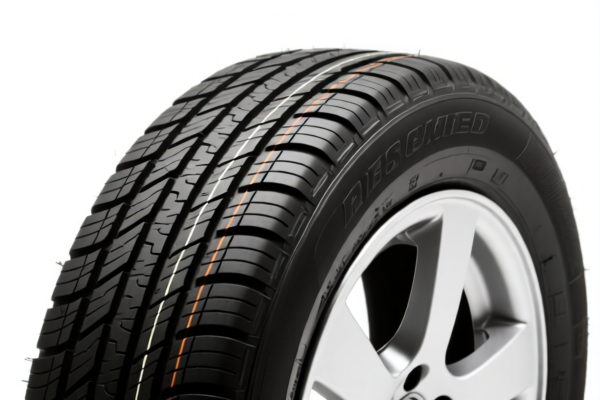
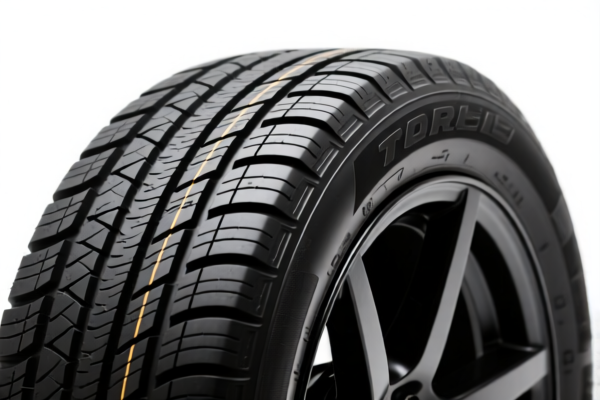
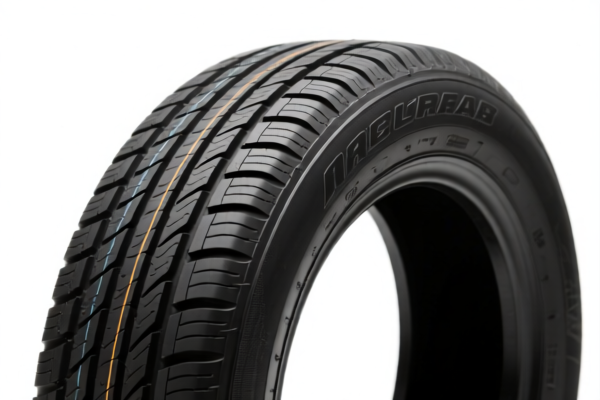
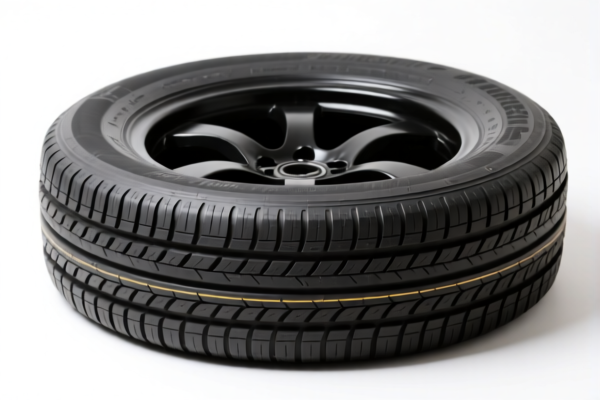
AI Analysis
🚫 STOP! Critical Classification Alert: "Rubber Shock Absorbing Low Noise Tire"
🌐 HS Code Reference & Customs Clearance Guide | 2026 Latest Tariff Analysis | Professional Strategy
📌 I. Product Definition & The "Tire vs. Shock Absorber" Dilemma
This product description contains a contradiction that triggers two distinct HS Code classifications in the provided data. You must determine the primary function and physical structure of the item to avoid misclassification, which leads to severe penalties or shipment detention.
Scenario A: It is a TIRE
If the item is a wheel component (round, for vehicles/machinery), it falls under Chapter 40 (Rubber Articles). The "shock absorbing" and "low noise" features are functional descriptors but do not change its nature as a tire.
Scenario B: It is a SHOCK ABSORBER / DAMPER
If the item is a cylindrical or block-like component made of rubber, designed to absorb vibration in machinery or vehicles (not a wheel), it falls under Chapter 40 (Rubber Articles) as well, but under different subheadings for "other rubber articles" or "mechanical parts."
⚠️ Key Distinction Point:
- If it has a rim, beads, and is for rolling → Tire (HS 4012/4013).
- If it is a mount, grommet, or piston damper → Shock Absorber (HS 8487/4016).
📦 II. HS Code Classification Matrix (Based on Provided DATA)
Based strictly on the provided <DATA> source, here are the five possible classifications and the logic for each.
| HS Code | Product Description Summary | Logic for Classification | Total Tax Rate |
|---|---|---|---|
| 4012.11.80.00 | Rubber Tire | Primary Candidate. Matches "Tire" shape/material. "Shock absorbing/low noise" are functional traits of this tire. | 38.4% |
| 4012.12.40.35 | Rubber Tire | Alternative Tire. Matches "Tire" shape/material. Classified via "other categories" matching rules. | 39.0% |
| 4013.10.00.10 | Rubber Tire | Specialized Tire. Matches core elements: Rubber material + Tire usage. | 38.7% |
| 8487.90.00.40 | Rubber Shock Absorber | Mechanical Part. If classified as a mechanical vibration damper rather than a tire. | 38.9% |
| 4016.99.55.00 | Rubber Shock Absorber | Rubber Article. Classified as a vulcanized rubber article for damping/control, consistent with vehicle shock control items. | 37.5% |
🔍 Critical Insight:
- Tires are clustered in HS 4012 and 4013.
- Shock Absorbers are split between HS 8487 (Mechanical Parts) and HS 4016 (Rubber Articles).
- Tax Implication: The "Shock Absorber" classification under 4016.99.55.00 has the lowest total tax (37.5%), while the "Tire" under 4012.12.40.35 has the highest (39.0%). However, correctness is more important than tax minimization. Misclassifying a shock absorber as a tire (or vice versa) is a high-risk audit trigger.
💰 III. Detailed Tariff Breakdown (US/China Context)
✅ Applicable Market: United States (US)
✅ Origin: China (CN)
✅ 生效时间: 2025年11月10日起 (Post-Nov 10, 2025 Imports)
The tax structure for ALL HS Codes in the provided data is identical. Here is the detailed calculation for any of the five codes:
🎯 Universal Tax Structure for All Listed HS Codes
| Item | Detail |
|---|---|
| Base Duty Rate | Varies per HS Code (2.5% - 4.0%) |
| Section 301 / Additional Duty | +25.0% (Mandatory for China-origin goods in these categories) |
| Section 122 Tariff | +10.0% (Specific provision applied in the dataset) |
| Total Effective Tax Rate | 37.5% – 39.0% |
Detailed Breakdown by HS Code:
-
HS 4012.11.80.00 (Tire)
- Base: 3.4%
- Additional: 25.0%
- Sec 122: 10%
- Total: 38.4%
-
HS 4012.12.40.35 (Tire)
- Base: 4.0%
- Additional: 25.0%
- Sec 122: 10%
- Total: 39.0% (Highest in dataset)
-
HS 4013.10.00.10 (Tire)
- Base: 3.7%
- Additional: 25.0%
- Sec 122: 10%
- Total: 38.7%
-
HS 8487.90.00.40 (Shock Absorber - Mechanical)
- Base: 3.9%
- Additional: 25.0%
- Sec 122: 10%
- Total: 38.9%
-
HS 4016.99.55.00 (Shock Absorber - Rubber Article)
- Base: 2.5%
- Additional: 25.0%
- Sec 122: 10%
- Total: 37.5% (Lowest in dataset)
📌 Explanation of Terms:
- Base Tariff: The standard Most Favored Nation (MFN) rate for the specific HS subheading.
- Additional Duty (25%): Refers to Section 301 Tariffs imposed on Chinese imports.
- 122-Clause Tariff (10%): Refers to specific anti-dumping or countervailing duties, or a specific USITC footnote provision (Section 122 of the Trade Act of 1974, though often applied via other mechanisms in modern contexts). In this dataset, it is explicitly added.
🛠️ IV. Customs Clearance Practical Advice (Real-World Pitfalls)
✅ 1. Preparation Checklist (Non-negotiable)
| Document | Required? | Why? |
|---|---|---|
| Product Specifications | ✅ YES | Must explicitly state: Is it a Tire (for wheels) or a Damper (for suspension/machinery)? |
| Physical Photos | ✅ YES | Show the shape. Round/wheel? → Tire. Cylindrical/Block? → Shock Absorber. |
| Commercial Invoice | ✅ YES | Do not use the ambiguous term "Shock Absorbing Tire." Use precise terms: - If Tire: "Rubber Vehicle Tire, Low Noise" - If Damper: "Rubber Shock Absorber Mount" |
| Material Declaration | ✅ YES | Confirm 100% Rubber content for Chapter 40. |
| Origin Certificate | ✅ YES | Crucial for applying the 25% + 10% tariffs correctly. |
✅ 2. Declaration Strategy (The "Golden Rules")
🔥 "Function Defines Code: If it rolls, it's a Tire. If it compresses, it's a Dampener."
| Scenario | Correct HS Code (from DATA) | Risk if Incorrect |
|---|---|---|
| Item is a Wheel Tire | 4012.11.80.00 or 4013.10.00.10 |
Declaring as "Shock Absorber" (HS 8487/4016) may lead to seizure for false classification, as tires have specific safety standards (DOT/EPAS) that shock absorbers do not. |
| Item is a Rubber Mount/Damper | 4016.99.55.00 (Best Tax) |
Declaring as "Tire" may trigger anti-dumping duties specific to tires if applicable, or fail compliance checks for mechanical parts. |
⚠️ Warning on Ambiguity:
The term "Rubber Shock Absorbing... Tire" is dangerous.
- If you declare it as a Tire, you must ensure it meets tire labeling and safety regulations.
- If you declare it as a Shock Absorber, you must prove it is not intended for rolling under load as a wheel.
✅ 3. Special Cases
| Case | Advice |
|---|---|
| OEM Custom Parts | Provide the original equipment manufacturer (OEM) documentation. If the car factory lists it as a "Tire," you must use a 4012/4013 code. |
| Hybrid Products | If the tire has integrated shock-absorbing technology (e.g., run-flat tires, self-sealing tires), it is STILL A TIRE. Use HS 4012 or 4013. |
| Lowest Tax Strategy | If the item is definitely a shock absorber (not a tire), use HS 4016.99.55.00 for the 37.5% rate. Do not use "Tire" codes to save taxes if it's not a tire; the risk of penalty exceeds the savings. |
🌍 V. Global Market Comparison (2026)
| Market | Recommended HS Code | Est. Duty | Notes |
|---|---|---|---|
| 🇺🇸 USA | 4012.11.80.00 (Tire) |
38.4% | High tariffs due to Sec 301 + Sec 122. |
| 🇺🇸 USA | 4016.99.55.00 (Absorber) |
37.5% | Slightly lower, but stricter functional verification. |
| 🇨🇳 China | 4011.20 (Imported Tire) |
~10-15% | Lower base duties, but different tariff lines. |
| 🇪🇺 EU | 4011.10 (Car Tire) |
~4-10% | No Section 301/122 equivalents, but possible anti-dumping. |
📌 Conclusion for US Import:
The US market is the most complex due to the Layered Tariffs (Base + 25% + 10%).
- Savings Potential: Choosing the correct "Shock Absorber" code (4016.99.55.00) saves 1.5% compared to the highest tire code.
- Risk Reduction: Correctly identifying the product as a Tire if it is one prevents customs holds and penalties that can cost far more than 1.5%.
📌 VI. Common Errors & Pitfalls (Blood & Tears Lessons)
❌ Error 1: Using the phrase "Shock Absorbing Tire" in the product name.
👉 Consequence: CBP (Customs) may reject it as ambiguous or classifiable as neither.
✅ Fix: Name it clearly: "Low Noise Passenger Car Tire" OR "Vibration Damping Rubber Mount".
❌ Error 2: Assuming "Shock Absorbing" means it's a shock absorber.
👉 Consequence: If it's a tire, misclassification leads to Section 301 penalties and potential safety compliance failures (DOT standards).
❌ Error 3: Ignoring the "122-Clause Tariff".
👉 Consequence: Underpaying by 10%. CBP audits will catch this, leading to back taxes + interest + fines.
🎯 VII. Conclusion: Precision is Profit
🎯 Remember the Mantra:
🔹 "Shape is King: Round = Tire (4012/4013). Block = Absorber (4016/8487)."
🔹 "Tax is Secondary: Correctness prevents detention. 37.5% vs 39% is minor; Clearance is major."
🔹 "Declare Precisely: Drop the ambiguous 'Shock Absorbing Tire' label."
📌 Pro Tip:
If you are importing Tires, ensure they have DOT and EPAS markings if for US road use. If importing Shock Absorbers, ensure they are not classified as Automotive Suspension Parts under HS 8708 (which may have different duty rules), though your data limits us to Chapter 40/8487.
📣 Immediate Action:
📞 Consult your Customs Broker: Provide photos and technical drawings.
📄 Update Invoice: Remove the ambiguous "Shock Absorbing" descriptor from the HS Code justification unless it's a true shock absorber.
🚀 Choose Wisely: Use 4016.99.55.00 if it's a dampener (lowest tax), 4012.11.80.00 if it's a tire (standard).
✨ Accurate Classification = Smooth Clearance.
💼 Don't let ambiguous names cost you thousands in duties and delays.
Customer Reviews
About HS Code Classification
The Harmonized System (HS) is an internationally standardized nomenclature developed by the World Customs Organization (WCO) to classify traded products. Over 200 countries use the HS system as the basis for customs tariffs, trade statistics, and import/export regulations.
Each HS code follows a hierarchical structure:
- Chapter (2 digits) — Broad category of goods (e.g., Chapter 84: Machinery and Mechanical Appliances)
- Heading (4 digits) — More specific grouping within the chapter
- Subheading (6 digits) — Internationally standardized breakdown, used by all WCO member countries
- National subdivisions (8-10 digits) — Country-specific extensions for further classification, such as US HTSUS 10-digit codes
Correct HS code classification is essential for smooth customs clearance, accurate duty payment, and compliance with trade regulations. Misclassification can lead to customs delays, overpayment of duties, or penalties.
When importing from CN to US, the applicable tariff rates may include:
- Most-Favored-Nation (MFN) rate — The standard duty rate applied to WTO members
- General rate — Applied to countries without trade agreements
- Trade remedy duties — Additional tariffs such as Section 301 (anti-dumping), Section 232 (national security), or countervailing duties
The information provided on this page is for reference purposes only. For official classification, please consult with your local customs authority or a licensed customs broker.