Rubber Shock Absorbing Profile
CN → US| HS Code | Tariff Rate | Origin | Destination | Doc |
|---|---|---|---|---|
| 4016993000 | 35.0% | CN | US | Official Doc |
| 8708801600 | 37.5% | CN | US | Official Doc |
| 4016995500 | 37.5% | CN | US | Official Doc |
| 4008192000 | 35.0% | CN | US | Official Doc |
| 8708995500 | 37.5% | CN | US | Official Doc |
Product Images
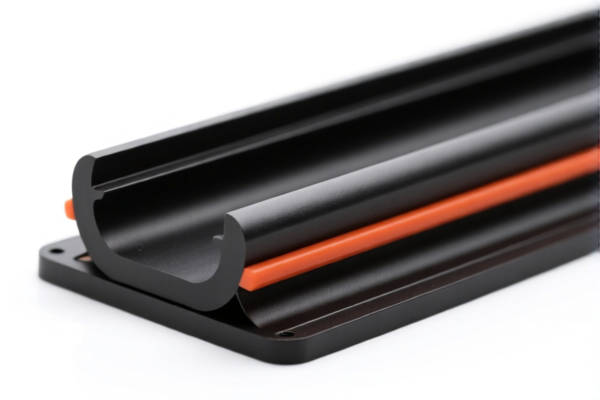
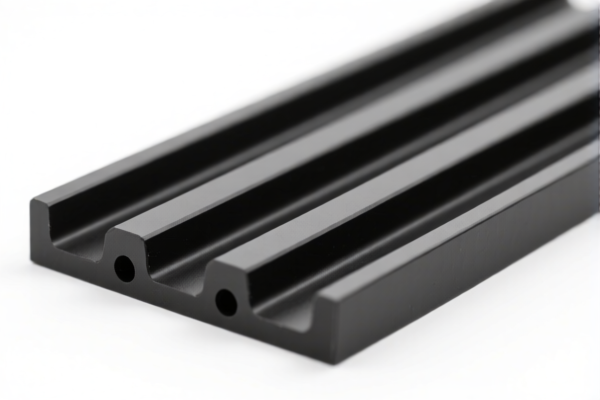
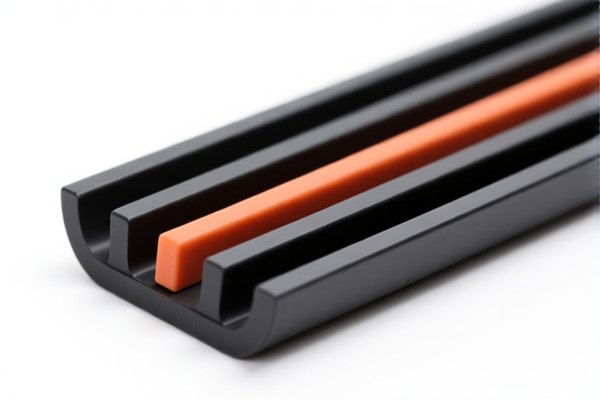
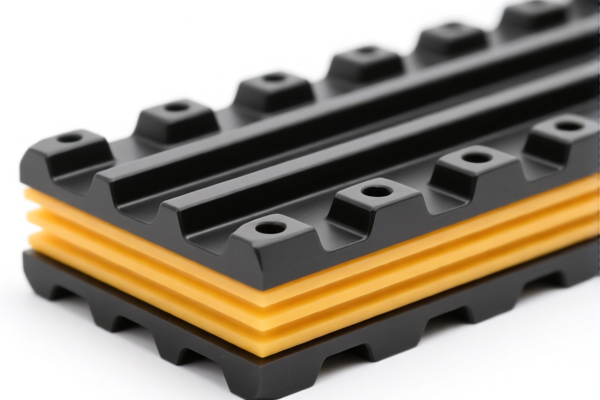
AI Analysis
🚗 Rubber Shock Absorbing Profiles (Rubber Vibration Dampeners)
🌐 HS Code Reference & Clearance Guide | 2026 Latest Tariff Analysis | Professional Customs Strategy for US Imports
📌 Part 1: Product Definition & Classification – Do You Really Understand "Shock Absorbing Profiles"?
Rubber Shock Absorbing Profiles are specialized components made from vulcanized rubber (natural or synthetic), designed to absorb vibrations, dampen noise, and isolate mechanical stress in automotive, industrial, or construction applications. In international trade, the classification depends heavily on material composition, shape/form, and intended end-use.
They are generally categorized into two main groups in customs data:
- General Rubber Articles (Ch 40): Classified by material type (e.g., natural rubber, extruded profiles) regardless of specific end-use, unless specifically exempted.
- Motor Vehicle Parts (Ch 87): Classified by their specific function as "parts of motor vehicles," specifically suspension or chassis components.
⚠️ Key Distinction Point:
- If the product is described primarily as a raw material/form (e.g., "extruded profile," "vulcanized rubber piece") without explicit vehicle integration → Often falls under Chapter 40.
- If the product is explicitly stated as a vehicle part (e.g., "suspension element," "chassis mount") and is uniquely shaped for that purpose → Often falls under Chapter 87.
- Customs Rationale: Chapter 87 takes precedence if the item is "identifiable as solely or principally used in vehicles" and fits the specific subheading for parts. However, general rubber items often fall under 4016.99.
📦 Part 2: HS Code Classification Details (2026 Latest Tariff Authority对照)
Based on the provided data, here are the five relevant HS Codes for Rubber Shock Absorbing Profiles, along with their specific tax implications.
| HS Code | Product Description (Summary from Data) | Key Attributes | Base Tariff | Total Tax Rate (CN Origin → US) |
|---|---|---|---|---|
| 4016.99.30.00 | Rubber Shock Absorbing Element (Matched with Natural Rubber Material & Vehicle Shock Absorption Use) |
Material: Natural Rubber Use: Vehicle Shock Absorption |
0.0% | 35.0% |
| 8708.80.16.00 | Rubber Shock Absorbing Element (Matched with Suspension System Parts & Rubber Material Attributes) |
Use: Suspension System Part Material: Rubber |
2.5% | 37.5% |
| 4016.99.55.00 | Rubber Shock Absorbing Element (Matched with Vulcanized Rubber Material & Shock Control Item Use) |
Material: Vulcanized Rubber Use: Shock Control Item |
2.5% | 37.5% |
| 4008.19.20.00 | Rubber Shock Absorbing Element (Matched with Functional Component & Profile Form Attribute) |
Form: Profile/Extruded Use: Functional Component |
0.0% | 35.0% |
| 8708.99.55.00 | Rubber Shock Absorbing Element (Matched with Rubber Material & Shock Absorption Function Definition) |
Function: Shock Absorption Material: Rubber |
2.5% | 37.5% |
🔍 Key Observation:
- Chapter 40 (4016.99.30, 4016.99.55, 4008.19.20): These codes focus on the material (natural/vulcanized rubber) and form (profile). The base tariff is lower (0% or 2.5%), but the total tax is still high due to additional duties. - Chapter 87 (8708.80.16, 8708.99.55): These codes focus on the function (suspension/chassis part). The base tariff is slightly higher (2.5%), leading to a total tax of 37.5%. - Why the difference? Customs may dispute whether a "profile" is a general rubber article (Ch 40) or a specific vehicle part (Ch 87). If the product is a standard extruded seal that can be cut to fit multiple uses, Ch 40 is safer. If it is molded specifically for a vehicle’s suspension bushing, Ch 87 is more appropriate.
💰 Part 3: 2026 Latest Tariff Rate Breakdown (Including Add-on Duties)
✅ Applicable Country: United States (US)
✅ Origin: China (CN)
✅ Effective Date: Post-2025 (Current Trade War Context)
🎯 1. Chapter 40 Codes: 4016.99.30.00 & 4008.19.20.00
(Focus: Material/Form - Natural Rubber / Profile Form)
| Item | Content |
|---|---|
| Base Tariff | 0.0% |
| Section 301 Duty (Additional) | +25.0% |
| Section 122 Duty (Additional) | +10.0% |
| Total Tax Rate | 35.0% |
| Tax Calculation | CIF Value × 35.0% |
| De Minimis Exemption | ❌ NOT Eligible (Section 301 & 122 duties apply to small shipments) |
| Legal Basis Path | USITC:4016.99.30.00 → Section 301: 25% → Section 122: 10% |
📌 Explanation:
- Base 0%: General rubber articles often have low base rates.
- 301 Duty (25%): The standard tariff on Chinese goods under Trade Act Section 301.
- Section 122 Duty (10%): A specific duty often applied to rubber products or certain industrial goods under US law (note: check current enforcement status, but data specifies 10%).
- Total 35%: This is the landed cost multiplier for these HS codes.
🎯 2. Chapter 87 Codes: 8708.80.16.00, 4016.99.55.00, 8708.99.55.00
(Focus: Function - Suspension/Chassis Parts & Vulcanized Rubber)
| Item | Content |
|---|---|
| Base Tariff | 2.5% |
| Section 301 Duty (Additional) | +25.0% |
| Section 122 Duty (Additional) | +10.0% |
| Total Tax Rate | 37.5% |
| Tax Calculation | CIF Value × 37.5% |
| De Minimis Exemption | ❌ NOT Eligible |
| Legal Basis Path | USITC:8708.80.16.00 → Section 301: 25% → Section 122: 10% |
📌 Explanation:
- Base 2.5%: Auto parts generally have a small base tariff.
- 301 + 122: Same additional duties apply.
- Total 37.5%: Slightly higher than the Ch 40 "0% base" options because the base rate is not zero.
- Note on4016.99.55.00: Although in Chapter 40, it has a 2.5% base tariff, resulting in the same 37.5% total as the Ch 87 codes.
🛠️ Part 4: Practical Clearance Advice (Avoiding Pitfalls)
✅ 1. Preparation Checklist (Essential Documents)
| Document | Required? | Explanation |
|---|---|---|
| ✅ Product Specification Sheet | ✔️ | Must detail material (Natural/Synthetic), hardness (Shore A), temperature resistance, and dimensions. |
| ✅ Material Safety Data Sheet (MSDS) | ✔️ | To prove rubber compound composition (no hazardous substances). |
| ✅ Product Photos | ✔️ | Clear images showing the profile shape, texture, and any part numbers. |
| ✅ Commercial Invoice | ✔️ | Must clearly state: "Rubber Shock Absorbing Profile, HS Code [Insert Code]," and "Origin: China." |
| ✅ Packing List | ✔️ | Weight and dimensions per carton. |
| ✅ Certificate of Origin (CO) | ✔️ | To prove Chinese origin (required for 301/122 duty calculation). |
| ✅ Bill of Lading/Air Waybill | ✔️ | Standard shipping documents. |
✅ 2. Declaration Tips (Key Strategy)
🔥 "Clarify Material & Function: Profile vs. Part"
| Scenario | Recommended Declaration | Risk if Misdeclared |
|---|---|---|
| Generic Rubber Profile (Can be used in multiple vehicles or non-auto apps) | HS: 4016.99.30.00 "Vulcanized Rubber Shock Absorbing Profile, Natural Rubber, for Industrial Use" |
If declared as auto part, may be audited for higher base tariff or misclassification. |
| Specific Suspension Bushing (Molded for specific vehicle suspension) | HS: 8708.80.16.00 "Rubber Suspension Element for Vehicle Chassis, HS 8708" |
If declared as general rubber, customs may reclassify and charge higher base tariff or require additional proof. |
| Standard Extruded Seal | HS: 4008.19.20.00 "Rubber Profile, Extruded, for Sealing/Shock Absorption" |
Ensure description matches "profile" and not "finished part." |
✅ 3. Special Cases & Mitigation
| Situation | Handling Advice |
|---|---|
| Mixed Shipments | If shipping both general rubber parts and specific auto parts, separate line items in the invoice. Do not lump them under one HS code. |
| OEM Custom Parts | Provide blueprints or CAD drawings to prove the part is uniquely shaped for a vehicle suspension system (supports Ch 87). |
| Raw Material vs. Finished Good | If importing rubber sheets/profiles for further processing, declare as raw material (Ch 40). If importing ready-to-install vibration mounts, declare as auto part (Ch 87). |
| Tariff Engineering | If possible, design the product to be a general-purpose rubber profile (Ch 40, 35% total) rather than a specific auto part (Ch 87, 37.5% total). Even a 2.5% difference adds up on large volumes. |
🌍 Part 5: Global Market Comparison (2026 Update)
| Market | Recommended HS Code | Base Tariff | Add-on Duties (CN) | Total Estimated Tax | Notes |
|---|---|---|---|---|---|
| 🇺🇸 USA | 4016.99.30.00 or 8708.80.16.00 |
0% or 2.5% | 301 (25%) + 122 (10%) | 35.0% - 37.5% | High tariff barrier. Pre-clearance critical. |
| 🇨🇳 China | 4016.99.30.00 or 8708.80.16.00 |
0% - 5% | 0% (if domestic) or MFN | 0% - 5% | Low tariff for import into China. |
| 🇪🇺 EU | 4016.99.80 (Similar) |
0% - 1% | None (if no trade dispute) | ~0% - 1% | No Section 301/122 equivalent. |
| 🇲🇽 Mexico | 4016.99.01 |
0% (under USMCA) | 0% | 0% | If assembled/manufactured in USMCA region. |
📌 Conclusion for US Importers:
- The 25% (Section 301) and 10% (Section 122) duties make US imports from China very expensive.
- Total cost impact: For every $10,000 CIF value, expect $3,500–$3,750 in duties alone.
- Mitigation: Consider sourcing from Vietnam, Thailand, or Mexico to avoid Section 301 duties (check USMCA rules for Mexico).
📌 Part 6: Common Errors & Pitfalls (Lessons Learned)
❌ Error 1: Declaring "Rubber Profile" as "Vehicle Part" when it is generic.
👉 Consequence: Customs may reclassify to Ch 87 (higher base rate) or reject the claim of "exclusive use."
👉 Fix: Use generic descriptions like "Industrial Vibration Dampening Rubber Profile" for Ch 40 codes.
❌ Error 2: Ignoring the Section 122 Duty.
👉 Consequence: Underestimating total landed cost by 10%.
👉 Fix: Include the 10% Section 122 duty in all cost models.
❌ Error 3: Using "Free" or "Duty-Free" claims without verification.
👉 Consequence: No rubber shock absorbers from China are currently duty-free to the US.
👉 Fix: Assume 35-37.5% total duty.
✅ Correct Declaration Example:
"Natural Rubber Shock Absorbing Profile, Extruded, Vulcanized, for Use in Industrial Machinery Vibration Control, HS Code 4016.99.30.00, Origin: China"
🎯 Part 7: Conclusion – Professional Declaration, Cost Optimization!
🎯 Key Takeaways:
🔹 "Material vs. Function": If it’s a generic profile, use Ch 40 (35%). If it’s a specific auto part, use Ch 87 (37.5%).
🔹 "Total Duty is High": 35-37.5% is the floor for Chinese rubber shock absorbers entering the US.
🔹 "Documentation is Key": Detailed specs and photos prevent reclassification and delays.
📌 Pro Tip:
If your volume is high, consider Tariff Engineering:
- Can the product be designed as a general-purpose seal (Ch 40) instead of a specific suspension bushing (Ch 87)?
- Even a 2.5% difference can save significant money over thousands of units.
- Consult a customs broker to review your product design for optimal classification.
📣 Immediate Action:
📞 Contact a licensed US Customs Broker
📄 Submit your product specs and photos for a Binding Ruling
🚀 Optimize your supply chain to mitigate the 35-37.5% duty burden!
✨ Precision in Classification, Savings in Logistics!
💼 Your Duty Cost is Your Bottom Line – Protect It!
Customer Reviews
About HS Code Classification
The Harmonized System (HS) is an internationally standardized nomenclature developed by the World Customs Organization (WCO) to classify traded products. Over 200 countries use the HS system as the basis for customs tariffs, trade statistics, and import/export regulations.
Each HS code follows a hierarchical structure:
- Chapter (2 digits) — Broad category of goods (e.g., Chapter 84: Machinery and Mechanical Appliances)
- Heading (4 digits) — More specific grouping within the chapter
- Subheading (6 digits) — Internationally standardized breakdown, used by all WCO member countries
- National subdivisions (8-10 digits) — Country-specific extensions for further classification, such as US HTSUS 10-digit codes
Correct HS code classification is essential for smooth customs clearance, accurate duty payment, and compliance with trade regulations. Misclassification can lead to customs delays, overpayment of duties, or penalties.
When importing from CN to US, the applicable tariff rates may include:
- Most-Favored-Nation (MFN) rate — The standard duty rate applied to WTO members
- General rate — Applied to countries without trade agreements
- Trade remedy duties — Additional tariffs such as Section 301 (anti-dumping), Section 232 (national security), or countervailing duties
The information provided on this page is for reference purposes only. For official classification, please consult with your local customs authority or a licensed customs broker.