Rubber Shock Absorbing Tire (Low Noise)
CN → US| HS Code | Tariff Rate | Origin | Destination | Doc |
|---|---|---|---|---|
| 8708990300 | 35.0% | CN | US | Official Doc |
| 8708995500 | 37.5% | CN | US | Official Doc |
| 4012901000 | 35.0% | CN | US | Official Doc |
| 4012909000 | 37.7% | CN | US | Official Doc |
Product Images
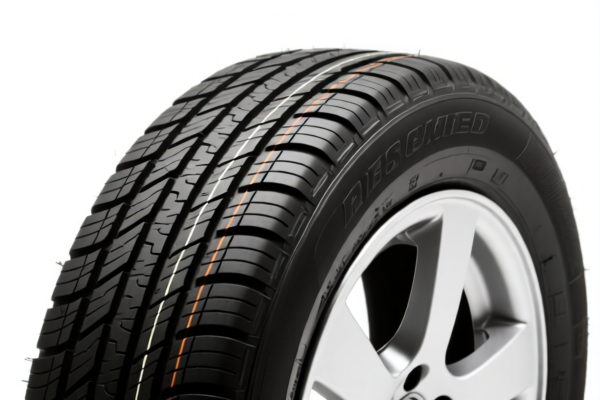
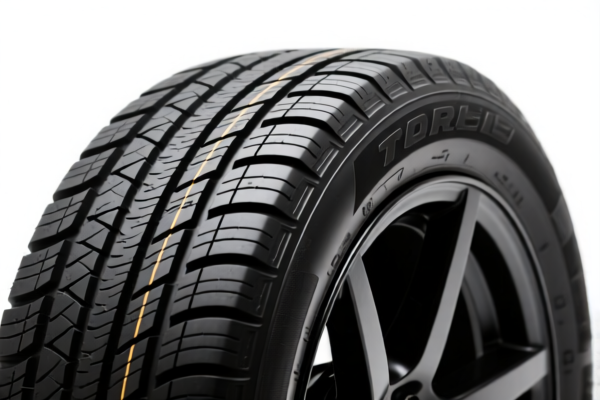
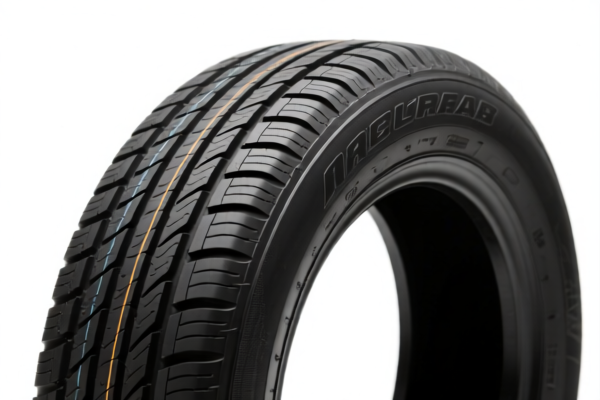
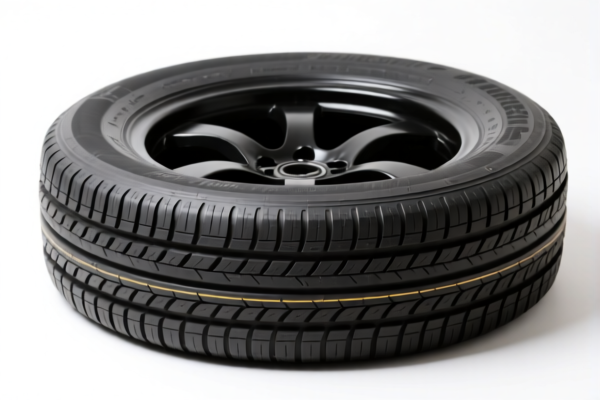
AI Analysis
🚛 Rubber Shock-Absorbing Tire (Low Noise / Solid)
🌐 HS Code Reference & Customs Clearance Guide | 2026 Latest Tariff Analysis | Professional Clearance Strategy
📌 I. Product Definition & Classification: What Exactly Is a "Shock-Absorbing Solid Tire"?
A "Rubber Shock-Absorbing Tire (Low Noise)" is typically a solid or cushion tire made of rubber, designed to replace pneumatic tires in industrial vehicles (forklifts, pallet jacks, airport ground support equipment) or heavy machinery. Its primary functions are load-bearing, shock absorption, and noise reduction.
⚠️ Key Distinction:
- If it is a pneumatic tire (inflated with air), even if used/retreaded, it falls under heading 4012.10 or 4012.20.
- If it is a solid or cushion tire (no air inside, often with polyurethane cores or specific rubber compounds for noise/shock reduction), it falls under 4012.90.10.
- If it is sold as a vibration control part installed on a vehicle (e.g., rubber mounts/bushings for the chassis), it may fall under 8708.99.
Critical Decision Point for This Product:
The term "Tire" strongly suggests 4012. However, if the product is marketed specifically as a "shock-absorbing mount" or "bushing" rather than a wheel tire, it might be classified under 8708 (Parts of Motor Vehicles).
Based on the provided DATA, we assume the product is a Solid/Cushion Tire or a Vibration Control Part containing rubber.
📦 II. HS Code Classification Details (Based on Provided DATA)
The provided data contains two distinct categories: Rubber Tires and Motor Vehicle Parts. We must determine which fits best.
| HS Code | Product Description | Key Characteristics | Applicable Scenario |
|---|---|---|---|
4012.90.10.00 |
Solid or cushion tires | Non-pneumatic, solid rubber or cushion type. Often used in forklifts, industrial trucks. | ✅ Most Likely if the product is a solid wheel/tire replacing a pneumatic one. |
4012.90.90.00 |
Other retreaded/used tires, treads, flaps | Used, retreaded, or unrelated rubber tire accessories. | ❌ Unlikely if new and solid/cushion type. |
8708.99.55.00 |
Vibration control goods containing rubber | Parts of motor vehicles (chassis, suspension) made of rubber to reduce vibration. | ✅ Alternative if the product is a mount/bushing for the vehicle frame, not a wheel tire. |
8708.99.03.00 |
Parts of tractors suitable for agricultural use | Vibration control goods for agricultural tractors. | ❌ Only if specifically for agricultural tractors. |
🔍 Analysis:
- The name "Rubber Shock-Absorbing Tire" implies a wheel component.
- "Low Noise" often refers to solid tires used in warehouses to reduce rolling noise.
- Therefore,4012.90.10.00(Solid or cushion tires) is the primary and most accurate classification for a new solid tire.
- However, if the product is a rubber mount (not a wheel), then8708.99.55.00applies.
💰 III. 2026 Latest Tariff Rate Breakdown (Detailed Tax Clauses)
✅ Applicable Country: United States (US)
✅ Origin: China (CN)
✅ Effective Time: Current rates apply as per 2026 tariff structure.
🎯 1. 4012.90.10.00 —— Solid or Cushion Tires (Most Likely)
| Item | Content |
|---|---|
| Base Tariff | 0.0% (Free) |
| Section 301 Additional Tariff | +25.0% |
| Total Tariff Rate | 25.0% |
| Tax Calculation | CIF Value × 25% |
| De Minimis Exemption | ❌ Not Eligible (Section 301 tariffs apply to all shipments from China, no de minimis exemption for 301 goods) |
| Legal Basis Path | USITC:4012.90.10.00 → USITC:Footnote 9903.88.01 (Section 301) |
📌 Explanation:
- Solid tires are classified under 4012.90.10.
- The base duty is 0%, meaning only the 301 tariff applies.
- 25% is a significant cost, but lower than the 45% for electronics.
- No de minimis exemption: Even small shipments are subject to this 25%.
🎯 2. 4012.90.90.00 —— Other Rubber Tire Products (Less Likely)
| Item | Content |
|---|---|
| Base Tariff | 2.7% |
| Section 301 Additional Tariff | +25.0% |
| Total Tariff Rate | 27.7% |
| Tax Calculation | CIF Value × 27.7% |
| De Minimis Exemption | ❌ Not Eligible |
| Legal Basis Path | USITC:4012.90.90.00 → USITC:Footnote 9903.88.01 |
📌 Explanation:
- This applies if the tire is used, retreaded, or a tread/flap accessory.
- Higher rate than solid new tires due to the base tariff.
🎯 3. 8708.99.55.00 —— Vibration Control Goods (Alternative if not a Tire)
| Item | Content |
|---|---|
| Base Tariff | 2.5% |
| Section 301 Additional Tariff | +25.0% |
| Total Tariff Rate | 27.5% |
| Tax Calculation | CIF Value × 27.5% |
| De Minimis Exemption | ❌ Not Eligible |
| Legal Basis Path | USITC:8708.99.55.00 → USITC:Footnote 9903.88.01 |
📌 Explanation:
- If the product is a rubber mount (not a wheel), it falls here.
- Slightly higher than solid tires due to the 2.5% base tariff.
🛠️ IV. Customs Clearance Practical Advice (Avoid Pitfalls)
✅ 1. Documentation Checklist (Non-Negotiable)
| Document | Required? | Notes |
|---|---|---|
| ✅ Product Specification Sheet | ✔️ | Must clearly state: "Solid Tire" or "Cushion Tire", material composition, load capacity. |
| ✅ Product Photos | ✔️ | Clear images showing no valve stem (proves it’s solid, not pneumatic). |
| ✅ Bill of Lading / Invoice | ✔️ | Description must match HS Code: "Solid Rubber Tire, Low Noise, for Forklift" |
| ✅ Country of Origin Certificate | ✔️ | To confirm origin for 301 tariff application. |
| ✅ Test Report (Optional) | ✔️ | If claiming "Low Noise", provide lab test results to justify marketing claims. |
✅ 2. Declaration Tips (Critical Keywords)
🔥 "Solid = No Air = 4012.90.10"
| Scenario | Correct Declaration | Incorrect Declaration |
|---|---|---|
| Solid Tire | "Solid Rubber Tire, Cushion Type, Non-Pneumatic" | "Rubber Tire" (Too vague, may be classified as pneumatic) |
| Used/Retreaded | "Retreaded Pneumatic Tire" | "New Solid Tire" (Fraud! Severe penalties) |
| Vibration Mount | "Rubber Vibration Isolator, Vehicle Part" | "Tire" (Misclassification) |
⚠️ Warning:
- Do NOT declare a solid tire as a "pneumatic tire" to avoid the 301 tariff if it’s not.
- Do NOT declare a used tire as "new" to avoid anti-dumping duties (if applicable).
- If it’s a solid tire, emphasize "Solid" and "Non-Pneumatic" in the description.
✅ 3. Special Cases
| Case | Handling Advice |
|---|---|
| Forklift Solid Tires | Use 4012.90.10.00. Ensure the invoice states "For Industrial Trucks/Forklifts". |
| Low Noise Polyurethane Cores | Still classified as rubber tire if the outer shell is rubber. Declare as "Solid Rubber Tire with Polyurethane Core". |
| Vibration Mounts (Not Tires) | Use 8708.99.55.00. Clearly describe as "Rubber Mount, Part No. XXX". |
| Used Tires | Use 4012.90.90.00. Must declare "Used" or "Retreaded" explicitly. |
🌍 V. Global Market Comparison (2026)
| Country | Recommended HS Code | Tariff Rate (China Origin) | Notes |
|---|---|---|---|
| 🇺🇸 USA | 4012.90.10.00 |
25.0% | 301 Tariff applies. No base duty. |
| 🇪🇺 EU | 4012.90.10 |
0% - 1.7% | Generally low duty for solid tires. |
| 🇨🇳 China | 4012.90.10 |
0% - 2.5% | Import duty may be low; check latest Chinese tariff book. |
| 🇬🇧 UK | 4012.90.10 |
0% - 2.5% | Post-Brexit tariff schedule applies. |
📌 Conclusion:
- The USA is the most expensive market due to the 25% Section 301 tariff.
- Solid tires enjoy 0% base duty, making them cheaper than pneumatic tires in the US (which may have 2.7% base + 25% 301 = 27.7%).
- Always declare "Solid" to avoid misclassification penalties.
📌 VI. Common Mistakes & Pitfalls
❌ Mistake 1: Declaring a solid tire as a pneumatic tire
👉 Consequence: Incorrect HS Code, potential fraud allegations, delays.
❌ Mistake 2: Not specifying "Solid" or "Non-Pneumatic"
👉 Consequence: Customs may ask for clarification, leading to delays and storage fees.
❌ Mistake 3: Using "Tire" for a rubber mount
👉 Consequence: If classified as 8708.99.55.00, the tariff is 27.5% (2.5% base + 25% 301), which is 0.5% higher than solid tires. But more importantly, misclassification can lead to audits.
❌ Mistake 4: Ignoring Section 301 Applicability
👉 Consequence: Assume de minimis applies. It does not. All shipments from China are subject to the 25% tariff.
✅ Correct Practice:
"Solid Rubber Tire, Low Noise, Non-Pneumatic, for Forklifts, Model XYZ, Made in China"
🎯 VII. Conclusion: Professional Clearance, Cost Savings
🎯 Key Takeaway:
🔹 Solid Tire =
4012.90.10.00= 25% Tariff (0% Base + 25% 301)
🔹 Used/Retreaded =4012.90.90.00= 27.7% Tariff
🔹 Vibration Mount =8708.99.55.00= 27.5% Tariff
📌 Advice:
1. Confirm Product Type: Is it a solid tire or a vibration mount?
2. Use Precise Descriptions: "Solid Rubber Tire" vs. "Rubber Mount".
3. Prepare for 25% Tariff: Budget accordingly. No de minimis exemption.
4. Document Everything: Photos, specs, and invoices must align with the declared HS Code.
📣 Immediate Action:
📞 Contact your customs broker with the following:
1. Product photos (showing no valve stem).
2. Specification sheet (material, type: solid/pneumatic, use).
3. Intended use (forklift, industrial truck, etc.).
🚀 Ensure accurate classification to avoid customs holds and unexpected costs!
✨ Precision in Classification, Profitability in Clearance!
💼 Every cent saved on duty is a cent earned in profit!
Customer Reviews
About HS Code Classification
The Harmonized System (HS) is an internationally standardized nomenclature developed by the World Customs Organization (WCO) to classify traded products. Over 200 countries use the HS system as the basis for customs tariffs, trade statistics, and import/export regulations.
Each HS code follows a hierarchical structure:
- Chapter (2 digits) — Broad category of goods (e.g., Chapter 84: Machinery and Mechanical Appliances)
- Heading (4 digits) — More specific grouping within the chapter
- Subheading (6 digits) — Internationally standardized breakdown, used by all WCO member countries
- National subdivisions (8-10 digits) — Country-specific extensions for further classification, such as US HTSUS 10-digit codes
Correct HS code classification is essential for smooth customs clearance, accurate duty payment, and compliance with trade regulations. Misclassification can lead to customs delays, overpayment of duties, or penalties.
When importing from CN to US, the applicable tariff rates may include:
- Most-Favored-Nation (MFN) rate — The standard duty rate applied to WTO members
- General rate — Applied to countries without trade agreements
- Trade remedy duties — Additional tariffs such as Section 301 (anti-dumping), Section 232 (national security), or countervailing duties
The information provided on this page is for reference purposes only. For official classification, please consult with your local customs authority or a licensed customs broker.