Rubber Shoe Sole
CN → US| HS Code | Tariff Rate | Origin | Destination | Doc |
|---|---|---|---|---|
| 6402190590 | 16.0% | CN | US | Official Doc |
| 6402190530 | 16.0% | CN | US | Official Doc |
| 6403191000 | 22.5% | CN | US | Official Doc |
| 6403193030 | 18.5% | CN | US | Official Doc |
| 6404112071 | 20.5% | CN | US | Official Doc |
| 6404115900 | 58.0% | CN | US | Official Doc |
Product Images
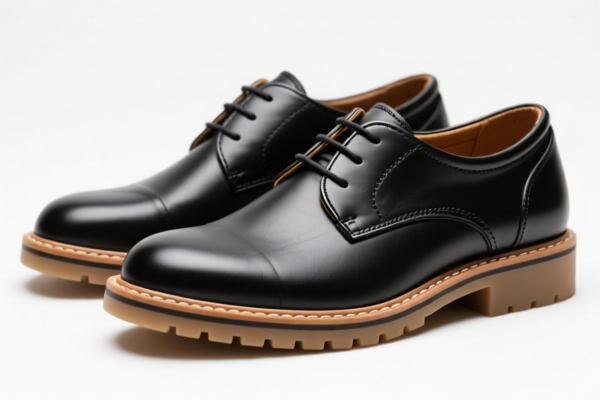
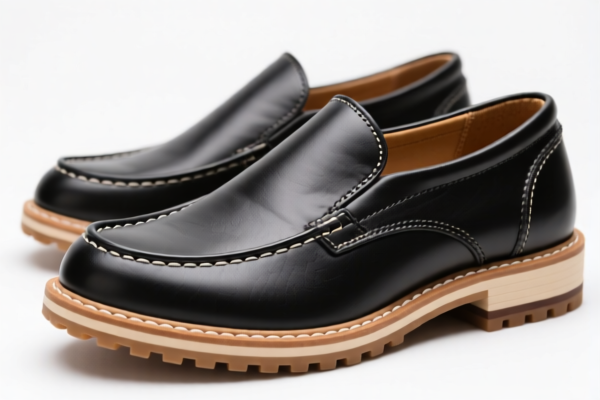
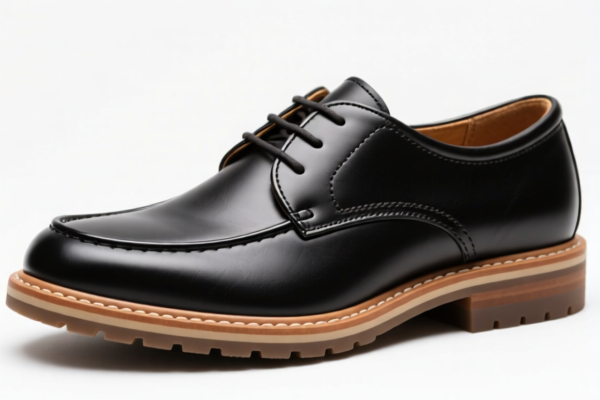
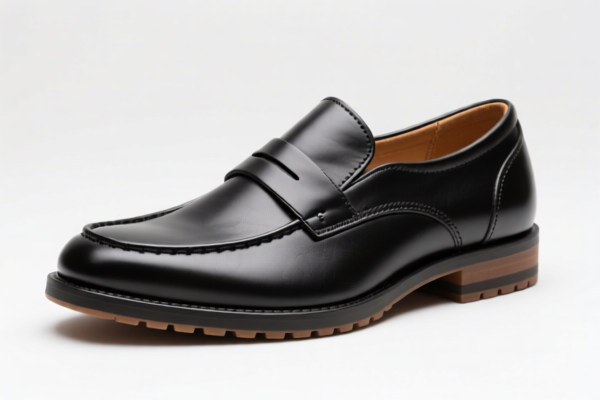
AI Analysis
👞 Rubber Shoe Sole (Raw Material / Component for Footwear)
🌐 HS Code Reference & Customs Clearance Guide | 2026 Latest Tariff Breakdown | Strategic Compliance Strategy
📌 I. Product Definition & Classification: What Exactly is a "Rubber Shoe Sole"?
In international trade, the term "Rubber Shoe Sole" can refer to two distinct categories depending on its state and intended use:
- Raw Material/Component (Unworked Semi-Finished): Solid rubber or plastic soles that have been cut into shape but lack uppers, stitching, or final assembly. These are often used by manufacturers to assemble finished shoes.
- Finished Footwear (Wearable): If the "sole" comes attached to an upper (even a partial one) or is marketed as a complete golf shoe with a rubber/plastic outsole, it is classified as Footwear, not a raw material.
⚠️ Key Distinction Point:
- If it is bare rubber/plastic outsoles without uppers → It might be considered a part/accessory, but often falls under footwear chapters if specifically shaped for shoes.
- If it is a complete Golf Shoe with a rubber/plastic outsole → It must be classified under Chapter 64 (Footwear).
- Note: The provided data only lists HS Codes for Footwear (Chapter 64), implying the input refers to Golf Shoes with rubber/plastic soles, not raw rubber blocks.
📦 II. HS Code Classification Matrix (Based on Provided Data)
| HS Code | Product Description | Material & Use Match | Total Tax Rate | Tax Detail Breakdown |
|---|---|---|---|---|
6402.19.05.90 |
Rubber or Plastic Golf Shoes | ✅ Matches: Rubber/plastic outsole, Golf purpose | 16.0% | Base: 6.0%, Additional: 0%, Section 301: 10% |
6402.19.05.30 |
Rubber/Plastic Sole Golf Shoes | ✅ Matches: Rubber/plastic outsole, Golf purpose | 16.0% | Base: 6.0%, Additional: 0%, Section 301: 10% |
6403.19.10.00 |
Rubber/Plastic Sole Golf Shoes | ✅ Matches: Rubber/plastic outsole, Golf purpose | 22.5% | Base: 5.0%, Additional: 7.5%, Section 301: 10% |
6403.19.30.30 |
Rubber/Plastic Sole Golf Shoes | ✅ Matches: Rubber/plastic outsole, Golf purpose | 18.5% | Base: 8.5%, Additional: 0%, Section 301: 10% |
6404.11.20.71 |
Rubber/Plastic Sole Golf Shoes | ✅ Matches: Rubber/plastic outsole, Sportswear category | 20.5% | Base: 10.5%, Additional: 0%, Section 301: 10% |
🔍 Critical Insight:
All listed HS Codes belong to Chapter 64 (Footwear). This means the item is not a raw rubber block or generic sole component, but rather finished or partially assembled Golf Shoes where the outer sole material is rubber or plastic.
-6402: Footwear with outer sole of rubber, plastics, leather composition, etc.
-6403: Footwear with outer sole of rubber, plastics, leather, and uppers of leather (likely the reason for higher base tax in some subcodes).
-6404: Footwear with outer sole of rubber, plastics, leather, or textile materials.
💰 III. 2026 Tariff Rate Detailed Analysis (Including Additional Duties)
✅ Applicable Country: United States (US)
✅ Origin: China (CN) (Implied by Section 301/122 Clause reference)
✅ Effective Date: Current trade policies apply
🎯 1. 6402.19.05.90 & 6402.19.05.30 – Rubber/Plastic Sole Golf Shoes (Lower Tax Bracket)
| Item | Content |
|---|---|
| Base Tariff (MFN) | 6.0% |
| Section 301 / 122 Additional Duty | +10.0% |
| Total Effective Tax Rate | 16.0% |
| Calculation Basis | CIF Value (Cost + Insurance + Freight) × 16% |
| De Minimis Exemption | ❌ Not Applicable (Section 301 goods are generally excluded) |
| Legal Basis Path | HTSUS: 6402.19.05 → Section 301 Footnote: 9903.01.25 (or similar) |
📌 Explanation:
- These codes fall under Heading 6402 (Footwear with outer sole of rubber/plastics).
- The 6.0% base rate is standard for many footwear items under MFN treatment.
- The +10% additional duty is likely from Section 301 (China-specific tariffs).
- Total 16% is the most competitive rate among the options.
🎯 2. 6403.19.10.00 – Highest Tax Bracket (Leather Uppers Implied?)
| Item | Content |
|---|---|
| Base Tariff (MFN) | 5.0% |
| Additional Duty (Section 301/122) | +7.5% |
| Section 301 / 122 Additional Duty | +10.0% |
| Total Effective Tax Rate | 22.5% |
| Calculation Basis | CIF Value × 22.5% |
| De Minimis Exemption | ❌ Not Applicable |
| Legal Basis Path | HTSUS: 6403.19.10 → Section 301 Footnote |
📌 Explanation:
- Why higher total tax despite lower base (5%)? Because the Additional Duty is 7.5% instead of 0%.
- This subcode likely includes footwear with leather uppers (Heading 6403), which often face stricter regulatory scrutiny or different trade policy treatments.
- Total 22.5% is the highest cost among the provided options.
🎯 3. 6403.19.30.30 – Mid-Range Tax
| Item | Content |
|---|---|
| Base Tariff (MFN) | 8.5% |
| Additional Duty | 0.0% |
| Section 301 / 122 Additional Duty | +10.0% |
| Total Effective Tax Rate | 18.5% |
| Calculation Basis | CIF Value × 18.5% |
🎯 4. 6404.11.20.71 – Sportswear Category
| Item | Content |
|---|---|
| Base Tariff (MFN) | 10.5% |
| Additional Duty | 0.0% |
| Section 301 / 122 Additional Duty | +10.0% |
| Total Effective Tax Rate | 20.5% |
| Calculation Basis | CIF Value × 20.5% |
📌 Explanation:
- Heading 6404 covers footwear with outer sole of rubber/plastics and upper of textile materials.
- Higher base tax (10.5%) reflects the textile content.
- Total 20.5% is moderate but higher than the 6402 options.
🛠️ IV. Customs Clearance Practical Advice (Avoiding Pitfalls)
✅ 1. Essential Documentation Checklist
| Document | Required? | Notes |
|---|---|---|
| ✅ Commercial Invoice | ✔️ | Must clearly state "Golf Shoes, Rubber/Plastic Outsole" |
| ✅ Packing List | ✔️ | Detail quantity, weight, dimensions |
| ✅ Product Photos | ✔️ | Clear images of sole material, stitching, and any branding |
| ✅ Material Declaration | ✔️ | Specify % of rubber, plastic, leather, textile in upper and sole |
| ✅ FCC/CE Certification | ❌ | Usually not required for footwear, but check for special safety standards |
| ✅ Origin Certificate (CO) | ✔️ | Required to prove origin (China) and apply correct Section 301 duties |
✅ 2. Classification Strategy (Key Tips)
🔥 “Sole Material + Upper Material = HS Code”
| Scenario | Correct HS Code | Reason |
|---|---|---|
| Golf Shoe with Rubber Sole + Leather Upper | Likely 6403.19.10.00 or 6403.19.30.30 |
Heading 6403 = Leather Upper |
| Golf Shoe with Rubber Sole + Textile Upper | Likely 6404.11.20.71 |
Heading 6404 = Textile Upper |
| Golf Shoe with Rubber/Plastic Sole + Other Material (e.g., PVC, Synthetic) | Likely 6402.19.05.90 or 6402.19.05.30 |
Heading 6402 = Rubber/Plastics/Leather Composition |
⚠️ Warning:
- Do NOT declare as "Rubber Sole Only" if it’s a finished shoe.
- Do NOT misdeclare leather uppers as textile to avoid higher duties (customs may inspect and penalize).
✅ 3. Special Handling for Section 301 / 122 Clauses
| Clause | Impact | Mitigation |
|---|---|---|
| Section 301 (10%) | Applies to all Chinese-origin footwear | Cannot be avoided; must be included in cost calculation |
| Section 122 (if applicable) | May add 7.5% in some cases (see 6403.19.10.00) |
Check if product falls under specific exclusion lists |
| De Minimis (Section 321) | ❌ Excluded for Section 301 goods | No $800 exemption for China-origin goods under 301 |
🌍 V. Global Market Comparison (2026)
| Country/Region | Recommended HS Code | Tariff Rate (China Origin) | Notes |
|---|---|---|---|
| 🇺🇸 USA | 6402.19.05.90 |
16.0% | Most competitive; avoid 6403 if possible |
| 🇨🇳 China | 6402.19.05.90 |
~5-8% | Import duties apply; check VAT |
| 🇪🇺 EU | 6402.19.00 |
~12% | No Section 301; standard MFN rate |
| 🇬🇧 UK | 6402.19.00 |
~12% | Post-Brexit tariff regime |
| 🇯🇵 Japan | 6402.19.00 |
~15% | Free Trade Agreement (JTEPA) may reduce |
📌 Conclusion:
- US market is most impacted by Section 301 tariffs.
- Selecting6402codes (16%) is better than6403(22.5%) or6404(20.5%) for cost efficiency.
- Consider supply chain diversification (e.g., Vietnam, India) if tariffs become prohibitive.
📌 VI. Common Mistakes & Pitfalls (Lessons Learned)
❌ Mistake 1: Declaring as "Rubber Parts" instead of "Footwear"
👉 Consequence: Customs may reclassify to footwear, applying 16-22% + penalties.
❌ Mistake 2: Misidentifying upper material
👉 Consequence: If leather is declared as textile, customs inspection may lead to higher duties (6403 vs 6404) + fines.
❌ Mistake 3: Ignoring Section 301 applicability
👉 Consequence: Assuming $800 de minimis exemption applies → Shipment seized or backdated duties + interest.
❌ Mistake 4: Using vague descriptions like "Shoes"
👉 Consequence: Customs may assign default higher tariff rate or delay clearance for inspection.
✅ Correct Practice:
"Golf Shoes, Men’s, Size 10, Rubber Outsole, Leather Upper, Model XYZ, Made in China"
→ Use precise HS Code6403.19.10.00or6402.19.05.90based on material breakdown.
🎯 VII. Conclusion: Precision in Classification Saves Money!
🎯 Remember the Golden Rules:
🔹 “Sole Material + Upper Material = Exact HS Code”
🔹 “Section 301 = 10% Extra for China Origin”
🔹 “6402 is Cheaper Than 6403 for Non-Leather Uppers”
🔹 “No De Minimis for 301 Goods”
📌 Pro Tip:
If your golf shoes have synthetic or textile uppers, aim for 6402.19.05.90 (16%) or 6404.11.20.71 (20.5%). Avoid 6403 unless absolutely necessary, as it carries higher total duties (22.5%).
📣 Action Required:
📞 Consult a licensed customs broker to verify the exact upper material composition.
🚀 Request an Advance Ruling from US Customs (CBP) to lock in the HS Code and tariff rate before shipment.
✨ Accurate Classification from Day One!
💼 Your Profit Margin Depends on the 16% vs 22.5% Difference!
Customer Reviews
About HS Code Classification
The Harmonized System (HS) is an internationally standardized nomenclature developed by the World Customs Organization (WCO) to classify traded products. Over 200 countries use the HS system as the basis for customs tariffs, trade statistics, and import/export regulations.
Each HS code follows a hierarchical structure:
- Chapter (2 digits) — Broad category of goods (e.g., Chapter 84: Machinery and Mechanical Appliances)
- Heading (4 digits) — More specific grouping within the chapter
- Subheading (6 digits) — Internationally standardized breakdown, used by all WCO member countries
- National subdivisions (8-10 digits) — Country-specific extensions for further classification, such as US HTSUS 10-digit codes
Correct HS code classification is essential for smooth customs clearance, accurate duty payment, and compliance with trade regulations. Misclassification can lead to customs delays, overpayment of duties, or penalties.
When importing from CN to US, the applicable tariff rates may include:
- Most-Favored-Nation (MFN) rate — The standard duty rate applied to WTO members
- General rate — Applied to countries without trade agreements
- Trade remedy duties — Additional tariffs such as Section 301 (anti-dumping), Section 232 (national security), or countervailing duties
The information provided on this page is for reference purposes only. For official classification, please consult with your local customs authority or a licensed customs broker.