Rubber Solution
CN → US| HS Code | Tariff Rate | Origin | Destination | Doc |
|---|---|---|---|---|
| 3506911000 | 35.0% | CN | US | Official Doc |
| 3506915000 | 37.1% | CN | US | Official Doc |
| 3913901000 | 35.0% | CN | US | Official Doc |
| 3913902090 | 40.8% | CN | US | Official Doc |
| 3902205000 | 41.5% | CN | US | Official Doc |
| 3902201000 | 35.0% | CN | US | Official Doc |
| 4002190016 | 35.0% | CN | US | Official Doc |
| 4002190014 | 35.0% | CN | US | Official Doc |
Product Images
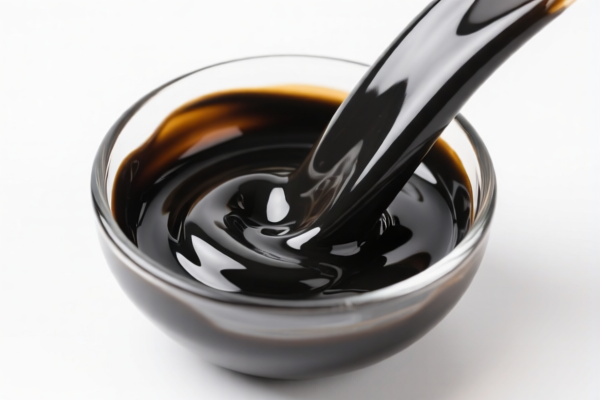
AI Analysis
🧪 Synthetic Rubber & Factice: Solution-Processed Polymers & Adhesives
🌐 HS Code Reference & Customs Clearance Guide | 2024-2025 Latest Tariff Analysis | Professional Clearance Strategy
📌 I. Product Definition & Classification: What is "Rubber Solution"?
"Rubber Solution" in international trade typically refers to Synthetic Rubber or Modified Natural Polymers produced or processed via solution polymerization, or Adhesives based on these polymers. It is not a single commodity but a category containing several specific chemical forms.
In customs classification, the key distinction lies in: 1. Chemical Structure: Is it Styrene-Butadiene (SBR)? Polyisobutylene? Or a Chemical Derivative of Natural Rubber? 2. Form: Is it in primary forms, bales, granules, or is it a "Prepared Adhesive"? 3. Styrene Content: For SBR, does it contain ≤50% styrene? 4. Usage: Is it purely raw rubber or an adhesive for displays/touch screens?
⚠️ Critical Distinction:
- S-SBR (Styrene-Butadiene Rubber produced by solution polymerization) in bales → 4002.19.00.16
- SBS (Styrene-Butadiene-Styrene Block Copolymers) in granules/powders → 4002.19.00.14
- Polyisobutylene (Elastomeric vs. Other) → 3902.20.10.00 / 3902.20.50.00
- Adhesives based on these polymers → 3506.91.10.00 / 3506.91.50.00
📦 II. HS Code Classification Details (Latest Tariff Concordance)
| HS Code | Product Description | Application Scenario | Key Characteristics |
|---|---|---|---|
4002.19.00.16 |
S-SBR: Styrene-butadiene rubber produced by solution polymerization in bales; containing ≤50% styrene | High-performance tires, footwear, automotive parts | Raw Rubber Form; Bales; Solution-processed |
4002.19.00.14 |
SBS: Styrene-butadiene-styrene block copolymers produced by solution polymerization, in granules, crumbs, or powders | Thermoplastic elastomers, adhesives, sealants | Thermoplastic Elastomer; Granules/Powders; NOT bales |
3902.20.10.00 |
Polyisobutylene: Elastomeric | Medical devices, adhesives, sealants | Synthetic Polymer; Elastomeric nature |
3902.20.50.00 |
Polyisobutylene: Other | Industrial applications, non-elastomeric forms | Synthetic Polymer; Non-elastomeric |
3913.90.10.00 |
Chemical Derivatives of Natural Rubber (not elsewhere specified) | Modified natural rubber products | Modified Natural Polymer; Chemical derivative |
3913.90.20.90 |
Other Polysaccharides and Their Derivatives | Biopolymers, alginic acid derivatives | Natural Polymer Derivative; Not specified elsewhere |
3506.91.10.00 |
Adhesives: Optically clear free-film/curable liquid adhesives for flat panel displays/touch screens | Electronics manufacturing, display assembly | Prepared Adhesive; High optical clarity; Display-specific |
3506.91.50.00 |
Adhesives: Other (based on polymers 3901-3913 or rubber) | General industrial adhesives | Prepared Adhesive; General purpose; Based on rubber/polymers |
🔍 Key Reminder:
- "Solution Polymerization" (S-SBR) is a specific manufacturing process for raw rubber (HS 4002), not an adhesive.
- SBS is a thermoplastic elastomer, often used in adhesives, but classified as rubber (HS 4002) if in granules/powders.
- Adhesives (HS 3506) are distinct from raw rubbers. If the product is a "glue" or "adhesive," look at Chapter 35, not Chapter 40.
💰 III. 2024-2025 Tariff Rate Breakdown (Including Supplementary Taxes)
✅ Applicable Country: United States (US)
✅ Origin: China (CN)
✅ Effective Time: Current rates as of 2024-2025 (Subject to USITC & USTR updates)
🎯 1. 4002.19.00.16 —— S-SBR (Solution Polymerized, Bales, ≤50% Styrene)
| Item | Detail |
|---|---|
| Basic Tariff | 0.0% |
| Additional Tariff (Section 301) | 0.0% |
| Total Tariff | 0.0% |
| Tax Calculation | CIF Value × 0% = $0 |
| De Minimis Exemption | ❌ Not Applicable (Physical goods subject to standard customs) |
| Legal Basis | HTSUS:4002.19.00.16 |
📌 Explanation:
- This specific S-SBR product enjoys zero duty under current US tariff schedules.
- No Section 301 additional tax applies to this specific subheading.
- Lowest Risk: Ideal for cost-sensitive supply chains.
🎯 2. 4002.19.00.14 —— SBS Granules/Powders (Solution Polymerized)
| Item | Detail |
|---|---|
| Basic Tariff | 0.0% |
| Additional Tariff (Section 301) | +25.0% |
| Total Tariff | 25.0% |
| Tax Calculation | CIF Value × 25% |
| De Minimis Exemption | ❌ Not Applicable |
| Legal Basis | HTSUS:4002.19.00.14 → USITC:301 |
📌 Explanation:
- SBS (Thermoplastic Elastomers) in granule/powder form is subject to the 25% Section 301 tariff.
- Despite being a "synthetic rubber," the form (granules/powders) and type (SBS) trigger the higher tax.
🎯 3. 3902.20.50.00 —— Polyisobutylene (Other)
| Item | Detail |
|---|---|
| Basic Tariff | 6.5% |
| Additional Tariff (Section 301) | +25.0% |
| Total Tariff | 31.5% |
| Tax Calculation | CIF Value × 31.5% |
| De Minimis Exemption | ❌ Not Applicable |
| Legal Basis | HTSUS:3902.20.50.00 → USITC:301 |
📌 Explanation:
- High Tariff Alert: "Other" Polyisobutylene has a high base rate (6.5%) PLUS 25% Section 301.
- Total 31.5% significantly impacts margins.
🎯 4. 3902.20.10.00 —— Polyisobutylene (Elastomeric)
| Item | Detail |
|---|---|
| Basic Tariff | 0.0% |
| Additional Tariff (Section 301) | +25.0% |
| Total Tariff | 25.0% |
| Tax Calculation | CIF Value × 25% |
| De Minimis Exemption | ❌ Not Applicable |
| Legal Basis | HTSUS:3902.20.10.00 → USITC:301 |
📌 Explanation:
- Elastomeric Polyisobutylene has a lower base rate (0%) but still incurs the 25% Section 301 tariff.
- Comparison: Much cheaper than "Other" Polyisobutylene (31.5% vs. 25%).
🎯 5. 3913.90.10.00 —— Chemical Derivatives of Natural Rubber
| Item | Detail |
|---|---|
| Basic Tariff | 0.0% |
| Additional Tariff (Section 301) | +25.0% |
| Total Tariff | 25.0% |
| Tax Calculation | CIF Value × 25% |
| De Minimis Exemption | ❌ Not Applicable |
| Legal Basis | HTSUS:3913.90.10.00 → USITC:301 |
🎯 6. 3913.90.20.90 —— Other Polysaccharides Derivatives
| Item | Detail |
|---|---|
| Basic Tariff | 5.8% |
| Additional Tariff (Section 301) | +25.0% |
| Total Tariff | 30.8% |
| Tax Calculation | CIF Value × 30.8% |
| De Minimis Exemption | ❌ Not Applicable |
| Legal Basis | HTSUS:3913.90.20.90 → USITC:301 |
🎯 7. 3506.91.10.00 —— Adhesives for Flat Panel Displays (Optically Clear)
| Item | Detail |
|---|---|
| Basic Tariff | 0.0% |
| Additional Tariff (Section 301) | +25.0% |
| Total Tariff | 25.0% |
| Tax Calculation | CIF Value × 25% |
| De Minimis Exemption | ❌ Not Applicable |
| Legal Basis | HTSUS:3506.91.10.00 → USITC:301 |
📌 Explanation:
- High-Tech Adhesives: Even though it's an adhesive, the specific use (flat panel displays) and material (polymers/rubber) trigger the 25% tariff.
- Crucial for Electronics Suppliers: Budget for 25% duty.
🎯 8. 3506.91.50.00 —— Other Adhesives (Based on Polymers/Rubber)
| Item | Detail |
|---|---|
| Basic Tariff | 0.0% |
| Additional Tariff (Section 301) | 0.0% |
| Total Tariff | 0.0% |
| Tax Calculation | CIF Value × 0% = $0 |
| De Minimis Exemption | ❌ Not Applicable |
| Legal Basis | HTSUS:3506.91.50.00 |
📌 Explanation:
- Hidden Gem: General-purpose adhesives based on polymers (not specifically for displays) often have 0% total duty.
- Optimization Opportunity: If your adhesive is not for displays, ensure it is classified under3506.91.50.00to save 25%.
🛠️ IV. Customs Clearance Practical Advice (Pitfall Avoidance Guide)
✅ 1. Preparation Checklist (Essential Documents)
| Document | Mandatory? | Purpose |
|---|---|---|
| ✅ Product Specification Sheet | ✔️ | Must clearly state: Chemical type (SBR, SBS, PIB), Polymerization method (Solution/Emulsion), Styrene content, Form (Bales, Granules, Liquid). |
| ✅ Safety Data Sheet (SDS) | ✔️ | Proves chemical composition and hazards (if any). |
| ✅ Commercial Invoice | ✔️ | Must specify "Synthetic Rubber" or "Adhesive" accurately, not just "Rubber Solution." |
| ✅ Certificate of Origin (CO) | ✔️ | To prove origin (China) and apply correct tariffs. |
| ✅ Product Photos | ✔️ | Show physical form: Bales (for 4002.19.00.16) vs. Granules (for 4002.19.00.14) vs. Liquid/Film (for 3506). |
| ✅ Technical Data for Adhesives | ✔️ | For 3506.91.10.00, prove "optical clarity" and "use in flat panel displays" to justify the subheading. |
✅ 2. Declaration Tips (Key Mantras)
🔥 "Form Defines Code, Use Defines Adhesive, Process Defines S-SBR!"
| Scenario | Correct Declaration | Wrong Declaration | Consequence |
|---|---|---|---|
| S-SBR in Bales | 4002.19.00.16 |
"Synthetic Rubber" | Misclassification → Potential penalty; Correct duty is 0% |
| SBS in Granules | 4002.19.00.14 |
"Styrene Rubber" | Misclassification → Duty jumps from 0% to 25% |
| Adhesive for Screens | 3506.91.10.00 |
"General Glue" | Misclassification → Duty 25% instead of 0% if misfiled as other adhesive |
| General Adhesive | 3506.91.50.00 |
"Display Adhesive" | Misclassification → Duty 0% instead of 25% |
| Polyisobutylene | 3902.20.10.00 (if elastomeric) |
"Other Polyisobutylene" | Misclassification → Duty 25% vs. 31.5% |
✅ 3. Special Cases & Optimization
| Case | Strategy |
|---|---|
| S-SBR vs. Emulsion SBR (E-SBR) | Ensure the technical data specifies "Solution Polymerization" to qualify for 4002.19.00.16 (0% duty). E-SBR may have different subheadings. |
| Adhesive Classification | If the adhesive is used in displays, it MUST be 3506.91.10.00 (25% duty). If it's for general use, classify as 3506.91.50.00 (0% duty). Do not over-claim "display use" if not applicable. |
| Polyisobutylene Form | If the PIB is elastomeric, use 3902.20.10.00 (25% total). If it's non-elastomeric, it's 3902.20.50.00 (31.5% total). Ensure the MSDS describes its physical state accurately. |
| Mixed Shipments | If shipping S-SBR (bales) and SBS (granules) together, separate line items in the invoice. Do not mix, as duties differ (0% vs. 25%). |
🌍 V. Global Market Comparison (2024-2025)
| Country/Region | Recommended HS Code | Total Duty (China Origin) | Certification/Note |
|---|---|---|---|
| 🇺🇸 USA | 4002.19.00.16 (S-SBR) |
0.0% | Best for S-SBR bales |
| 🇺🇸 USA | 4002.19.00.14 (SBS) |
25.0% | High duty for SBS granules |
| 🇺🇸 USA | 3506.91.50.00 (General Adhesive) |
0.0% | Save 25% by avoiding "display" designation if not applicable |
| 🇨🇳 China | Varies | 0%-6.5% | No Section 301; Lower base rates |
| 🇪🇺 EU | Varies | 0%-6.5% | No Section 301; CET applies |
| 🇯🇵 Japan | Varies | 0%-5.5% | Low base rates; No Section 301 |
📌 Conclusion:
- USA is the only market with Section 301 Additional Tariffs for these goods.
- Strategic Classification:
- Use S-SBR (Bales) for 0% duty.
- Use General Adhesives (3506.91.50.00) for 0% duty.
- Avoid SBS Granules and Other Polyisobutylene if cost is critical, as they carry 25-31.5% duties.
📌 VI. Common Mistakes & Pitfalls (Blood Lessons)
❌ Mistake 1: Calling "SBS Granules" "Styrene Rubber" and classifying under 4002.19.00.16 (0%)
👉 Consequence: Customs audit finds it's SBS (granules) → Back taxes + 25% penalty.
❌ Mistake 2: Classifying "Display Adhesive" as "General Adhesive" (3506.91.50.00) to avoid 25% duty
👉 Consequence: Customs inspects and finds it's used for displays → Misclassification penalty + 25% back duty.
❌ Mistake 3: Ignoring the "Form" of Polyisobutylene
👉 Consequence: Mixing up Elastomeric (25%) and Other (31.5%) → 6.5% overpayment or underpayment.
✅ Correct Practice:
"Styrene-Butadiene Rubber (SBR), Solution Polymerized, in Bales, 45% Styrene" → 4002.19.00.16
"Acrylic-Based Adhesive for Flat Panel Display Assembly, Optically Clear" → 3506.91.10.00
🎯 VII. Conclusion: Precision Classification for Cost Savings
🎯 Remember the Mantras:
🔹 "S-SBR Bales = 0% Duty"
🔹 "SBS Granules = 25% Duty"
🔹 "General Adhesive = 0% Duty"
🔹 "Display Adhesive = 25% Duty"🔹 "Polyisobutylene Elastomeric = 25%; Other = 31.5%"
📌 Pro Tip:
- If your product is an adhesive, ensure the primary use is correctly declared. If it's not for displays, do not claim display use to avoid the 25% tariff.
- If your rubber is S-SBR, ensure it is in bales and solution-polymerized to qualify for 0% duty.
📣 Immediate Action:
📞 Consult a licensed customs broker.
📄 Provide detailed Technical Data Sheets and MSDS.
🚀 Verify HS Codes with U.S. Customs and Border Protection (CBP) via an Advance Ruling if volume is high.
✨ Professional Clearance Starts with Accurate Classification!
💼 Every Percent Saved is Pure Profit!
Customer Reviews
About HS Code Classification
The Harmonized System (HS) is an internationally standardized nomenclature developed by the World Customs Organization (WCO) to classify traded products. Over 200 countries use the HS system as the basis for customs tariffs, trade statistics, and import/export regulations.
Each HS code follows a hierarchical structure:
- Chapter (2 digits) — Broad category of goods (e.g., Chapter 84: Machinery and Mechanical Appliances)
- Heading (4 digits) — More specific grouping within the chapter
- Subheading (6 digits) — Internationally standardized breakdown, used by all WCO member countries
- National subdivisions (8-10 digits) — Country-specific extensions for further classification, such as US HTSUS 10-digit codes
Correct HS code classification is essential for smooth customs clearance, accurate duty payment, and compliance with trade regulations. Misclassification can lead to customs delays, overpayment of duties, or penalties.
When importing from CN to US, the applicable tariff rates may include:
- Most-Favored-Nation (MFN) rate — The standard duty rate applied to WTO members
- General rate — Applied to countries without trade agreements
- Trade remedy duties — Additional tariffs such as Section 301 (anti-dumping), Section 232 (national security), or countervailing duties
The information provided on this page is for reference purposes only. For official classification, please consult with your local customs authority or a licensed customs broker.