Rubber Synchronous Belt
CN → US| HS Code | Tariff Rate | Origin | Destination | Doc |
|---|---|---|---|---|
| 4010353000 | 39.1% | CN | US | Official Doc |
| 4010354100 | 43.0% | CN | US | Official Doc |
| 8483901050 | 37.8% | CN | US | Official Doc |
| 8483908080 | 37.8% | CN | US | Official Doc |
| 4010359000 | 38.3% | CN | US | Official Doc |
Product Images
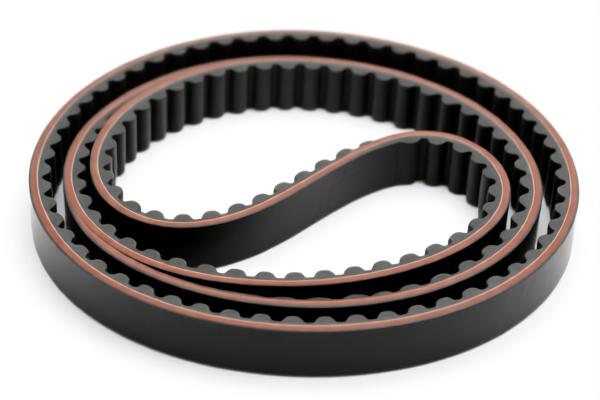
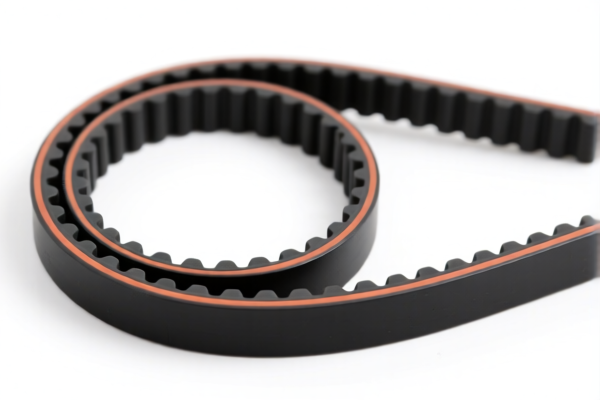
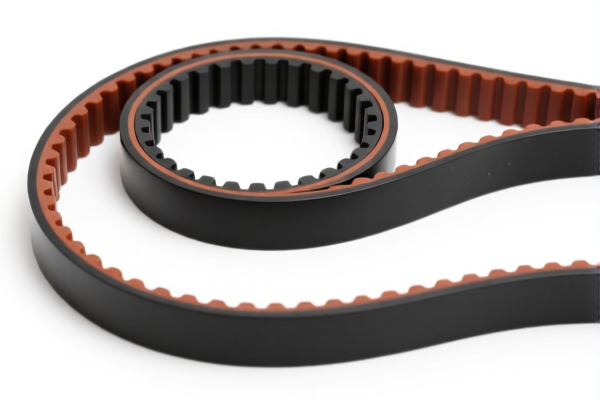
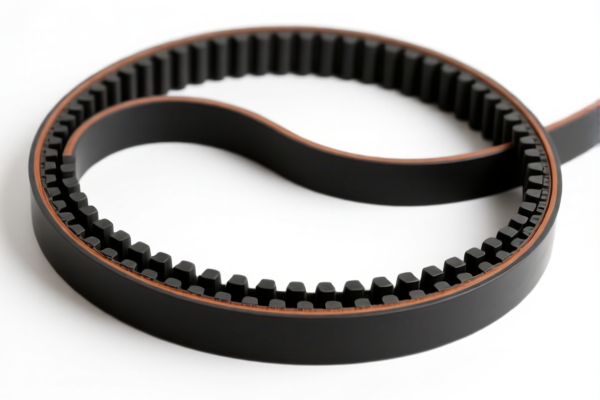
AI Analysis
🏭 Rubber Synchronous Belts (Rubber Timing Belts)
🌐 HS Code Reference & Customs Clearance Guide | 2026 Latest Tariff Analysis | Professional Clearance Strategy
📌 I. Product Definition & Classification: What Exactly is a "Rubber Synchronous Belt"?
A Rubber Synchronous Belt (also known as a Timing Belt or Toothed Belt) is a critical mechanical transmission component. It combines the positive drive characteristics of gears with the flexibility and noise reduction of belts. Unlike V-belts that rely on friction, synchronous belts use teeth molded into the inner surface to mesh with grooves in pulleys, ensuring precise speed ratios and zero slip.
In international trade, classification depends heavily on Material Composition (Rubber vs. Others) and Functional Category (Drive Component vs. General Machinery Part).
⚠️ Key Distinction Points:
- If the belt is primarily made of Rubber (even with textile/metal cords inside) → It falls under Chapter 40 (Rubber and Articles Thereof).
- If it is considered a generic Transmission Component of machinery (often interpreted as a part of gear/pulley systems) → It may fall under Chapter 84 (Machinery and Mechanical Appliances).
- Crucial Note: Many importers mistakenly classify these as "Parts of Machines" (8483) to save on base rates, but this carries significant risk if the belt’s primary identity is clearly "Rubber."
📦 II. HS Code Classification Details (2026 Latest Tariff Authority Comparison)
Based on the provided data, there are six potential HS Codes. We categorize them into two groups: Rubber Specific (Chapter 40) and Machinery Parts (Chapter 84).
Group A: Rubber Category (Primary Classification)
These codes apply when the product is defined by its material (Rubber).
| HS Code | Product Description | Application Scenario | Key Characteristic |
|---|---|---|---|
4010.35.30.00 |
Rubber Synchronous Belt, Dimensions 60-150 cm, Material/Form Fully Matched | Standard industrial timing belts within specific length ranges | Exact Match: Size & Material aligned |
4010.35.41.00 |
Rubber Synchronous Belt, Matches Outside Circumference Spec, Material is Rubber | Belts defined by circumference specs | Material: Explicitly Rubber |
4010.35.90.00 |
Synchronous Belt Form/Usage Matched, Inferred Rubber Material | Standard rubber belts not covered by specific sub-items | Inferred: Based on form/usage |
4010.36.90.00 |
Synchronous Belt Consistent Form, Inferred Rubber, Other Category | Alternative rubber belt category | Inferred: "Other" category |
Group B: Machinery Transmission Components (Secondary/Alternative Classification)
These codes apply if customs authorities view the item primarily as a "part of a transmission system" or "pulley component."
| HS Code | Product Description | Application Scenario | Key Characteristic |
|---|---|---|---|
8483.90.10.50 |
Synchronous Belt as Transmission Element, Falls under "Other Transmission Elements" | General transmission parts | Functional: Transmission element |
8483.90.80.80 |
Synchronous Belt as Part of Transmission Devices & Pulley Assemblies | Pulley systems, drive assemblies | Assembly: Related to pulleys/drives |
🔍 Important Reminder:
- Chapter 40 Codes (4010...) are generally the most accurate for "Rubber Belts" because the Harmonized System prioritizes material when specified.
- Chapter 84 Codes (8483...) are functional classifications. Use these only if the belt is sold as a kit with pulleys or if specific local customs rulings prefer functional classification.
- Risk: Misclassification from 4010 to 8483 can lead to penalties if the "Rubber" nature is dominant and declared incorrectly.
💰 III. 2026 Latest Tariff Rate Breakdown (Including Surcharges & Policy Add-ons)
✅ Applicable Country: United States (US)
✅ Origin: China (CN)
✅ Effective Date: 2025/2026 Import Period
All codes below are subject to the same surcharge structure but differ in Base Duty, leading to different Total Effective Rates.
🎯 1. 4010.35.30.00 —— Rubber Synchronous Belt (Size 60-150cm)
| Item | Content |
|---|---|
| Base Duty | 4.1% |
| Section 301 Surcharge | +25.0% |
| Section 122 Tariff | +10.0% |
| Total Tax Rate | 39.1% |
| Tax Calculation | CIF Value × 39.1% |
| De Minimis Exemption | ❌ Not Applicable |
| Legal Basis | Base Rate + Section 301 (USITC) + Section 122 (Specific Trade Remedy) |
📌 Explanation:
- This code offers the lowest total tax rate (39.1%) among all options because its base duty (4.1%) is moderate.
- Section 122 tariffs are specific trade remedies that add an extra layer of cost.
🎯 2. 4010.35.41.00 —— Rubber Synchronous Belt (Circumference Spec)
| Item | Content |
|---|---|
| Base Duty | 8.0% |
| Section 301 Surcharge | +25.0% |
| Section 122 Tariff | +10.0% |
| Total Tax Rate | 43.0% |
| Tax Calculation | CIF Value × 43.0% |
| De Minimis Exemption | ❌ Not Applicable |
| Legal Basis | Base Rate + Section 301 (USITC) + Section 122 (Specific Trade Remedy) |
📌 Note:
- Higher base duty (8.0%) pushes the total to 43.0%.
- Use this code only if the product description explicitly cites "Outside Circumference" specifications rather than standard length/width.
🎯 3. 8483.90.10.50 & 8483.90.80.80 —— Transmission Elements / Pulley Assemblies
| Item | Content |
|---|---|
| Base Duty | 2.8% |
| Section 301 Surcharge | +25.0% |
| Section 122 Tariff | +10.0% |
| Total Tax Rate | 37.8% |
| Tax Calculation | CIF Value × 37.8% |
| De Minimis Exemption | ❌ Not Applicable |
| Legal Basis | Base Rate + Section 301 (USITC) + Section 122 (Specific Trade Remedy) |
📌 Strategic Insight:
- These two codes share the lowest total tax rate (37.8%).
- However, the risk is higher. If customs determines the product is primarily a rubber belt (Chapter 40) and not a generic transmission part, you may be audited, back-taxed, and fined for misclassification.
- Recommendation: Only use these if you have a Pre-Ruling from Customs confirming that the belt is considered a "Part of Transmission Device" (8483) rather than a "Rubber Belt" (4010).
🎯 4. 4010.35.90.00 & 4010.36.90.00 —— Other Rubber Synchronous Belts
| Item | Content |
|---|---|
| Base Duty | 3.3% |
| Section 301 Surcharge | +25.0% |
| Section 122 Tariff | +10.0% |
| Total Tax Rate | 38.3% |
| Tax Calculation | CIF Value × 38.3% |
| De Minimis Exemption | ❌ Not Applicable |
| Legal Basis | Base Rate + Section 301 (USITC) + Section 122 (Specific Trade Remedy) |
📌 Note:
- These "Other" categories have a base duty of 3.3%, resulting in a total of 38.3%.
- They are fallback options if the specific dimensions (60-150cm) or circumference specs don't fit4010.35.30or4010.35.41.
🛠️ IV. Customs Clearance Practical Advice (Battle-Tested Pitfall Avoidance)
✅ 1. Documentation Checklist (Non-Negotiable)
| Document | Required? | Description |
|---|---|---|
| ✅ Product Specification Sheet | ✔️ | Must include: Material (Rubber), Dimensions (Length/Circumference), Tooth Profile, Width. |
| ✅ HS Code Justification Memo | ✔️ | Explain why Chapter 40 vs. 84 was chosen. If using 8483, justify why it's a "Transmission Part" and not just a rubber belt. |
| ✅ Commercial Invoice | ✔️ | Must clearly state "Rubber Synchronous Belt" and HS Code. Avoid vague terms like "Parts." |
| ✅ Certificate of Origin | ✔️ | To prove Origin (China) for surcharge calculation. |
| ✅ Third-Party Test Report | ✔️ | Proof of material composition (e.g., Rubber compound analysis) if audited. |
✅ 2. Classification Strategy (Key Mantra)
🔥 "Rubber First, Function Second. If it's Rubber, Chapter 40 is safer!"
| Scenario | Recommended HS Code | Reason |
|---|---|---|
| Standard Rubber Belt | 4010.35.30.00 or 4010.35.90.00 |
Highest accuracy. Lowest dispute risk. Total Tax: 38.3%-39.1% |
| Belt with Specific Circumference Spec | 4010.35.41.00 |
Matches specific description. Total Tax: 43.0% |
| Belt Sold as Part of Pulley Kit | 8483.90.10.50 / 8483.90.80.80 |
Risky. Only use if kit is primary item. Total Tax: 37.8% |
| Vague "Transmission Belt" | Avoid | Do not use generic terms. Customs will reclassify to the highest risk code. |
✅ 3. Special Circumstances
| Situation | Handling Advice |
|---|---|
| Section 122 Tariff Impact | All codes include a 10% Section 122 tariff. This is non-negotiable for Chinese-origin goods. Budget accordingly. |
| Audits on Chapter 84 | If you use 8483... codes, be prepared to provide engineering diagrams showing the belt's integration into a transmission system. Otherwise, expect a forced reclassification to Chapter 40 + Penalties. |
| Pre-Ruling Request | Highly Recommended. Submit an HS Code Binding Ruling to US Customs (CBP) before shipping. This locks in your classification and protects against audits. |
🌍 V. Global Market Comparison (2026 Latest)
| Country/Region | Recommended HS Code | Total Tax Rate (China Origin) | Notes |
|---|---|---|---|
| 🇺🇸 USA | 4010.35.30.00 |
39.1% | Includes Section 301 (25%) + Section 122 (10%) + Base (4.1%). |
| 🇺🇸 USA (Alt) | 8483.90.10.50 |
37.8% | Lower base, but high audit risk. |
| 🇨🇳 China (Import) | 4010.35.30.00 |
~4.1% | No Section 301/122 applies. |
| 🇪🇺 EU | 4010.35.00 |
0-4% | No Section 301/122. Standard MFN rates apply. |
| 🇦🇺 Australia | 4010.35.00 |
5% | No Section 301/122. |
📌 Conclusion:
- USA is the most complex market for Rubber Synchronous Belts due to Section 301 and Section 122 tariffs.
- Total Tax Rates range from 37.8% to 43.0%.
- Strategic Choice: Choose4010.35.30.00(39.1%) for balance of safety and cost. Choose8483(37.8%) only with legal backing.
📌 VI. Common Mistakes & Pitfall Guide (Lessons Learned)
❌ Mistake 1: Classifying as 8483... without justification
👉 Consequence: Customs audits, reclassification to 4010..., back-taxes + penalties.
👉 Fix: Use Chapter 40 unless you have a pre-ruling.
❌ Mistake 2: Ignoring Section 122 Tariff
👉 Consequence: Underpayment by 10%. Customs will demand payment + interest.
👉 Fix: Include 10% in all cost calculations.
❌ Mistake 3: Vague Description ("Belt")
👉 Consequence: Customs assigns default high-duty code.
👉 Fix: Use "Rubber Synchronous Belt, Size 150cm, 5mm Width."
❌ Mistake 4: Splitting Shipment to Avoid De Minimis
👉 Consequence: De Minimis does not apply to these goods (as per data: deny_de_minimis). No benefit.
👉 Fix: Full compliance from Day 1.
✅ Correct Approach:
"Rubber Synchronous Belt, 150cm Length, 50mm Width, 10mm Tooth Pitch, HS Code 4010.35.30.00, Origin: China, Subject to 39.1% Total Duty."
🎯 VII. Conclusion: Professional Classification Saves Money!
🎯 Remember the Mantra:
🔹 "Rubber First, Chapter 40 is King. Base 4.1%, Add 35%, Total 39.1%."
🔹 "Chapter 84 is a Trap: 37.8% looks good, but audit risk is high!"
🔹 "Section 122 is a Must: Don't forget the 10%!"
📌 Pro Tip:
If your volume is high, apply for a CBP Binding Ruling. It provides legal certainty for 5 years and prevents surprise audits.
📞 Contact a licensed customs broker + Provide detailed product specs + Request HS Code Pre-Ruling.
🚀 Ensure smooth clearance, predictable costs, and zero surprises!
✨ Professional Clearance Starts with Accurate Classification!
💼 Your Profit Margin Depends on These 5 Digits!
Customer Reviews
About HS Code Classification
The Harmonized System (HS) is an internationally standardized nomenclature developed by the World Customs Organization (WCO) to classify traded products. Over 200 countries use the HS system as the basis for customs tariffs, trade statistics, and import/export regulations.
Each HS code follows a hierarchical structure:
- Chapter (2 digits) — Broad category of goods (e.g., Chapter 84: Machinery and Mechanical Appliances)
- Heading (4 digits) — More specific grouping within the chapter
- Subheading (6 digits) — Internationally standardized breakdown, used by all WCO member countries
- National subdivisions (8-10 digits) — Country-specific extensions for further classification, such as US HTSUS 10-digit codes
Correct HS code classification is essential for smooth customs clearance, accurate duty payment, and compliance with trade regulations. Misclassification can lead to customs delays, overpayment of duties, or penalties.
When importing from CN to US, the applicable tariff rates may include:
- Most-Favored-Nation (MFN) rate — The standard duty rate applied to WTO members
- General rate — Applied to countries without trade agreements
- Trade remedy duties — Additional tariffs such as Section 301 (anti-dumping), Section 232 (national security), or countervailing duties
The information provided on this page is for reference purposes only. For official classification, please consult with your local customs authority or a licensed customs broker.