Rubber Thickening Compound
CN → US| HS Code | Tariff Rate | Origin | Destination | Doc |
|---|---|---|---|---|
| 3812105000 | 40.0% | CN | US | Official Doc |
| 3812399000 | 40.0% | CN | US | Official Doc |
| 3901901000 | 35.0% | CN | US | Official Doc |
| 3901909000 | 41.5% | CN | US | Official Doc |
| 3402901000 | 38.8% | CN | US | Official Doc |
Product Images
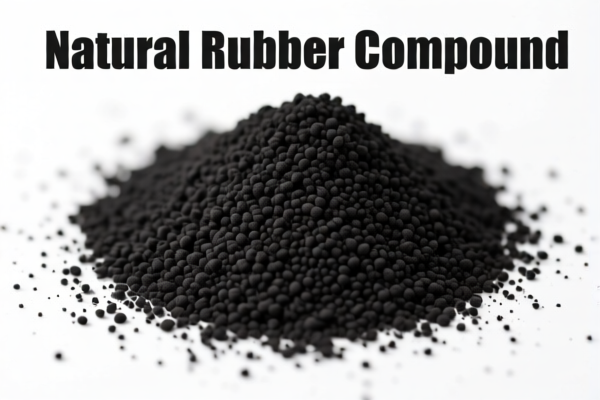
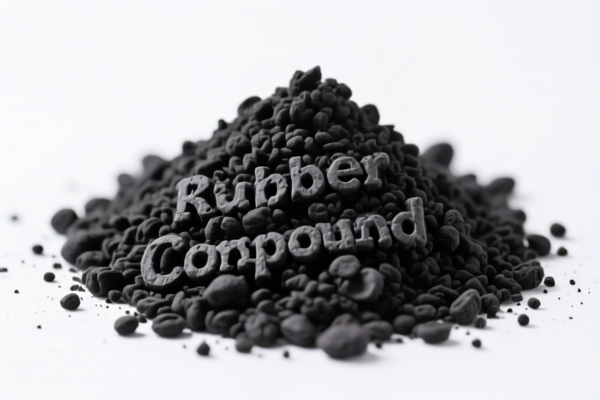
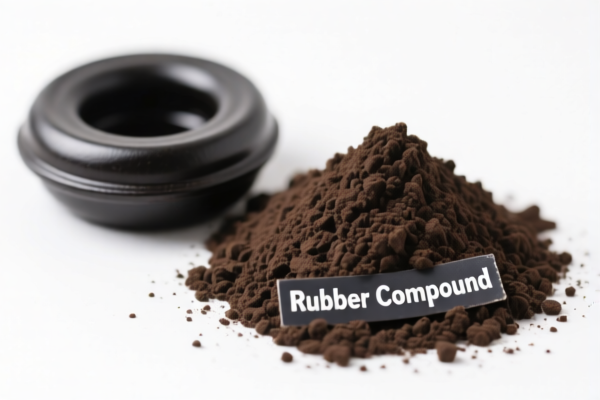
AI Analysis
🧪 Rubber Thickening Compound (Viscosity Enhancer for Rubber)
🌐 HS Code Reference & Customs Clearance Guide | 2024 Latest Tariff Analysis | Strategic Compliance for US-China Trade
📌 I. Product Definition & Classification: What is a "Rubber Thickening Compound"?
Rubber Thickening Compounds (often referred to as viscosity modifiers, rheology modifiers, or processing aids) are specialized chemical additives used in the rubber industry. Their primary function is to increase the viscosity of raw rubber or compound mixtures during processing (mixing, extrusion, calendering) to improve shape retention, reduce sagging, and enhance surface smoothness.
These compounds are not simple rubber materials themselves but are chemical auxiliaries or polymeric additives. Their classification depends heavily on their chemical composition: 1. Chemical/Additive Nature: If based on organic surfactants or complex chemical formulations. 2. Polymeric Nature: If they are synthetic polymers (e.g., EPDM, SBS, or other elastomers) used in primary forms. 3. Functional Classification: Whether they fit into general chemical preparations or specific rubber processing aids.
⚠️ Critical Distinction Point:
- If the product is a chemical mixture/additive (e.g., organic compounds, surfactants) →归入 Chapter 38 (Miscellaneous Chemical Products) or Chapter 34 (Soap, Organic Surface-Active Agents).
- If the product is a pure polymer/raw material (e.g., synthetic rubber in primary form) →归入 Chapter 39 (Plastics and Articles Thereof).
- Do NOT confuse with finished rubber goods (Chapter 40). This is an ingredient or auxiliary, not a tire or shoe.
📦 II. HS Code Classification Details (2024/2025 Authoritative Mapping)
Based on the provided data, the "Rubber Thickening Compound" can be classified into five potential HS Codes depending on its specific chemical formulation and physical state.
| HS Code | Product Description | Applicable Scenario | Tax Implication (China-Origin to US) |
|---|---|---|---|
| 3812.10.50.00 | Rubber Processing Aids (Other) | Thickening agents matched with rubber; classified under "other" aids, same category as accelerators/stabilizers. | 40.0% (5% Base + 25% Sec 301 + 10% Sec 122) |
| 3812.39.90.00 | Composite Stabilizers for Rubber | Thickening agents categorized as antioxidants or other composite stabilizers. | 40.0% (5% Base + 25% Sec 301 + 10% Sec 122) |
| 3901.90.10.00 | Primary Form Polymers (Elastomers) | Inferred as polymeric raw material (primary form); compatible with elastomer/polymer attributes. | 35.0% (0% Base + 25% Sec 301 + 10% Sec 122) |
| 3901.90.90.00 | Ethylene Polymers (Fallback) | Inferred as chemical/polymer raw material; fits the "ethene polymer" catch-all category. | 41.5% (6.5% Base + 25% Sec 301 + 10% Sec 122) |
| 3402.90.10.00 | Surface Active Agents / Functional Additives | Inferred as chemical auxiliary; categorized under surfactants or functional additives. | 38.8% (3.8% Base + 25% Sec 301 + 10% Sec 122) |
🔍 Key Insight:
- Chapter 38 (3812) is the most common classification for specialized rubber processing aids.
- Chapter 39 (3901) applies if the thickener is effectively a synthetic rubber/polymer itself.
- Chapter 34 (3402) is a potential fallback if the product acts primarily as a surfactant or general chemical additive.
- Tax Variance: The total tax rate ranges from 35% to 41.5%. Choosing the correct HS code can save up to 6.5% in base duties, but all categories incur significant additional tariffs.
💰 III. 2024/2025 Latest Tariff Rate Breakdown (Including Surtaxes & Policy Surcharges)
✅ Applicable Country: United States (US)
✅ Origin: China (CN)
✅ Effective Date: Current applicable tariffs (Section 301 & Section 122)
🎯 1. 3812.10.50.00 & 3812.39.90.00 —— Rubber Processing Aids / Stabilizers
| Item | Detail |
|---|---|
| Base Tariff | 5.0% (ad valorem) |
| Section 301 Surtax | +25.0% (List 3/4A - Chemicals/Rubber Aids) |
| Section 122 Surtax | +10.0% (Specific to certain chemical/industrial inputs) |
| Total Tax Rate | 40.0% |
| Calculation Basis | CIF Value × 40% |
| De Minimis Exemption | ❌ Not Applicable (High-risk category for de minimis) |
| Legal Pathway | USITC:3812.10.50.00 → HTS:301_Track1 → IEEPA:122_Track |
📌 Explanation:
- These codes are standard for rubber processing aids. The 5% base duty is standard for Chapter 38.
- The 25% Section 301 is mandatory for most Chinese chemical intermediates.
- The 10% Section 122 is a newer/additional surcharge applied to specific industrial inputs.
- Total 40% is a heavy burden. Ensure your Product Data Sheet (PDS) explicitly states "Rubber Processing Aid" to support this classification.
🎯 2. 3901.90.10.00 —— Polymeric Raw Material (Primary Form)
| Item | Detail |
|---|---|
| Base Tariff | 0.0% (Most elastomers/polymers have low base duties) |
| Section 301 Surtax | +25.0% |
| Section 122 Surtax | +10.0% |
| Total Tax Rate | 35.0% |
| Calculation Basis | CIF Value × 35% |
| De Minimis Exemption | ❌ Not Applicable |
| Legal Pathway | USITC:3901.90.10.00 → HTS:301_Track1 → IEEPA:122_Track |
📌 Optimization Tip:
- If your thickening compound is chemically a synthetic polymer (e.g., EPDM rubber powder, SBS), classifying under Chapter 39 offers a 5% saving compared to Chapter 38.
- Requirement: Must provide chemical structure analysis proving it is a polymer, not a simple chemical additive.
🎯 3. 3901.90.90.00 —— Ethylene Polymers (Fallback)
| Item | Detail |
|---|---|
| Base Tariff | 6.5% |
| Section 301 Surtax | +25.0% |
| Section 122 Surtax | +10.0% |
| Total Tax Rate | 41.5% |
| Calculation Basis | CIF Value × 41.5% |
| De Minimis Exemption | ❌ Not Applicable |
| Legal Pathway | USITC:3901.90.90.00 → HTS:301_Track1 → IEEPA:122_Track |
📌 Warning:
- This is a "catch-all" for ethylene polymers. If the product doesn't fit3901.90.10.00(primary form elastomers), it may fall here.
- Highest Tax Risk: At 41.5%, this is the most expensive option. Avoid unless chemically necessary.
🎯 4. 3402.90.10.00 —— Surface Active Agents / Functional Additives
| Item | Detail |
|---|---|
| Base Tariff | 3.8% |
| Section 301 Surtax | +25.0% |
| Section 122 Surtax | +10.0% |
| Total Tax Rate | 38.8% |
| Calculation Basis | CIF Value × 38.8% |
| De Minimis Exemption | ❌ Not Applicable |
| Legal Pathway | USITC:3402.90.10.00 → HTS:301_Track1 → IEEPA:122_Track |
📌 Explanation:
- If the thickener functions primarily as a surfactant or wetting agent, Chapter 34 may apply.
- Savings: 1.2% cheaper than3812codes.
- Risk: CBP may reclassify as3812if the primary function is "rubber processing aid" rather than "surfactant."
🛠️ IV. Customs Clearance Practical Advice (Avoiding Pitfalls)
✅ 1. Required Documentation Checklist (Mandatory)
| Document | Required? | Purpose |
|---|---|---|
| ✅ Product Data Sheet (PDS) | ✔️ | Must clearly state chemical composition, CAS numbers, and primary function (e.g., "Viscosity Modifier for Rubber"). |
| ✅ Formula/Composition Breakdown | ✔️ | Proves whether it is a polymer (Ch 39) or a chemical mixture (Ch 38/34). |
| ✅ Product Photos | ✔️ | Shows physical form (powder, liquid, pellets) to support "primary form" or "preparation" classification. |
| ✅ Certificate of Analysis (COA) | ✔️ | Verifies purity and chemical identity. |
| ✅ Commercial Invoice | ✔️ | Description must match HS Code logic (e.g., "Rubber Processing Aid, Not Elastomer"). |
| ✅ Supply Chain Declaration | ✔️ | Confirm origin is China to trigger applicable Section 301/122 tariffs. |
✅ 2. Declaration Strategy (Key Mnemonics)
🔥 “Function First, Chemistry Second! Don’t Mix Codes!”
| Scenario | Correct Declaration | Wrong Declaration | Consequence |
|---|---|---|---|
| Chemical Additive | "Rubber Processing Aid, Chemical Mixture" → 3812 |
"Rubber Raw Material" | Misclassification → Penalty |
| Polymer Thickener | "Synthetic Polymer, Primary Form" → 3901 |
"Chemical Additive" | Loss of 0-5% base duty saving |
| Surfactant Type | "Surface Active Agent, Functional Additive" → 3402 |
"Rubber Plasticizer" | Higher base duty |
| Mixed Bag | Declare separately | Combine different chemicals | Audit risk |
✅ 3. Special Case Handling
| Situation | Recommendation |
|---|---|
| OEM Custom Compound | Provide Formula Sheet showing % of polymer vs. chemical. If >50% polymer, argue for 3901. |
| Liquid vs. Solid | Solids may be classified as "primary form" (3901). Liquids may be "preparations" (3812). Check physical state. |
| Blended Products | If it’s a mix of rubber powder and chemicals, use GRI 3(b) (essential character). Usually, the rubber/polymer component dominates → 3901. |
| Pre-Clearance Ruling | Highly Recommended. Submit an Advance Ruling to CBP with chemical analysis to lock in 3812 or 3901 and avoid disputes. |
🌍 V. Global Market Comparison (2024/2025)
| Country/Region | Recommended HS Code | Total Tariff (China Origin) | Key Requirements | Notes |
|---|---|---|---|---|
| 🇺🇸 USA | 3812.10.50.00 / 3901.90.10.00 |
35% - 41.5% | FCC (if electronic), SDS | High Surtax. Section 301 + 122 applies. |
| 🇨🇳 China | 3812.10.50.00 |
5% - 6.5% | CCC (if applicable) | No surtax. Low entry cost. |
| 🇪🇺 EU | 3824.99 / 3901.90 |
6.5% - 7.5% | REACH, SDS | No Section 301. Lower base duty. |
| 🇬🇧 UK | 3824.99 / 3901.90 |
6.5% - 7.5% | UKCA, SDS | Post-Brexit tariff schedule. |
| 🇯🇵 Japan | 3824.99 / 3901.90 |
0% - 3.5% | PSE (if electronic) | CPTPP benefits may apply. |
📌 Conclusion:
- USA is the most expensive market due to Section 301 and Section 122 surcharges.
- EU/UK/Japan are significantly cheaper (0-7.5%).
- Strategy: If possible, explore third-country processing (e.g., Vietnam, Malaysia) to avoid US surtaxes, though rules of origin must be strictly met.
📌 VI. Common Errors & Pitfalls (Blood & Tears Lessons)
❌ Error 1: Misclassifying a chemical mixture as a pure polymer.
👉 Result: If CBP reclassifies 3901 to 3812, you may face back taxes + interest.
👉 Fix: Provide CAS numbers and chemical structure proofs.
❌ Error 2: Claiming De Minimis (Section 321) for shipments under $800.
👉 Result: Denial. Chemical products are often excluded from De Minimis exemptions if they contain restricted substances or are subject to Section 301.
👉 Fix: Assume full duty applies. Plan for 40% tax cost.
❌ Error 3: Vague description "Rubber Thickener" on Invoice.
👉 Result: CBP may classify under the highest duty code (3901.90.90.00 at 41.5%) due to uncertainty.
👉 Fix: Use precise terms: "Rubber Processing Aid, Viscosity Modifier, Chemical Composition: [Detail]."
❌ Error 4: Ignoring Section 122 applicability.
👉 Result: Unexpected 10% surcharge.
👉 Fix: Verify if the product falls under the Section 122 list (often industrial chemicals). All provided HS codes include this 10%.
✅ Correct Approach:
"Rubber Viscosity Modifier, Synthetic Polymer-Based, Primary Form, CAS No. [XXX-XX-X], for Use in Tire Manufacturing. HS: 3901.90.10.00."
🎯 VII. Conclusion: Precision in Classification, Savings in Clearance
🎯 Remember the Mantra:
🔹 “Polymer is Cheaper (35%), Chemical is Standard (40%), Surfactant is Middle (38.8%).”
🔹 “Section 301 + 122 = 35-41.5%. Always Pay Up!”
🔹 “Documentation is Key: CAS Numbers Win Battles.”
📌 Pro Tip:
If your thickening compound is polymer-based, fight for
3901.90.10.00(35% total).
If it’s a chemical additive,3812.10.50.00(40% total) is the safest standard.
Avoid3901.90.90.00(41.5%) unless forced by chemistry.
Never rely on De Minimis without explicit CBP approval for chemical products.
📣 Immediate Action:
📞 Consult a Customs Broker + Provide Chemical Analysis + Apply for Advance Ruling
🚀 Optimize your supply chain to handle high US tariffs efficiently!
✨ Professional Clearance Starts with Accurate Classification!
💼 Every Percent of Tariff Counts. Don’t Leave Money on the Table!
Customer Reviews
About HS Code Classification
The Harmonized System (HS) is an internationally standardized nomenclature developed by the World Customs Organization (WCO) to classify traded products. Over 200 countries use the HS system as the basis for customs tariffs, trade statistics, and import/export regulations.
Each HS code follows a hierarchical structure:
- Chapter (2 digits) — Broad category of goods (e.g., Chapter 84: Machinery and Mechanical Appliances)
- Heading (4 digits) — More specific grouping within the chapter
- Subheading (6 digits) — Internationally standardized breakdown, used by all WCO member countries
- National subdivisions (8-10 digits) — Country-specific extensions for further classification, such as US HTSUS 10-digit codes
Correct HS code classification is essential for smooth customs clearance, accurate duty payment, and compliance with trade regulations. Misclassification can lead to customs delays, overpayment of duties, or penalties.
When importing from CN to US, the applicable tariff rates may include:
- Most-Favored-Nation (MFN) rate — The standard duty rate applied to WTO members
- General rate — Applied to countries without trade agreements
- Trade remedy duties — Additional tariffs such as Section 301 (anti-dumping), Section 232 (national security), or countervailing duties
The information provided on this page is for reference purposes only. For official classification, please consult with your local customs authority or a licensed customs broker.