Rubber Tire Inner Tube
CN → US| HS Code | Tariff Rate | Origin | Destination | Doc |
|---|---|---|---|---|
| 4013200000 | 12.0% | CN | US | Official Doc |
| 4011908050 | 38.4% | CN | US | Official Doc |
| 4011500000 | 35.0% | CN | US | Official Doc |
| 4012118000 | 38.4% | CN | US | Official Doc |
| 4012124035 | 39.0% | CN | US | Official Doc |
| 4013100010 | 38.7% | CN | US | Official Doc |
Product Images
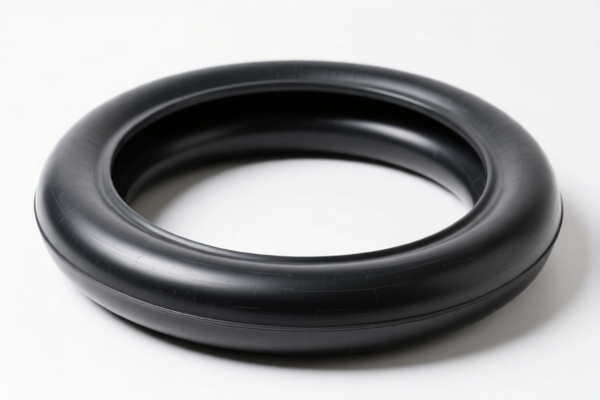
AI Analysis
🚲 Rubber Tire Inner Tube & Associated Rubber Products
🌐 HS Code Reference & Customs Clearance Guide | 2026 Latest Tariff Analysis | Professional Clearance Strategy
📌 One, Product Definition & Classification: What Exactly Are You Importing?
In international trade, "Rubber Tire Inner Tube" is often a specific component, but customs classification depends heavily on packaging, assembly, and the specific tire type. The data provided highlights a critical distinction:
Scenario A: Combined Set (Tire + Inner Tube)
If the inner tube is sold together with a bicycle tire as a single retail package, it may be classified under a specific combined heading.
🎯 Result: HS Code 4013.20.00.00
Key Feature: "Rubber bicycle tire and inner tube combination."
Scenario B: Standalone Inflatable Rubber Tire (Other Types)
If the item is a standalone rubber tire (not necessarily for bicycles) or misclassified based on shape/material alone.
🎯 Result: HS Code 4011.90.80.50
Key Feature: "Rubber inflatable tires, other."
Scenario C: Bicycle Tire (Standalone or Specific Heading)
If the product is strictly identified as a bicycle tire (outer or inner) falling under the primary bicycle tire heading.
🎯 Result: HS Code 4011.50.00.00
Key Feature: "Rubber bicycle tires."
Scenario D: General Rubber Tire (Fallback Categories)
If the specific application is unclear or falls under general "other rubber tires" categories.
🎯 Result: HS Codes 4012.11.80.00, 4012.12.40.35, 4013.10.00.10
Key Feature: "Rubber tires" based on general material/shape rules.⚠️ Critical Distinction:
- Combined Package: Use 4013.20.00.00 (Lowest Tax).
- Standalone/General: Use other codes (High Tax).
- Bicycle Specific: Use 4011.50.00.00 (Medium Tax).
📦 Two. HS Code Classification Details (2026 Latest Tariff Authority Comparison)
| HS Code | Product Description | Key Attributes | Tax Rate (Total) |
|---|---|---|---|
| 4013.20.00.00 | Rubber bicycle tire and inner tube combination | Combined Set: Tire + Inner Tube sold together | 12.0% ✅ Best Option |
| 4011.90.80.50 | Rubber inflatable tires, other | Other: General rubber tires, not specific to bicycle combined set | 38.4% ❌ High |
| 4011.50.00.00 | Rubber bicycle tires | Bicycle Tire: Specific to bicycles, but not the combined set | 35.0% ⚠️ Medium |
| 4012.11.80.00 | Rubber tires | Fallback: General category based on other rules | 38.4% ❌ High |
| 4012.12.40.35 | Rubber tires | Fallback: General category based on matching rules | 39.0% ❌ Highest |
| 4013.10.00.10 | Rubber tires | Core Element: Based on material and core use | 38.7% ❌ High |
🔍 重点提醒 (Key Reminder):
- Do not separate: If the inner tube is packaged with the bicycle tire, always use 4013.20.00.00 to benefit from the lowest tax rate (12.0%).
- Misclassification Risk: Declaring a bicycle tire-only product as a general "rubber tire" (4011/4012) can lead to penalties if evidence shows it’s specifically for bicycles.
- Material vs. Use: While all are "rubber," the application (bicycle vs. other) and form (combined vs. standalone) drastically change the tax.
💰 Three. 2026 Latest Tariff Rate Breakdown (Including Additional Taxes)
✅ Applicable Country: USA (US)
✅ Origin: China (CN)
✅ Effective Date: From Nov 10, 2025 (including subsequent imports)
🎯 1. 4013.20.00.00 — Rubber Bicycle Tire & Inner Tube Combination
| Item | Content |
|---|---|
| Base Tariff | 0.0% (ad valorem) |
| Section 301 Additional Tariff | +2.0% |
| Section 122 Tariff | +10% |
| Total Tariff Rate | 12.0% ✅ Lowest in Dataset |
| Tax Calculation | CIF Value × 12.0% |
| De Minimis Eligibility | ❌ Not Eligible (Likely due to Section 301/122 restrictions) |
| Legal Basis Path | Base: 0% → Section 301: 2% → Section 122: 10% |
📌 Explanation:
- This is the only low-tax option in the provided data.
- Crucial Strategy: Ensure your product is marketed and shipped as a combined set (Tire + Inner Tube) to qualify for this heading.
- Section 122 is a specific recent addition targeting Chinese rubber products, adding a flat 10% on top of the small Section 301 rate.
🎯 2. 4011.50.00.00 — Rubber Bicycle Tires
| Item | Content |
|---|---|
| Base Tariff | 0.0% |
| Section 301 Additional Tariff | +25.0% |
| Section 122 Tariff | +10% |
| Total Tariff Rate | 35.0% ⚠️ |
| Tax Calculation | CIF Value × 35.0% |
| De Minimis Eligibility | ❌ Not Eligible |
| Legal Basis Path | Base: 0% → Section 301: 25% → Section 122: 10% |
📌 Note:
- If you cannot claim the combined set heading (e.g., selling tires and tubes separately), this is the next best option for bicycle-specific items.
- 25% Section 301 significantly increases costs compared to the combined set.
🎯 3. 4011.90.80.50, 4012.11.80.00, 4012.12.40.35, 4013.10.00.10 — Other/Fallback Rubber Tires
| Item | Content |
|---|---|
| Base Tariff | 3.4% - 4.0% |
| Section 301 Additional Tariff | +25.0% |
| Section 122 Tariff | +10% |
| Total Tariff Rate | 38.4% - 39.0% ❌ High |
| Tax Calculation | CIF Value × ~38.7% (Average) |
| De Minimis Eligibility | ❌ Not Eligible |
📌 Warning:
- These codes apply if the product is not specifically a bicycle tire/inner tube combination.
- Avoid these codes if your product is for bicycles, as they incur the highest penalties due to the 25% Section 301 tariff on general rubber tires.
🛠️ Four. Customs Clearance Practical Advice (Real-World Pitfall Guide)
✅ 1. Preparation Checklist (Non-negotiable)
| Document | Required? | Notes |
|---|---|---|
| ✅ Product Photos | ✔️ | Must clearly show Tire + Inner Tube packaged together for 4013.20.00.00. |
| ✅ Commercial Invoice | ✔️ | Description must say "Bicycle Tire and Inner Tube Set" or similar. |
| ✅ Packing List | ✔️ | Confirm units are packed as a single SKU/set. |
| ✅ Spec Sheet | ✔️ | Confirm rubber material and bicycle compatibility. |
✅ 2. Declaration Strategy (Key Mantra)
🔥 "Combine to Save, Separate to Pay!"
(Combine Tire & Tube → 12% | Separate → 35-39%)
| Situation | Correct Declaration | Wrong Declaration | Consequence |
|---|---|---|---|
| Tire + Tube in one box | 4013.20.00.00 |
4011.50.00.00 (Tire only) |
Overpay 23% |
| Tire only (no tube) | 4011.50.00.00 |
4013.20.00.00 |
Customs Rejection (Missing component) |
| Tube only | Not explicitly in dataset, likely high tax | 4013.20.00.00 |
Customs Rejection (Missing tire) |
| General rubber tire | 4011.90.80.50 |
4013.20.00.00 |
Misclassification Penalty |
✅ 3. Special Handling
| Case | Recommendation |
|---|---|
| OEM Custom Sets | Provide proof that tire and tube are sold as a single retail unit to justify 4013.20.00.00. |
| Mixed Containers | Clearly segregate "Sets" (4013.20.00.00) from "Tires Only" (4011.50.00.00) in packing lists. |
| Origin Labeling | Ensure "Made in China" is clear, as Section 122 and 301 apply specifically to Chinese origin. |
🌍 Five. Global Market Clearance Comparison (2026 Latest)
| Country/Region | Recommended HS Code | Tariff (China Origin) | Notes |
|---|---|---|---|
| 🇺🇸 USA | 4013.20.00.00 |
12.0% | Best Option if combined. Else 35-39%. |
| 🇺🇸 USA | 4011.50.00.00 |
35.0% | If sold separately. |
| 🇨🇳 China | Export Declaration | N/A | For export purposes. |
| 🇪🇺 EU | Check Local Tariff | Varies | EU may have different duties; US data is dominant here. |
📌 Conclusion:
- USA is the critical market due to high Section 301 and Section 122 tariffs.
- Structure your supply chain to ship Tire + Inner Tube as a set to hit the 12% rate.
- Do not ship separately unless necessary, as the tax jump is 23-27%.
📌 Six. Common Mistakes & Pitfalls (Lessons Learned)
❌ Mistake 1: Shipping tires and inner tubes in separate boxes but declaring as a set.
👉 Consequence: Customs inspection reveals discrepancy → Seizure or Heavy Penalty.
❌ Mistake 2: Declaring "Bicycle Tire" only when it includes an inner tube.
👉 Consequence: Missed opportunity for lower tax → Overpay 23%.
❌ Mistake 3: Using general "Rubber Tire" codes (4011/4012) for bicycle products.
👉 Consequence: Incorrect classification → Audit Risk + Back Taxes.
✅ Correct Practice:
"Bicycle Tire and Inner Tube Set, 26-inch, Black Rubber, Model ABC, Packaged Together for Retail."
🎯 Seven. Conclusion: Precise Classification, Maximize Profit!
🎯 Remember the Mantra:
🔹 "Set is 12%, Separate is 35+, Save 23% by Combining!"
🔹 "Section 122 adds 10%, Section 301 adds 2-25%, Choose Your HS Code Wisely!"
📌 Pro Tip:
If you are importing large volumes, consider Advance Ruling (Pre-classification) with US Customs to confirm the eligibility of 4013.20.00.00 for your specific product configuration. This provides legal certainty and avoids costly disputes later.
📣 Act Now:
📞 Consult a Licensed Customs Broker + Provide Product Photos + Apply for Pre-classification
🚀 Let your rubber products clear smoothly, minimize taxes, and boost margins!
✨ Professional Clearance Starts with Accurate Classification!
💼 Every Percentage Point Saved is Pure Profit!
Customer Reviews
About HS Code Classification
The Harmonized System (HS) is an internationally standardized nomenclature developed by the World Customs Organization (WCO) to classify traded products. Over 200 countries use the HS system as the basis for customs tariffs, trade statistics, and import/export regulations.
Each HS code follows a hierarchical structure:
- Chapter (2 digits) — Broad category of goods (e.g., Chapter 84: Machinery and Mechanical Appliances)
- Heading (4 digits) — More specific grouping within the chapter
- Subheading (6 digits) — Internationally standardized breakdown, used by all WCO member countries
- National subdivisions (8-10 digits) — Country-specific extensions for further classification, such as US HTSUS 10-digit codes
Correct HS code classification is essential for smooth customs clearance, accurate duty payment, and compliance with trade regulations. Misclassification can lead to customs delays, overpayment of duties, or penalties.
When importing from CN to US, the applicable tariff rates may include:
- Most-Favored-Nation (MFN) rate — The standard duty rate applied to WTO members
- General rate — Applied to countries without trade agreements
- Trade remedy duties — Additional tariffs such as Section 301 (anti-dumping), Section 232 (national security), or countervailing duties
The information provided on this page is for reference purposes only. For official classification, please consult with your local customs authority or a licensed customs broker.