Rubber Tire Protection Pad
CN → US| HS Code | Tariff Rate | Origin | Destination | Doc |
|---|---|---|---|---|
| 4008111000 | 35.0% | CN | US | Official Doc |
| 4016996050 | 37.5% | CN | US | Official Doc |
| 4016990500 | 20.9% | CN | US | Official Doc |
| 3926904510 | 38.5% | CN | US | Official Doc |
| 4008210000 | 35.0% | CN | US | Official Doc |
Product Images
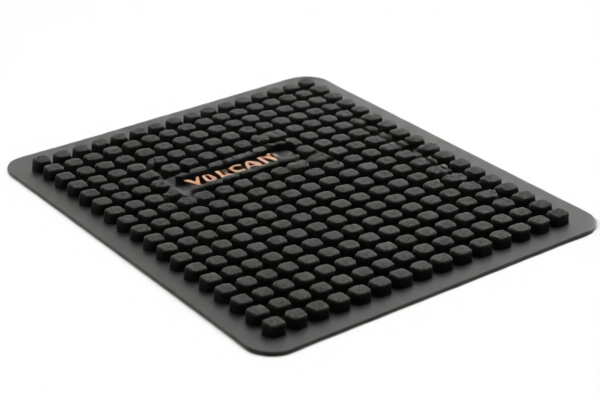
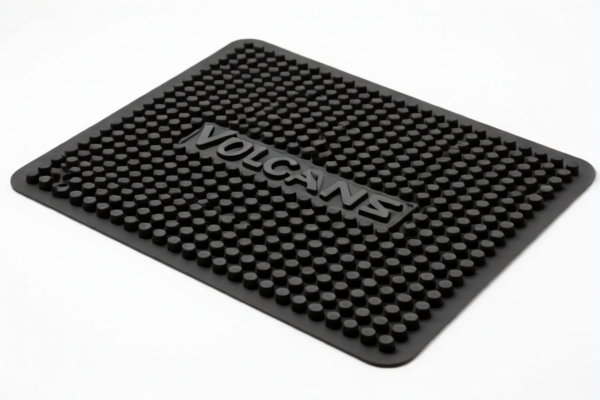
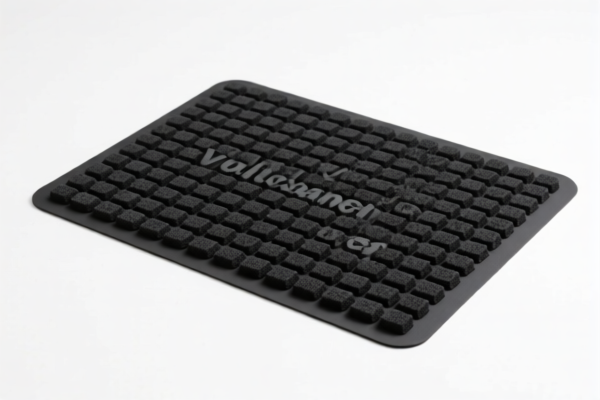
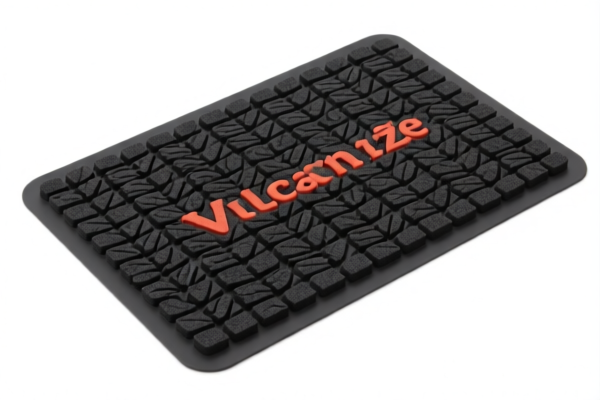
AI Analysis
🛡️ Rubber Tire Protection Pad (Industrial Safety Mats)
🌐 HS Code Reference & Customs Clearance Guide | 2026 Latest Tariff Analysis | Professional Clearance Strategy
📌 I. Product Definition & Classification: What is a "Rubber Protection Pad"?
Rubber Tire Protection Pads are critical safety components used in warehouses, loading docks, and industrial facilities. They serve as buffers between heavy machinery (forklifts, trucks) and fixed infrastructure (walls, racks, doors). In international trade, their classification depends heavily on material composition and specific form.
Two Main Categories: 1. Natural Rubber Pads: Made primarily from natural latex/crude rubber. Often classified under Chapter 40 (Section I), focusing on raw material properties. 2. Vulcanized/Synthetic Rubber Pads: Processed rubber products, often reinforced or chemically treated. Classified under Chapter 40 (Section II) as specific rubber articles.
⚠️ Key Distinction Point:
- If the product is made of natural rubber in plate/sheet form →归入 4008 series.
- If the product is vulcanized rubber (processed) and used as a general-purpose mat →归入 4016 series.
- If the product is made of synthetic rubber/plastic blend and used as a gasket/seal →归入 3926 or 4016 (depending on exact chemical makeup).
📦 II. HS Code Classification Details (2026 Latest Tariff Authority对照)
Based on the provided data, here are the five most likely HS Codes for Rubber Tire Protection Pads, along with their logic:
| HS Code | Product Description | Logic & Applicability | Tax Rate (Total) |
|---|---|---|---|
4008.11.10.00 |
Natural Rubber Pads | Material: Natural Rubber. Form: Pads. Fits the logic of "Natural Rubber Articles." | 35.0% |
4016.99.60.50 |
Vulcanized Rubber Mats (Non-Specific Use) | Material: Vulcanized Rubber. Form: Mats. Non-specific purpose rubber articles. | 37.5% |
4016.99.05.00 |
Vulcanized Rubber Pads (Household/General) | Material: Vulcanized Rubber. Form: Pads. Classified as "Other household/general rubber articles." | 20.9% |
3926.90.45.10 |
Rubber/Plastic Gaskets & Seals | Material: Rubber (treated as plastic/synthetic in this context). Form: Pads/Gaskets. Classified as "Sealing members." | 38.5% |
4008.21.00.00 |
Natural Rubber Plates/Sheets (Non-foam) | Material: Natural Rubber. Form: Plates/Sheets/Belts. Non-foam category. | 35.0% |
🔍 Critical Analysis:
-4016.99.05.00offers the lowest tax rate (20.9%) but requires proof that the pad is a "general/household" item, not an industrial component.
-4008codes (35.0%) apply if the pad is strictly natural rubber.
-3926.90.45.10(38.5%) is a risky classification, treating the pad as a "gasket/seal," which may attract higher scrutiny.
-4016.99.60.50(37.5%) is the standard for general vulcanized rubber products.
💰 III. 2026 Tariff Rate Breakdown (Including Additional Duties)
✅ Applicable Country: United States (US)
✅ Origin: China (CN)
✅ Effective Date: Post-November 10, 2025 (including subsequent imports)
🎯 1. 4008.11.10.00 – Natural Rubber Pads
| Item | Content |
|---|---|
| Base Tariff | 0.0% (ad valorem) |
| USITC Additional Duty | +25.0% (Section 301 Tariffs) |
| IEEPA Additional Duty | +10.0% (China-specific tariff) |
| Total Tax Rate | 35.0% |
| Tax Calculation | CIF Value × 35.0% |
| De Minimis Exemption | ❌ Not Eligible (deny_de_minimis) |
| Legal Basis Path | IEEPA:9903.01.24 → USITC:4008.11.10.00 → FOOTNOTE:301 |
📌 Explanation:
- "Base 0%" reflects the traditional low tariff for raw rubber products.
- "USITC +25%" is the standard Section 301 penalty.
- "IEEPA +10%" is the additional tariff on Chinese goods.
- Total 35% is high but lower than some synthetic alternatives.
🎯 2. 4016.99.60.50 – Vulcanized Rubber Mats (Non-Specific)
| Item | Content |
|---|---|
| Base Tariff | 2.5% |
| USITC Additional Duty | +25.0% |
| IEEPA Additional Duty | +10.0% |
| Total Tax Rate | 37.5% |
| Tax Calculation | CIF Value × 37.5% |
| De Minimis Exemption | ❌ Not Eligible |
| Legal Basis Path | IEEPA:9903.01.24 → USITC:4016.99.60.50 → FOOTNOTE:301 |
📌 Note:
- Higher base tariff (2.5%) makes this option 1.5% more expensive than natural rubber (4008).
- Best for high-grade, vulcanized, industrial-grade mats.
🎯 3. 4016.99.05.00 – Vulcanized Rubber Pads (General Use)
| Item | Content |
|---|---|
| Base Tariff | 3.4% |
| USITC Additional Duty | +7.5% (Reduced Section 301 for specific subcategories) |
| IEEPA Additional Duty | +10.0% |
| Total Tax Rate | 20.9% |
| Tax Calculation | CIF Value × 20.9% |
| De Minimis Exemption | ❌ Not Eligible |
| Legal Basis Path | IEEPA:9903.01.24 → USITC:4016.99.05.00 → FOOTNOTE:301 |
📌 Strategic Advantage:
- Lowest Total Rate (20.9%) among all options.
- Condition: Must prove the pad is "general use" and not exclusively industrial.
- Risk: Customs may challenge this if the pad is clearly labeled "Industrial Forklift Pad."
🎯 4. 3926.90.45.10 – Rubber/Plastic Gaskets & Seals
| Item | Content |
|---|---|
| Base Tariff | 3.5% |
| USITC Additional Duty | +25.0% |
| IEEPA Additional Duty | +10.0% |
| Total Tax Rate | 38.5% |
| Tax Calculation | CIF Value × 38.5% |
| De Minimis Exemption | ❌ Not Eligible |
| Legal Basis Path | IEEPA:9903.01.24 → USITC:3926.90.45.10 → FOOTNOTE:301 |
📌 Warning:
- This classification treats the pad as a "gasket/seal," which is technically incorrect for a "protection mat."
- Highest Risk of Audit. If Customs disagrees, they may reclassify to a higher rate.
🎯 5. 4008.21.00.00 – Natural Rubber Plates/Sheets (Non-Foam)
| Item | Content |
|---|---|
| Base Tariff | 0.0% |
| USITC Additional Duty | +25.0% |
| IEEPA Additional Duty | +10.0% |
| Total Tax Rate | 35.0% |
| Tax Calculation | CIF Value × 35.0% |
| De Minimis Exemption | ❌ Not Eligible |
| Legal Basis Path | IEEPA:9903.01.24 → USITC:4008.21.00.00 → FOOTNOTE:301 |
📌 Note:
- Similar to4008.11.10.00but for plate/sheet form.
- Suitable if the pad is sold as a bulk sheet to be cut locally.
🛠️ IV. Customs Clearance Practical Advice (Actionable Strategies)
✅ 1. Documentation Checklist (Non-Negotiable)
| Document | Required | Notes |
|---|---|---|
| ✅ Product Specification Sheet | ✔️ | Must detail: Material (Natural/Vulcanized/Synthetic), Hardness (Shore A), Thickness, Density. |
| ✅ Material Safety Data Sheet (MSDS) | ✔️ | Proves rubber type and chemical composition. |
| ✅ Product Photos (Clear) | ✔️ | Show texture, color, and any branding. "Pad" vs. "Sheet" visual distinction. |
| ✅ Commercial Invoice | ✔️ | Use precise description: "Vulcanized Rubber Protection Pad for Forklifts, Model XYZ." Avoid vague terms like "Rubber Part." |
| ✅ Packing List | ✔️ | Ensure dimensions and weight match the HS Code classification. |
| ✅ Certificate of Origin (CO) | ✔️ | Required for tariff calculation and potential exemptions. |
✅ 2. Classification Strategy (Key Mantra)
🔥 "Material Dictates Code, Form Determines Subheading, Use Influences Rate!"
| Scenario | Recommended HS Code | Reason |
|---|---|---|
| Natural Rubber, Cut into Pads | 4008.11.10.00 |
Base 0%, Total 35%. Best for pure natural rubber. |
| Vulcanized, General Use (Warehouses) | 4016.99.05.00 |
Base 3.4%, Total 20.9%. Lowest Cost. Requires "General Use" proof. |
| Vulcanized, Industrial Specific | 4016.99.60.50 |
Base 2.5%, Total 37.5%. Safer if "Industrial" is explicitly stated. |
| Synthetic Rubber, Sold as Sheets | 4008.21.00.00 |
Base 0%, Total 35%. For bulk sheets. |
| Misclassified as Gaskets | 3926.90.45.10 |
Base 3.5%, Total 38.5%. Avoid unless it is a sealing gasket. |
✅ 3. Special Cases & Risk Management
| Situation | Handling Advice |
|---|---|
| Mixed Materials (Rubber + Steel Plate) | If steel plate >50% by weight, may fall under Chapter 73. If rubber >50%, stay in Chapter 40. |
| OEM Custom Pads | Provide customer design drawings. Clearly state "Custom Molded Rubber Pad." |
| High-Density Industrial Mats | Use 4016.99.60.50 to avoid disputes over "general use." |
| Foam Rubber Pads | Not covered in this list. Would fall under 4008.19 or 4016.93. Check separately. |
🌍 V. Global Market Comparison (2026 Latest)
| Country/Region | Recommended HS Code | Tariff (China Origin) | Certification | Notes |
|---|---|---|---|---|
| 🇺🇸 USA | 4016.99.05.00 |
20.9% (Lowest) | None specific | Highest risk of audit if "Industrial" is declared. |
| 🇨🇳 China | 4016.99.90 |
5% - 8% | RoHS | No Section 301 tariffs. |
| 🇪🇺 EU | 4016.93.90 |
3.7% | CE | No additional duties. |
| 🇦🇺 Australia | 4016.93.00 |
5% | ACCC | No additional duties. |
📌 Conclusion:
- USA is the only market with high additional tariffs.
-4016.99.05.00is the strategic choice for USA if you can justify "General Use."
-4008series is safer for natural rubber products but costs more than4016.99.05.00.
📌 VI. Common Mistakes & Pitfalls (Lessons Learned)
❌ Mistake 1: Using vague terms like "Rubber Part" on the Invoice.
👉 Consequence: Customs flags for manual review → Delays + Potential Penalty.
❌ Mistake 2: Classifying Vulcanized Rubber as Natural Rubber (4008) to save taxes.
👉 Consequence: Rejected by Customs. Forced to pay difference + interest.
❌ Mistake 3: Using 3926.90.45.10 for Protection Pads.
👉 Consequence: Incorrect classification. Pads are not "gaskets." High audit risk.
❌ Mistake 4: Ignoring the "Form" (Pad vs. Sheet).
👉 Consequence: 4008.11 (Pads) vs 4008.21 (Sheets). Misclassification leads to delays.
✅ Correct Practice:
"Vulcanized Rubber Protection Pad, 1/2 inch Thick, Black, for Warehouse Forklifts, Model RPP-500, Country of Origin: China"
🎯 VII. Conclusion: Professional Classification Saves Money!
🎯 Key Takeaways:
🔹 Lowest Tax:
4016.99.05.00(20.9%) – Use if "General Use" can be proven.
🔹 Safest for Natural Rubber:4008.11.10.00(35.0%).
🔹 Avoid:3926.90.45.10(38.5%) – High Audit Risk.
🔹 Always: Provide detailed specs, photos, and MSDS.
📌 Pro Tip:
If your pads are made in Vietnam, Thailand, or Malaysia, you may qualify for IEEPA Exemptions, reducing tariffs to 0%-5%.
Recommendation: Apply for an Advance Ruling from US Customs (CBP) before shipment to lock in the correct HS Code and avoid surprise taxes.
📣 Immediate Action:
📞 Consult a licensed customs broker.
📝 Prepare product specs and photos.
🚀 Secure your tariff rate today!
✨ Precision in Classification, Profit in Clearance!
💼 Every percentage point matters in global trade.
Customer Reviews
About HS Code Classification
The Harmonized System (HS) is an internationally standardized nomenclature developed by the World Customs Organization (WCO) to classify traded products. Over 200 countries use the HS system as the basis for customs tariffs, trade statistics, and import/export regulations.
Each HS code follows a hierarchical structure:
- Chapter (2 digits) — Broad category of goods (e.g., Chapter 84: Machinery and Mechanical Appliances)
- Heading (4 digits) — More specific grouping within the chapter
- Subheading (6 digits) — Internationally standardized breakdown, used by all WCO member countries
- National subdivisions (8-10 digits) — Country-specific extensions for further classification, such as US HTSUS 10-digit codes
Correct HS code classification is essential for smooth customs clearance, accurate duty payment, and compliance with trade regulations. Misclassification can lead to customs delays, overpayment of duties, or penalties.
When importing from CN to US, the applicable tariff rates may include:
- Most-Favored-Nation (MFN) rate — The standard duty rate applied to WTO members
- General rate — Applied to countries without trade agreements
- Trade remedy duties — Additional tariffs such as Section 301 (anti-dumping), Section 232 (national security), or countervailing duties
The information provided on this page is for reference purposes only. For official classification, please consult with your local customs authority or a licensed customs broker.