Rubber Tire Waste
CN → US| HS Code | Tariff Rate | Origin | Destination | Doc |
|---|---|---|---|---|
| 4013100010 | 38.7% | CN | US | Official Doc |
| 4012124035 | 39.0% | CN | US | Official Doc |
| 4012118000 | 38.4% | CN | US | Official Doc |
| 4012204500 | 35.0% | CN | US | Official Doc |
| 4012201500 | 35.0% | CN | US | Official Doc |
Product Images
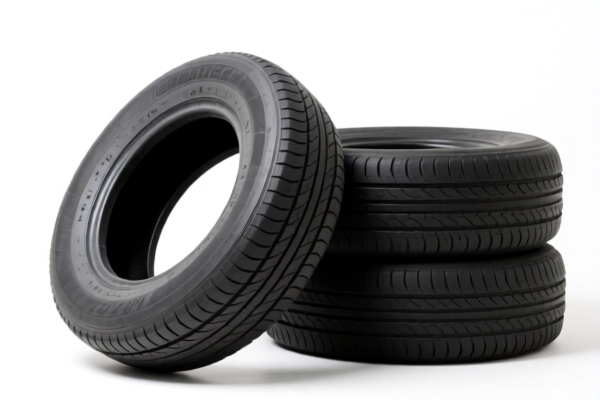
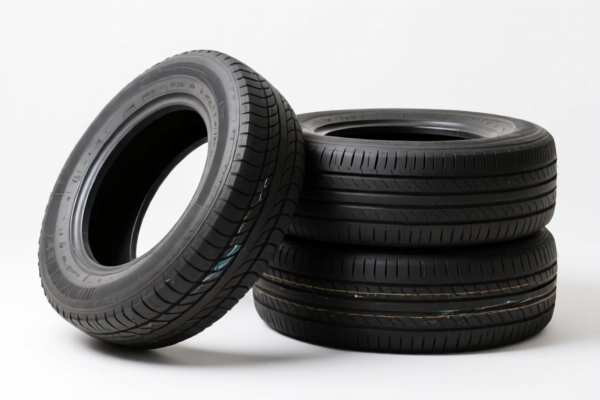
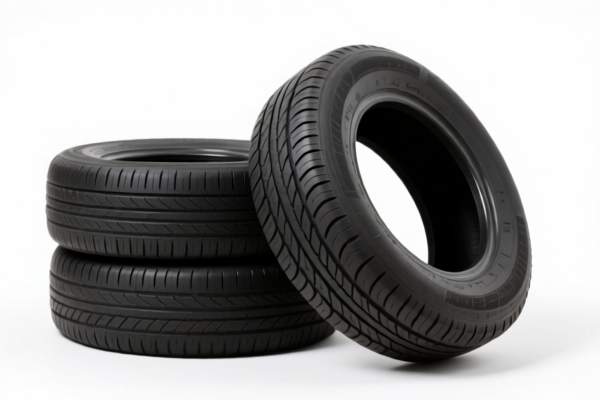
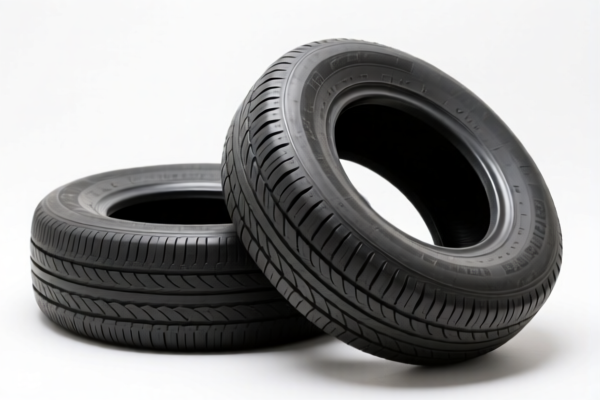
AI Analysis
🚛 Rubber Tire Waste & End-of-Life Tires
🌐 HS Code Reference & Customs Clearance Guide | 2026 Latest Tariff Analysis | Strategic Compliance for Scrap & Agricultural Tires
📌 I. Product Definition: What is "Rubber Tire Waste"?
In international trade, the term "Rubber Tire Waste" is ambiguous and often triggers high scrutiny. It generally refers to two distinct categories with vastly different HS Codes and tax liabilities:
- Scrap/Used Tires (Non-Agricultural): Tires that have been removed from vehicles and are destined for recycling or disposal. These are considered "waste" or "used goods."
- Agricultural/Industrial Scrap Tires: Tires specifically designed for agricultural machinery (tractors, harvesters) that are now worn out or rejected.
⚠️ Critical Distinction:
- If the tires are new, they fall under 4013.10.00.10 (Standard Rubber Tires).
- If the tires are used/waste but not for agricultural machinery, they fall under 4012.12.40.35 or 4012.11.80.00 (Other Used Pneumatic Tires).
- If the tires are used/waste AND for agricultural machinery, they fall under 4012.20.45.00 or 4012.20.15.00.
📦 II. HS Code Classification Details (2026 Latest Tariff Authority)
Based on the provided data, here are the 5 possible HS Code classifications for "Rubber Tire Waste," sorted by tax implication and product nature.
| HS Code | Product Description | Key Matching Logic | Tax Rate (Total) |
|---|---|---|---|
| 4012.20.45.00 | Agricultural Used Tires | "Waste" = Used/Old; "Tire" = Pneumatic; "Agricultural Use" = For Ag/Horticultural Machinery. | 35.0% |
| 4012.20.15.00 | Agricultural Used Tires | Same as above; matches form and use for Ag machinery. | 35.0% |
| 4012.11.80.00 | Other Used Pneumatic Tires | "Other" category fallback rule; used tires not specified elsewhere. | 38.4% |
| 4012.12.40.35 | Other Used Pneumatic Tires | Used tires matched under "Other" category when purpose is unclear. | 39.0% |
| 4013.10.00.10 | New Rubber Tires | Note: This code is for NEW tires, but listed in data due to keyword match. If "Waste" is misinterpreted as just "Rubber Tire," this applies. | 38.7% |
🔍 Key Insight:
- Agricultural Used Tires (4012.20.xxxx) have the lowest tax burden (35.0%) because the base tariff is 0.0%.
- Standard Used Tires (4012.1x.xxxx) carry a 3.4%–4.0% base tariff, leading to higher total taxes.
- New Tires (4013.10.xxxx) are not waste, but if your shipment is mistakenly declared as "Rubber Tire" without specifying "Used/Waste," it may be classified here, incurring a 3.7% base tariff.
💰 III. 2026 Latest Tariff Rate Breakdown (Including Surcharges)
✅ Applicable Country: United States (US)
✅ Origin: China (CN)
✅ Effective Date: From 2025-11-10 onwards
🎯 1. 4012.20.45.00 / 4012.20.15.00 — Agricultural Used Tires (Best Tax Option)
| Item | Content |
|---|---|
| Base Tariff | 0.0% (Ad Valorem) |
| Section 301 Surcharge | +25.0% |
| Section 122 Tariff | +10.0% |
| Total Tariff | 35.0% |
| Tax Calculation | CIF Value × 35% |
| De Minimis Exemption | ❌ Not Available |
| Legal Basis | Section 301: 25% → Section 122: 10% → USITC: 4012.20.xxxx |
📌 Explanation:
- The 0% base rate is a strategic advantage for agricultural-related waste.
- However, the 35% total effective rate is still significant due to the 25% (Section 301) and 10% (Section 122) surcharges.
- Crucial: You must prove the tires are for agricultural machinery to qualify for this lower base rate.
🎯 2. 4013.10.00.10 — New Rubber Tires (Misclassification Risk)
| Item | Content |
|---|---|
| Base Tariff | 3.7% |
| Section 301 Surcharge | +25.0% |
| Section 122 Tariff | +10.0% |
| Total Tariff | 38.7% |
| Tax Calculation | CIF Value × 38.7% |
| De Minimis Exemption | ❌ Not Available |
| Legal Basis | Section 301: 25% → Section 122: 10% → USITC: 4013.10.00.10 |
📌 Warning:
- If you import used tires but declare them as "Rubber Tire" without specifying "Used" or "Waste," customs may classify them as new tires (4013.10.00.10).
- This results in a higher base tariff (3.7%) and potential penalties for misdeclaration.
🎯 3. 4012.12.40.35 — Other Used Pneumatic Tires (Default Category)
| Item | Content |
|---|---|
| Base Tariff | 4.0% |
| Section 301 Surcharge | +25.0% |
| Section 122 Tariff | +10.0% |
| Total Tariff | 39.0% |
| Tax Calculation | CIF Value × 39.0% |
| De Minimis Exemption | ❌ Not Available |
| Legal Basis | Section 301: 25% → Section 122: 10% → USITC: 4012.12.40.35 |
📌 Explanation:
- This is the fallback category for used tires that do not fit specific descriptions (e.g., not for agricultural use).
- It has the highest total tax rate (39.0%) among used tire options due to the 4.0% base tariff.
🎯 4. 4012.11.80.00 — Other Used Pneumatic Tires (Fallback Rule)
| Item | Content |
|---|---|
| Base Tariff | 3.4% |
| Section 301 Surcharge | +25.0% |
| Section 122 Tariff | +10.0% |
| Total Tariff | 38.4% |
| Tax Calculation | CIF Value × 38.4% |
| De Minimis Exemption | ❌ Not Available |
| Legal Basis | Section 301: 25% → Section 122: 10% → USITC: 4012.11.80.00 |
📌 Explanation:
- This code is applied based on the "Other" category fallback rule.
- It is slightly cheaper than4012.12.40.35but still more expensive than agricultural used tires.
🛠️ IV. Customs Clearance Practical Advice (Pitfall Avoidance Guide)
✅ 1. Documentation Checklist (Mandatory)
| Document | Required | Notes |
|---|---|---|
| ✅ Commercial Invoice | ✔️ | Must explicitly state "Used Rubber Tires" or "Scrap Tires", NOT just "Rubber Tire". |
| ✅ Packing List | ✔️ | Detail the quantity, size, and condition (e.g., "Worn," "Recyclable"). |
| ✅ Product Photos | ✔️ | Show tread wear, sidewall damage, and any labels indicating prior use. |
| ✅ Usage Declaration | ✔️ | If claiming agricultural status, provide proof of prior use in agricultural machinery. |
| ✅ Certificate of Origin | ✔️ | Essential for verifying origin and applying surcharges. |
| ✅ Third-Party Inspection Report | ✔️ | Recommended to prove the tires are not new and are in waste/scrap condition. |
✅ 2. Declaration Strategy (Key Mnemonic)
🔥 “Used must be declared, Ag proves low tax, New is high risk, Waste needs proof!”
| Scenario | Correct HS Code | Risk if Wrong |
|---|---|---|
| Used Ag Tires | 4012.20.45.00 / 4012.20.15.00 |
If declared as "New Tires" → 38.7% + Penalties |
| Used Standard Tires | 4012.12.40.35 / 4012.11.80.00 |
If declared as "New Tires" → 38.7% + Penalties |
| New Tires | 4013.10.00.10 |
If declared as "Used" → Misclassification, potential seizure |
✅ 3. Special Case Handling
| Situation | Handling Advice |
|---|---|
| Mixed Loads | Do not mix new and used tires. Separate declarations are required. |
| Ambiguous "Waste" | If "Waste" is unclear, use 4012.12.40.35 as the safer default, but be prepared for 39.0% tax. |
| Agricultural Claim | Must provide proof of use (e.g., photos of tractor tires, bills of sale). Without proof, customs will default to higher base rates. |
| Recycling vs. Reuse | If tires are for recycling, ensure they are clearly marked as "Scrap" to avoid being classified as "Used" for resale. |
🌍 V. Global Market Comparison (2026 Latest)
| Country/Region | Recommended HS Code | Tariff (China Origin) | Certification | Notes |
|---|---|---|---|---|
| 🇺🇸 USA | 4012.20.45.00 (Ag) |
35.0% | None | Highest surcharges (35%) |
| 🇨🇳 China | 4012.20.45.00 |
0% (Import) | CCC (if new) | No surcharges for used tires |
| 🇪🇺 EU | 4012.20.45.00 |
0% (if waste) | CE (if new) | Waste tires may face environmental levies |
| 🇦🇺 Australia | 4012.20.45.00 |
5% | RCM | Low base tariff |
| 🇯🇵 Japan | 4012.20.45.00 |
0% | PSE (if new) | No surcharges |
📌 Conclusion:
- USA is the most expensive market for rubber tire waste due to Section 301 and Section 122 surcharges.
- Agricultural used tires offer the best tax optimization (35%) in the US compared to standard used tires (38.4%–39.0%).
- Misdeclaration (claiming used as new) is a major risk leading to penalties and back taxes.
📌 VI. Common Mistakes & Pitfalls (Lessons Learned)
❌ Mistake 1: Declaring "Used Tires" as "New Rubber Tires"
👉 Consequence: 38.7% tax + Penalties for misdeclaration.
❌ Mistake 2: Failing to specify "Agricultural" use for Ag Tires
👉 Consequence: Falls back to 39.0% tax instead of 35.0%.
❌ Mistake 3: Using vague terms like "Tire Material" in invoice
👉 Consequence: Customs delays, additional inspections, and potential seizure.
❌ Mistake 4: Assuming De Minimis applies to used tires
👉 Consequence: No exemption; full 35%–39% tax applies.
✅ Correct Approach:
"Used Agricultural Rubber Tires (Scrap), Size 18.4-34, for Tractor Recycling, Model XYZ, Condition: Worn, Origin: CN"
🎯 VII. Conclusion: Professional Declaration Saves Money!
🎯 Key Takeaways:
🔹 "Used must be stated, Ag lowers the base, 35% is the goal, 39% is the risk."
🔹 "HS Code defines tax, 35% vs 39% is a big difference, misdeclaration costs more."
🔹 "Prove Ag use, avoid high base rates, keep docs ready."
📌 Pro Tip:
If your used tires are not agricultural, consider if they can be classified as scrap/recyclable material rather than "used tires" to explore other potential tariff lines, but 4012.12.40.35 is the safest default.
Always apply for an Advance Ruling if the product’s status is ambiguous.
📣 Action Item:
📞 Consult a licensed customs broker + Provide clear photos + Declare "Used/Agricultural" explicitly
🚀 Ensure smooth clearance, avoid penalties, and optimize tax costs!
✨ Professional clearance starts with accurate classification!
💼 Every percentage point matters in tariff costs!
Customer Reviews
About HS Code Classification
The Harmonized System (HS) is an internationally standardized nomenclature developed by the World Customs Organization (WCO) to classify traded products. Over 200 countries use the HS system as the basis for customs tariffs, trade statistics, and import/export regulations.
Each HS code follows a hierarchical structure:
- Chapter (2 digits) — Broad category of goods (e.g., Chapter 84: Machinery and Mechanical Appliances)
- Heading (4 digits) — More specific grouping within the chapter
- Subheading (6 digits) — Internationally standardized breakdown, used by all WCO member countries
- National subdivisions (8-10 digits) — Country-specific extensions for further classification, such as US HTSUS 10-digit codes
Correct HS code classification is essential for smooth customs clearance, accurate duty payment, and compliance with trade regulations. Misclassification can lead to customs delays, overpayment of duties, or penalties.
When importing from CN to US, the applicable tariff rates may include:
- Most-Favored-Nation (MFN) rate — The standard duty rate applied to WTO members
- General rate — Applied to countries without trade agreements
- Trade remedy duties — Additional tariffs such as Section 301 (anti-dumping), Section 232 (national security), or countervailing duties
The information provided on this page is for reference purposes only. For official classification, please consult with your local customs authority or a licensed customs broker.