Rubber Vulcanization Accelerator Compound
CN → US| HS Code | Tariff Rate | Origin | Destination | Doc |
|---|---|---|---|---|
| 2942005000 | 38.7% | CN | US | Official Doc |
| 2942003500 | 41.5% | CN | US | Official Doc |
| 3812101000 | 41.5% | CN | US | Official Doc |
| 3812105000 | 40.0% | CN | US | Official Doc |
| 2942003500 | 41.5% | CN | US | Official Doc |
Product Images



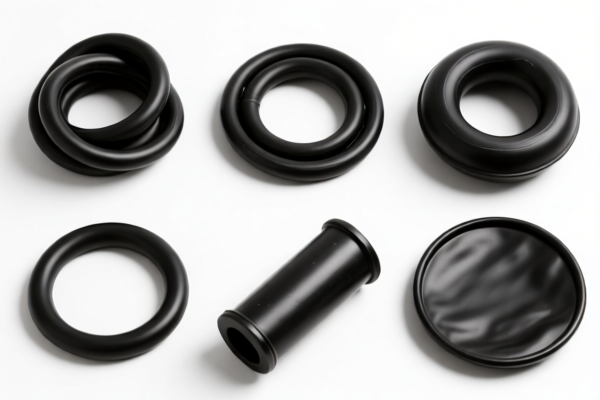
AI Analysis
🧪 Rubber Vulcanization Accelerator Compound (硫化橡胶促进剂化合物)
🌐 HS Code Reference & Customs Clearance Guide | 2026 Latest Tariff Analysis | Professional Level Compliance Strategy
📌 I. Product Definition & Classification: Do You Really Understand "Rubber Accelerators"?
Rubber Vulcanization Accelerators are critical chemical additives used in the rubber manufacturing industry to speed up the vulcanization process (cross-linking of polymer chains). In international trade, they are primarily classified based on their chemical composition and functional purpose.
Organic Chemical Compounds (Heading 2942): Pure organic chemical substances used as accelerators, classified under "Other organic compounds." Prepared Rubber Accelerators (Heading 3812): Mixtures, preparations, or specific formulations where the primary function is rubber acceleration, classified under "Preparations for use in rubber or plastics vulcanization."
⚠️ Key Classification Distinction:
- If the product is a pure organic chemical substance (e.g., a specific chemical compound like CBS, TBBS) without being a "preparation" or mixture for immediate industrial use → Often classified under Chapter 29 (Organic Chemicals).
- If the product is a mixture, blend, or preparation specifically formulated for rubber vulcanization → Classified under 3812.10 (Preparations for rubber vulcanization).
- Note: The summary provided in the data indicates that even "Pure Organic" accelerators may fall under 2942.00 ("Other organic compounds") if they don't fit specific sub-headings, while "Prepared" or "Functional" accelerators fall under 3812.
📦 II. HS Code Classification Details (Based on Provided Data)
| HS Code | Product Description | Classification Logic | Total Tax Rate (China Origin) |
|---|---|---|---|
2942.00.50.00 |
Fast-Acting Vulcanization Accelerators (Other Organic Compounds) | Classified as "Other organic compounds" due to its material attribute as an organic chemical synthesis product. | 38.7% |
2942.00.35.00 |
Vulcanization Accelerators (Other Organic Compounds) | Classified as "Other organic compounds" because it is a carbon-containing organic chemical substance. | 41.5% |
3812.10.10.00 |
Rubber Accelerators (Specific Preparation) | Purpose matches "Rubber Accelerators" exactly; material characteristics fit this specific sub-category. | 41.5% |
3812.10.50.00 |
Rubber Accelerators (Other Preparations) | Material and use are consistent; "Fast-acting" is a functional trait that does not change the classification. | 40.0% |
2942.00.35.00 |
Vulcanization Accelerators & Antioxidants | Functional additives for rubber fall under "Other organic compounds" in Chapter 29. | 41.5% |
🔍 Key Insight:
- 3812.10.10.00 and 3812.10.50.00 are the most common classifications for preparations/mixtures of rubber accelerators.
- 2942.00.35.00 and 2942.00.50.00 apply to pure organic chemical substances that do not have a more specific subheading in Chapter 29.
- The difference in tax rates (38.7% vs. 41.5% vs. 40.0%) depends on whether the product is considered a "preparation" (3812) or a general "organic compound" (2942), and the specific base tariff applied.
💰 III. 2026 Latest Tariff Rate Details (Including Surtaxes & Policy Add-ons)
✅ Applicable Country: United States (US)
✅ Country of Origin: China (CN)
✅ Effective Date: November 10, 2025 (and subsequent imports)
🎯 1. 2942.00.50.00 —— Fast-Acting Vulcanization Accelerators (Other Organic Compounds)
| Item | Detail |
|---|---|
| Base Tariff | 3.7% (ad valorem) |
| Surtax (Section 301) | +25.0% |
| 122 Clause Surtax | +10.0% |
| Total Effective Rate | 38.7% |
| Tax Calculation | CIF Value × 38.7% |
| De Minimis Exemption | ❌ Not Eligible (deny_de_minimis) |
| Legal Basis Path | Base Tariff 3.7% → Section 301 Surtax 25% → 122 Clause Surtax 10% |
📌 Explanation:
- This HS code is classified under "Other organic compounds."
- The total tax burden is 38.7%, which is high for chemical imports.
- The 122 Clause (likely referring to Section 301 or specific trade remedy provisions) adds an additional 10% on top of the standard 25% surtax.
🎯 2. 2942.00.35.00 —— Vulcanization Accelerators (Other Organic Compounds)
| Item | Detail |
|---|---|
| Base Tariff | 6.5% (ad valorem) |
| Surtax (Section 301) | +25.0% |
| 122 Clause Surtax | +10.0% |
| Total Effective Rate | 41.5% |
| Tax Calculation | CIF Value × 41.5% |
| De Minimis Exemption | ❌ Not Eligible (deny_de_minimis) |
| Legal Basis Path | Base Tariff 6.5% → Section 301 Surtax 25% → 122 Clause Surtax 10% |
📌 Note:
- This rate is higher than2942.00.50.00due to a higher base tariff (6.5% vs. 3.7%).
- Both fall under Chapter 29, but different sub-headings lead to different base rates.
- Crucial: Ensure your product's chemical identity matches the description for this specific code to avoid misclassification.
🎯 3. 3812.10.10.00 —— Rubber Accelerators (Specific Preparations)
| Item | Detail |
|---|---|
| Base Tariff | 6.5% (ad valorem) |
| Surtax (Section 301) | +25.0% |
| 122 Clause Surtax | +10.0% |
| Total Effective Rate | 41.5% |
| Tax Calculation | CIF Value × 41.5% |
| De Minimis Exemption | ❌ Not Eligible (deny_de_minimis) |
| Legal Basis Path | Base Tariff 6.5% → Section 301 Surtax 25% → 122 Clause Surtax 10% |
📌 Explanation:
- This code is for preparations specifically for rubber vulcanization.
- If your product is a mixture or blend of accelerators, this is likely the correct classification.
- The tax rate is 41.5%, same as2942.00.35.00, but the legal basis differs (Chapter 38 vs. Chapter 29).
🎯 4. 3812.10.50.00 —— Rubber Accelerators (Other Preparations)
| Item | Detail |
|---|---|
| Base Tariff | 5.0% (ad valorem) |
| Surtax (Section 301) | +25.0% |
| 122 Clause Surtax | +10.0% |
| Total Effective Rate | 40.0% |
| Tax Calculation | CIF Value × 40.0% |
| De Minimis Exemption | ❌ Not Eligible (deny_de_minimis) |
| Legal Basis Path | Base Tariff 5.0% → Section 301 Surtax 25% → 122 Clause Surtax 10% |
📌 Note:
- This code has the lowest base tariff (5.0%) among the options, resulting in a total rate of 40.0%.
- It is used for rubber accelerators that do not fit the specific description of3812.10.10.00.
- "Fast-acting" is a functional characteristic that does not change the classification; it still falls under this general preparation category.
🛠️ IV. Customs Clearance Practical Advice (Real-World Pitfall Avoidance Guide)
✅ 1. Required Documentation Checklist (Non-Negotiable)
| Document | Must Provide | Description |
|---|---|---|
| ✅ Product Specification Sheet | ✔️ | Must include chemical composition, CAS numbers, purity, and physical state. |
| ✅ MSDS/SDS (Safety Data Sheet) | ✔️ | Essential for hazardous material classification and safety handling. |
| ✅ Structure Diagram / Chemical Formula | ✔️ | To prove whether it is a pure compound (Chapter 29) or a mixture (Chapter 38). |
| ✅ Commercial Invoice | ✔️ | Must clearly state "Rubber Vulcanization Accelerator" and HS Code. |
| ✅ Packing List | ✔️ | Detail net/gross weight and packaging type. |
| ✅ Certificate of Origin (CO) | ✔️ | Required for tariff calculations and trade policy verification. |
| ✅ Test Report (Third-Party) | ✔️ | To verify chemical composition and purity, especially for Chapter 29 classifications. |
✅ 2. Declaration Tips (Key Mantra)
🔥 "Pure Compound? Go to 29. Mixture? Go to 38. Fast-Acting is Functional, Not a Code!"
| Scenario | Correct Declaration | Wrong Practice |
|---|---|---|
| Pure Organic Chemical (e.g., CBS) | 2942.00.35.00 or 2942.00.50.00 |
Misclassifying as 3812 → Potential penalty if proven pure. |
| Mixture/Preparation of Accelerators | 3812.10.10.00 or 3812.10.50.00 |
Misclassifying as 2942 → May be rejected if not a pure compound. |
| Product with "Fast-Acting" Label | 3812.10.50.00 (if preparation) |
Trying to find a special code for "Fast-Acting" → Does not exist. |
| Antioxidant + Accelerator Mix | 2942.00.35.00 (if organic) or 3812 (if preparation) |
Ambiguous description → Leads to customs hold. |
✅ 3. Special Cases Handling
| Scenario | Handling Advice |
|---|---|
| OEM Custom Blends | Provide detailed formulation or MSDS. If it's a proprietary mix, it likely falls under 3812. |
| Pure Chemical Substances | Provide CAS number and chemical structure. If it fits "Other organic compounds," use 2942. |
| Antioxidants Included | If the primary function is acceleration, still classify as accelerator. If it's a blend with multiple functions, consult a customs broker. |
| Hazardous Chemicals | Ensure SDS is up-to-date. Some accelerators may be classified as hazardous, requiring additional permits. |
🌍 V. Global Market Comparison (2026 Latest)
| Country/Region | Recommended HS Code | Tariff (China Origin) | Certification Requirements | Notes |
|---|---|---|---|---|
| 🇺🇸 United States | 3812.10.10.00 / 2942.00.35.00 |
40.0% - 41.5% | No specific CE/FCC, but SDS required | High tariff burden due to Section 301 and 122 Clause. |
| 🇨🇳 China | 3812.10.10.00 |
6.5% | None for import (domestic production) | Base tariff only. |
| 🇪🇺 European Union | 3812.10.90 |
0% - 4% | REACH Registration, SDS | Low tariffs, but high regulatory compliance costs (REACH). |
| 🇬🇧 United Kingdom | 3812.10.90 |
0% - 4% | UK REACH | Post-Brexit, UK-specific regulations apply. |
| 🇯🇵 Japan | 3812.10.00 |
0% - 3% | JIS Standards | Low tariffs, but strict quality control. |
📌 Conclusion:
- The US has the highest tariff burden for rubber accelerators from China (40-41.5%).
- EU and UK have low tariffs but high regulatory barriers (REACH).
- China, Japan, and Australia have lower or zero tariffs but require strict adherence to safety and quality standards.
📌 VI. Common Errors & Pitfall Avoidance (Lessons Learned)
❌ Error 1: Classifying a mixture of accelerators under 2942 (Pure Compounds)
👉 Consequence: Customs may reject the declaration, leading to delays, fines, or reclassification with higher penalties.
❌ Error 2: Ignoring the 122 Clause Surtax in tariff calculations
👉 Consequence: Underpaying duties by 10%, leading to back taxes and interest upon audit.
❌ Error 3: Using vague descriptions like "Rubber Chemical"
👉 Consequence: Customs cannot determine the correct HS code, resulting in manual examination and delays.
❌ Error 4: Assuming "Fast-Acting" changes the HS Code
👉 Consequence: No specific code exists for "fast-acting." It is a functional descriptor, not a classification criterion.
✅ Correct Practice:
"Rubber Vulcanization Accelerator, Preparation, CBZ Type, CAS 95-15-9, SDS Available, HS Code: 3812.10.10.00"
🎯 VII. Conclusion: Precise Classification, Cost Control, Compliance!
🎯 Remember the Mantra:
🔹 "Pure Compound? Check Chapter 29. Mixture? Chapter 38. Fast-Acting? Just a Feature. Tax Rate? 40-41.5% in the US!"
🔹 "HS Code is Life. 1% Difference in Base Rate = 3% Difference in Total Tax!"
📌 Pro Tip:
- If your product is a preparation (mixture), use 3812.10.50.00 for the lowest total tax rate (40.0%).
- If it is a pure compound, use 2942.00.50.00 for 38.7% (if applicable) or 2942.00.35.00 for 41.5%.
- Always provide SDS and Chemical Structure to support your classification.
- Apply for Advance Ruling if unsure, especially for high-value shipments.
📣 Immediate Action:
📞 Contact a licensed customs broker + Provide SDS + Verify HS Code before shipment.
🚀 Ensure smooth customs clearance, minimize costs, and maximize profit!
✨ Professional Customs Clearance Starts with Precise Classification!
💼 Every cent of your cost deserves to be calculated precisely!
Customer Reviews
About HS Code Classification
The Harmonized System (HS) is an internationally standardized nomenclature developed by the World Customs Organization (WCO) to classify traded products. Over 200 countries use the HS system as the basis for customs tariffs, trade statistics, and import/export regulations.
Each HS code follows a hierarchical structure:
- Chapter (2 digits) — Broad category of goods (e.g., Chapter 84: Machinery and Mechanical Appliances)
- Heading (4 digits) — More specific grouping within the chapter
- Subheading (6 digits) — Internationally standardized breakdown, used by all WCO member countries
- National subdivisions (8-10 digits) — Country-specific extensions for further classification, such as US HTSUS 10-digit codes
Correct HS code classification is essential for smooth customs clearance, accurate duty payment, and compliance with trade regulations. Misclassification can lead to customs delays, overpayment of duties, or penalties.
When importing from CN to US, the applicable tariff rates may include:
- Most-Favored-Nation (MFN) rate — The standard duty rate applied to WTO members
- General rate — Applied to countries without trade agreements
- Trade remedy duties — Additional tariffs such as Section 301 (anti-dumping), Section 232 (national security), or countervailing duties
The information provided on this page is for reference purposes only. For official classification, please consult with your local customs authority or a licensed customs broker.