Rubber Vulcanization System Additive
CN → US| HS Code | Tariff Rate | Origin | Destination | Doc |
|---|---|---|---|---|
| 2942005000 | 38.7% | CN | US | Official Doc |
| 2942003500 | 41.5% | CN | US | Official Doc |
| 3812105000 | 40.0% | CN | US | Official Doc |
| 3812101000 | 41.5% | CN | US | Official Doc |
| 2942003500 | 41.5% | CN | US | Official Doc |
Product Images
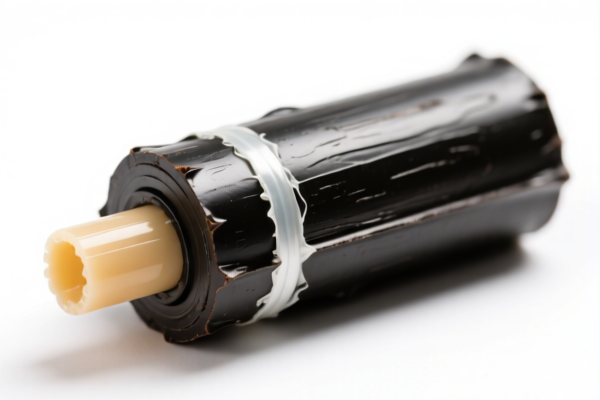

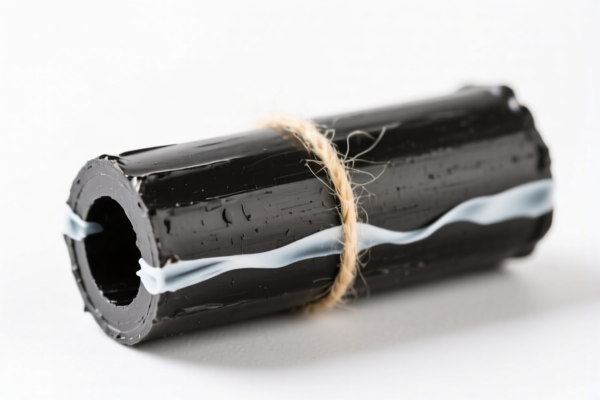

AI Analysis
🧪 Rubber Vulcanization System Additive (RVS Additive)
🌐 HS Code Reference & Customs Clearance Guide | 2026 Latest Tariff Analysis | Professional Entry Strategy
📌 I. Product Definition: What Exactly Is "Rubber Vulcanization System Additive"?
In the chemical industry, Rubber Vulcanization System Additive (RVS Additive) refers to a comprehensive blend or specific chemical compound used to accelerate, regulate, or improve the vulcanization process of rubber. These additives are critical in tire manufacturing, rubber hoses, seals, and industrial rubber goods.
The key to classification lies in the chemical nature and specific function of the additive: * Organic Chemical Compounds: Many accelerators and antioxidants are pure organic chemicals (e.g., thiazoles, sulfenamides). * Preparations/Mixtures: Some are complex mixes of accelerators, activators, and antioxidants specifically formulated for rubber.
⚠️ Critical Distinction:
- If the product is a pure organic chemical defined elsewhere in Chapter 29 (e.g., a specific accelerator with a precise chemical structure) → Classify under Chapter 29.
- If the product is a preparation specifically designed as a "rubber accelerator" or "vulcanization additive" (even if organic) → Classify under Heading 3812.
📦 II. HS Code Classification Details (2026 Latest Tariff Authority)
Based on the provided data, here are the four possible HS Codes and their specific rationales:
| HS Code | Summary / Classification Rationale | Key Differentiator |
|---|---|---|
| 2942.00.50.00 | Organic Chemical: Classified as "Other Organic Compounds." The RVS additive is viewed primarily as an organic synthesis product falling outside specific Chapter 29 headings. | Focus on chemical composition (Organic Synthesis). |
| 2942.00.35.00 | Organic Chemical: Fits the category of "Other Organic Compounds." Specifically applies if the additive is identified as a "Rubber Vulcanization Accelerator" or "Antioxidant" that falls under general organic chemical definitions. | Focus on material category (Organic Compound). |
| 3812.10.50.00 | Rubber Accelerator: The name "Rubber Accelerator" in the product description matches the HS Code description perfectly in terms of material and usage. | Focus on function (Accelerator). |
| 3812.10.10.00 | Rubber Accelerator: The "Rubber Accelerator" designation in the name aligns fully with the usage specified in the classification. | Focus on application (Vulcanization Aid). |
🔍 Key Insight:
- Chapter 29 (2942.xxxx) is chosen when the customs authority views the item primarily as a chemical substance rather than a formulated preparation.
- Chapter 38 (3812.10.xxxx) is chosen when the item is recognized specifically for its technical function as a rubber accelerator/additive, regardless of its chemical purity.
- Note:3812.10.50.00and3812.10.10.00both relate to "Rubber Accelerators," but may differ in specific sub-category nuances (e.g., liquid vs. solid, or specific chemical families not detailed in the summary but relevant in legal text).
💰 III. 2026 Latest Tariff Rate Breakdown (Detailed Taxes)
✅ Applicable Country: United States (US)
✅ Country of Origin: China (CN)
✅ Effective Date: November 10, 2025 onwards (for subsequent imports)
The tariff structure is consistent across all four HS Codes due to the "Section 301" and "IEEPA" surcharges on Chinese goods.
🎯 1. Common Tax Structure for All Listed HS Codes
| Tax Component | Rate | Legal Basis / Description |
|---|---|---|
| Basic Tariff (MFN) | 3.7% - 6.5% | Varies by HS Code: - 2942.00.50.00: 3.7% - 2942.00.35.00: 6.5% - 3812.10.50.00: 5.0% - 3812.10.10.00: 6.5% |
| Section 301 Surcharge | +25.0% | 122-Clause Tariff / Trade War Surcharge on Chinese goods. |
| IEEPA Surcharge | +10.0% | "122-Clause Tariff" (IEEPA) applied to Chinese imports effective 2025-11-10. |
| Total Effective Tax | 38.7% - 41.5% | Sum of Basic + 301 + IEEPA. |
📊 Detailed Breakdown by HS Code
🎯 Option A: 2942.00.50.00 (Other Organic Compounds)
- Base Rate: 3.7%
- Add 301: 25.0%
- Add IEEPA: 10.0%
- Total Tax: 38.7%
- Rationale: Product is classified as a generic organic chemical synthesis product.
🎯 Option B: 2942.00.35.00 (Organic Compound - Accelerator/Antioxidant)
- Base Rate: 6.5%
- Add 301: 25.0%
- Add IEEPA: 10.0%
- Total Tax: 41.5%
- Rationale: Product is a specific organic compound (accelerator/antioxidant) but classified under general organic chemicals rather than chemical preparations.
🎯 Option C: 3812.10.50.00 (Rubber Accelerator)
- Base Rate: 5.0%
- Add 301: 25.0%
- Add IEEPA: 10.0%
- Total Tax: 40.0%
- Rationale: Product is explicitly identified as a "Rubber Accelerator" by function and material match.
🎯 Option D: 3812.10.10.00 (Rubber Accelerator - Specific)
- Base Rate: 6.5%
- Add 301: 25.0%
- Add IEEPA: 10.0%
- Total Tax: 41.5%
- Rationale: Product is a "Rubber Accelerator" with usage matching the classification description.
📌 Explanation of Taxes:
- "Basic Tariff": The standard Most Favored Nation (MFN) duty rate for the HS Code.
- "Section 301 / 122-Clause": The 25% additional duty imposed under US Trade Law Section 301 on Chinese imports.
- "IEEPA 10%": The additional 10% duty imposed under the International Emergency Economic Powers Act (IEEPA) on Chinese goods, effective November 2025.
- Total Cost Impact: Importers must budget for a 38.7% to 41.5% total duty burden on CIF value.
🛠️ IV. Customs Clearance Practical Advice (Pitfall Avoidance Guide)
✅ 1. Documentation Checklist (Mandatory)
| Document | Required? | Purpose |
|---|---|---|
| Product Technical Data Sheet (TDS) | ✔️ | To prove chemical composition vs. functional formulation. |
| MSDS (Material Safety Data Sheet) | ✔️ | Required for hazardous chemical classification (often RVS additives are flammable/corrosive). |
| Certificate of Analysis (COA) | ✔️ | To confirm purity and specific chemical identity (crucial for Ch. 29 vs. Ch. 38). |
| Commercial Invoice | ✔️ | Must clearly state: "Rubber Vulcanization System Additive" or "Rubber Accelerator." |
| Packing List | ✔️ | Detail net/gross weights and container load plan. |
| Origin Certificate | ✔️ | Critical for US imports from China to confirm origin for 301/IEEPA applicability. |
✅ 2. Classification Strategy (Key Decision Tree)
🔥 "Function Over Formula? Check Ch. 38. Pure Chemical? Check Ch. 29."
| Scenario | Recommended HS Code | Risk Level |
|---|---|---|
| Pure Chemical Substance (e.g., pure MBT, pure ZDBC) with no other additives. | 2942.00.xxxx |
Low (if formula is clear) |
| Mixture/Preparation of accelerators/activators specifically for rubber. | 3812.10.xxxx |
Medium (needs proof of formulation) |
| Generic "Chemical Aid" with no clear rubber-specific claim. | 2942.00.50.00 |
High (may be challenged) |
| Unclear Purpose (used for plastics or adhesives too). | 3812.10.50.00 / 2942 |
Very High (may be reclassified) |
✅ 3. Special Considerations
| Situation | Advice |
|---|---|
| High Tariff Avoidance | ❌ Impossible for CN Origin. All options have >38% tax. No duty-free exemption applies. |
| IEEPA 10% Impact | Ensure your invoice date and Bill of Lading date are after Nov 10, 2025, for new shipments. |
| Chemical Safety | RVS additives often contain sulfur or amines. Ensure DOT/IMDG compliance for shipping. |
| Pre-Ruling | ✅ Strongly Recommended. Apply for an Advance Ruling from CBP if the chemical vs. preparation status is ambiguous. |
🌍 V. Global Market Comparison (2026)
| Market | Likely HS Code | Base Duty | Surcharge (China) | Total Est. | Notes |
|---|---|---|---|---|---|
| 🇺🇸 USA | 3812.10.50.00 |
5.0% | +35% (301+IEEPA) | 40.0% | Highest barrier. |
| 🇪🇺 EU | 3812.10.00 |
~6.5% | None | ~6.5% | No Section 301. |
| 🇨🇳 China | 2942.00.50.00 |
~1% | None | ~1% | Import into China is cheap. |
| 🇮🇳 India | 3812.10.00 |
~7.5% | None | ~7.5% | No major surcharges. |
📌 Conclusion:
- USA is the most expensive market due to the 35%+ surcharge.
- EU/India/Asia offer much lower duty burdens (~6-8%).
- Consider supply chain diversification if targeting the US market heavily.
📌 VI. Common Errors & Pitfalls (Lessons Learned)
❌ Error 1: Misclassifying a Rubber Accelerator as a generic Chemical (2942) without justification.
👉 Result: CBP may accept it, but if challenged, you might face penalties for incorrect declaration if the primary character is "preparation" (3812).
❌ Error 2: Ignoring the IEEPA 10% surcharge effective Nov 2025.
👉 Result: Underpayment of duty. CBP will assess the difference + interest.
❌ Error 3: Using vague descriptions like "Chemical Additive" on the Invoice.
👉 Result: Customs hold. Requires additional documentation to prove HS Code.
❌ Error 4: Assuming all "Rubber Additives" are one HS Code.
👉 Result: Incorrect tax calculation. 3812.10.10.00 and 3812.10.50.00 have different base rates (6.5% vs 5.0%).
✅ Best Practice:
Declare as: "Rubber Vulcanization Accelerator, Organic Chemical Preparation, HS 3812.10.50.00"
Provide MSDS and Technical Data Sheet to prove classification.
🎯 VII. Conclusion: Strategic Sourcing & Compliance
🎯 Key Takeaway:
🔹 USA Imports: Budget for 38.7% - 41.5% total duties. No exemption for China-origin goods.
🔹 Classification: Prefer3812.10.50.00(40.0%) if it's a formulation;2942.00.50.00(38.7%) if it's a pure chemical.
🔹 Documentation: MSDS and COA are non-negotiable for smooth clearance.
📌 Pro Tip:
If you are exporting high-volume RVS additives to the US, consider:
1. Advance Ruling from CBP to lock in the HS Code.
2. Supply Chain Review: Evaluate if sourcing from Vietnam, Thailand, or India (non-China origin) can save ~35% in tariffs.
📣 Immediate Action:
📞 Contact your freight forwarder with the MSDS and Technical Specification.
📝 Verify the HS Code with CBP via a Letter of Ruling if ambiguous.
💰 Update your costing model with 40% total duty for US shipments from China.
✨ Professional Clearance, Precise Classification!
💼 Your Margin Depends on Your HS Code!
Customer Reviews
About HS Code Classification
The Harmonized System (HS) is an internationally standardized nomenclature developed by the World Customs Organization (WCO) to classify traded products. Over 200 countries use the HS system as the basis for customs tariffs, trade statistics, and import/export regulations.
Each HS code follows a hierarchical structure:
- Chapter (2 digits) — Broad category of goods (e.g., Chapter 84: Machinery and Mechanical Appliances)
- Heading (4 digits) — More specific grouping within the chapter
- Subheading (6 digits) — Internationally standardized breakdown, used by all WCO member countries
- National subdivisions (8-10 digits) — Country-specific extensions for further classification, such as US HTSUS 10-digit codes
Correct HS code classification is essential for smooth customs clearance, accurate duty payment, and compliance with trade regulations. Misclassification can lead to customs delays, overpayment of duties, or penalties.
When importing from CN to US, the applicable tariff rates may include:
- Most-Favored-Nation (MFN) rate — The standard duty rate applied to WTO members
- General rate — Applied to countries without trade agreements
- Trade remedy duties — Additional tariffs such as Section 301 (anti-dumping), Section 232 (national security), or countervailing duties
The information provided on this page is for reference purposes only. For official classification, please consult with your local customs authority or a licensed customs broker.