Rubber Wear Resistant Sheets
CN → US| HS Code | Tariff Rate | Origin | Destination | Doc |
|---|---|---|---|---|
| 4016100000 | 35.0% | CN | US | Official Doc |
| 4016990500 | 20.9% | CN | US | Official Doc |
Product Images

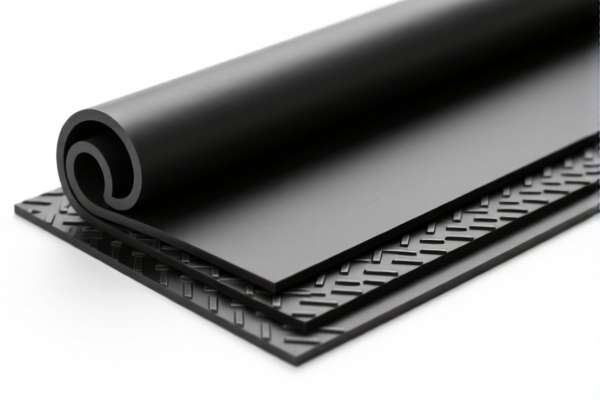
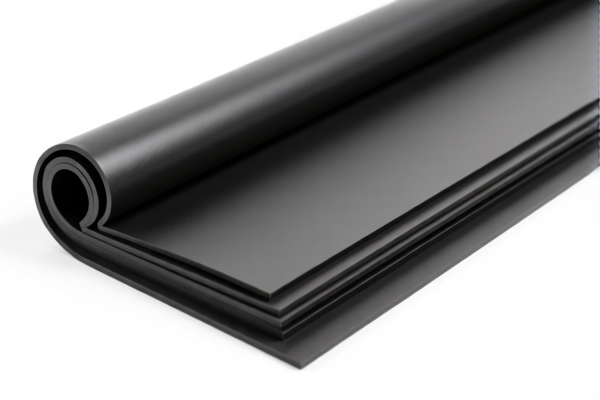

AI Analysis
🛡️ Rubber Wear Resistant Sheets (Vulcanized Rubber Articles)
🌐 HS Code Reference & Customs Clearance Guide | 2026 Latest Tariff Analysis | Professional Compliance Strategy
📌 I. Product Definition & Classification: Do You Really Know "Rubber Wear Resistant Sheets"?
Rubber Wear Resistant Sheets are industrial components made from vulcanized rubber, designed to withstand friction, abrasion, and impact. In international trade, these items fall under Chapter 40 (Rubber and Articles Thereof). Specifically, they are classified as "Other articles of vulcanized rubber other than hard rubber."
However, the exact HS Code depends on the physical structure (cellular vs. solid) and the specific end-use of the sheet:
1. Cellular Rubber Sheets (Foam/Porous):
- Characterized by a porous, sponge-like structure with air pockets.
- Often used for insulation, gasketing, or cushioning where weight reduction is key.
- Classification Focus: 4016.10 (Of cellular rubber).
2. Solid/Non-Cellular Rubber Sheets (Household/General Use):
- Characterized by a dense, solid structure.
- If used for general household purposes (e.g., bath mats, anti-slip pads, non-industrial liners) not specified elsewhere.
- Classification Focus: 4016.99 (Other).
⚠️ Key Distinction:
- If the rubber has a visible cellular/foam structure →归入 4016.10.00.00
- If the rubber is solid/dense and used for household/general articles →归入 4016.99.05.00
- Note: Pure industrial wear plates (solid) not for household use might fall under other sub-headings, but based on the provided data, we focus on the two specific codes given.
📦 II. HS Code Classification Details (2026 Latest Tariff Authority Comparison)
| HS Code | Product Description | Applicable Scenario | Structure |
|---|---|---|---|
4016.10.00.00 |
Other articles of vulcanized rubber: Of cellular rubber | Foam rubber sheets, spongy wear pads, insulating cellular mats | ✅ Cellular (Porous) |
4016.99.05.00 |
Other articles: Other: Household articles not elsewhere specified or included | Solid rubber anti-slip sheets, household bath mats, non-industrial liners | ❌ Solid (Non-cellular) |
🔍 Critical Reminder:
- Structure is King: Customs officers will physically inspect the material. If it is compressed foam, it is4016.10. If it is solid rubber, it is likely4016.99(depending on use).
- Use Matters: Even if solid, if it’s not for "household" purposes (e.g., heavy machinery tires), it might fall under4016.99.80(Other), which has different tax implications not listed here. Stick to the provided codes.
- "Wear Resistant" is a Performance Claim, Not a HS Description: You must declare the material state (cellular/solid) and use (household/general), not just "wear resistant."
💰 III. 2026 Latest Tariff Rate Details (Including Surtaxes & Policy Add-ons)
✅ Applicable Country: United States (US)
✅ Country of Origin: China (CN)
✅ Effective Time: From 2025 November 10 onwards (including subsequent imports)
🎯 1. 4016.10.00.00 —— Cellular Rubber Articles
| Item | Content |
|---|---|
| Base Tariff Rate | 0.0% (ad valorem) |
| Section 301 Surcharge | +25.0% |
| Total Tax Rate | 25.0% |
| Tax Calculation | CIF Value × 25% |
| De Minimis Exemption | ❌ Not Applicable (For Chinese origin goods under Section 301) |
| Legal Basis Path | USITC:4016.10.00.00 → Footnote 9903.88.01 (Section 301) |
📌 Explanation:
- Base Rate 0%: Cellular rubber articles generally have low base duties.
- 25% Surcharge: This is the critical cost driver. Under US Trade Act Section 301, many rubber articles from China are subject to a 25% additional duty.
- Total Cost Impact: For every $10,000 of goods, you pay $2,500 in taxes. This is a significant cost that must be factored into pricing.
🎯 2. 4016.99.05.00 —— Household Rubber Articles (Solid)
| Item | Content |
|---|---|
| Base Tariff Rate | 0.0% (ad valorem) |
| Section 301 Surcharge | 0.0% |
| Total Tax Rate | 0.0% |
| Tax Calculation | CIF Value × 0% |
| De Minimis Exemption | ✅ Yes (If value < $800 per shipment, under Section 321) |
| Legal Basis Path | USITC:4016.99.05.00 |
📌 Explanation:
- Base Rate 0%: Certain household rubber articles have no base duty.
- 0% Surcharge: Crucially, this specific sub-heading (Household articles) is NOT subject to the 25% Section 301 surcharge in the provided data.
- Total Cost Impact: $0 tax. This is a huge advantage if your product qualifies as a "household article not elsewhere specified."
- De Minimis: If shipped via courier (e.g., DHL, FedEx) and value is under $800, it may enter duty-free even more easily.
🛠️ IV. Customs Clearance Practical Advice (Real-World Pitfall Guide)
✅ 1. Preparation Checklist (Mandatory)
| Document | Must Provide | Purpose |
|---|---|---|
| ✅ Product Specification Sheet | ✔️ | Clearly state: "Vulcanized Rubber," "Cellular" or "Solid," "Hardness (Shore A)," "Dimensions." |
| ✅ Material Composition Report | ✔️ | Confirm no steel wire or other non-rubber reinforcements that might change classification. |
| ✅ Product Photos | ✔️ | Show cross-section (to prove cellular vs. solid) and surface texture. |
| ✅ Statement of Use | ✔️ | For 4016.99.05.00: Explicitly state "For Household Use" (e.g., bath mats, anti-slip floor pads). Do NOT say "Industrial Machinery Liner." |
| ✅ Commercial Invoice | ✔️ | HS Code must be explicitly stated. |
| ✅ Packing List | ✔️ | Weight and dimensions. |
✅ 2. Declaration Strategy (Key Tips)
🔥 "Cellular = 25%, Household = 0%. Structure & Use Define Tax!"
| Scenario | Correct HS Code | Risk |
|---|---|---|
| Foam Rubber Sheet (used for insulation/cushioning) | 4016.10.00.00 |
Pay 25% surcharge. No way to avoid if cellular. |
| Solid Rubber Mat (used in bathrooms/gyms) | 4016.99.05.00 |
Optimal Choice. 0% tax. |
| Solid Rubber Sheet (used in factories/industrial wear plates) | 4016.99.80.00 (Not in data) |
High Risk. Likely subject to 25% surcharge. Not covered in provided data. |
| Mixed Package (Cellular + Solid) | Separate Declaration | Do not mix! Each item needs its own code. |
✅ 3. Special Case Handling
| Situation | Handling Advice |
|---|---|
| "Wear Resistant" Claim | Avoid using "Industrial" or "Heavy Duty" in descriptions if you want 4016.99.05.00. Use "Household Anti-Slip Pad." |
| Customs Inspection | Have a sample ready to prove cellular structure (squeeze test) or household nature (marketing materials showing home use). |
| Origin Marking | Ensure "Made in China" is clearly marked. This triggers the Section 301 check for cellular items. |
| Value Declaration | Ensure CIF value is accurate. Under-declaration leads to fines. |
🌍 V. Global Market Comparison (2026 Latest)
| Country/Region | Recommended HS Code | Tariff (China Origin) | Remarks |
|---|---|---|---|
| 🇺🇸 USA | 4016.10.00.00 |
25% | Cellular rubber suffers from Section 301. |
| 🇺🇸 USA | 4016.99.05.00 |
0% | Household items are tax-free! |
| 🇪🇺 EU | 4016.10 / 4016.99 |
0% - 3% | Generally lower duties. No Section 301 equivalent. |
| 🇨🇳 China | 4016.10 / 4016.99 |
5% - 10% | Import duty for Chinese companies. |
📌 Conclusion:
- USA is the only major market with high tariffs on Chinese rubber goods.
- Strategy: If possible, reclassify or redesign products to fit4016.99.05.00(Household) to save 25%. For example, market an industrial-grade wear pad as a "Heavy-Duty Household Anti-Slip Mat" if functionally acceptable.
- Warning: Misclassification is fraud. Only use4016.99.05.00if the product is genuinely for household/general use and not specifically excluded elsewhere.
📌 VI. Common Mistakes & Pitfall Guide (Lessons Learned)
❌ Mistake 1: Declaring Cellular Rubber as 4016.99.05.00
👉 Consequence: Customs inspection reveals foam structure. Backdated 25% tax + penalties!
❌ Mistake 2: Declaring Industrial Wear Plates as 4016.99.05.00
👉 Consequence: Customs rejects "Household" claim. Reclassified to taxable category, 25% surcharge applied.
❌ Mistake 3: Using "Rubber Sheet" without specifying structure
👉 Consequence: Customs assumes the worst (or highest duty). Delays and inquiries.
✅ Correct Approach:
"Vulcanized Rubber Wear-Resistant Sheet, Solid, Black, 5mm Thickness, for Household Anti-Slip Floor Mat, Model XYZ."
🎯 VII. Conclusion: Precision in Classification Saves Money!
🎯 Remember the Golden Rule:
🔹 "Cellular = 25% Tax (USA)."
🔹 "Household Solid = 0% Tax (USA)."
🔹 "Industrial Solid = Likely 25% Tax (USA)."
📌 Pro Tip:
If your product is solid rubber and can be used in a household setting (even if also industrial), try to emphasize the household/general use aspect in your documentation to qualify for 4016.99.05.00 and save 25%. Always consult a licensed customs broker for final classification.
📣 Immediate Action:
📞 Contact Customs Broker + Provide Cross-Section Photos + Verify End-Use
🚀 Minimize Tax Liability, Maximize Profit!
✨ Professional Clearance Starts with Accurate Classification!
💼 Every Penny Saved in Duty is a Penny Added to Your Bottom Line!
Customer Reviews
About HS Code Classification
The Harmonized System (HS) is an internationally standardized nomenclature developed by the World Customs Organization (WCO) to classify traded products. Over 200 countries use the HS system as the basis for customs tariffs, trade statistics, and import/export regulations.
Each HS code follows a hierarchical structure:
- Chapter (2 digits) — Broad category of goods (e.g., Chapter 84: Machinery and Mechanical Appliances)
- Heading (4 digits) — More specific grouping within the chapter
- Subheading (6 digits) — Internationally standardized breakdown, used by all WCO member countries
- National subdivisions (8-10 digits) — Country-specific extensions for further classification, such as US HTSUS 10-digit codes
Correct HS code classification is essential for smooth customs clearance, accurate duty payment, and compliance with trade regulations. Misclassification can lead to customs delays, overpayment of duties, or penalties.
When importing from CN to US, the applicable tariff rates may include:
- Most-Favored-Nation (MFN) rate — The standard duty rate applied to WTO members
- General rate — Applied to countries without trade agreements
- Trade remedy duties — Additional tariffs such as Section 301 (anti-dumping), Section 232 (national security), or countervailing duties
The information provided on this page is for reference purposes only. For official classification, please consult with your local customs authority or a licensed customs broker.