Rubber Wood Shavings
CN → US| HS Code | Tariff Rate | Origin | Destination | Doc |
|---|---|---|---|---|
| 4401220000 | 35.0% | CN | US | Official Doc |
| 4401394220 | 35.0% | CN | US | Official Doc |
| 4407110052 | 35.0% | CN | US | Official Doc |
| 4401490020 | 35.0% | CN | US | Official Doc |
| 4405000000 | 38.2% | CN | US | Official Doc |
Product Images
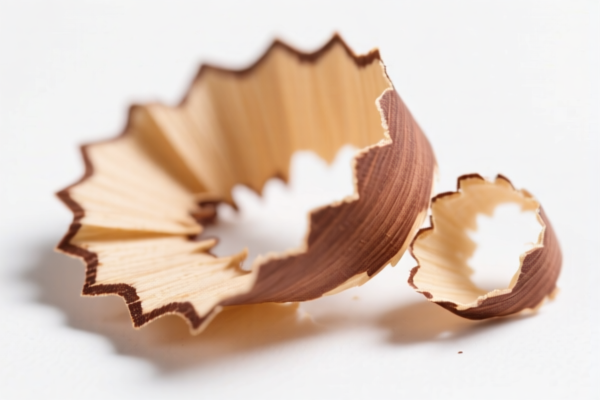
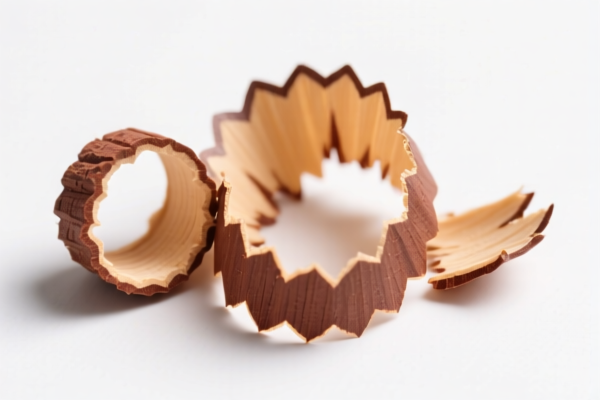
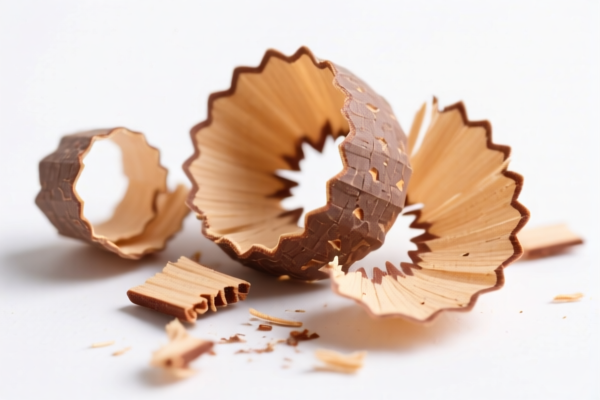
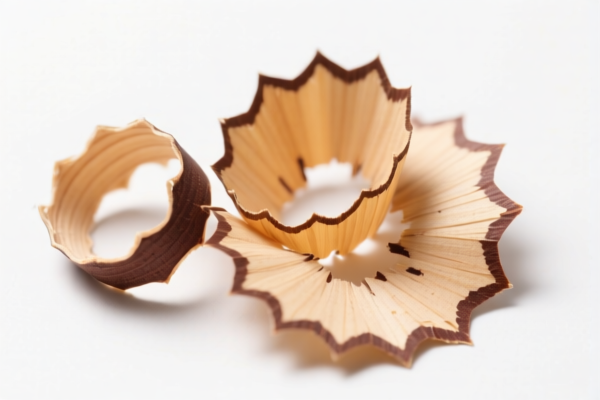
AI Analysis
🪵 Rubber Wood Shavings (Rubberwood Chipping)
🌐 HS Code Reference & Customs Clearance Guide | 2026 Tariff Full Analysis | Professional Clearance Strategy
📌 I. Product Definition & Classification: Do You Really Understand "Rubber Wood Shavings"?
Rubber wood shavings, also known as rubberwood chips or刨花 (huàhuā), are raw wood materials obtained by processing rubber wood (Hevea brasiliensis). Although rubber wood is botanically a broadleaf (hardwood) tree, it is widely used in furniture, flooring, and engineering wood products. In international trade, these shavings are classified primarily as raw wood material or wood waste/scrap, depending on their physical form and intended use.
⚠️ Key Distinction Point:
- If the shavings are clean, uniform, and intended for manufacturing (e.g., particleboard, MDF), they fall under Chapter 44 (Wood and Articles of Wood).
- If they are irregular, dusty, or considered waste, they may fall under 4401.49 (Wood waste and scrap) or even 4405 (Wood wool, chips and particles) if extremely fine.
- Note: Rubber wood is not a coniferous (softwood) species, so it cannot be classified under pine-specific codes like 4407.11 unless used as a fallback structure (as suggested in some internal logic), but this is technically inaccurate for customs purposes. Correct classification prioritizes material type + physical form.
📦 II. HS Code Classification Details (2026 Latest Tariff Authoritative Comparison)
| HS Code | Product Description | Applicable Scenario | Is it Broadleaf? |
|---|---|---|---|
4401.22.00.00 |
Firewood, Chips or Shavings (刨花/木片), of non-coniferous wood | Rubber wood shavings, ideal for particleboard/MDF production | ✅ Yes (Broadleaf) |
4401.39.42.20 |
Other wood in chips or shavings (non-coniferous, other than firewood) | Industrial wood chips, not specifically firewood or standard shavings | ✅ Yes (Broadleaf) |
4407.11.00.52 |
Pine wood sawn or chipped along the length (fallback structure) | ❌ Inaccurate for Rubber Wood – Pine is coniferous; rubber wood is broadleaf. Included in data for structural reference only. | ❌ No (Coniferous) |
4401.49.00.20 |
Wood waste, scrap, and sawdust; Wood chips and particles (shavings included) | Irregular rubber wood shavings, sawdust mix, industrial waste | ✅ Yes (Broadleaf) |
4405.00.00.00 |
Wood wool, wood chips, particles and other wood waste, finely divided | Extremely fine rubber wood dust/powder, wood wool-like texture | ✅ Yes (Broadleaf) |
🔍 Key Reminder:
- Rubber wood is a broadleaf species. Do NOT classify it under pine-specific codes (e.g.,4407.11) unless explicitly allowed by local customs as a fallback (rare).
- If the shavings are uniform and clean, prefer4401.22or4401.39.
- If they are mixed with dust or irregular, use4401.49.
- If they are extremely fine (powder-like), use4405.00.
💰 III. 2026 Latest Tariff Rate Breakdown (Including Additional Taxes, Policy Surcharges)
✅ Applicable Country: United States (US)
✅ Origin: China (CN)
✅ Effective Date: From November 10, 2025 (including subsequent imports)
🎯 1. 4401.22.00.00 —— Shavings of Non-Coniferous Wood (e.g., Rubber Wood)
| Item | Content |
|---|---|
| Base Tariff Rate | 0% (ad valorem) |
| USITC Additional Tariff | +25% (from USITC Footnote 9903.88.01, Section 301) |
| IEEPA Additional Tariff | +10% (against China/HK products, effective Nov 10, 2025) |
| Total Tariff Rate | 35.0% |
| Tax Calculation | CIF Value × 35.0% |
| De Minimis Eligibility | ❌ Not Eligible (deny_de_minimis) |
| Legal Basis Path | IEEPA:9903.01.25 → IEEPA:9903.01.24 → USITC:4401.22.00.00 → FOOTNOTE:9903.88.01 |
📌 Explanation:
- The 25% USITC tariff is from Section 301 of the Trade Act;
- The 10% IEEPA tariff is the new executive order surcharge on Chinese goods;
- Total 35% is high. Pre-calculation is essential for cost control.
🎯 2. 4401.39.42.20 —— Other Wood Chips/Shavings (Non-Coniferous)
| Item | Content |
|---|---|
| Base Tariff Rate | 0% |
| USITC Additional Tariff | +25% |
| IEEPA Additional Tariff | +10% |
| Total Tariff Rate | 35.0% |
| Tax Calculation | CIF × 35.0% |
| De Minimis Eligibility | ❌ Not Eligible |
| Legal Basis Path | IEEPA:9901.25 → IEEPA:9903.01.24 → USITC:4401.39.42.20 → FOOTNOTE:9903.88.01 |
📌 Note:
- Same tax structure as4401.22;
- Applies to industrial wood chips not classified as firewood or standard shavings.
🎯 3. 4407.11.00.52 —— Pine Wood Chips (Fallback Reference Only)
| Item | Content |
|---|---|
| Base Tariff Rate | 0% |
| USITC Additional Tariff | +25% |
| IEEPA Additional Tariff | +10% |
| Total Tariff Rate | 35.0% |
| Tax Calculation | CIF × 35.0% |
| De Minimis Eligibility | ❌ Not Eligible |
📌 Warning:
- Do not use this code for Rubber Wood unless customs explicitly allows it as a fallback.
- Rubber wood is broadleaf, pine is coniferous. Misclassification can lead to audits, penalties, or delays.
🎯 4. 4401.49.00.20 —— Wood Waste, Scrap, and Particles (Including Shavings)
| Item | Content |
|---|---|
| Base Tariff Rate | 0% |
| USITC Additional Tariff | +25% |
| IEEPA Additional Tariff | +10% |
| Total Tariff Rate | 35.0% |
| Tax Calculation | CIF × 35.0% |
| De Minimis Eligibility | ❌ Not Eligible |
📌 Applicable When:
- Shavings are irregular, mixed with sawdust, or considered industrial waste.
- Still 35% total, but easier to justify as "waste" if not high-quality.
🎯 5. 4405.00.00.00 —— Wood Wool, Fine Chips, and Particles
| Item | Content |
|---|---|
| Base Tariff Rate | 3.2% |
| USITC Additional Tariff | +25% |
| IEEPA Additional Tariff | +10% |
| Total Tariff Rate | 38.2% |
| Tax Calculation | CIF × 38.2% |
| De Minimis Eligibility | ❌ Not Eligible |
📌 Applicable When:
- Rubber wood material is extremely fine, resembling dust, wood wool, or powder.
- Highest tariff (38.2%) due to base rate of 3.2%. Use only if physically accurate.
🛠️ IV. Customs Clearance Practical Advice (Real-World Pitfall Avoidance Guide)
✅ 1. Required Documentation Checklist (Non-Negotiable)
| Document | Required | Description |
|---|---|---|
| ✅ Product Specification Sheet | ✔️ | Includes particle size, moisture content, origin, intended use (e.g., MDF, particleboard) |
| ✅ Product Photos (with labels) | ✔️ | Clear images showing shavings’ texture, packaging, and any treatment (e.g., kiln-dried) |
| ✅ Commercial Invoice | ✔️ | Clearly state: "Rubber Wood Shavings, Broadleaf, for Industrial Use" |
| ✅ Packing List | ✔️ | Detail gross/net weight, packaging type (bags, pallets) |
| ✅ Origin Certificate (CO) | ✔️ | If not Chinese origin, may qualify for lower tariffs |
| ✅ Phytosanitary Certificate | ✔️ | Often required for wood products to prevent pests/diseases |
| ✅ Treatment Certificate (if applicable) | ✔️ | E.g., MB (Methyl Bromide) or HT (Heat Treatment) |
✅ 2. Declaration Tips (Key Mnemonics)
🔥 "Material First, Form Second, Name Precise, Tariff Predictable!"
| Scenario | Correct Declaration | Wrong Practice |
|---|---|---|
| Clean, uniform rubber wood shavings | 4401.22.00.00 |
Misclassify as pine (4407) → Risk of audit |
| Irregular, dusty shavings | 4401.49.00.20 |
Declare as "raw wood" → Delayed clearance |
| Fine powder-like rubber wood | 4405.00.00.00 |
Declare as "shavings" → Higher tax (38.2% vs 35%) |
| Mixed with other wood types | Declare separately or use generic 4401.99 |
Mixed declaration → Potential rejection |
✅ 3. Special Situation Handling
| Situation | Recommendation |
|---|---|
| OEM Custom Shavings | Provide buyer’s specification sheet to justify HS code |
| Shavings with High Moisture | Declare moisture content; may affect classification |
| Treated Wood (MB/HT) | Provide treatment certificate; may avoid phytosanitary hold |
| Mixed Origin | Declare each origin separately; different tariffs may apply |
🌍 V. Global Market Customs Comparison (2026 Latest)
| Country/Region | Recommended HS Code | Tariff (China Origin) | Certification Required | Notes |
|---|---|---|---|---|
| 🇺🇸 USA | 4401.22.00.00 |
35% (with surcharges) | Phytosanitary + CO | 38.2% if fine powder |
| 🇨🇳 China | 4401.22.00.00 |
5% (base) | None specific | No additional tariffs |
| 🇪🇺 EU | 4401.22.00.00 |
0% (if FSC certified) | FSC + Phytosanitary | No surcharges |
| 🇦🇺 Australia | 4401.22.00.00 |
5% | IPPC + Phytosanitary | No surcharges |
| 🇯🇵 Japan | 4401.22.00.00 |
0% | IPPC | No surcharges |
📌 Conclusion:
- USA is the only major market imposing high additional tariffs on rubber wood shavings;
- China-origin rubber wood shavings to the US face 35%–38.2% total tariffs;
- Consider supply chain diversification (e.g., Vietnam, Malaysia) for cost efficiency.
📌 VI. Common Mistakes & Pitfall Avoidance (Blood-Tested Lessons)
❌ Mistake 1: Classifying rubber wood shavings as pine wood (4407.11)
👉 Consequence: Customs audit, penalty, or shipment delay due to incorrect botanical classification.
❌ Mistake 2: Declaring fine powder as "shavings" (4401.22)
👉 Consequence: Tax increase from 35% to 38.2%, plus potential misclassification fines.
❌ Mistake 3: Omitting Phytosanitary Certificate
👉 Consequence: Shipment held at port, demurrage charges, possible destruction if pests detected.
❌ Mistake 4: Using vague descriptions like "wood chips" without specifying broadleaf/coniferous
👉 Consequence: Customs requests additional info, delaying clearance by days.
✅ Correct Declaration Example:
"Rubber Wood Shavings, Broadleaf, Kiln-Dried, Particle Size 2-5mm, for Particleboard Manufacturing, HS Code 4401.22.00.00, Origin: China"
🎯 VII. Conclusion: Precise Classification Saves Time, Money, and Stress!
🎯 Remember Mnemonic:
🔹 "Broadleaf First, Form Next, Name Exact, Tariff Fixed!"
🔹 "HS Code Decides Fate, Tax Differs 3.2%, Declaration Step Matters, Cost Can Change Fast!"
📌 Pro Tip:
If your rubber wood shavings originate from Vietnam, Malaysia, or Indonesia, you may qualify for lower or zero tariffs in the US/EU due to FTAs or different origin rules.
Recommendation: Apply for Advance Ruling from US Customs before shipment to avoid surprises.
📣 Immediate Action:
📞 Contact a licensed customs broker + Provide product images + Request HS Code Advance Ruling
🚀 Ensure your rubber wood shavings clear customs smoothly, efficiently, and cost-effectively!
✨ Professional clearance starts with precise classification!
💼 Every cent of your cost deserves accurate calculation!
Customer Reviews
About HS Code Classification
The Harmonized System (HS) is an internationally standardized nomenclature developed by the World Customs Organization (WCO) to classify traded products. Over 200 countries use the HS system as the basis for customs tariffs, trade statistics, and import/export regulations.
Each HS code follows a hierarchical structure:
- Chapter (2 digits) — Broad category of goods (e.g., Chapter 84: Machinery and Mechanical Appliances)
- Heading (4 digits) — More specific grouping within the chapter
- Subheading (6 digits) — Internationally standardized breakdown, used by all WCO member countries
- National subdivisions (8-10 digits) — Country-specific extensions for further classification, such as US HTSUS 10-digit codes
Correct HS code classification is essential for smooth customs clearance, accurate duty payment, and compliance with trade regulations. Misclassification can lead to customs delays, overpayment of duties, or penalties.
When importing from CN to US, the applicable tariff rates may include:
- Most-Favored-Nation (MFN) rate — The standard duty rate applied to WTO members
- General rate — Applied to countries without trade agreements
- Trade remedy duties — Additional tariffs such as Section 301 (anti-dumping), Section 232 (national security), or countervailing duties
The information provided on this page is for reference purposes only. For official classification, please consult with your local customs authority or a licensed customs broker.