Rubber Work Clothes
CN → US| HS Code | Tariff Rate | Origin | Destination | Doc |
|---|---|---|---|---|
| 6210203000 | 13.8% | CN | US | Official Doc |
| 4015900010 | 39.0% | CN | US | Official Doc |
| 4015900050 | 39.0% | CN | US | Official Doc |
| 6210207000 | 13.3% | CN | US | Official Doc |
Product Images
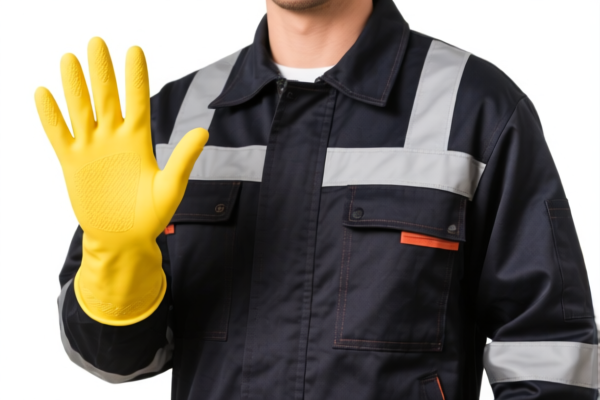
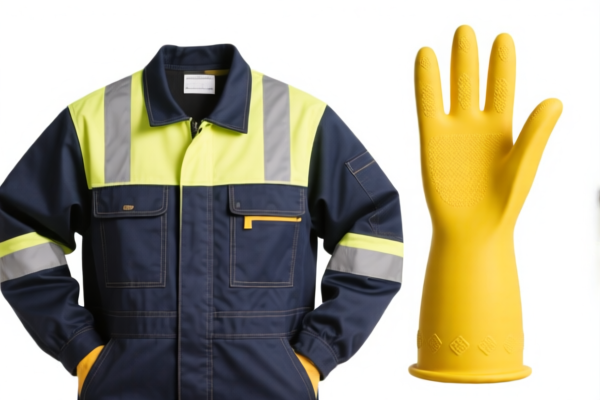

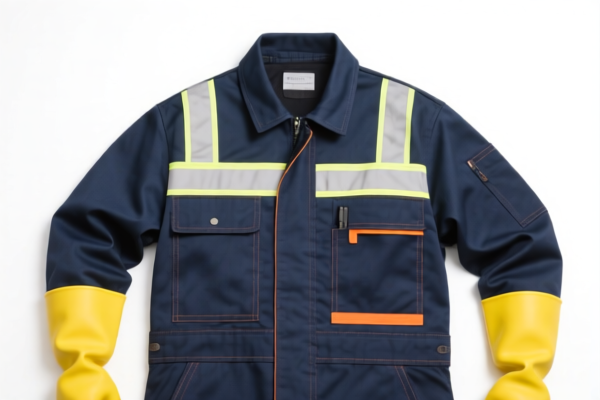
AI Analysis
🛡️ Rubber Work Clothes (Protective Apparel)
🌐 HS Code Reference & Customs Clearance Guide | 2026 Latest Tariff Analysis | Professional Strategy for Rubber Garments
📌 I. Product Definition & Classification: Do You Truly Understand "Rubber Work Clothes"?
Rubber work clothes, in the context of international trade, are primarily categorized by their material composition and manufacturing process. They are not simply "clothes made of rubber"; the distinction lies in whether the rubber acts as a surface coating/layer on textile fabrics or if the garment is constructed from solid vulcanized rubber.
Type A: Textile-Based with Rubber Coating
Garments where the base structure is man-made fibers or other textiles, and the outer surface is impregnated, coated, covered, or laminated with rubber.
Key Feature:* The structural integrity comes from the fabric; the rubber provides waterproofing/chemical resistance.
Type B: Solid Rubber Construction
Garments made entirely of vulcanized rubber (or other plastics), including gloves, boots, and protective suits.
Key Feature:* The material itself is rubber; no textile backing.
⚠️ Critical Distinction Point:
- If the item is a fabric with a rubber layer (coated/laminated) → Look at Chapter 62 (Articles of Apparel and Clothing Accessories).
- If the item is solid rubber molded or cut into shape → Look at Chapter 40 (Rubber and Articles Thereof).
📦 II. HS Code Classification Details (2026 Latest Tariff Authority Mapping)
Based on the provided data, here is the precise breakdown for Rubber Work Clothes:
| HS Code | Product Description | Application Scenario | Material/Structure |
|---|---|---|---|
6210.20.30.00 |
Rubber work clothes, shaped as garments, made of man-made fibers coated with rubber | Industrial rainwear, chemical splash aprons, light protective suits | ✅ Textile base + Rubber coating (Man-made fibers) |
4015.90.00.10 |
Rubber work clothes, made of rubber, falling under general apparel/accessories category | Heavy-duty industrial suits, diving suits, specialized chemical protection | ✅ Solid Vulcanized Rubber |
4015.90.00.50 |
Rubber work clothes, made of rubber, specifically categorized as vulcanized rubber garments & accessories | Medical protective suits, high-risk chemical handling gear | ✅ Solid Vulcanized Rubber |
6210.20.70.00 |
Rubber work clothes, outer surface impregnated, coated, covered, or laminated with rubber | General-purpose waterproof coats, painted workwear | ✅ Textile base + Rubber coating (Any fiber type) |
🔍 Key Reminder:
- "Coated/Laminated" vs. "Solid Rubber": If you can see the fabric weave underneath the rubber surface, it likely falls under 6210. If it is opaque, flexible, and smells distinctly of rubber with no fabric backing, it falls under 4015.
- Shape Matters: The classification explicitly mentions "shaped as garments" (cut and sewn), distinguishing them from raw rubber sheets.
💰 III. 2026 Latest Tariff Rate Breakdown (Including Surcharges & Policy Add-ons)
✅ Applicable Country: United States (US)
✅ Origin: China (CN)
✅ Effective Date: 2025-11-10 onwards (including subsequent imports)
🎯 1. 6210.20.30.00 & 6210.20.70.00 —— Textile-Based Rubber-Coated Garments
These two codes share a similar tax structure because they are primarily textile articles with rubber treatment.
| Item | Content |
|---|---|
| Base Duty Rate | 3.8% (for ...30.00) / 3.3% (for ...70.00) |
| Section 301 Surcharge | 0.0% (No additional 301 tariff for these specific sub-headings) |
| Section 122 Tariff | +10% (Specific China-related surcharge) |
| Total Effective Rate | 13.8% (...30.00) / 13.3% (...70.00) |
| Tax Calculation | CIF Value × 13.8% (or 13.3%) |
| De Minimis Exemption | ❌ No (Not eligible for low-value shipment exemption) |
| Legal Basis Path | USITC:6210.20 → Section 122: 10% |
📌 Explanation:
- These garments benefit from lower base duties and no Section 301 surcharge, making them significantly cheaper to import than solid rubber goods.
- The 122 Clause adds a flat 10%, but the total remains under 15%.
🎯 2. 4015.90.00.10 & 4015.90.00.50 —— Solid Vulcanized Rubber Garments
These codes fall under Chapter 40, which carries much higher trade barriers.
| Item | Content |
|---|---|
| Base Duty Rate | 4.0% |
| Section 301 Surcharge | +25.0% (Standard Section 301 tariff on rubber products) |
| Section 122 Tariff | +10% (Specific China-related surcharge) |
| Total Effective Rate | 39.0% |
| Tax Calculation | CIF Value × 39.0% |
| De Minimis Exemption | ❌ No |
| Legal Basis Path | USITC:4015.90 → Section 301: 25% → Section 122: 10% |
📌 Explanation:
- Total Rate: 39% is extremely high.
- The 25% Section 301 tariff is the primary driver.
- This makes solid rubber suits significantly more expensive to clear in the US compared to coated textile suits.
🛠️ IV. Customs Clearance Practical Advice (Real-World Pitfall Guide)
✅ 1. Required Documentation Checklist (Non-Negotiable)
| Document | Required? | Note |
|---|---|---|
| ✅ Product Specification Sheet | ✔️ | Must detail: Base material (e.g., "Polyester woven fabric") + Coating type (e.g., "Vulcanized rubber lamination, 1mm thick") |
| ✅ Cross-Section Photo | ✔️ | Crucial: Show the fabric layer vs. the rubber layer to prove it's 6210 and not 4015. |
| ✅ Composition Statement | ✔️ | Explicitly state % of fabric vs. % of rubber coating. |
| ✅ Commercial Invoice | ✔️ | Description must match HS Code: e.g., "Rubber-Coated Cotton Coveralls" (for 6210) vs. "Vulcanized Rubber Protective Suit" (for 4015). |
| ✅ Bill of Lading | ✔️ | Ensure weight and dimensions match the declaration. |
✅ 2. Classification Strategy (Key Mnemonic)
🔥 "Coated Fabric = 13% | Solid Rubber = 39%! Prove the Weave!"
| Scenario | Correct HS Code | Error Consequence |
|---|---|---|
| Raincoat with visible fabric texture + rubber surface | 6210.20.30.00 / 6210.20.70.00 |
If misdeclared as Rubber (4015) → Overpay 26% in duties. |
| Diving suit or thick chemical suit (no fabric inside) | 4015.90.00.10 / 4015.90.00.50 |
If misdeclared as Coated Textile (6210) → Audit Risk, Penalties, Back Taxes + 26% Diff. |
| Rubber Gloves (if included) | Usually 4015.11 or 4015.19 |
Don't mix gloves with suits in one line if duties differ significantly. |
| Partially Coated Workwear | 6210.20.xx |
Ensure >50% of outer surface is coated/rubber to qualify. |
✅ 3. Special Situations Handling
| Situation | Handling Advice |
|---|---|
| Dual Material Garments (e.g., Rubber sleeves on Cotton suit) | Classify based on essential character. If rubber dominates protection, consider 4015. If fabric dominates, 6210. Provide engineering diagrams. |
| Sample Imports | Even samples are subject to the 39% duty if solid rubber. Plan budget accordingly. |
| Re-export from Third Country | If originally Chinese but assembled in Vietnam, ensure Certificate of Origin proves substantial transformation to avoid US Section 122/301 tariffs. |
| Medical vs. Industrial | Both 4015.90.00.10 and 50 are broadly used. For medical protective suits, 4015.90.00.50 is often preferred if strictly vulcanized. Provide FDA registration if applicable. |
🌍 V. Global Market Clearance Comparison (2026 Latest)
| Country/Region | Recommended HS Code | Tariff Rate (China Origin) | Certification | Note |
|---|---|---|---|---|
| 🇺🇸 USA | 6210.20.70.00 |
13.3% (Best Option) | No special certs | Avoid 4015 if possible (39%) |
| 🇺🇸 USA | 4015.90.00.50 |
39.0% (High Cost) | FDA (if medical) | High tariff burden |
| 🇪🇺 EU | 6210.20.00 |
~8.0% | REACH Compliance | No 301 equivalent |
| 🇨🇳 China | 6210.20.00 |
~6.0% | GB Standards | Lower import duty |
| 🇯🇵 Japan | 6210.20.00 |
~8.0% | JIS Standards | Moderate duty |
📌 Conclusion:
- The USA is the most expensive market due to Section 301 and Section 122 tariffs.
- Strategy: If your product can be manufactured with a textile base (coated/laminated), strongly prefer HS 6210 to save ~26% in duties compared to solid rubber (HS 4015).
📌 VI. Common Mistakes & Pitfall Guide (Blood Lessons)
❌ Mistake 1: Declaring a Solid Rubber Suit as "Coated Fabric" (6210) to save money
👉 Result: Customs inspection reveals no fabric layer → 26% duty difference + Penalty + Storage Fees.
✅ Fix: Be honest. If it's solid rubber, pay the 39%. Or redesign to use a fabric backing.
❌ Mistake 2: Not specifying "Rubber Coated" in the description for 6210
👉 Result: Customs classifies under general cotton/polyester workwear → Different duty rate + Audit Flag.
✅ Fix: Use precise language: "Rubber-coated man-made fiber work suit."
❌ Mistake 3: Mixing Solid Rubber Gloves with Rubber-Coated Suits
👉 Result: Confusion in HS Code selection. Gloves might have different duties.
✅ Fix: Separate line items or ensure combined duty is calculated correctly.
🎯 VII. Conclusion: Professional Declaration, Cost Optimization
🎯 Key Takeaway:
🔹 "Coated = 13% | Solid = 39% | Prove the Weave!"
🔹 Design for Duty: If possible, design work clothes with a textile base and rubber coating (6210) rather than solid rubber (4015) to save 26% in US customs duties.
📌 Pro Tip:
If you are importing Solid Rubber suits (4015), consider:
1. Negotiating FOB terms to lower the CIF base.
2. Checking for Exclusions: Are there any Section 301 exclusions for specific industrial rubber goods? (Apply for exclusion if eligible).
3. Third-Party Assembly: If assembled in a beneficiary country (e.g., Vietnam), ensure substantial transformation occurs to reset origin rules.
📣 Immediate Action:
📞 Contact your freight forwarder with cross-section photos of your rubber suits.
📄 Request a Pre-Ruling from US Customs (CBP) if the boundary between6210and4015is ambiguous for your specific product.
🚀 Optimize your BOM (Bill of Materials) to favor textile-backed rubber solutions for the US market.
✨ Professional Clearance Starts with Precise Classification!
💼 Every Percent of Tariff is a Percent of Your Margin Lost!
Customer Reviews
About HS Code Classification
The Harmonized System (HS) is an internationally standardized nomenclature developed by the World Customs Organization (WCO) to classify traded products. Over 200 countries use the HS system as the basis for customs tariffs, trade statistics, and import/export regulations.
Each HS code follows a hierarchical structure:
- Chapter (2 digits) — Broad category of goods (e.g., Chapter 84: Machinery and Mechanical Appliances)
- Heading (4 digits) — More specific grouping within the chapter
- Subheading (6 digits) — Internationally standardized breakdown, used by all WCO member countries
- National subdivisions (8-10 digits) — Country-specific extensions for further classification, such as US HTSUS 10-digit codes
Correct HS code classification is essential for smooth customs clearance, accurate duty payment, and compliance with trade regulations. Misclassification can lead to customs delays, overpayment of duties, or penalties.
When importing from CN to US, the applicable tariff rates may include:
- Most-Favored-Nation (MFN) rate — The standard duty rate applied to WTO members
- General rate — Applied to countries without trade agreements
- Trade remedy duties — Additional tariffs such as Section 301 (anti-dumping), Section 232 (national security), or countervailing duties
The information provided on this page is for reference purposes only. For official classification, please consult with your local customs authority or a licensed customs broker.