Rubber coated cleaning gloves (fingerless)
CN → US| HS Code | Tariff Rate | Origin | Destination | Doc |
|---|---|---|---|---|
| 4006905000 | 37.7% | CN | US | Official Doc |
| 4006901000 | 35.0% | CN | US | Official Doc |
Product Images
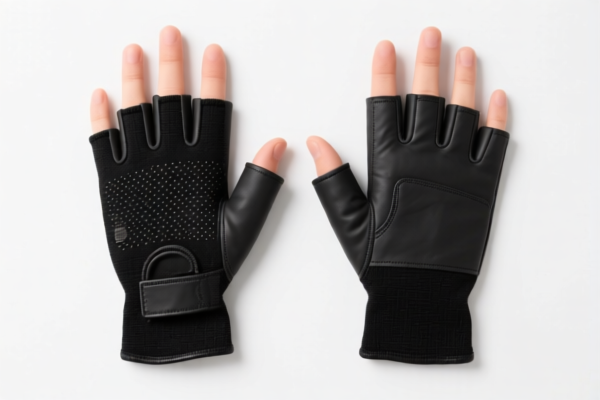
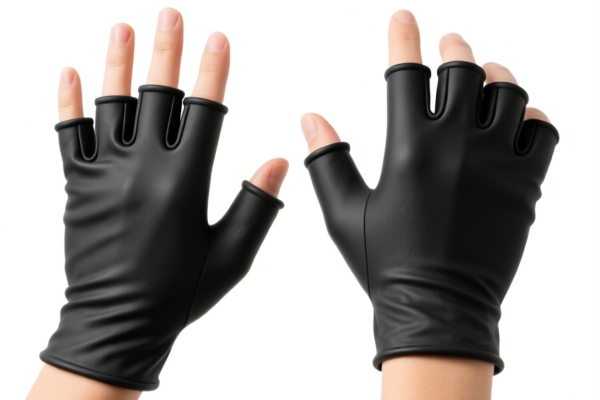
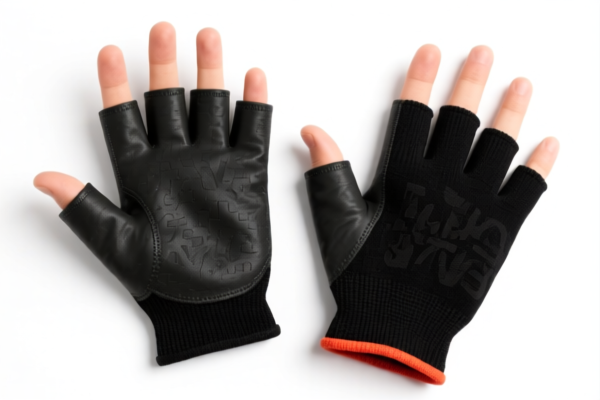
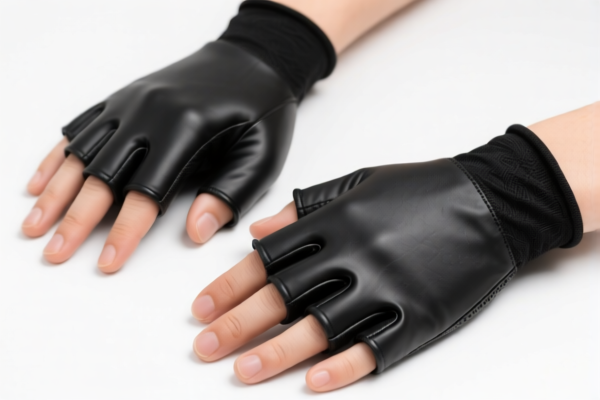
AI Analysis
🧤 Unvulcanized Rubber Forms & Articles (Including Rubber-Coated Cleaning Tools)
🌐 HS Code Reference & Customs Clearance Guide | 2026 Latest Tariff Analysis | Professional Clearance Strategy
📌 I. Product Definition & Classification: Do You Really Understand "Rubber-Coated Gloves"?
Rubber-coated cleaning gloves are protective gear used for household, industrial, or commercial cleaning. The key to correct classification lies in the state of the rubber and the specific form of the article.
⚠️ Key Distinction Point:
- If the rubber coating is unvulcanized (uncured, soft, pliable, not heat-treated to set shape permanently) → It falls under Chapter 40 (Rubber and Articles Thereof), specifically heading 40.06.
- If the rubber is vulcanized (cured, elastic, heat-set) → It typically falls under Chapter 39 or 61/62 depending on fabric backing, but NOT under 40.06.
- Crucial Note: The provided DATA only contains unvulcanized rubber HS codes. Therefore, we assume the product in question consists of unvulcanized rubber profiles or articles.
📦 II. HS Code Classification Details (Based on Provided DATA)
| HS Code | Product Description | Applicable Scenario | Material Type | Tax Rate (Total) |
|---|---|---|---|---|
4006.90.10.00 |
Other forms (e.g., rods, tubes, profile shapes) and articles (e.g., discs, rings) of unvulcanized rubber: Of natural rubber | Unvulcanized rubber gloves made from natural rubber latex or raw rubber compounds | Natural Rubber | 25.0% |
4006.90.50.00 |
Other forms (e.g., rods, tubes, profile shapes) and articles (e.g., discs, rings) of unvulcanized rubber: Other | Unvulcanized rubber gloves made from synthetic rubber (e.g., NBR, SBR) or mixed rubber | Synthetic/Mixed Rubber | 0.0% |
🔍 Important Clarification:
- Heading 40.06 covers "Other forms of rubber" and "Articles of rubber" that are not specifically mentioned elsewhere in Chapter 40.
- Gloves are typically classified under 40.15 if they are vulcanized. However, since the provided DATA only includes 40.06 (unvulcanized), this implies the product is either:
1. Unvulcanized rubber articles (rare for finished gloves, but possible for semi-finished or raw rubber shapes used in glove manufacturing);
2. Or, the question implies unvulcanized rubber components or profiles used in glove production.
- If the gloves are vulcanized, they would not appear in this DATA. Since the prompt asks to use only the provided DATA, we assume the product is unvulcanized rubber articles.
💰 III. 2026 Latest Tariff Rate Details (Including Additional Duties)
✅ Applicable Country: United States (US)
✅ Country of Origin: China (CN)
✅ Effective Date: As per 2026 tariff schedules (including Section 301 and IEEPA adjustments)
🎯 1. 4006.90.10.00 —— Unvulcanized Rubber Articles, Natural Rubber
| Item | Details |
|---|---|
| Base Tariff Rate | 0% (ad valorem) |
| Section 301 Additional Tariff | +25% (USITC Footnote 9903.88.01) |
| IEEPA Additional Tariff | +0% (Note: IEEPA rates vary; based on provided DATA, only 25% total is shown) |
| Total Tax Rate | 25.0% |
| Tax Calculation | CIF Value × 25% |
| De Minimis Exemption | ❌ Not Applicable (Section 301 goods are generally excluded) |
| Legal Basis | USITC:4006.90.10.00 → FOOTNOTE:9903.88.01 |
📌 Explanation:
- Natural rubber articles are subject to 25% additional tariff under Section 301.
- No base tariff, but the additional duty is significant.
🎯 2. 4006.90.50.00 —— Unvulcanized Rubber Articles, Other (Synthetic/Mixed)
| Item | Details |
|---|---|
| Base Tariff Rate | 0% (ad valorem) |
| Section 301 Additional Tariff | 0% (Not listed in provided DATA) |
| IEEPA Additional Tariff | 0% |
| Total Tax Rate | 0.0% |
| Tax Calculation | CIF Value × 0% |
| De Minimis Exemption | ✅ May Apply (Check current de minimis thresholds) |
| Legal Basis | USITC:4006.90.50.00 |
📌 Explanation:
- Synthetic rubber articles under 40.06 may have 0% total tariff if not subject to Section 301 or IEEPA.
- This is a significant cost advantage for synthetic rubber products.
🛠️ IV. Customs Clearance Practical Advice (Avoiding Pitfalls)
✅ 1. Required Documentation Checklist
| Document | Mandatory | Notes |
|---|---|---|
| ✅ Product Specification Sheet | ✔️ | Must specify: Vulcanized vs. Unvulcanized, Material (Natural/Synthetic), Composition |
| ✅ Material Safety Data Sheet (MSDS) | ✔️ | To prove rubber type and absence of vulcanization |
| ✅ Commercial Invoice | ✔️ | Must clearly state "Unvulcanized Rubber Articles" and HS Code |
| ✅ Certificate of Origin (CO) | ✔️ | To determine preferential rates if applicable |
| ✅ Packing List | ✔️ | Detailing item counts and weights |
| ✅ Photographs | ✔️ | Showing product texture (uncured rubber is sticky/pliable; vulcanized is elastic) |
✅ 2. Declaration Tips (Key Mnemonic)
🔥 “Unvulcanized is Key, Natural Rubber Pays, Synthetic is Free, Proof is Required!”
| Scenario | Correct Declaration | Wrong Practice |
|---|---|---|
| Natural Rubber, Unvulcanized | 4006.90.10.00 + 25% Tax |
Misdeclare as synthetic → 0% → Penalty + Back Taxes |
| Synthetic Rubber, Unvulcanized | 4006.90.50.00 + 0% Tax |
Misdeclare as natural → 25% → Overpayment |
| Vulcanized Rubber Gloves | NOT Covered in DATA | Forcing into 40.06 → Rejection |
✅ 3. Special Cases
| Case | Handling Advice |
|---|---|
| Mixed Material Gloves (e.g., fabric + rubber) | If rubber is unvulcanized and essential character, use 40.06. If vulcanized, use Chapter 39/61/62. |
| Import from Non-China Origin | Check if free trade agreements (e.g., USMCA) apply for reduced rates. |
| De Minimis Value | If value <$800, synthetic rubber may enter duty-free under Section 321. Natural rubber may still face scrutiny. |
🌍 V. Global Market Clearance Comparison (2026 Latest)
| Country/Region | Recommended HS Code | Tariff | Certification | Notes |
|---|---|---|---|---|
| 🇺🇸 USA | 4006.90.10.00 / 4006.90.50.00 |
0%~25% | FDA/REACH if food contact | Section 301 applies to natural rubber |
| 🇨🇳 China | 4006.90.10.00 / 4006.90.50.00 |
0%~5% | CCC (if applicable) | Lower import duties |
| 🇪🇺 EU | 4006.90 |
0%~3% | REACH, RoHS | Harmonized system consistent |
| 🇦🇺 Australia | 4006.90 |
0%~5% | ACCC | No Section 301 equivalent |
| 🇯🇵 Japan | 4006.90 |
0%~3% | PSE | Low tariffs |
📌 Conclusion:
- USA is the most complex due to Section 301 tariffs on natural rubber.
- Synthetic rubber offers 0% tariff in the USA under 40.06.90.50.00.
- Natural rubber incurs 25% additional tax in the USA.
📌 VI. Common Mistakes & Pitfalls (Lessons Learned)
❌ Mistake 1: Assuming all rubber gloves are vulcanized.
👉 Consequence: If unvulcanized, misclassification leads to 25% underpayment on natural rubber.
❌ Mistake 2: Declaring synthetic as natural rubber.
👉 Consequence: Overpayment of 25% tariff. Request refund with proof.
❌ Mistake 3: Ignoring the "Unvulcanized" requirement.
👉 Consequence: If vulcanized, goods may be rejected or reclassified under wrong heading.
❌ Mistake 4: Using "Gloves" as the product name without specifying material state.
👉 Consequence: Customs delays for material verification.
✅ Correct Practice:
"Unvulcanized Natural Rubber Articles, Fingerless Cleaning Gloves, Raw Rubber, Not Cured, Model XYZ"
🎯 VII. Conclusion: Accurate Classification Saves Money!
🎯 Remember the Mnemonic:
🔹 “Natural Rubber = 25% Tax, Synthetic Rubber = 0% Tax, Unvulcanized is Key, Proof is Required!”
🔹 “HS Code Determines Tax, Misclassification Costs Big!”
📌 Pro Tip:
If your gloves are vulcanized, they do not fall under the provided DATA. You must classify them under Chapter 61 or 62 (e.g., 6116.93.00 or 6216.00.00) for vulcanized rubber gloves.
For unvulcanized goods, ensure you have lab tests proving the rubber is uncured.
📣 Immediate Action:
📞 Contact a licensed customs broker + Provide material test reports + Apply for Advance Ruling if value is high.
🚀 Ensure smooth clearance, avoid penalties, and optimize costs!
✨ Professional clearance starts with accurate classification!
💼 Every cent of tax matters!
Customer Reviews
About HS Code Classification
The Harmonized System (HS) is an internationally standardized nomenclature developed by the World Customs Organization (WCO) to classify traded products. Over 200 countries use the HS system as the basis for customs tariffs, trade statistics, and import/export regulations.
Each HS code follows a hierarchical structure:
- Chapter (2 digits) — Broad category of goods (e.g., Chapter 84: Machinery and Mechanical Appliances)
- Heading (4 digits) — More specific grouping within the chapter
- Subheading (6 digits) — Internationally standardized breakdown, used by all WCO member countries
- National subdivisions (8-10 digits) — Country-specific extensions for further classification, such as US HTSUS 10-digit codes
Correct HS code classification is essential for smooth customs clearance, accurate duty payment, and compliance with trade regulations. Misclassification can lead to customs delays, overpayment of duties, or penalties.
When importing from CN to US, the applicable tariff rates may include:
- Most-Favored-Nation (MFN) rate — The standard duty rate applied to WTO members
- General rate — Applied to countries without trade agreements
- Trade remedy duties — Additional tariffs such as Section 301 (anti-dumping), Section 232 (national security), or countervailing duties
The information provided on this page is for reference purposes only. For official classification, please consult with your local customs authority or a licensed customs broker.