Rubber impregnated Coated Plant Fiber Gloves
CN → US| HS Code | Tariff Rate | Origin | Destination | Doc |
|---|---|---|---|---|
| 3926204050 | 16.5% | CN | US | Official Doc |
| 4015195100 | 49.0% | CN | US | Official Doc |
| 4015129000 | 49.0% | CN | US | Official Doc |
| 6116105510 | 30.7% | CN | US | Official Doc |
| 6116104810 | 36.1% | CN | US | Official Doc |
Product Images
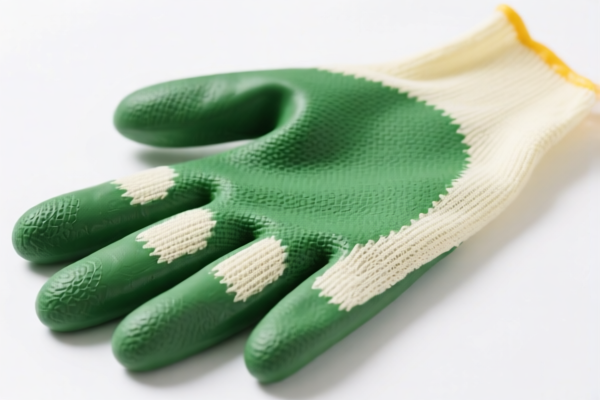
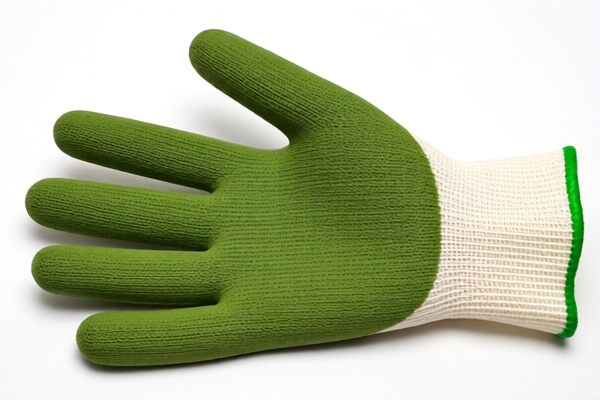
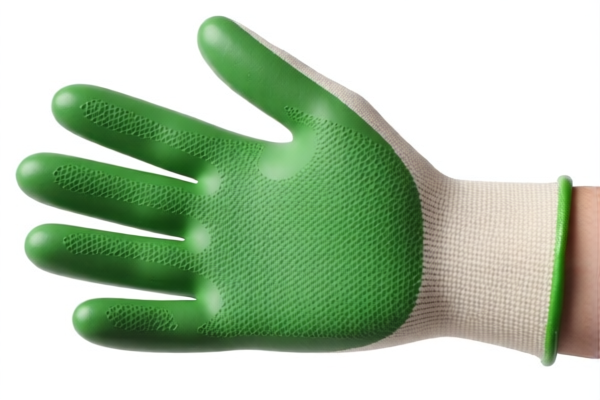
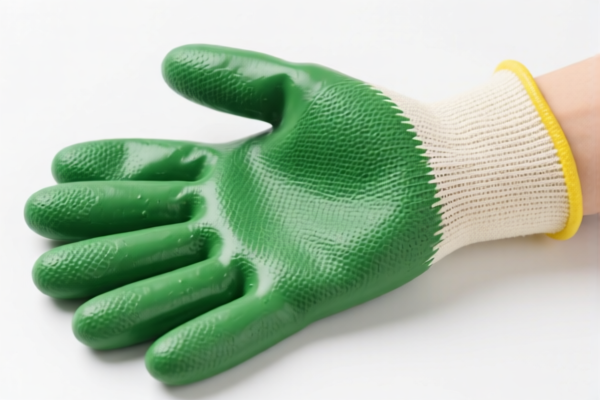
AI Analysis
🧤 Rubber Impregnated Coated Plant Fiber Gloves (Cotton Gloves)
🌐 HS Code Reference & Customs Clearance Guide | 2026 Latest Tariff Analysis | Professional Clearance Strategy
📌 I. Product Definition & Classification: Do You Really Know "Coated Gloves"?
Rubber impregnated/coated plant fiber gloves (typically cotton) are protective handwear where a natural fiber base (usually ≥50% cotton) is coated or impregnated with rubber or plastic to enhance durability, water resistance, or chemical protection.
In international trade, the classification hinges on two critical factors: 1. Material Composition: Is the base material considered "Textile" (Cotton) or "Rubber" (Vulcanized)? 2. Manufacturing Process: Is it "Coated/Impregnated" (Textile chapter) or "Vulcanized/Composite" (Rubber chapter)?
⚠️ Key Distinction Point: - If the cotton fabric is the essential character and is merely coated/impregnated → Chapter 61 (Knitted/Crocheted) or Chapter 39/40 (Plastic/Rubber coating as accessory). - If the rubber constitutes the essential character or is vulcanized directly onto the fiber → Chapter 40 (Rubber). - Misclassification Risk: Declaring "Cotton Gloves" when they are heavily rubberized can lead to higher tariffs (Section 301/122) or rejection for lacking textile specs.
📦 II. HS Code Classification Details (2026 Latest Tariff Authority Comparison)
Based on the provided data, here is the authoritative breakdown for Rubber Coated Cotton Gloves:
| HS Code | Product Description & Classification Logic | Key Material Characteristic | Total Tax Rate |
|---|---|---|---|
3926.20.40.50 |
Plastic-Coated Textile Gloves: Rubber/Plastic coating on cotton. Classified as "Other articles of plastics and articles of other materials of heading 39.01 to 39.14." | Base: Plastic/Rubber coating + Cotton. Considered a plastic article due to coating nature. | 16.5% |
6116.10.55.10 |
Cotton-Based Coated Gloves: Cotton content >50%, knitted/crocheted, with rubber coating. Classified under "Gloves, mittens, and mitts, impregnated, coated, covered or laminated with plastics or rubber." | Base: Cotton (Primary Material). | 30.7% |
6116.10.48.10 |
Cotton Coated Gloves (Specific Subheading): Cotton-based, coated, specific subcategory for general use. | Base: Cotton. Specific subtype for non-medical/general protection. | 36.1% |
4015.19.51.00 |
Vulcanized Rubber Gloves: Rubber (Vulcanized) composite with other materials. Classified under "Other gloves of vulcanized rubber." | Base: Vulcanized Rubber. The rubber layer defines the essential character. | 49.0% |
4015.12.90.00 |
Medical/Protective Rubber Gloves: Gloves of vulcanized rubber, for medical or surgical use. | Base: Vulcanized Rubber. Specific use: Medical/Protective. | 49.0% |
🔍 Critical Note: - Chapter 61 (
6116.10.48.10/6116.10.55.10) is generally preferred for high-cotton-content gloves where the rubber is a surface coating. Lower tax burden than Chapter 40. - Chapter 40 (4015.19.51.00/4015.12.90.00) applies when the product is considered primarily rubber (e.g., thick coating, vulcanized process, or medical grade). Highest Tax Burden. -3926.20.40.50is a "middle ground" often used if the plastic/rubber coating is viewed as the primary manufacturing component under Heading 39 (Articles of plastics). Lowest Tax Burden (but requires strict material justification).
💰 III. 2026 Latest Tariff Rate Breakdown (Including Surtaxes & Policy Surcharges)
✅ Applicable Country: United States (US) ✅ Origin: China (CN) ✅ Effective Date: Current rates apply (including Section 301/122 surcharges)
🎯 1. 3926.20.40.50 —— Plastic/Rubber Coated Textile Article
| Item | Detail |
|---|---|
| Base Tariff | 6.5% |
| Section 301 Surtax | 0.0% (Note: Often exempt or lower for specific plastic articles, but verify current list) |
| Section 122 Surtax | 10.0% |
| Total Tax Rate | 16.5% |
| Tax Calculation | CIF Value × 16.5% |
| De Minimis Exemption | ❌ Not Applicable (Section 301/122 goods are excluded from $800 de minimis if subject to surcharges) |
| Legal Basis Path | HTSUS:3926.20.40.50 → Section 301 List 4 (if applicable) → Section 122 (USMCA/China Surcharge) |
📌 Explanation: - This classification leverages the "Plastic Article" route rather than "Textile" or "Rubber." - 16.5% is the most cost-effective option among the listed codes, assuming the product qualifies as an "article of plastics" with textile base.
🎯 2. 6116.10.55.10 —— Cotton-Based Coated Gloves (Primary Material: Cotton)
| Item | Detail |
|---|---|
| Base Tariff | 13.2% |
| Section 301 Surtax | 7.5% |
| Section 122 Surtax | 10.0% |
| Total Tax Rate | 30.7% |
| Tax Calculation | CIF Value × 30.7% |
| De Minimis Exemption | ❌ Not Applicable |
| Legal Basis Path | HTSUS:6116.10.55.10 → Section 301 → Section 122 |
📌 Explanation: - Standard for work gloves where cotton is the primary fabric (>50%). - Higher than
3926due to higher base tariff for textiles.
🎯 3. 6116.10.48.10 —— Cotton Coated Gloves (General Use)
| Item | Detail |
|---|---|
| Base Tariff | 18.6% |
| Section 301 Surtax | 7.5% |
| Section 122 Surtax | 10.0% |
| Total Tax Rate | 36.1% |
| Tax Calculation | CIF Value × 36.1% |
| De Minimis Exemption | ❌ Not Applicable |
| Legal Basis Path | HTSUS:6116.10.48.10 → Section 301 → Section 122 |
📌 Explanation: - Specific subheading for cotton gloves, potentially for different thickness or usage than
55.10. - Higher base tariff than55.10.
🎯 4. 4015.19.51.00 & 4015.12.90.00 —— Vulcanized Rubber Gloves
| Item | Detail |
|---|---|
| Base Tariff | 14.0% |
| Section 301 Surtax | 25.0% |
| Section 122 Surtax | 10.0% |
| Total Tax Rate | 49.0% |
| Tax Calculation | CIF Value × 49.0% |
| De Minimis Exemption | ❌ Not Applicable |
| Legal Basis Path | HTSUS:4015.19.51.00 / 4015.12.90.00 → Section 301 (High Rate) → Section 122 |
📌 Explanation: - Highest Tax Burden (49%). - Applies if Customs determines the rubber is the essential character (e.g., thick coating, medical grade, or vulcanized process). - Warning: Misclassifying rubber-heavy gloves as textile gloves (
6116) to save tax can lead to severe penalties.
🛠️ IV. Customs Clearance Practical Advice (Real-World Pitfall Avoidance)
✅ 1. Preparation Checklist (All Required)
| Document | Required? | Explanation |
|---|---|---|
| ✅ Product Composition Statement | ✔️ | Must specify % of Cotton vs. Rubber/Plastic. Critical for choosing between 3926, 6116, or 4015. |
| ✅ Process Description | ✔️ | Is it "Coated," "Impregnated," or "Vulcanized"? Impregnated/Coated favors 6116/3926. Vulcanized favors 4015. |
| ✅ Product Photos | ✔️ | Show cross-section of fabric + coating. Thick coating → Risk of 4015. Thin coating → 6116/3926. |
| ✅ Commercial Invoice | ✔️ | Clearly state "Rubber Coated Cotton Gloves" or "Plastic Impregnated Cotton Gloves." |
| ✅ Packaging List | ✔️ | Ensure no mixed descriptions. |
✅ 2. Classification Strategy & Tips
🔥 "Material Determines Duty, Process Determines Code"
| Scenario | Recommended HS Code | Reasoning |
|---|---|---|
| Thin rubber/plastic coating on cotton knit fabric | 3926.20.40.50 (Lowest Tax) or 6116.10.55.10 |
If the coating is minor, 3926 may apply as "Article of Plastic." If textile is dominant, 6116. |
| Standard industrial work gloves (Cotton >50%) | 6116.10.55.10 |
Most common for general labor. Good balance of tax and compliance. |
| Medical/Surgical Rubber Gloves | 4015.12.90.00 |
Must be medical-grade, vulcanized. High tax, but mandatory for medical classification. |
| Heavy-duty rubber gloves with fabric lining | 4015.19.51.00 |
If rubber is the main protective layer, it's a rubber glove. |
| Avoid: Declaring "Plastic Gloves" for "Cotton Gloves" | ❌ Illegal | Misdeclaration leads to seizure, fines, and blacklisting. |
✅ 3. Special Cases Handling
| Scenario | Handling Advice |
|---|---|
| OEM Custom Gloves | Provide design specs showing the ratio of fabric to rubber. |
| Medical vs. Industrial | Clearly label "Industrial Use" to avoid 4015.12 (Medical) which may have different inspection requirements. |
| Section 301 Exemptions | Check if the specific HTSUS has an excluded product list. Currently, most 3926 and 6116 are subject to surcharges. |
| De Minimis ($800) | Do NOT rely on de minimis for Chinese-origin rubber/plastic/textile gloves due to Section 301/122. All duties must be paid at entry. |
🌍 V. Global Market Comparison (2026 Latest)
| Country/Region | Recommended HS Code | Estimated Tax (China Origin) | Key Certification | Note |
|---|---|---|---|---|
| 🇺🇸 USA | 3926.20.40.50 |
16.5% | None (General) | Lowest tax, but strict material proof needed. |
| 🇺🇸 USA | 6116.10.55.10 |
30.7% | None | Standard for cotton work gloves. |
| 🇺🇸 USA | 4015.19.51.00 |
49.0% | None | High tax, avoid unless necessary. |
| 🇨🇳 China | 6116.10.55.10 |
~10-13% | CCC (if applicable) | Lower import duties, no Section 301. |
| 🇪🇺 EU | 6116.10.55.10 |
~4.5% | REACH/CE | Low base duty, no Section 301. |
📌 Conclusion: - USA Market: Tax sensitivity is high.
3926.20.40.50is the optimal classification if technically justifiable, saving ~14-32% vs. other codes. - EU/China: Lower base duties, focus on compliance (REACH/CCC) rather than tax optimization.
📌 VI. Common Mistakes & Pitfall Guide (Lessons Learned)
❌ Mistake 1: Classifying "Rubber-Coated Cotton Gloves" as 3926 when the rubber layer is thick/vulcanized.
👉 Consequence: Customs reclassifies to 4015 → Back duties + Interest + Penalties (49% instead of 16.5%).
❌ Mistake 2: Using 6116.10.48.10 for a product that fits 6116.10.55.10.
👉 Consequence: Overpayment of tax (36.1% vs. 30.7%). Always choose the most specific, lowest-rate valid code.
❌ Mistake 3: Ignoring Section 122/301 surcharges. 👉 Consequence: Under-declaration of duty → Customs hold → Delayed release → Demurrage fees.
✅ Correct Approach:
"Rubber-Coated Cotton Work Gloves, 100% Cotton Knit Base, Nitrile Coated, Industrial Use, Model XYZ"
🎯 VII. Conclusion: Professional Classification, Cost Optimization
🎯 Remember the Rule:
🔹 "Coated = Textile/Plastic (Lower Tax)" 🔹 "Vulcanized/Medical = Rubber (Higher Tax)" 🔹 "Section 301/122 = Always Apply for CN Origin"
📌 Pro Tip:
If you can technically justify the product as "Article of Plastics" (3926) rather than "Textile" (6116) or "Rubber" (4015), you save significant duties. However, ensure the coating is not so thick that it constitutes a rubber article.
📣 Immediate Action:
📞 Consult a customs broker for a Pre-Ruling on HS Code
3926.20.40.50vs6116.10.55.10. 📄 Provide detailed material composition reports. 🚀 Optimize your supply chain costs by 10-30% with correct classification!
✨ Precision in Classification, Profitability in Trade! 💼 Every cent saved in duty is pure profit!
Customer Reviews
About HS Code Classification
The Harmonized System (HS) is an internationally standardized nomenclature developed by the World Customs Organization (WCO) to classify traded products. Over 200 countries use the HS system as the basis for customs tariffs, trade statistics, and import/export regulations.
Each HS code follows a hierarchical structure:
- Chapter (2 digits) — Broad category of goods (e.g., Chapter 84: Machinery and Mechanical Appliances)
- Heading (4 digits) — More specific grouping within the chapter
- Subheading (6 digits) — Internationally standardized breakdown, used by all WCO member countries
- National subdivisions (8-10 digits) — Country-specific extensions for further classification, such as US HTSUS 10-digit codes
Correct HS code classification is essential for smooth customs clearance, accurate duty payment, and compliance with trade regulations. Misclassification can lead to customs delays, overpayment of duties, or penalties.
When importing from CN to US, the applicable tariff rates may include:
- Most-Favored-Nation (MFN) rate — The standard duty rate applied to WTO members
- General rate — Applied to countries without trade agreements
- Trade remedy duties — Additional tariffs such as Section 301 (anti-dumping), Section 232 (national security), or countervailing duties
The information provided on this page is for reference purposes only. For official classification, please consult with your local customs authority or a licensed customs broker.