Rubber impregnated Knitted Blend Gloves
CN → US| HS Code | Tariff Rate | Origin | Destination | Doc |
|---|---|---|---|---|
| 4015195100 | 49.0% | CN | US | Official Doc |
| 9018390020 | 10.0% | CN | US | Official Doc |
| 9018390050 | 10.0% | CN | US | Official Doc |
| 3926201050 | 10.0% | CN | US | Official Doc |
| 4015191150 | 38.0% | CN | US | Official Doc |
Product Images
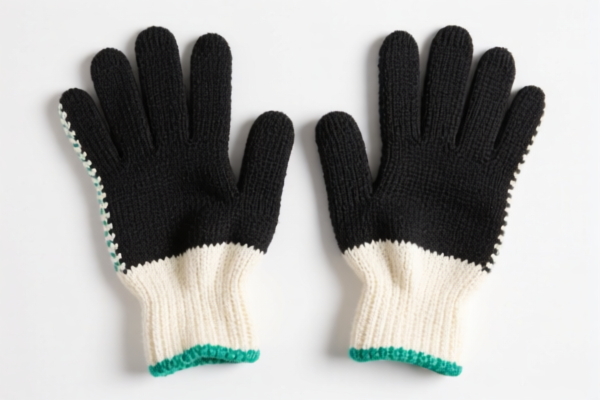
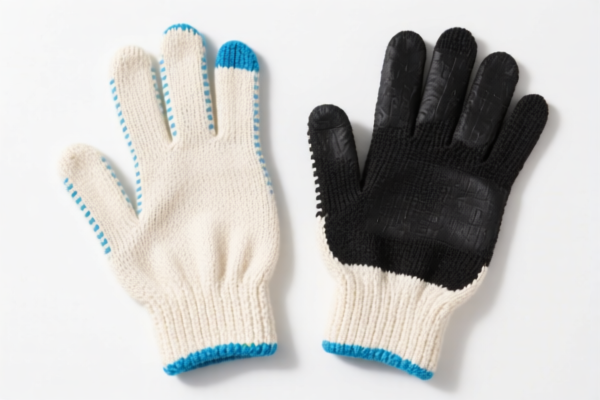


AI Analysis
🧤 Rubber Impregnated Knitted Blend Gloves (Rubber-Coated Knit Gloves)
🌐 HS Code Reference & Customs Clearance Guide | 2026 Latest Tariff Analysis | Professional Clearance Strategy
📌 I. Product Definition & Classification: Do You Really Understand "Rubber Impregnated Gloves"?
Rubber impregnated knitted blend gloves are protective handwear where a knitted fabric base (often cotton, nylon, or polyester blend) is coated or impregnated with rubber (natural or synthetic, such as latex, nitrile, or PVC) to provide grip, waterproofing, and chemical resistance.
In international trade, these gloves are classified based on material composition, intended use (general vs. medical), and structural form. The classification significantly impacts the duty rate, especially under current US trade policies.
⚠️ Key Distinction Points:
- If the rubber coating is the primary characteristic and they are for general protection → Chapter 40 (Rubber).
- If they are specifically designed for medical procedures (e.g., surgical exam) → Chapter 90 (Medical Instruments).
- If considered a composite textile/rubber hybrid without specific medical or general glove classification → Chapter 39 (Plastics/Resins) or Chapter 61/62 (Apparel) may be argued, though less common.
📦 II. HS Code Classification Details (2026 Latest Tariff Authority)
| HS Code | Product Description | Application Scenario | Key Classification Basis |
|---|---|---|---|
4015.19.51.00 |
Rubber-impregnated finger cots/gloves, made of vulcanized rubber, classified under gloves/finger cots | General industrial protection, hygiene, non-medical | ✅ Primary material: Vulcanized Rubber; Function: Glove |
9018.39.00.20 |
Rubber-impregnated finger cots, extended application of catheters/probes | Medical devices, probe protection, specific medical accessories | ✅ Form: Catheter/probe-like extension; Medical use |
9018.39.00.50 |
Medical rubber-impregnated finger cots, categorized under catheters/sheaths | Surgical exam gloves, medical barrier protection | ✅ Category: Medical Device (Other); Hospital use |
3926.20.10.50 |
Rubber-impregnated finger cots, viewed as plastic/polymer composite | Non-standard rubber gloves, composite material usage | ✅ Material: Plastic/High-polymer composite application |
4015.19.11.50 |
Rubber-impregnated finger cots, considered clothing accessories | Fashion or accessory gloves, non-protective | ✅ Category: Apparel Accessory; No material conflict |
🔍 Critical Reminder:
- Medical vs. General Use: Gloves intended for medical procedures fall under Chapter 90, while general industrial/hygiene gloves fall under Chapter 40. Misclassification can lead to severe penalties. - Material Priority: If the rubber coating is substantial and vulcanized, Chapter 40 is the primary classification. If it's a thin impregnation on a textile base, customs may still view it as a rubber article if the rubber defines the essential character.
💰 III. 2026 Latest Tariff Rate Details (Including Surtaxes & Policy Add-ons)
✅ Applicable Country: United States (US)
✅ Origin: China (CN)
✅ Effective Date: From November 10, 2025 (and subsequent imports)
🎯 1. 4015.19.51.00 —— Rubber-impregnated Finger Cots/Gloves (Vulcanized Rubber)
| Item | Content |
|---|---|
| Base Duty Rate | 14.0% (ad valorem) |
| USITC Surtax (Section 301) | +25.0% |
| IEEPA Surtax | +10.0% (Targeting China/HK products) |
| Total Duty Rate | 49.0% |
| Tax Calculation | CIF Value × 49% |
| De Minimis Exemption | ❌ Not Eligible (deny_de_minimis) |
| Legal Basis Path | IEEPA:9903.01.24 → USITC:4015.19.51.00 → FOOTNOTE:301-Tariff |
📌 Explanation:
- Base 14%: Standard MFN duty for rubber gloves. - 25% Section 301: Additional tariff on Chinese rubber articles. - 10% IEEPA: Additional tariff under the International Emergency Economic Powers Act. - Total 49%: This is a very high tariff. Importers must plan for significant cost increases.
🎯 2. 9018.39.00.20 —— Rubber-impregnated Finger Cots (Medical Probe Extension)
| Item | Content |
|---|---|
| Base Duty Rate | 0.0% |
| USITC Surtax | 0.0% |
| IEEPA Surtax | +10.0% |
| Total Duty Rate | 10.0% |
| Tax Calculation | CIF Value × 10% |
| De Minimis Exemption | ❌ Not Eligible |
| Legal Basis Path | IEEPA:9903.01.24 → USITC:9018.39.00.20 → FOOTNOTE:IEEPA |
📌 Note:
- Base 0%: Medical instruments often have zero base duty. - 10% IEEPA: The only surtax applied is the IEEPA tariff. - Total 10%: Significantly lower than general rubber gloves. This is a strategic classification for medical-grade products.
🎯 3. 9018.39.00.50 —— Medical Rubber-impregnated Finger Cots (Catheter/Sheath Category)
| Item | Content |
|---|---|
| Base Duty Rate | 0.0% |
| USITC Surtax | 0.0% |
| IEEPA Surtax | +10.0% |
| Total Duty Rate | 10.0% |
| Tax Calculation | CIF Value × 10% |
| De Minimis Exemption | ❌ Not Eligible |
| Legal Basis Path | IEEPA:9903.01.24 → USITC:9018.39.00.50 → FOOTNOTE:IEEPA |
📌 Note:
- Same as above: 10% total. - Applies specifically to medical devices categorized under "Other instruments and appliances used in medical, surgical, dental, or veterinary sciences."
🎯 4. 3926.20.10.50 —— Rubber-impregnated Finger Cots (Plastic/Composite)
| Item | Content |
|---|---|
| Base Duty Rate | 0.0% |
| USITC Surtax | 0.0% |
| IEEPA Surtax | +10.0% |
| Total Duty Rate | 10.0% |
| Tax Calculation | CIF Value × 10% |
| De Minimis Exemption | ❌ Not Eligible |
| Legal Basis Path | IEEPA:9903.01.24 → USITC:3926.20.10.50 → FOOTNOTE:IEEPA |
📌 Note:
- If customs classifies the product as a "plastic article" due to composite nature, the base duty is 0%. - 10% IEEPA still applies. - Total 10%: Lower than general rubber gloves.
🎯 5. 4015.19.11.50 —— Rubber-impregnated Finger Cots (Clothing Accessory)
| Item | Content |
|---|---|
| Base Duty Rate | 3.0% |
| USITC Surtax | +25.0% |
| IEEPA Surtax | +10.0% |
| Total Duty Rate | 38.0% |
| Tax Calculation | CIF Value × 38% |
| De Minimis Exemption | ❌ Not Eligible |
| Legal Basis Path | IEEPA:9903.01.24 → USITC:4015.19.11.50 → FOOTNOTE:301-Tariff |
📌 Note:
- Base 3%: Lower base for apparel/accessories. - 25% Section 301 + 10% IEEPA = 35% surtax. - Total 38%: Higher than medical (10%) but lower than general rubber gloves (49%).
🛠️ IV. Customs Clearance Practical Advice (Battle-Proven Pitfall Avoidance)
✅ 1. Document Checklist (All Required)
| Document | Mandatory | Description |
|---|---|---|
| ✅ Product Specifications | ✔️ | Material composition, coating type (latex/nitrile/pvc), glove size, thickness |
| ✅ Intended Use Statement | ✔️ | Explicitly state if for Medical (surgical/exam) or General Industrial use |
| ✅ Product Photos (Label/Tag) | ✔️ | Clear view of brand, model, material claims |
| ✅ Third-party Testing Report | ✔️ | FDA 510(k) (if medical), CE, REACH, or ASTM standards |
| ✅ Commercial Invoice | ✔️ | Must clearly describe product as "Medical Gloves" or "Industrial Rubber Gloves" |
| ✅ Certificate of Origin (CO) | ✔️ | To prove origin; not eligible for preference in US-China trade currently |
| ✅ Packing List | ✔️ | Details quantity, weight, and packaging |
✅ 2. Declaration Strategy (Key Rules)
🔥 “Medical Zero Base, Industrial High Base; Specify Use, Lower Cost!”
| Scenario | Correct Declaration | Wrong Approach |
|---|---|---|
| Medical Use | 9018.39.00.20 / 9018.39.00.50 |
Declaring as "General Gloves" → 49% duty |
| General Industrial | 4015.19.51.00 |
Declaring as "Medical" without FDA registration → Fraud/penalty |
| Composite/Plastic View | 3926.20.10.50 |
If rubber is minimal, argue for plastic classification → 10% duty |
| Fashion Accessory | 4015.19.11.50 |
If not protective, declare as accessory → 38% duty |
✅ 3. Special Cases Handling
| Case | Handling Advice |
|---|---|
| OEM Medical Gloves | Provide FDA registration number and intended use certificate to justify 9018 classification |
| Mixed Packaging | If medical and general gloves are packed together, declare separately to avoid misclassification |
| Non-Chinese Origin | If from Vietnam, Mexico, etc., IEEPA surtax may be waived or reduced; apply for EO 14058 exemption if eligible |
| Sample Imports | Even samples are subject to duty; do not use "gift" declaration incorrectly |
🌍 V. Global Market Customs Comparison (2026 Latest)
| Country/Region | Recommended HS Code | Duty Rate | Certification | Notes |
|---|---|---|---|---|
| 🇺🇸 USA | 4015.19.51.00 (General) |
49% | FDA (if medical) | Highest due to 301+IEEPA |
| 🇺🇸 USA | 9018.39.00.20 (Medical) |
10% | FDA 510(k) | Best rate for medical |
| 🇨🇳 China | 4015.19 |
8-14% | CCC (if applicable) | Lower base, no IEEPA |
| 🇪🇺 EU | 4015.11 |
0-4% | CE, REACH | No Section 301/IEEPA |
| 🇬🇧 UK | 4015.11 |
0-5% | UKCA | Post-Brexit rules apply |
| 🇦🇺 Australia | 4015.11 |
5% | TGA (if medical) | No surtaxes |
📌 Conclusion:
- USA is the most costly market for Chinese-made rubber gloves due to combined 301 and IEEPA tariffs. - Medical classification (9018) offers the lowest duty (10%), but requires strict documentation (FDA, medical use proof). - General industrial gloves face 49%, which may impact profitability significantly.
📌 VI. Common Errors & Pitfalls (Blood Lessons)
❌ Error 1: Declaring medical gloves as "general hand protection"
👉 Consequence: Pay 49% instead of 10% → Loss of profit margin
❌ Error 2: Declaring general gloves as "medical" without FDA approval
👉 Consequence: Customs seizure, fines, or entry refusal → Legal risk
❌ Error 3: Omitting material composition (e.g., "knitted blend")
👉 Consequence: Customs may misclassify as pure rubber or pure textile → Audits
❌ Error 4: Assuming de minimis applies
👉 Consequence: Packages under $800 are not exempt from IEEPA/301 tariffs → Unexpected duty bills
✅ Correct Practice:
“Medical Examination Gloves, Nitrile-Coated Cotton Knit, FDA Registered, Sterile, Box of 100”
🎯 VII. Conclusion: Professional Declaration, Save Costs, Ensure Compliance
🎯 Remember the Mantra:
🔹 “Medical is 10%, General is 49%; Specify Use, Save Money!”
🔹 “HS Code Defines Destiny, Duty Rate Varies; Declare Accurately, Avoid Fines!”
📌 Tip:
If your gloves are originating from Vietnam, Mexico, Thailand, or Malaysia, you may qualify for IEEPA Exemption under EO 14058, reducing the rate to 0%-5%.
Recommend applying for an Advance Ruling from CBP to confirm classification before shipment.
📣 Immediate Action:
📞 Contact a professional customs broker + Provide product specs + Apply for HS Code Advance Ruling
🚀 Let your gloves clear smoothly, export efficiently, and boost profits!
✨ Professional Customs Clearance Starts with Accurate Classification!
💼 Every cent of your cost deserves precise calculation!
Customer Reviews
About HS Code Classification
The Harmonized System (HS) is an internationally standardized nomenclature developed by the World Customs Organization (WCO) to classify traded products. Over 200 countries use the HS system as the basis for customs tariffs, trade statistics, and import/export regulations.
Each HS code follows a hierarchical structure:
- Chapter (2 digits) — Broad category of goods (e.g., Chapter 84: Machinery and Mechanical Appliances)
- Heading (4 digits) — More specific grouping within the chapter
- Subheading (6 digits) — Internationally standardized breakdown, used by all WCO member countries
- National subdivisions (8-10 digits) — Country-specific extensions for further classification, such as US HTSUS 10-digit codes
Correct HS code classification is essential for smooth customs clearance, accurate duty payment, and compliance with trade regulations. Misclassification can lead to customs delays, overpayment of duties, or penalties.
When importing from CN to US, the applicable tariff rates may include:
- Most-Favored-Nation (MFN) rate — The standard duty rate applied to WTO members
- General rate — Applied to countries without trade agreements
- Trade remedy duties — Additional tariffs such as Section 301 (anti-dumping), Section 232 (national security), or countervailing duties
The information provided on this page is for reference purposes only. For official classification, please consult with your local customs authority or a licensed customs broker.