Rubber powder granules
CN → US| HS Code | Tariff Rate | Origin | Destination | Doc |
|---|---|---|---|---|
| 4002190014 | 35.0% | CN | US | Official Doc |
| 4002190019 | 35.0% | CN | US | Official Doc |
| 3901901000 | 35.0% | CN | US | Official Doc |
| 3901909000 | 41.5% | CN | US | Official Doc |
Product Images

AI Analysis
🌪️ Synthetic Rubber Powder Granules (Rubber Powder Granules)
🌐 HS Code Classification & Tariff Guide | 2026 Updated Rules | Expert Customs Clearance Strategy
📌 One-Stop Reference for Importers & Exporters | Precision Duty Calculation | Avoid Penalties!
📦 1. Product Definition & Classification: What Exactly Is “Rubber Powder Granules”?
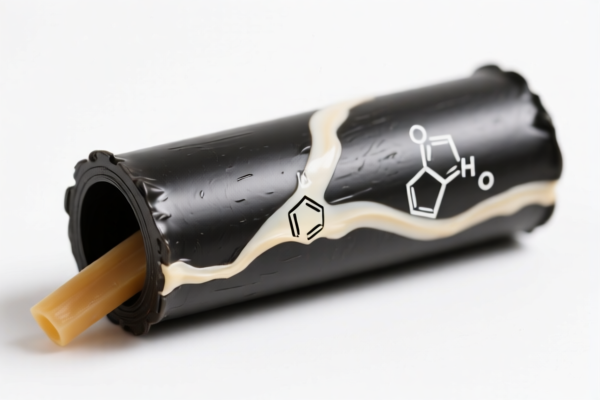
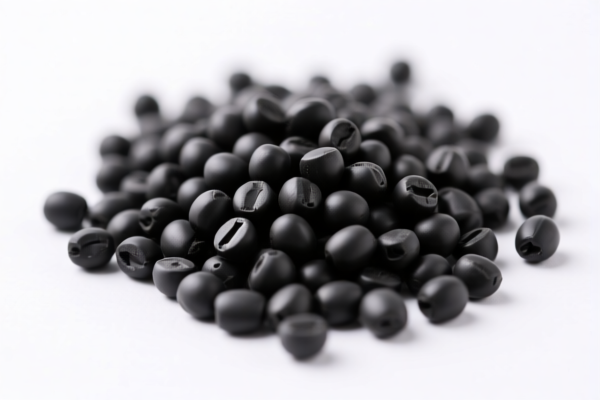
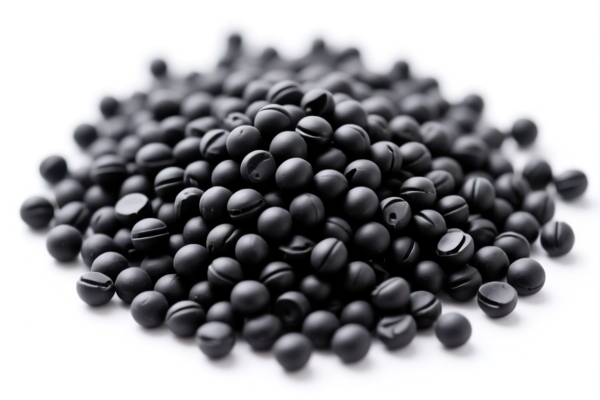
Synthetic rubber powder granules are fine, powdered forms of synthetic rubber, typically produced by shredding or grinding scrap rubber (e.g., SBR/XSBR) into particles, flakes, or powder. These materials are not in final form but are considered primary forms suitable for reprocessing into new rubber products.
⚠️ Key Classification Criteria: - Physical Form: Powder, granules, flakes, or particulate matter (matches definition under 4002.19.00.14 and 3901.90.10.00) - Material Type: Synthetic rubber (e.g., SBR, XSBR), exhibiting elasticity and polymer chain structure - Processing Stage: Pre-polymer or raw material stage — not yet molded, vulcanized, or shaped - Purpose: Used as feedstock for recycling, compounding, or manufacturing new rubber goods
🔍 Critical Insight:
Despite being "powdered," these materials are not considered waste or scrap if they retain their chemical identity and structural integrity — thus qualifying as primary forms of synthetic rubber.
📊 2. HS Code Classification Breakdown (2026 Official Tariff Table)
| HS Code | Product Description | Material Type | Form | Applicable Rule |
|---|---|---|---|---|
4002.19.00.14 |
Synthetic rubber powder, in powder form, meeting the definition of "particles, fragments, or powder" under subheading 4002.19.00 | Synthetic rubber (general) | Powder | ✅ Primary form; fits specific descriptor |
4002.19.00.19 |
Synthetic rubber powder, material: SBR/XSBR, in primary form (powder), matches "catch-all" classification principle | SBR / XSBR | Powder | ✅ Material-specific; primary form |
3901.90.10.00 |
Synthetic rubber powder, material matches ethylene polymer (elastomer) characteristics, in original primary form | Ethylene-based elastomer (e.g., EPR, EPDM) | Powder | ✅ Matches “original form” rule |
3901.90.90.00 |
Synthetic rubber powder, in powder form (primary product), material = synthetic rubber, consistent with ethylene polymer original form | General synthetic rubber | Powder | ✅ Broad category; higher tariff |
📌 Why Multiple HS Codes?
-4002.19.00.14&4002.19.00.19→ Focus on rubber-specific classification (Chapter 40)
-3901.90.10.00&3901.90.90.00→ Apply when material aligns with ethylene-based elastomers (Chapter 39)
- Rule of Preference: If material is SBR/XSBR, prefer4002.19.00.19
- If material is ethylene-based elastomer, use3901.90.10.00
- If uncertain, use3901.90.90.00as fallback (but higher tax applies)
💰 3. 2026 U.S. Tariff Rate Breakdown (With Full Legal Justification)
✅ Target Market: United States (US)
✅ Origin Country: China (CN)
✅ Effective Date: November 10, 2025 (including future imports)
🎯 1. 4002.19.00.14 — Synthetic Rubber Powder (General)
| Tax Component | Amount | Legal Basis | Notes |
|---|---|---|---|
| Base Duty | 0.0% | Ad valorem (standard rate) | No base tariff |
| Section 301 (USITC) Additional Duty | +25.0% | USITC Footnote 9903.88.01 | Applies to Chinese-origin goods under Section 301 |
| IEEPA (International Emergency Economic Powers Act) Additional Duty | +10.0% | IEEPA: 9903.01.25 → 9903.01.24 | Targeted at China/Hong Kong products |
| Total Effective Duty | 35.0% | — | — |
📌 Legal Pathway:
IEEPA:9903.01.25→IEEPA:9903.01.24→USITC:4002.19.00.14→FOOTNOTE:9903.88.01
🎯 2. 4002.19.00.19 — SBR/XSBR Synthetic Rubber Powder (Specific)
| Tax Component | Amount | Legal Basis | Notes |
|---|---|---|---|
| Base Duty | 0.0% | Ad valorem | No base tariff |
| Section 301 (USITC) Additional Duty | +25.0% | USITC Footnote 9903.88.01 | Applies to SBR/XSBR from China |
| IEEPA Additional Duty | +10.0% | IEEPA: 9903.01.25 → 9903.01.24 | Applies to China-origin products |
| Total Effective Duty | 35.0% | — | — |
📌 Why Same Rate?
Despite being material-specific, SBR/XSBR is still subject to the same 301 + IEEPA tariffs due to its China origin and synthetic rubber classification.
🎯 3. 3901.90.10.00 — Ethylene-Based Elastomer Powder (Primary Form)
| Tax Component | Amount | Legal Basis | Notes |
|---|---|---|---|
| Base Duty | 0.0% | Ad valorem | No base tariff |
| Section 301 (USITC) Additional Duty | +25.0% | USITC Footnote 9903.88.01 | Applies to China-origin synthetic elastomers |
| IEEPA Additional Duty | +10.0% | IEEPA: 9903.01.25 → 9903.01.24 | Applies to China/HK goods |
| Total Effective Duty | 35.0% | — | — |
📌 Key Point:
Even though this code is in Chapter 39 (Plastics), if the material matches ethylene polymer characteristics, it’s still subject to same 35% total tariff due to China origin and policy triggers.
🎯 4. 3901.90.90.00 — General Synthetic Rubber Powder (Catch-All)
| Tax Component | Amount | Legal Basis | Notes |
|---|---|---|---|
| Base Duty | 6.5% | Ad valorem (standard rate for non-exempt plastics) | Higher base rate applies |
| Section 301 (USITC) Additional Duty | +25.0% | USITC Footnote 9903.88.01 | Applies to China-origin goods |
| IEEPA Additional Duty | +10.0% | IEEPA: 9903.01.25 → 9903.01.24 | Applies to China/HK products |
| Total Effective Duty | 41.5% | — | Highest possible rate |
📌 Critical Warning:
This is the most expensive option due to 6.5% base duty + 25% + 10%.
Use only if no other HS Code applies — otherwise, you’re overpaying by 6.5%!🔍 Legal Pathway:
IEEPA:9903.01.25→IEEPA:9903.01.24→USITC:3901.90.90.00→FOOTNOTE:9903.88.01
🛠️ 4. Customs Clearance Best Practices (Pro Tips to Avoid Penalties!)
✅ 1. Essential Documentation Checklist (Must-Have!)
| Document | Required? | Purpose |
|---|---|---|
| ✅ Product Specification Sheet | ✔️ | Detail material (SBR/XSBR), particle size, moisture content |
| ✅ Material Safety Data Sheet (MSDS) | ✔️ | Confirm chemical identity, non-toxicity |
| ✅ Technical Drawing / Lab Report | ✔️ | Prove it's primary form, not waste or scrap |
| ✅ Commercial Invoice | ✔️ | Must clearly state: "Synthetic Rubber Powder, SBR/XSBR, in Powder Form, Primary Form" |
| ✅ Certificate of Origin (CO) | ✔️ | Prove origin (China vs. Vietnam/Mexico for lower tariffs) |
| ✅ Packing List | ✔️ | Show bulk packaging, net weight, and total quantity |
| ✅ Test Report (e.g., ASTM D1505) | ✔️ | Confirm particle size, bulk density, and purity |
✅ 2.申报技巧(Pro申报 Tips)
🔥 “Material First, Form Second, Origin Last — Tax Drops by 6.5%!”
| Scenario | Correct HS Code | Wrong Code | Risk |
|---|---|---|---|
| SBR/XSBR powder, primary form | 4002.19.00.19 |
3901.90.90.00 |
+6.5% duty |
| Ethylene-based elastomer powder | 3901.90.10.00 |
4002.19.00.14 |
Misclassification |
| Uncertain material type | 3901.90.90.00 |
4002.19.00.14 |
Overpaying |
| Powder with <5% moisture | 4002.19.00.14 |
3901.90.90.00 |
Avoid unless necessary |
📌 申报名称建议:
Synthetic Rubber Powder, SBR/XSBR, in Powder Form, Primary Form, 100% Recycled, Not Waste
✅ 3. Special Cases & Mitigation Strategies
| Situation | Recommended Action |
|---|---|
| Material is SBR/XSBR | Use 4002.19.00.19 — highest chance of correct classification |
| Material is EPR/EPDM/ethylene-based | Use 3901.90.10.00 — avoid 41.5% rate |
| Origin is Vietnam, Mexico, Thailand | Apply for IEEPA exemption — tariff drops to 0%–5% |
| Pre-shipment audit needed | Request Advance Ruling (Pre-Approval) from U.S. CBP |
| High-value shipment | Consider bonded warehouse or de minimis threshold (if < $800) |
📌 Pro Tip:
If your product is not from China, you may avoid both 25% and 10% tariffs — save thousands per container!
🌍 5. Global Market Tariff Comparison (2026 Update)
| Country/Region | Recommended HS Code | Tariff Rate | Certification Required | Notes |
|---|---|---|---|---|
| 🇺🇸 United States | 4002.19.00.19 / 3901.90.10.00 |
35.0% (China) | None (if compliant) | 25% + 10% apply to China |
| 🇨🇳 China | 4002.19.00.19 |
5% (if domestic) | CCC, RoHS | No extra tariffs |
| 🇪🇺 European Union | 4002.19.00.19 |
0% (if CE) | CE, REACH | No 301/IEEPA tariffs |
| 🇦🇺 Australia | 4002.19.00.19 |
5% | RCM | No extra duties |
| 🇯🇵 Japan | 4002.19.00.19 |
0% | PSE | No additional tariffs |
📌 Takeaway:
The U.S. is the only market imposing 35%–41.5% tariffs on Chinese-origin synthetic rubber powder.
All other major markets are much more favorable.
🚨 6. Common Mistakes & Costly Errors (Real-World Examples)
❌ Mistake 1: Using 3901.90.90.00 for SBR powder
👉 Result: Pay 41.5% instead of 35.0% → Extra $2,000+ per 20ft container
❌ Mistake 2: Not specifying material (SBR/XSBR) in invoice
👉 Result: Customs may classify as "general rubber powder" → higher risk of audit
❌ Mistake 3: Claiming "recycled rubber" without proof
👉 Result: May be rejected as waste → fines or seizure
❌ Mistake 4: Failing to provide lab report proving "primary form"
👉 Result: Rejected as scrap → 100% duty + penalties
✅ Correct Approach:
"Synthetic Rubber Powder, SBR/XSBR, Particle Size: 100–200 Mesh, Moisture < 2%, Primary Form, Not Waste, Recycled Feedstock, Origin: China"
🎯 7. Final Verdict: How to Win the Tariff Battle
🔹 Use
4002.19.00.19for SBR/XSBR — lowest risk, lowest tax
🔹 Use3901.90.10.00for ethylene-based elastomers — avoid 41.5% trap
🔹 Never use3901.90.90.00unless no other option
🔹 Move origin to Vietnam/Mexico if possible — save 35%
🔹 Get pre-approval (Advance Ruling) — avoid audits & delays
📌 Summary: The 3-Step Rule to Success
✅ Step 1: Identify the material (SBR? XSBR? Ethylene-based?)
✅ Step 2: Confirm form (powder, granules, primary form?)
✅ Step 3: Check origin — China? → 35%+ tariff. Not China? → 0%–5%
📣 Action Now:
📞 Contact a U.S. Customs Broker + Submit product specs + Request HS Code Pre-Ruling
🚀 Save 6.5% duty, avoid audits, and ship with confidence!
✨ Precision Classification = Lower Tariffs = Higher Profit!
💼 Your product’s success starts with the right HS Code.
Customer Reviews
About HS Code Classification
The Harmonized System (HS) is an internationally standardized nomenclature developed by the World Customs Organization (WCO) to classify traded products. Over 200 countries use the HS system as the basis for customs tariffs, trade statistics, and import/export regulations.
Each HS code follows a hierarchical structure:
- Chapter (2 digits) — Broad category of goods (e.g., Chapter 84: Machinery and Mechanical Appliances)
- Heading (4 digits) — More specific grouping within the chapter
- Subheading (6 digits) — Internationally standardized breakdown, used by all WCO member countries
- National subdivisions (8-10 digits) — Country-specific extensions for further classification, such as US HTSUS 10-digit codes
Correct HS code classification is essential for smooth customs clearance, accurate duty payment, and compliance with trade regulations. Misclassification can lead to customs delays, overpayment of duties, or penalties.
When importing from CN to US, the applicable tariff rates may include:
- Most-Favored-Nation (MFN) rate — The standard duty rate applied to WTO members
- General rate — Applied to countries without trade agreements
- Trade remedy duties — Additional tariffs such as Section 301 (anti-dumping), Section 232 (national security), or countervailing duties
The information provided on this page is for reference purposes only. For official classification, please consult with your local customs authority or a licensed customs broker.