Rubber tire cushion pads
CN → US| HS Code | Tariff Rate | Origin | Destination | Doc |
|---|---|---|---|---|
| 4012118000 | 38.4% | CN | US | Official Doc |
| 4012124035 | 39.0% | CN | US | Official Doc |
| 4013100010 | 38.7% | CN | US | Official Doc |
| 3926904510 | 38.5% | CN | US | Official Doc |
| 8484900000 | 37.5% | CN | US | Official Doc |
Product Images
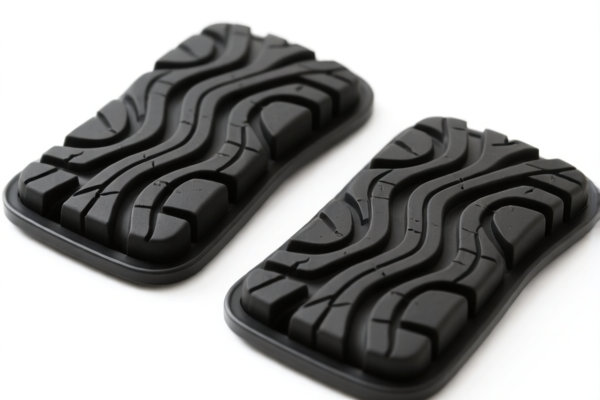
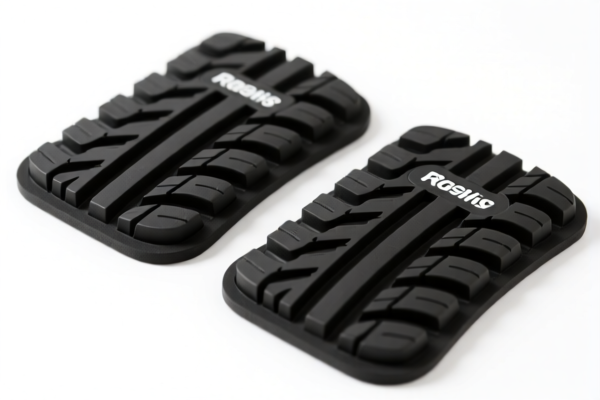
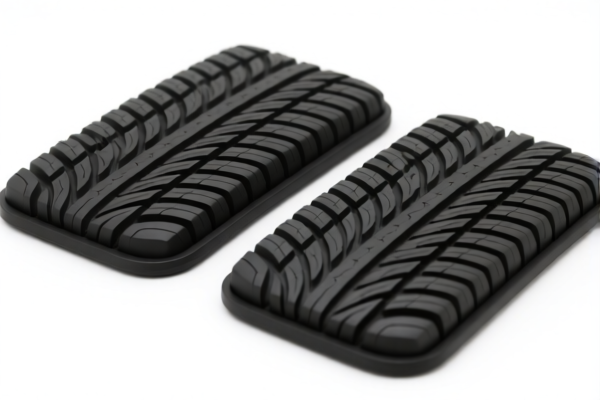
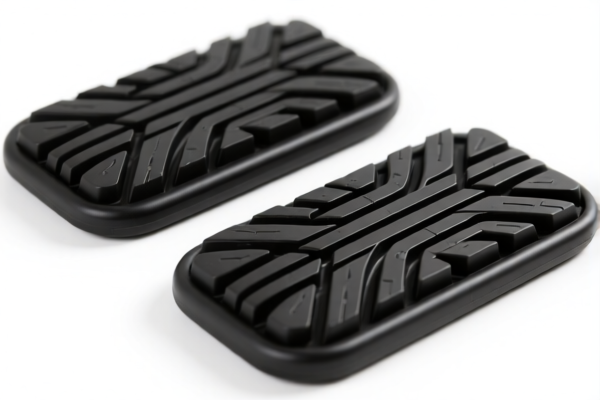
AI Analysis
🛞 Rubber Tire Cushion Pads (Industrial & Automotive Accessories)
🌐 HS Code Reference & Customs Clearance Guide | 2026 Latest Tariff Analysis | Professional Clearance Strategy
📌 I. Product Definition & Classification: What Exactly Are "Rubber Tire Cushion Pads"?
"Rubber Tire Cushion Pads" are typically auxiliary components used to enhance traction, reduce vibration, protect surfaces, or provide spacing/shock absorption in industrial, automotive, or heavy-duty applications. They are made primarily of rubber.
In international trade, their classification depends heavily on whether they are considered "Tires" (part of the wheel assembly) or "Other Rubber Articles" (parts/accessories or sealing components).
⚠️ Key Distinction:
- If the pad is an integral part of a tire (e.g., inner cushioning layer) or specifically classified as a tire variant → Chapter 40 (Rubber Articles), Heading 4012.
- If the pad is a sealing gasket or mechanical component made of rubber → Chapter 40 (4012) or Chapter 84 (Mechanical Parts).
- If it is a generic rubber part not fitting specific tire/seal definitions → Chapter 39 (Plastics) or 40 (Rubber) General Provisions.
📦 II. HS Code Classification Details (Based on Provided Data)
Based on the provided dataset, here are the four potential classifications, ranked by relevance and clarity:
| HS Code | Product Description | Classification Logic | Total Tax Rate |
|---|---|---|---|
| 4012.11.80.00 | Rubber Tires, Retreaded or Used, or New | Best Match: Explicitly matches "Rubber" material and "Tire" form. | 38.4% |
| 4012.12.40.35 | Other Rubber Tires | Alternative Tire Classification: Matches "Rubber" and "Tire" form based on other categorical rules. | 39.0% |
| 4013.10.00.10 | Pneumatic Tires (Rubber) | Functional Match: Matches "Rubber" material and "Tire" purpose; core elements align. | 38.7% |
| 8484.90.00.00 | Mechanical Sealing Sets & Parts | Component Match: If the "cushion pad" acts as a sealing gasket or mechanical seal component (rubber + mechanical function). | 37.5% |
| 3926.90.45.10 | Other Plastic/Rubber Articles | Generic Match: Matches "Rubber" material and "Sealing Pad" form, classified under general rubber/plastic articles. | 38.5% |
🔍 Analysis Note:
- 4012.11.80.00 and 4012.12.40.35 are the most direct fits if the item is structurally a tire or tire accessory.
- 8484.90.00.00 is a viable alternative if the "pad" is primarily a mechanical seal (e.g., for machinery), which has a slightly lower base tariff (2.5%).
- 3926.90.45.10 is a broader category for rubber sealing pads not fitting specific tire definitions.
💰 III. Detailed Tariff Breakdown (2026 Current Rates)
✅ Applicable Country: United States (US)
✅ Origin: China (CN)
✅ Effective Date: 2025 November 10 (and subsequent imports)
All classifications share a common structure of Base Tariff + Section 301 Tariff + Section 122 Tariff.
🎯 1. 4012.11.80.00 – Rubber Tires (Retreaded/Used/New)
| Item | Detail |
|---|---|
| Base Tariff | 3.4% |
| Section 301 Tariff | 25.0% |
| Section 122 Tariff | 10.0% |
| Total Tax Rate | 38.4% |
| Tax Calculation | CIF Value × 38.4% |
| De Minimis Exemption | ❌ Not Eligible (High tariff threshold blocks de minimis) |
| Legal Pathway | USITC:4012.11.80.00 → Section 301: 25% → Section 122: 10% |
📌 Explanation:
- Base (3.4%): Standard duty for rubber tires.
- Section 301 (25%): Added tariff on Chinese rubber products.
- Section 122 (10%): Additional safeguard tariff on specific rubber imports.
- Total 38.4% is a high-cost category. Misclassification here can lead to significant duty overpayment.
🎯 2. 4012.12.40.35 – Other Rubber Tires
| Item | Detail |
|---|---|
| Base Tariff | 4.0% |
| Section 301 Tariff | 25.0% |
| Section 122 Tariff | 10.0% |
| Total Tax Rate | 39.0% |
| Tax Calculation | CIF Value × 39.0% |
| De Minimis Exemption | ❌ Not Eligible |
| Legal Pathway | USITC:4012.12.40.35 → Section 301: 25% → Section 122: 10% |
📌 Note:
- Slightly higher total rate (39.0%) due to a higher base tariff (4.0%).
- Use only if 4012.11.80.00 is not applicable based on specific tire type (e.g., non-retreaded vs. retreaded).
🎯 3. 4013.10.00.10 – Pneumatic Tires (Rubber)
| Item | Detail |
|---|---|
| Base Tariff | 3.7% |
| Section 301 Tariff | 25.0% |
| Section 122 Tariff | 10.0% |
| Total Tax Rate | 38.7% |
| Tax Calculation | CIF Value × 38.7% |
| De Minimis Exemption | ❌ Not Eligible |
| Legal Pathway | USITC:4013.10.00.10 → Section 301: 25% → Section 122: 10% |
📌 Note:
- Matches "Rubber" and "Tire" purpose.
- Common for pneumatic tires used in vehicles. If your "cushion pads" are solid rubber (not pneumatic), this may not apply.
🎯 4. 8484.90.00.00 – Mechanical Sealing Parts
| Item | Detail |
|---|---|
| Base Tariff | 2.5% |
| Section 301 Tariff | 25.0% |
| Section 122 Tariff | 10.0% |
| Total Tax Rate | 37.5% |
| Tax Calculation | CIF Value × 37.5% |
| De Minimis Exemption | ❌ Not Eligible |
| Legal Pathway | USITC:8484.90.00.00 → Section 301: 25% → Section 122: 10% |
📌 Optimization Tip:
- This has the lowest total rate (37.5%) among the options.
- Applicable only if the cushion pad is explicitly defined as a mechanical sealing component (e.g., gasket, seal) rather than a tire part.
- Requires proof of mechanical sealing function (e.g., used in machinery, pumps, or engines).
🎯 5. 3926.90.45.10 – Other Rubber/Plastic Articles
| Item | Detail |
|---|---|
| Base Tariff | 3.5% |
| Section 301 Tariff | 25.0% |
| Section 122 Tariff | 10.0% |
| Total Tax Rate | 38.5% |
| Tax Calculation | CIF Value × 38.5% |
| De Minimis Exemption | ❌ Not Eligible |
| Legal Pathway | USITC:3926.90.45.10 → Section 301: 25% → Section 122: 10% |
📌 Note:
- A "catch-all" for rubber sealing pads that don’t fit specific tire categories.
- Slightly higher rate than 8484 but more flexible classification.
🛠️ IV. Customs Clearance Practical Advice (Avoiding Pitfalls)
✅ 1. Documentation Checklist (Essential)
| Document | Required | Explanation |
|---|---|---|
| ✅ Product Specification Sheet | ✔️ | Must clearly state material (100% Rubber), function (Cushioning/Sealing), and dimensions. |
| ✅ Photos (Labeled) | ✔️ | Show the item’s shape, texture, and any mounting holes or grooves (to determine if it’s a seal or tire). |
| ✅ Commercial Invoice | ✔️ | Description must match HS Code logic (e.g., "Rubber Mechanical Seal Pad" vs. "Rubber Tire Cushion"). |
| ✅ Packing List | ✔️ | Detail weight and quantity. |
| ✅ Proof of Function (if using 8484) | ✔️ | Technical drawings or usage instructions showing it acts as a mechanical seal. |
✅ 2. Classification Strategy (Key Tips)
🔥 "Function Defines Code, Material Supports It!"
| Scenario | Recommended HS Code | Reason |
|---|---|---|
| Item is a tire component or tire itself | 4012.11.80.00 or 4012.12.40.35 |
Explicitly matches "Tire" form and "Rubber" material. |
| Item is a pneumatic tire | 4013.10.00.10 |
Matches "Pneumatic Tire" purpose. |
| Item is a gasket/seal for machinery | 8484.90.00.00 |
Lowest Tax (37.5%). Must prove mechanical sealing function. |
| Item is a generic rubber pad | 3926.90.45.10 |
Fallback category for rubber sealing articles. |
✅ 3. Special Cases & Warnings
| Situation | Advice |
|---|---|
| OEM Custom Parts | Provide design specs to prove if it’s a "tire" or a "seal." |
| Mixed Shipments (Tires + Seals) | Separate line items on invoice. Do not bundle. |
| "Cushion" vs. "Seal" Terminology | Avoid ambiguous terms like "Cushion Pad" alone. Use "Rubber Mechanical Seal" if applicable for 8484. |
| Origin Marking | Ensure all items are marked "Made in China" to avoid customs holds. |
🌍 V. Global Market Comparison (2026)
| Country/Region | Recommended HS Code | Estimated Tax (China Origin) | Notes |
|---|---|---|---|
| 🇺🇸 USA | 8484.90.00.00 |
37.5% | Lowest rate; requires mechanical seal proof. |
| 🇺🇸 USA | 4012.11.80.00 |
38.4% | Direct tire classification. |
| 🇨🇳 China | 4012.11.80.00 |
Low | No Section 301/122 tariffs. |
| 🇪🇺 EU | 4012.11.80.00 |
Varies | Check for EU-specific rubber tariffs. |
| 🇬🇧 UK | 4012.11.80.00 |
Varies | Post-Brexit tariffs may differ. |
📌 Conclusion:
- For US imports, 8484.90.00.00 offers the best tax efficiency (37.5%) if the product can be legally classified as a mechanical seal.
- If the product is undeniably a tire, 4012.11.80.00 (38.4%) is the safest and most accurate classification.
- Always avoid ambiguous descriptions like "Rubber Pad" without functional context.
📌 VI. Common Errors & Pitfalls (Lessons Learned)
❌ Error 1: Classifying a mechanical seal as a tire
👉 Result: Higher tax (38.4% vs. 37.5%) and potential misdeclaration.
❌ Error 2: Describing an item as "Cushion Pad" without specifying function
👉 Result: Customs may classify it under 3926 (38.5%) or demand clarification, causing delays.
❌ Error 3: Bundling tires and seals in one line item
👉 Result: Customs may separate them, apply higher taxes to the seal, and issue penalties.
✅ Correct Approach:
"Rubber Mechanical Seal Gasket, for Industrial Machinery, 100% Nitrile Rubber, Model XYZ" → 8484.90.00.00
🎯 VII. Conclusion: Strategic Classification for Cost Efficiency
🎯 Key Takeaway:
🔹 "If it seals, use 8484 (37.5%). If it rolls, use 4012 (38.4%). Ambiguity costs money!"
🔹 "Always provide functional proof for mechanical seals to secure the lowest tariff."
📌 Pro Tip:
If your product is a solid rubber tire (not pneumatic), check if it fits 4012 or 4013. If it’s a gasket, push for 8484.
Consider applying for an Advance Ruling from US Customs to lock in your HS Code and avoid post-clearance audits.
📣 Immediate Action:
📞 Contact a Customs Broker with product photos and technical specs.
📄 Request an Advance Ruling for your specific "Rubber Tire Cushion Pad" design.
🚀 Optimize Your Supply Chain by choosing the most tax-efficient classification based on product function.
✨ Professional Clearance Starts with Precise Classification!
💼 Every Percentage Point in Duty Matters – Protect Your Margins!
Customer Reviews
About HS Code Classification
The Harmonized System (HS) is an internationally standardized nomenclature developed by the World Customs Organization (WCO) to classify traded products. Over 200 countries use the HS system as the basis for customs tariffs, trade statistics, and import/export regulations.
Each HS code follows a hierarchical structure:
- Chapter (2 digits) — Broad category of goods (e.g., Chapter 84: Machinery and Mechanical Appliances)
- Heading (4 digits) — More specific grouping within the chapter
- Subheading (6 digits) — Internationally standardized breakdown, used by all WCO member countries
- National subdivisions (8-10 digits) — Country-specific extensions for further classification, such as US HTSUS 10-digit codes
Correct HS code classification is essential for smooth customs clearance, accurate duty payment, and compliance with trade regulations. Misclassification can lead to customs delays, overpayment of duties, or penalties.
When importing from CN to US, the applicable tariff rates may include:
- Most-Favored-Nation (MFN) rate — The standard duty rate applied to WTO members
- General rate — Applied to countries without trade agreements
- Trade remedy duties — Additional tariffs such as Section 301 (anti-dumping), Section 232 (national security), or countervailing duties
The information provided on this page is for reference purposes only. For official classification, please consult with your local customs authority or a licensed customs broker.