Rubber tire flap set
CN → US| HS Code | Tariff Rate | Origin | Destination | Doc |
|---|---|---|---|---|
| 4011908010 | 38.4% | CN | US | Official Doc |
| 4011908050 | 38.4% | CN | US | Official Doc |
| 4016931010 | 37.5% | CN | US | Official Doc |
| 4016931050 | 37.5% | CN | US | Official Doc |
| 8708995500 | 37.5% | CN | US | Official Doc |
| 8708706030 | 37.5% | CN | US | Official Doc |
Product Images
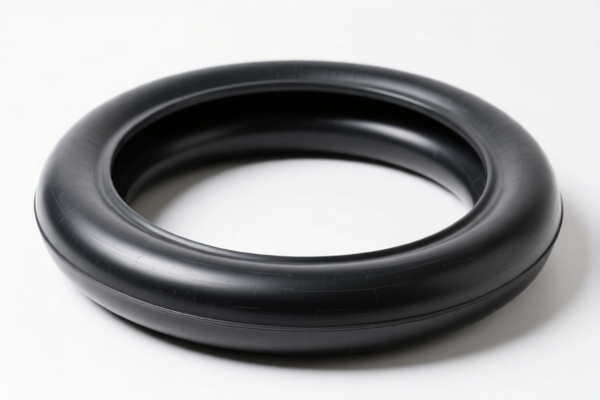
AI Analysis
🛞 Rubber Tire Flap Set: The Unsung Hero of Pneumatic Integrity
🌐 HS Code Reference & Customs Clearance Guide | 2026 Latest Tariff Analysis | Professional-Level Compliance Strategy
📌 I. Product Definition & Classification: Do You Truly Understand "Tire Flaps"?
Rubber tire flaps (also known as inner liners or valve stem inserts) are critical components used inside pneumatic tires to maintain air pressure by preventing air leakage through the porous rubber of the outer tire casing. In international trade, they are strictly regulated as vulcanized rubber articles or automotive parts, depending on their specific application and construction.
Key Distinction:
- Standard Pneumatic Tire Flaps: Used in general automotive, agricultural, or industrial tires (Chapters 40 or 87).
- Specialty Flaps: Specifically designed for non-standard vehicles (e.g., golf carts, ATVs, turf equipment) may fall under tire-specific subheadings if classified with the tire itself, but often classified as rubber articles if sold separately.
⚠️ Critical Clarification:
- If the product is a standalone rubber sheet/strip used to line the inside of a tire → Classified under Chapter 40 (Vulcanized Rubber Articles).
- If the product is marketed as a complete assembly with valve stems and mounting hardware specifically for automotive use → It may be considered a Part of Automotive Goods (Chapter 87), but US Customs typically classifies rubber flaps themselves under 4016.93 as seals/gaskets unless explicitly defined as a vehicle part.
- US Practice: Tire flaps are most commonly classified as "Gaskets, washers and other seals" or "Other articles of vulcanized rubber" under HS Code 4016.93.10, with further subdivision based on automotive use.
📦 II. HS Code Classification Details (2026 Latest Tariff Authority对照)
| HS Code | Product Description | Application Scenario | Classification Logic |
|---|---|---|---|
4016.93.10.10 |
Gaskets, washers and other seals: Of a kind used in the automotive goods of chapter 87 O-Rings | Automotive tire flaps with O-ring style seals or specific automotive sealing function | ✅ Automotive Rubber Seal |
4016.93.10.50 |
Gaskets, washers and other seals: Of a kind used in the automotive goods of chapter 87 Other | General automotive tire flaps (non-O-ring type, standard rubber liners) | ✅ Automotive Rubber Article |
4011.90.80.10 |
New pneumatic tires: Of a kind used on golf carts, all-terrain vehicles, and for turf, lawn and garden, and trailer applications | Tires, not flaps. Only if the product is the tire itself. | ❌ Not Applicable for flaps alone |
4011.90.80.50 |
New pneumatic tires: Other | Tires, not flaps. Only if the product is the tire itself. | ❌ Not Applicable for flaps alone |
8708.99.55.00 |
Parts and accessories of motor vehicles: Vibration control goods containing rubber | Not applicable for tire flaps | ❌ Incorrect Classification |
8708.70.60.30 |
Road wheels and parts and accessories thereof: Wheel rims | Not applicable for tire flaps | ❌ Incorrect Classification |
🔍 Key Insight:
- Tire flaps are NOT tires. Do not confuse4011(Tires) with4016(Rubber Articles).
- Most standard rubber tire flaps fall under 4016.93.10 (Gaskets/Seals for automotive use).
- The distinction between.10(O-Rings) and.50(Other) depends on physical design and sealing mechanism. If it has an O-ring profile, use.10; otherwise, use.50.
💰 III. 2026 Latest Tariff Rate Details (Including Surtaxes)
✅ Applicable Country: United States (US)
✅ Origin: China (CN)
✅ Effective Date: 2025 November 10 onwards (for subsequent imports)
🎯 1. 4016.93.10.10 — Automotive Rubber Seals (O-Ring Type)
| Item | Content |
|---|---|
| Base Tariff | 2.5% (ad valorem) |
| Section 301 Surtax | +25.0% (USITC Footnote 9903.88.01) |
| Total Tariff Rate | 27.5% |
| Tax Calculation | CIF Value × 27.5% |
| De Minimis Eligibility | ❌ Denied (deny_de_minimis) |
| Legal Basis Path | USITC:4016.93.10.10 → FOOTNOTE:9903.88.01 → Section 301: 25% |
📌 Explanation:
- The 2.5% base rate applies to "Other articles of vulcanized rubber, other than hard rubber: Gaskets, washers and other seals."
- The 25% surtax is imposed under Section 301 of the Trade Act of 1974 on Chinese-origin rubber articles.
- Total 27.5% is significant. Importers must budget for this cost.
🎯 2. 4016.93.10.50 — Automotive Rubber Seals (Other Types)
| Item | Content |
|---|---|
| Base Tariff | 2.5% (ad valorem) |
| Section 301 Surtax | +25.0% (USITC Footnote 9903.88.01) |
| Total Tariff Rate | 27.5% |
| Tax Calculation | CIF Value × 27.5% |
| De Minimis Eligibility | ❌ Denied (deny_de_minimis) |
| Legal Basis Path | USITC:4016.93.10.50 → FOOTNOTE:9903.88.01 → Section 301: 25% |
📌 Note:
- Same tax rate as O-Ring type.
- The key difference is product design: Standard flat or curved rubber liners without O-ring profiles go here.
- Total 27.5% applies regardless of the sub-subheading under 4016.93.10.
🛠️ IV. Customs Clearance Practical Advice (Battle-Tested Pitfall Avoidance Guide)
✅ 1. Required Documentation Checklist (Missing Any Will Cause Delays)
| Document | Required | Description |
|---|---|---|
| ✅ Product Specifications | ✔️ | Material composition (vulcanized rubber), dimensions, thickness, intended vehicle type |
| ✅ Product Photos | ✔️ | Clear images showing cross-section, valve stem hole, and any O-ring features |
| ✅ Commercial Invoice | ✔️ | Must explicitly state: "Rubber Tire Flaps for Automotive Use" + HS Code |
| ✅ Packing List | ✔️ | Include net/gross weight, quantity, and packaging details |
| ✅ Certificate of Origin (CO) | ✔️ | Essential for proving Chinese origin (triggering 25% surtax) or non-China origin (for exemptions) |
| ✅ Import Entry Summary | ✔️ | Filed by US Customs Broker with correct HTSUS code |
✅ 2. Declaration Tips (Critical Mnemonics)
🔥 "Seal Not Tire, Rubber Not Part, Name it Rubber, Pay 27.5!"
| Scenario | Correct Declaration | Wrong Practice |
|---|---|---|
| Standard rubber liner | 4016.93.10.50 |
Misdeclare as 4011 (Tire) → Rejected/Confiscated |
| O-ring type seal | 4016.93.10.10 |
Misdeclare as 4016.93.10.50 → No penalty, but incorrect record |
| Sold with valve stem | Still 4016.93.10.xx |
Do not classify as 8708 (Auto Parts) unless it’s a complex assembly |
| Non-Chinese Origin | Still 4016.93.10.xx but 0% surtax |
Failing to declare non-China origin → Loss of exemption |
✅ 3. Special Handling Cases
| Situation | Handling Advice |
|---|---|
| OEM Custom Flaps | Provide customer PO and design drawings. Clarify if it’s an "O-ring" type for accurate .10 vs .50 classification. |
| Flaps + Valve Stems Kit | If valve stems are integral and essential for function, still classify under 4016.93.10 as rubber article. Do not split into 8708 parts unless specified by CBP. |
| Non-Automotive Use | If used in bicycles or industrial machinery, classify under 4016.99 (Other rubber articles) — Tariff may differ. Confirm with broker. |
| Re-export from Mexico | If processed in Mexico with substantial transformation, may qualify for USMCA preferential tariff (0%). Requires proper CO. |
🌍 V. Global Market Comparison (2026 Latest)
| Country/Region | Recommended HS Code | Tariff (China Origin) | Certification | Notes |
|---|---|---|---|---|
| 🇺🇸 USA | 4016.93.10.50 |
27.5% (Base 2.5% + 25% Surtax) | N/A | High tariff due to Section 301. |
| 🇨🇳 China | 4016.93.10 |
5-7% | CCC (if applicable) | No surtax. |
| 🇪🇺 EU | 4016.93 |
4.5% | REACH, RoHS | No additional surtax. |
| 🇬🇧 UK | 4016.93 |
4.5% | UKCA | Post-Brexit rules apply. |
| 🇨🇦 Canada | 4016.93 |
0% (if under CUSMA) | N/A | Preferential tariff for Chinese goods? No. Check CUSMA rules. |
📌 Conclusion:
- USA imposes the highest effective duty (27.5%) on Chinese-made rubber tire flaps.
- EU and UK offer moderate rates (~4.5%).
- No duty-free access for Chinese goods in major markets unless under specific FTAs (e.g., Vietnam, Mexico).
📌 VI. Common Mistakes & Pitfall Avoidance (Blood-Lesson Guide)
❌ Mistake 1: Classifying tire flaps under 4011 (Tires)
👉 Consequence: Customs rejection, as flaps are not tires. Fines and delays.
❌ Mistake 2: Ignoring the O-Ring vs. Other distinction
👉 Consequence: Minor administrative error, but accurate classification ensures correct audit trail.
❌ Mistake 3: Failing to declare Chinese origin
👉 Consequence: If discovered later, penalties + back payment of 25% surtax + interest.
❌ Mistake 4: Mixing flaps with rubber hoses or gaskets in one shipment without proper labeling
👉 Consequence: Customs may audit the entire shipment, causing delays.
✅ Correct Declaration Example:
"Rubber Tire Flaps, Vulcanized Rubber, For Automotive Tire Liners, HS Code 4016.93.10.50, Origin: China"
🎯 VII. Conclusion: Professional Classification, Cost Control, Efficient Clearance
🎯 Remember the Mantra:
🔹 "Flaps are Rubber, Not Tires; Use 4016.93; Pay 27.5%; Avoid 4011!"
🔹 "O-Ring is .10, Other is .50; Both are 27.5%; No De Minimis!"
📌 Pro Tip:
- If your tire flaps are sourced from Vietnam, Thailand, or Mexico, you may qualify for 0% or reduced tariffs under USMCA or other trade agreements.
- Apply for a Binding Ruling from US Customs and Border Protection (CBP) before shipment to lock in classification and avoid disputes.
📣 Immediate Action:
📞 Contact a licensed US Customs Broker + Provide Product Photos + Confirm Origin
🚀 Ensure accurate HS Code4016.93.10.10/50for smooth clearance and cost predictability.
✨ Professional Customs Compliance Starts with Precise Classification!
💼 Every dollar saved on tariff compliance is profit earned!
Customer Reviews
About HS Code Classification
The Harmonized System (HS) is an internationally standardized nomenclature developed by the World Customs Organization (WCO) to classify traded products. Over 200 countries use the HS system as the basis for customs tariffs, trade statistics, and import/export regulations.
Each HS code follows a hierarchical structure:
- Chapter (2 digits) — Broad category of goods (e.g., Chapter 84: Machinery and Mechanical Appliances)
- Heading (4 digits) — More specific grouping within the chapter
- Subheading (6 digits) — Internationally standardized breakdown, used by all WCO member countries
- National subdivisions (8-10 digits) — Country-specific extensions for further classification, such as US HTSUS 10-digit codes
Correct HS code classification is essential for smooth customs clearance, accurate duty payment, and compliance with trade regulations. Misclassification can lead to customs delays, overpayment of duties, or penalties.
When importing from CN to US, the applicable tariff rates may include:
- Most-Favored-Nation (MFN) rate — The standard duty rate applied to WTO members
- General rate — Applied to countries without trade agreements
- Trade remedy duties — Additional tariffs such as Section 301 (anti-dumping), Section 232 (national security), or countervailing duties
The information provided on this page is for reference purposes only. For official classification, please consult with your local customs authority or a licensed customs broker.